
When the doorbell rings and your dog erupts into a whirlwind of barking, jumping, and frantic circling, it’s not just embarrassing—it can be stressful for everyone involved. Many pet owners default to crate training as a solution, but not every dog tolerates crates well, and some households simply don’t want to rely on confinement. The good news is that you don’t need a crate to manage an overexcited dog during guest visits. With consistent training, smart environmental setup, and proactive behavior management, you can help your dog stay calm and composed—even in high-energy situations.
Understanding Why Dogs Get Overexcited
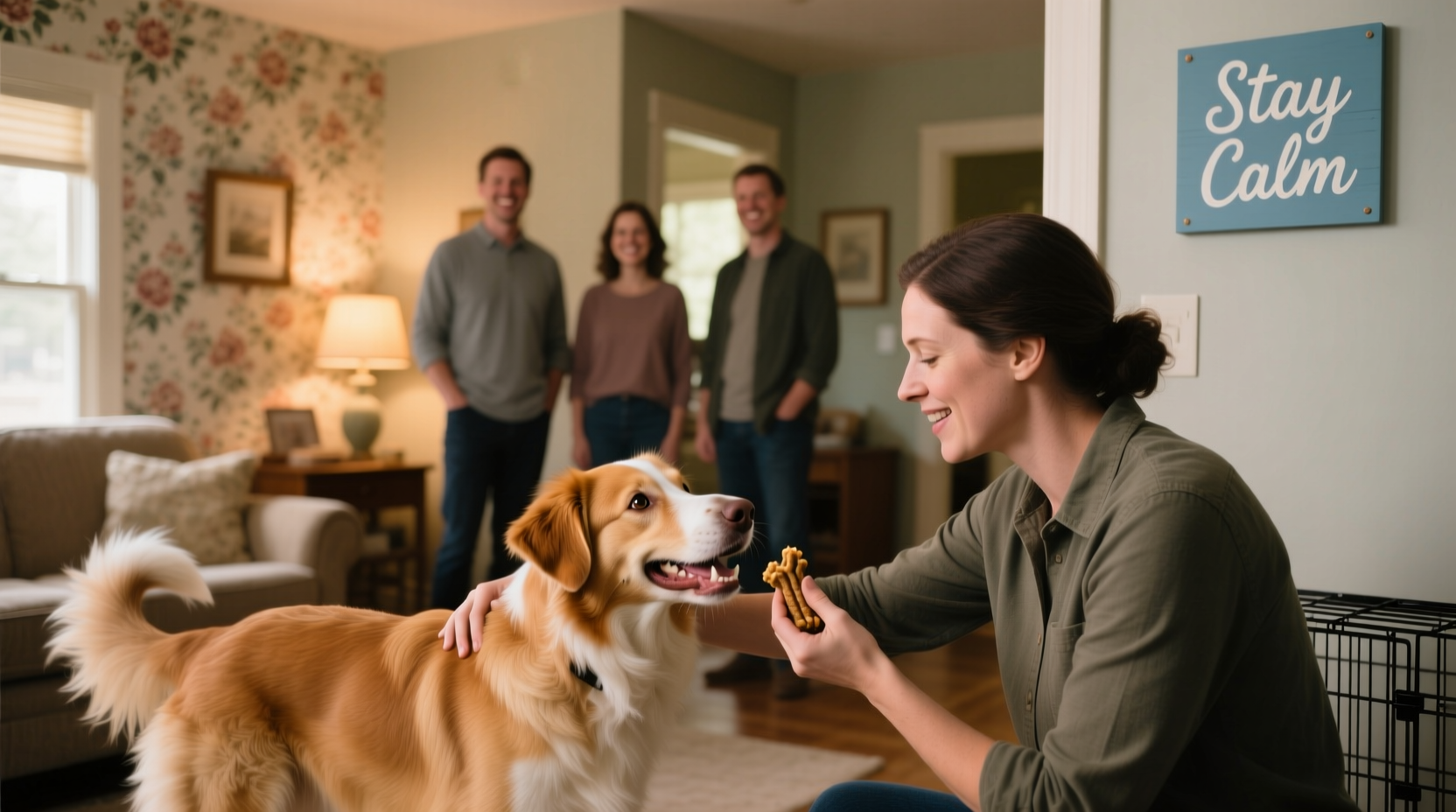
Dogs are social animals with finely tuned senses. A knock at the door or the sound of unfamiliar voices triggers their alert system. For many dogs, this moment represents a potential threat, an exciting novelty, or both. Their response—barking, pacing, jumping—is rooted in instinct: they’re trying to protect their territory or greet what they perceive as a pack member.
However, when excitement crosses into hyperactivity, it becomes problematic. An overstimulated dog may ignore commands, pull on the leash, or even nip out of overarousal. This isn’t defiance; it’s a neurological state where the dog has “flipped their lid,” as veterinary behaviorists describe it—the emotional brain overrides the rational one.
The goal isn’t to suppress natural reactions but to teach dogs how to self-regulate. Without resorting to crate confinement, you can build alternative routines that promote calmness, focus, and impulse control.
Step-by-Step Guide to Managing Excitement Before Guests Arrive
Prevention starts before the doorbell even rings. A proactive approach reduces the likelihood of an explosive reaction by preparing your dog mentally and physically.
- Exercise Before Anticipated Events: Take your dog for a brisk walk, play fetch, or engage in tug-of-war 30–60 minutes before guests are expected. Physical exertion lowers arousal levels and increases the production of calming neurotransmitters like serotonin.
- Practice Calm-Down Routines: Teach your dog a “settle” command using treats and praise. Use a mat or bed as a designated relaxation zone. Practice daily so it becomes a conditioned response.
- Desensitize to Door Sounds: Record doorbell sounds or practice knocking. Play these at low volume while rewarding calm behavior. Gradually increase volume and add movement toward the door only if your dog remains relaxed.
- Use Puzzle Toys Pre-Entry: Give your dog a stuffed Kong or treat-dispensing toy before the visit. This shifts focus from external stimuli to a positive, engaging activity.
- Establish a Guest Protocol: Inform visitors to avoid direct eye contact, refrain from petting immediately, and wait until your dog is calm before interacting.
Creating a Calm Environment During Visits
Once guests arrive, your environment plays a crucial role in managing your dog’s behavior. You don’t need a crate to create boundaries—strategic space management works just as well.
Designate a Quiet Zone
Choose a low-traffic area of the house—a bedroom, den, or corner of the living room—where your dog can retreat. Equip it with a comfortable bed, chew toys, and familiar scents. This isn’t isolation; it’s a safe haven where your dog can decompress.
Use Baby Gates or Exercise Pens
Instead of confining your dog in a crate, use a baby gate to block off part of a room. This allows visual access without physical access, reducing frustration while maintaining safety. Exercise pens (x-pens) can also create a semi-contained space in larger rooms.
Leverage Background Noise
Turn on soft music, a white noise machine, or a TV show to dampen sudden sounds. Classical music, in particular, has been shown in studies to reduce canine stress levels.
| Tool | Benefit | Best For |
|---|---|---|
| White noise machine | Masks door knocks and voices | Sensitive or reactive dogs |
| Puzzle feeder | Redirects focus to problem-solving | High-drive dogs |
| Phantom luring (empty hand gesture) | Guides dog away without force | Dogs trained with hand signals |
| Pressure wrap (e.g., Thundershirt) | Provides gentle compression | Anxious or fearful dogs |
Training Techniques to Build Impulse Control
Long-term calmness comes from training, not just management. These techniques build self-control and reinforce desirable behaviors.
“Go to Place” Command
This powerful cue directs your dog to a specific spot—like a mat or bed—and stay there until released. It’s not about punishment; it’s about giving your dog a job.
- Start in a quiet setting. Hold a treat near a mat and say “Go to place.”
- When your dog steps on it, mark with “Yes!” and reward.
- Gradually add duration and distance.
- Practice with distractions, eventually moving to the front door area.
Once mastered, use “Go to place” the moment you hear the doorbell. Reward heavily for compliance.
Leave-It and Focus Drills
Teach your dog to disengage from stimuli. Hold a treat in a closed fist. When your dog stops sniffing or pawing, say “Leave it” and reward with a different treat. Pair this with “Look at me” cues to redirect attention to you.
Controlled Greeting Sequences
Let guests enter but remain still and silent. Only allow interaction once your dog is sitting calmly. If excitement returns, the guest turns sideways and ignores the dog until calm resumes.
“We often expect dogs to behave perfectly in chaotic moments without teaching them how. Calmness is a skill, not a switch.” — Dr. Sophia Yin, DVM, Applied Animal BehavioristTip: Always carry high-value treats during guest arrivals to reinforce calm behavior instantly.
Mini Case Study: Max, the Overenthusiastic Labrador
Max, a three-year-old yellow Lab, would bark uncontrollably and jump on visitors the second the door opened. His owner, Sarah, didn’t want to crate him because he became anxious and vocalized loudly. Instead, she implemented a multi-step plan:
- She started taking Max for a 30-minute walk before any planned visits.
- She taught him a “go to mat” command using a red rug in the hallway.
- She placed a frozen peanut butter Kong on the mat whenever someone arrived.
- She installed a baby gate between the entryway and living room to give Max space.
- She asked guests to wait quietly until Max was lying down before offering a greeting.
Within four weeks, Max went from lunging at the door to walking calmly to his mat and settling down. The Kong kept him occupied, and the routine gave him predictability. No crate was used—just consistency, structure, and positive reinforcement.
Checklist: Calming Your Dog Without a Crate
Use this checklist before and during guest visits to ensure success:
- ✅ Exercise your dog 30–60 minutes before arrival
- ✅ Prepare a quiet zone with bed, water, and toys
- ✅ Set up a baby gate or x-pen if needed
- ✅ Have high-value treats ready
- ✅ Practice “go to place” or “settle” command earlier in the day
- ✅ Offer a food puzzle or long-lasting chew upon guest arrival
- ✅ Brief guests on the protocol: no sudden movements, wait for calm
- ✅ Reinforce calm behavior immediately with praise and treats
- ✅ End the visit with a relaxing activity, like a gentle massage or quiet time
Common Mistakes That Worsen Excitement
Even with good intentions, owners often accidentally reinforce overexcitement. Avoid these pitfalls:
- Petting or talking to the dog while excited: This rewards the very behavior you want to reduce.
- Inconsistent rules: Letting guests sometimes interact when the dog is jumping sends mixed signals.
- Using punishment: Yelling or leash corrections increase stress and damage trust.
- Skipping preparation: Expecting instant calm without prior training sets both you and your dog up for failure.
- Ignoring body language: Signs like stiff posture, rapid panting, or whale eye indicate rising stress—act early.
FAQ
Can I train an older dog to be calm around guests?
Absolutely. While puppies are more adaptable, adult dogs can learn new behaviors with patience and consistency. Older dogs may take longer, but their maturity often makes them more capable of focus than excitable adolescents.
What if my dog growls or acts aggressively when guests arrive?
Growling is a warning sign of fear or discomfort. Do not force interactions. Consult a certified dog behavior consultant or veterinary behaviorist to address underlying anxiety or fear-based reactivity safely.
Are calming supplements effective?
Some dogs benefit from natural supplements like L-theanine, chamomile, or CBD (where legal), especially when combined with training. However, these should support—not replace—behavior modification. Always consult your vet before starting any supplement.
Conclusion
Calming an overexcited dog when guests arrive doesn’t require a crate. What it does require is empathy, planning, and consistent effort. By understanding your dog’s triggers, creating structured routines, and reinforcing calm behavior through positive training, you can transform chaotic entries into peaceful moments. Your dog isn’t misbehaving—they’re communicating. With the right tools, you can teach them a better way to respond.
🚀 Start tonight: Pick one strategy—like teaching “go to place” or setting up a quiet zone—and practice it daily. Small steps lead to lasting change. Share your progress in the comments and inspire others on the same journey.








