Selecting the right dog leash isn't just about style or material—it's about fit, function, and safety. A poorly sized leash can compromise control during walks, cause discomfort for your dog, or even lead to escape risks. While many pet owners focus solely on collar or harness sizing, the leash itself plays a critical role in the overall walking experience. Measuring a dog leash correctly ensures it complements your dog’s size, strength, and behavior while supporting your ability to manage them effectively.
Whether you're shopping online, custom-ordering a leash, or simply verifying if your current one is appropriate, understanding how to measure a leash accurately is essential. This guide breaks down the process with practical steps, real-world examples, and expert-backed advice to help you make informed decisions.
Why Leash Length and Fit Matter
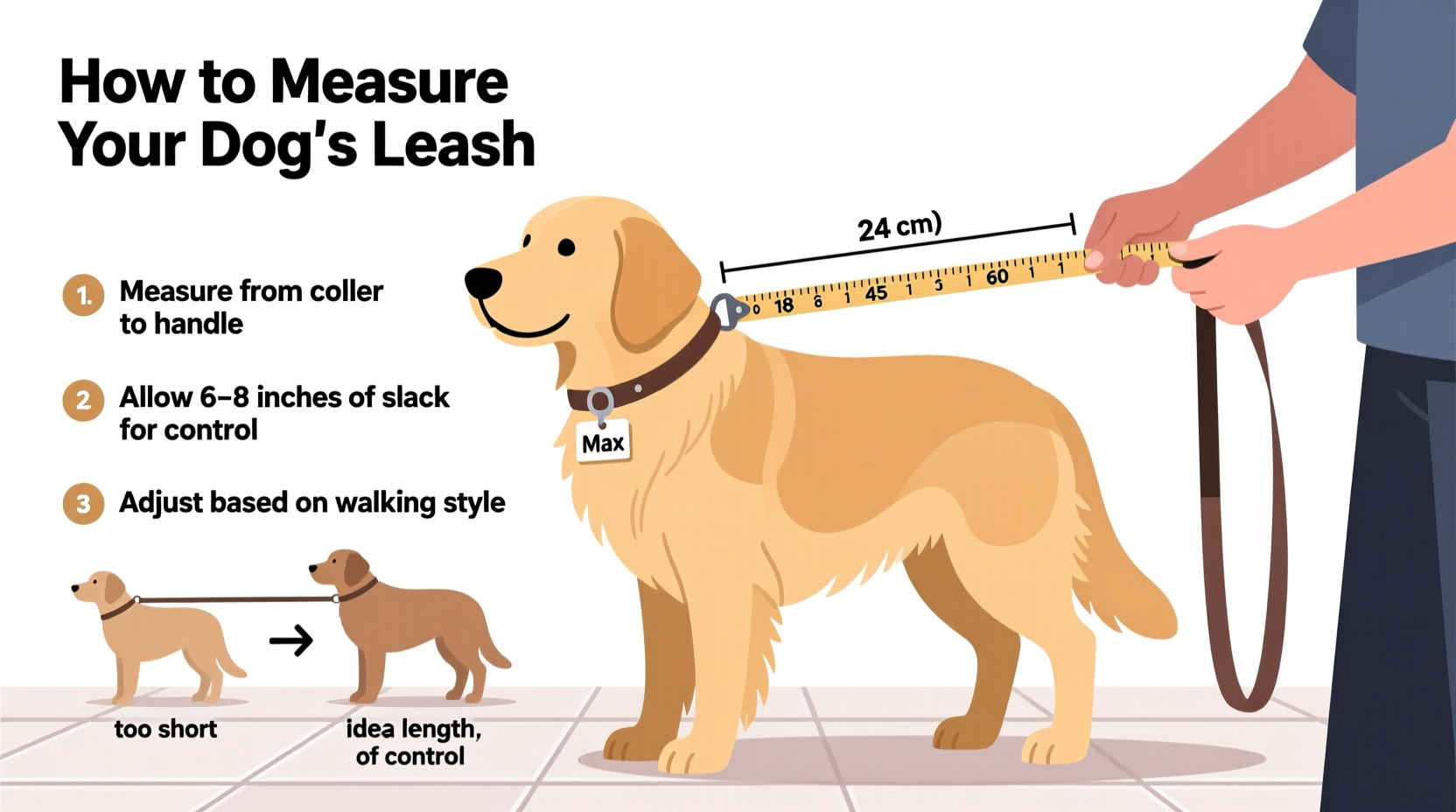
The length of a leash directly influences your level of control, your dog’s freedom to explore, and your safety during walks. Too short, and your dog may feel restricted or develop tension-related behaviors. Too long, and you risk losing command in high-traffic areas or near hazards like roads.
Fitness also extends beyond length. The handle size should accommodate your hand comfortably, especially during extended walks. Materials and thickness affect grip, durability, and weight—all contributing to long-term comfort for both handler and pet.
“An appropriately measured leash enhances communication between dog and owner. It’s not just a tether—it’s a tool for connection.” — Dr. Laura Simmons, Certified Canine Behavior Consultant
Step-by-Step Guide to Measuring a Dog Leash
Accurate measurement involves assessing multiple components: total length, handle length, width (thickness), and sometimes adjustability features. Follow this sequence to ensure precision:
- Determine the Purpose of Use
Identify whether the leash will be used for daily walks, training, hiking, or hands-free activities. This sets the baseline for ideal measurements. - Measure Total Leash Length
Stretch the leash fully on a flat surface. Use a tape measure from the metal clasp at the collar/harness end to the end of the handle loop. Standard lengths range from 4 to 6 feet for regular use; specialty leashes may extend up to 10–30 feet (e.g., retractable or long-line training leashes). - Assess Handle Size
Measure the circumference of the handle loop and its width. The loop should fit snugly but comfortably over your hand, allowing room for gloves in colder climates. Ideal handle length ranges from 4 to 7 inches. - Check Width and Thickness
Use a ruler to measure the leash’s width across its broadest point. Small dogs typically do well with ½-inch-wide leashes; medium to large breeds benefit from ¾ to 1 inch. Thicker leashes offer more durability but add weight. - Verify Adjustability (if applicable)
For adjustable or multi-length leashes, test each setting. Confirm that locking mechanisms hold securely and transitions are smooth.
Choosing the Right Length Based on Dog Size and Behavior
Different dogs require different leash specifications based on breed, energy level, and obedience training. Below is a reference table matching common scenarios to recommended leash dimensions:
| Dog Profile | Recommended Length | Width | Best Leash Type |
|---|---|---|---|
| Small breed (e.g., Chihuahua, Pomeranian) | 4–5 feet | ½ inch | Nylon or woven fabric |
| Medium breed (e.g., Beagle, Cocker Spaniel) | 5–6 feet | ⅝–¾ inch | Standard nylon or biothane |
| Large/strong breed (e.g., Labrador, German Shepherd) | 4–6 feet (non-retractable) | ¾–1 inch | Heavy-duty nylon, leather, or chain |
| Training or recall practice | 10–30 feet | ½–¾ inch | Long-line rope leash |
| Hiking or hands-free walking | Waist-loop system (adjustable) | ¾ inch | Bungee or elasticized waist leashes |
Note: Retractable leashes, while convenient, pose challenges in crowded areas and can encourage pulling. They are best suited for calm, well-trained dogs in open spaces.
Real Example: Fixing a Fit Issue with Proper Measurement
Sarah adopted Max, a 55-pound mixed-breed rescue known for sudden lunges toward squirrels. Her initial 6-foot thin nylon leash slipped from her hands during one such lunge, resulting in minor friction burns. Concerned, she consulted a local trainer who advised measuring her equipment more critically.
She remeasured the leash and found it was actually 6'4\" due to an oversized handle, reducing her effective control zone. Additionally, the ½-inch width provided insufficient grip security. Sarah switched to a 5-foot, ¾-inch biothane leash with a padded ergonomic handle. After the change, she reported better responsiveness from Max and no further incidents of slippage.
This case illustrates how seemingly minor discrepancies in leash dimensions can significantly impact safety and handling.
Essential Checklist Before Buying or Using a Leash
- ✅ Measure total leash length from clip to handle end
- ✅ Confirm handle fits your hand without strain
- ✅ Match leash width to your dog’s size and strength
- ✅ Test clips and connectors for smooth operation and sturdiness
- ✅ Ensure material suits your climate (e.g., mildew-resistant for humid areas)
- ✅ Verify reflectivity or visibility features if walking at night
- ✅ Check for signs of fraying or stitching wear regularly
Frequently Asked Questions
How do I know if my dog’s leash is too long?
A leash is too long if your dog consistently moves beyond your zone of control, ignores recall cues, or enters unsafe areas like streets before you can react. In urban environments, leashes longer than 6 feet often reduce situational awareness. For focused training or crowded zones, consider a 4-foot leash.
Can I use the same leash for walking and training?
It depends on the design. A standard 4–6 foot non-retractable leash made of durable material (like nylon or biothane) works well for both purposes. Avoid using retractable leashes for formal training, as they allow inconsistent tension and reinforce pulling behavior. For advanced recall drills, pair your everyday leash with a separate 15–30 foot long-line in safe, enclosed areas.
What’s the best way to maintain accurate measurements over time?
Periodically re-measure your leash, especially after heavy use or exposure to moisture. Stretching can occur in materials like nylon or cotton webbing. Inspect for elongation, weakened stitching, or hardware deformation every few months. Replace any leash showing structural changes, regardless of original measurements.
Final Thoughts: Prioritize Precision for Safety and Comfort
Measuring a dog leash might seem straightforward, but overlooking details can lead to compromised safety, reduced control, or physical discomfort for both you and your pet. Taking the time to assess length, handle fit, width, and material compatibility ensures that every walk is secure, enjoyable, and stress-free.
Just as you wouldn’t buy shoes without trying them on, don’t assume a “standard” leash fits perfectly without verification. Whether you’re a first-time dog owner or upgrading your gear, precise measurement is a small step with significant returns.
💬 Have a leash fit success story or measurement tip? Share your experience in the comments to help fellow dog owners find the perfect match!








