
When bringing home a new puppy, one of the first decisions you’ll face is what type of walking gear to use. The debate between harnesses and collars isn’t just about comfort—it’s about safety, control, and long-term health. While many pet owners default to collars out of habit, modern training science increasingly favors harnesses, especially during early development. Understanding the differences in how each affects your ability to guide and manage your puppy can make all the difference in building good leash manners from day one.
The Mechanics of Control: How Force Is Distributed
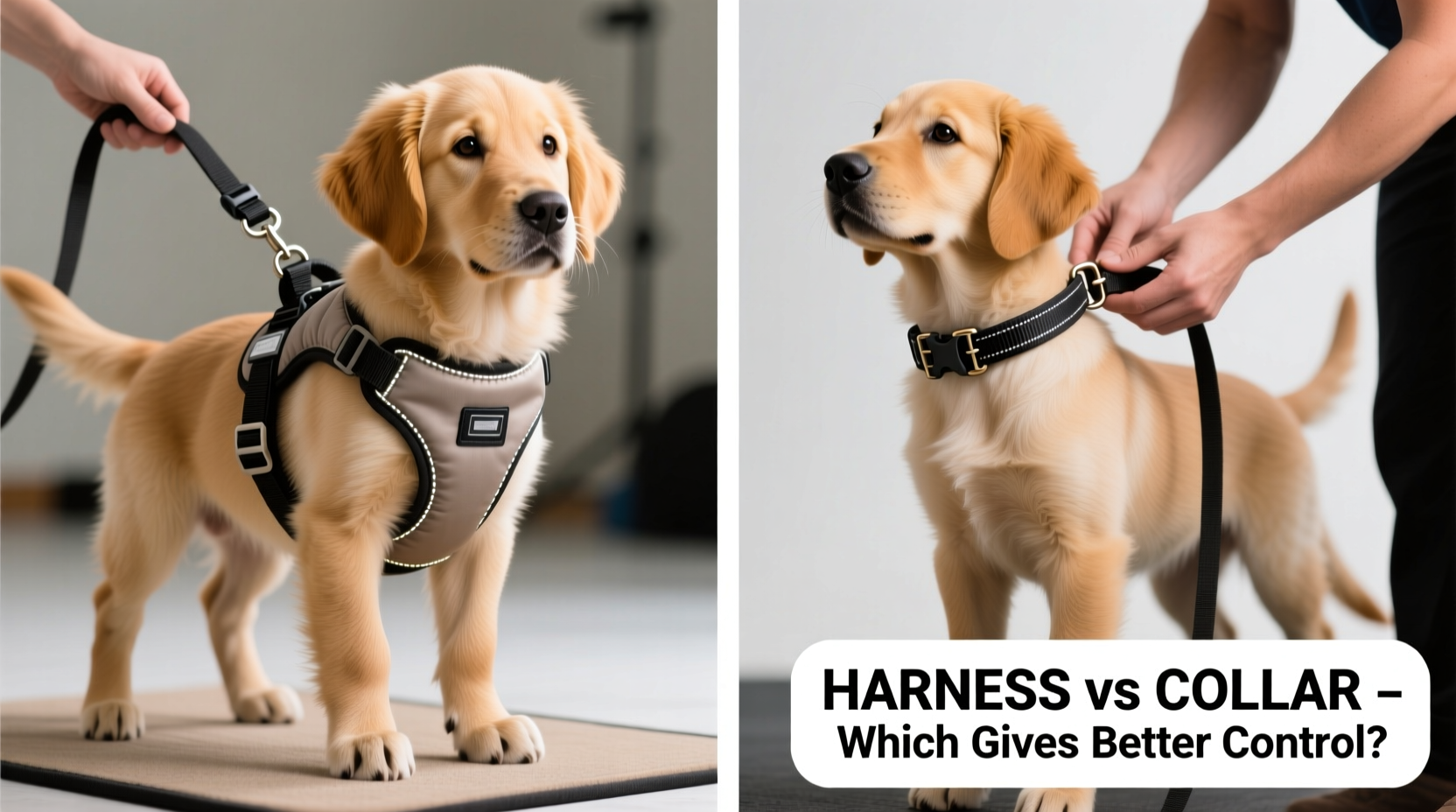
Control during walks doesn’t just come from strength—it comes from how force is applied across your puppy’s body. A collar concentrates pressure on the neck, specifically around the trachea, cervical spine, and throat area. When a puppy pulls, even gently, this creates sudden spikes in pressure that can lead to discomfort or injury over time. In contrast, a well-fitted harness distributes tension across the chest and shoulders—areas better equipped to handle force without risk.
This fundamental difference changes not only how safe your puppy feels but also how responsive they become to cues. Puppies wearing collars may associate pulling with choking, leading to fear-based resistance or reactivity. Harnesses, particularly front-clip designs, redirect forward momentum into a gentle turn toward the handler, making them inherently self-correcting tools.
Tip: Always test fit any harness by adjusting straps while your puppy stands—there should be enough room to slide two fingers comfortably under each strap.Pros and Cons: Collar vs Harness
Both options have their place, but when it comes to actual control during training, the balance often tips decisively toward harnesses—especially for young dogs still learning leash etiquette.
| Feature | Collar | Harness |
|---|---|---|
| Neck Pressure | High – direct strain on trachea and spine | Low – force spread across torso |
| Escape Risk | Moderate to high (slip-out breeds) | Very low (secure fit around chest/back) |
| Training Support | Limited – encourages pulling if not managed | Strong – especially front-clip models reduce pull instinct |
| Identification Access | Easy – tags attached directly | May require separate collar or tag attachment |
| Comfort During Growth | Potentially harmful – sensitive neck structures developing | Generally safer – avoids neck stress |
While collars are simpler and allow for quick ID access, they offer minimal mechanical advantage when trying to guide an excited puppy. Harnesses, particularly those with front D-rings (where the leash attaches near the chest), create a natural opposition reflex—when the dog moves forward, they pivot toward the handler instead of lunging ahead.
Expert Insight: What Trainers and Veterinarians Say
“Using a collar on a growing puppy, especially one prone to pulling, is like asking a child to carry a backpack by their throat. It might work short-term, but the long-term consequences aren’t worth the risk.” — Dr. Lena Patel, DVM, Canine Rehabilitation Specialist
Veterinary professionals consistently warn against prolonged pressure on a puppy’s neck. Even brief episodes of tugging can contribute to thyroid issues, ocular pressure changes, and tracheal collapse—particularly in small or brachycephalic breeds like Pomeranians, Bulldogs, or Shih Tzus.
Professional dog trainers also emphasize that control isn’t just physical—it’s psychological. A tool that reduces fear and confusion helps puppies learn faster. “We want the walk to be a calm, cooperative experience,” says Marcus Tran, certified positive-reinforcement trainer with over 15 years of experience. “Harnesses give us the leverage we need to guide without intimidation. That’s real control—not dominance.”
Step-by-Step Guide to Choosing and Using the Right Gear
Selecting the correct equipment involves more than picking a style—it requires proper fitting, consistent use, and gradual introduction. Follow this timeline to ensure your puppy adapts smoothly and safely.
- Week 1: Introduce the harness indoors
Let your puppy sniff and explore the harness. Reward curiosity with treats. Practice clipping it on and off without tightening fully. - Week 2: Short wear sessions with rewards
Put the harness on for 5–10 minutes at a time while playing or feeding. Adjust straps as needed. Never force it—if your puppy resists, go slower. - Week 3: Attach the leash inside the house
Use a lightweight leash to practice following you around furniture. Use verbal cues (“this way,” “come”) paired with treats. Let them feel the gentle redirection of a front-clip harness. - Week 4: Begin outdoor walks in low-distraction areas
Start in quiet yards or driveways. Keep walks under 10 minutes. Focus on loose-leash walking—reward attention and position beside you. - Week 5+: Gradually increase duration and complexity
Add mild distractions (e.g., passing cars, birds). Continue using the harness consistently. Only switch to a back-clip or collar later—if ever—if your dog demonstrates reliable self-control.
Throughout this process, avoid jerking the leash or using corrections. The goal is to build trust and cooperation, not submission. If your puppy leans forward or pulls, stop moving. Wait for slack in the leash, then mark and reward the moment they turn back toward you.
Real Example: Training a Reactive Jack Russell Terrier
Sophie adopted a 10-week-old Jack Russell Terrier named Milo who was energetic and easily overwhelmed. On his first few walks with a standard nylon collar, he would lunge at squirrels, choke himself, and become increasingly agitated. After consulting a local trainer, she switched to a no-pull harness with a front clip.
Within three days of consistent indoor practice, Milo began turning automatically when the leash tension changed. By week six, he walked calmly past other dogs and busy sidewalks. “It wasn’t magic,” Sophie said. “But the harness gave me the ability to guide him without hurting him. Now he looks to me before reacting—he trusts that I’ll help him navigate the world.”
This case illustrates how improved control through proper equipment leads to faster behavioral progress. Without the constant struggle of managing a choking puppy, Sophie could focus on teaching rather than restraining.
Tips for Maximizing Control Regardless of Equipment Choice
Even the best harness won’t fix poor technique. Pair your gear with smart handling strategies to get the most out of every walk.
- Keep the leash short but relaxed—about 3–4 feet of slack allows communication without giving freedom to charge ahead.
- Use directional cues like “this way” or “let’s go” instead of pulling backward, which can trigger opposition reflex.
- Practice frequent turns and changes in pace to keep your puppy attentive.
- Avoid retractable leashes during training—they encourage pulling and reduce your responsiveness.
- Always carry high-value treats on walks to reinforce desired behavior immediately.
Frequently Asked Questions
Can I use both a harness and a collar at the same time?
Yes—and many trainers recommend it. Use the harness for walking and attach the leash to it, while keeping a lightweight collar on for ID tags and licensing. Just ensure both fit properly and don’t rub or chafe.
Will a harness make my puppy lazy or resistant to walking?
No evidence supports this myth. A properly fitted harness doesn’t restrict movement or energy. In fact, puppies often walk more willingly because they’re not being choked or corrected. Any reluctance is usually due to fear or lack of conditioning, not the harness itself.
Are certain harnesses better for specific breeds?
Absolutely. Brachycephalic breeds (like Pugs or French Bulldogs) benefit most from wide-chest harnesses that avoid throat pressure. Long-backed dogs (like Dachshunds) need supportive fits that prevent spinal twisting. Small breeds do best with soft, padded models; larger, strong-pulling breeds may require reinforced stitching and dual clips.
Checklist: Choosing the Right Harness for Training
- ✅ Measure your puppy’s girth (behind front legs) and neck before purchasing.
- ✅ Choose a front-clip design for maximum control during early training.
- ✅ Ensure adjustable straps on shoulders, chest, and belly for growing puppies.
- ✅ Avoid overly bulky or restrictive models that limit leg movement.
- ✅ Look for padded edges and breathable materials to prevent irritation.
- ✅ Test fit and observe movement—your puppy should walk naturally, not hunch or twist.
- ✅ Introduce gradually with positive reinforcement, never force.
Conclusion: Prioritize Safety, Communication, and Long-Term Success
When evaluating whether a harness or collar gives you better control for puppy training, the answer lies not in tradition but in biomechanics and behavioral science. A harness—especially one designed for training—offers superior control by reducing pain, preventing injury, and promoting cooperation. It allows you to guide your puppy effectively without resorting to force or intimidation.
True control isn’t about dominance; it’s about clear communication, consistency, and mutual trust. By choosing equipment that supports these principles from the start, you set the foundation for a lifetime of enjoyable walks and confident companionship. Don’t wait until bad habits form—start with the right tool today.
💬 Have questions about your puppy’s walking gear or training challenges? Share your experience below—we’d love to hear how your pup is doing and help you find solutions that work.








