The terms \"hare\" and \"rabbit\" are often used interchangeably, but they refer to distinct animals with significant biological, behavioral, and ecological differences. While both belong to the family Leporidae, their lifestyles, physical traits, and interactions with humans vary greatly. Understanding these differences clarifies not only which animal might prevail in a confrontation but also which is more suitable as a companion.
Anatomical and Behavioral Differences
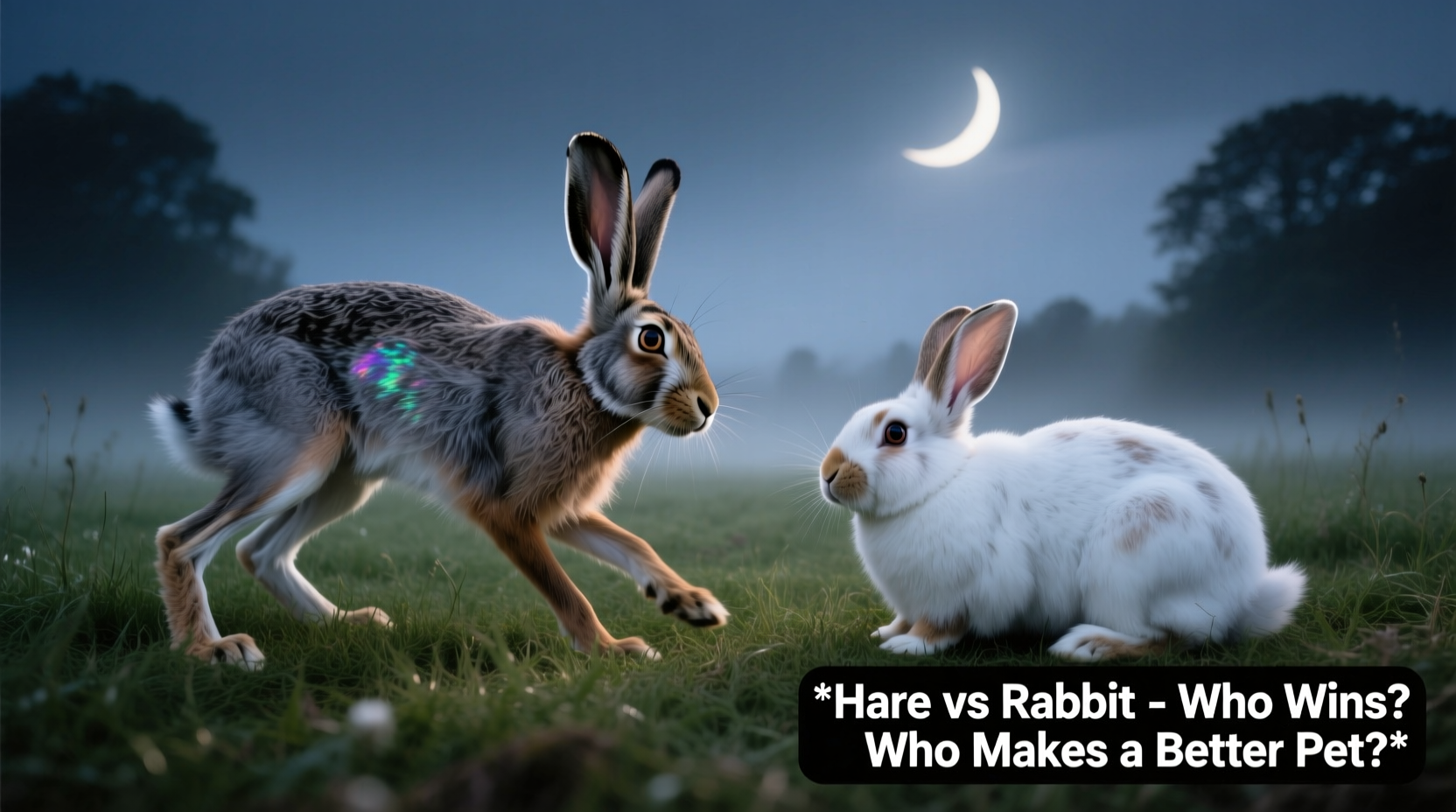
Hares and rabbits diverge in anatomy, reproduction, and temperament. Hares are generally larger, with longer hind legs, bigger ears, and a leaner build optimized for speed. They live above ground, relying on agility and endurance to escape predators. Rabbits, by contrast, are smaller, stockier, and burrow into the ground for safety. Their survival strategy emphasizes concealment over flight.
Behaviorally, hares are solitary and highly territorial. They avoid social interaction except during mating season. Rabbits, however, are social creatures that thrive in groups and form strong bonds with companions—both human and animal.
Reproduction further highlights their divergence. Rabbit kits are born blind, hairless, and entirely dependent on maternal care. Hare leverets, on the other hand, are born fully furred, with open eyes, and can move within hours of birth. This precocial development allows hares to be independent early, reducing parental investment.
Tip: Never approach or handle a young hare in the wild—it’s likely not abandoned. Its mother visits only briefly to feed.Who Would Win in a Fight?
In a hypothetical physical confrontation, a hare would almost certainly defeat a rabbit. The advantage lies in size, strength, and aggression. An adult jackrabbit (a type of hare) can weigh up to 7 pounds and reach speeds of 45 mph, using powerful kicks and rapid directional changes to fend off threats. Domestic rabbits typically weigh 2–5 pounds and lack the musculature or instinct for combat.
Hares are naturally more aggressive when cornered. Their primary defense is flight, but if trapped, they will bite, scratch, and deliver forceful hind-leg kicks capable of breaking skin. Rabbits, bred over generations for docility, tend to freeze or flee rather than fight.
In a controlled setting—such as an enclosure where neither can escape—the hare’s superior size, reflexes, and defensive instincts would give it a decisive edge. However, such a fight serves no natural purpose; both species evolved to avoid conflict through evasion, not confrontation.
“Hares are built like athletes—long limbs, high stamina, and explosive power. In a direct clash, a rabbit wouldn’t stand a chance.” — Dr. Lena Peterson, Wildlife Biologist, University of Alberta
Pet Suitability: Rabbit vs Hare
When it comes to companionship, the answer is unequivocal: rabbits make far better pets than hares. Hares are wild animals, unsuited to domestication. They experience extreme stress in captivity, often injuring themselves in attempts to escape. Their dietary and spatial needs are complex and difficult to replicate outside their natural habitat.
Rabbits, especially domestic breeds like the Holland Lop or Mini Rex, have been selectively bred for centuries to coexist with humans. They adapt well to indoor living, respond to training, and form affectionate bonds. With proper care, a pet rabbit can live 8–12 years, becoming a quiet, engaging household member.
Key Advantages of Rabbits as Pets
- Trainable to use a litter box
- Capable of learning simple commands
- Enjoy social interaction and gentle handling
- Available in a variety of breeds and temperaments
- Well-documented care guidelines and veterinary support
Why Hares Are Not Suitable Pets
- Legally protected in many regions
- Highly stressed by confinement and human contact
- Require specialized diets and large outdoor enclosures
- Not domesticated—retain strong wild instincts
- Often mistaken for orphaned rabbits and improperly rescued
Comparison Table: Hare vs Rabbit
| Feature | Hare | Rabbit |
|---|---|---|
| Size | Larger, up to 7+ lbs | Smaller, 2–5 lbs (common pets) |
| Ears | Longer, often black-tipped | Shorter, rounded |
| Hind Legs | Longer, more muscular | Shorter, compact |
| Birthing Style | Precocial (furred, mobile at birth) | Altricial (naked, blind, helpless) |
| Habitat | Nests above ground | Burrows underground |
| Social Behavior | Solitary, territorial | Social, group-oriented |
| Domestication | No—wild only | Yes—fully domesticated |
| Lifespan (Wild) | 4–5 years | 1–2 years (higher predation) |
| Lifespan (Captivity) | Not applicable (unsuitable) | 8–12 years with care |
Step-by-Step Guide to Choosing a Pet Rabbit
Selecting the right rabbit involves research, preparation, and commitment. Follow these steps to ensure a healthy, happy pet:
- Research Breeds: Choose a breed that fits your space and lifestyle. Dwarf breeds are ideal for apartments; larger breeds need more room.
- Find a Reputable Source: Adopt from shelters or ethical breeders. Avoid pet stores with unknown origins.
- Prepare Housing: Set up a secure, rabbit-proofed area with shelter, bedding, and toys. Indoor housing is safest.
- Stock Essentials: Purchase hay (80% of diet), fresh vegetables, water dispenser, litter box, and chew toys.
- Schedule a Vet Visit: Find an exotic veterinarian experienced with rabbits for initial checkups and spaying/neutering.
- Introduce Gradually: Allow your rabbit time to adjust. Minimize handling at first to build trust.
- Establish Routine: Feed, clean, and interact daily to create a stable environment.
Mini Case Study: From Rescue to Companion
Sarah adopted a neutered male Dutch rabbit named Oreo from a local shelter. Initially fearful and prone to hiding, Oreo was given a quiet bedroom setup with a large pen, soft bedding, and hiding boxes. Over six weeks, Sarah introduced gentle hand-feeding with herbs and spent time sitting nearby reading aloud. By week ten, Oreo approached her voluntarily and allowed brief petting. Today, he follows her around the house, uses his litter box consistently, and enjoys supervised playtime. His transformation underscores the importance of patience and proper socialization in rabbit ownership.
Frequently Asked Questions
Can a hare be tamed like a rabbit?
No. Hares remain wild animals regardless of early exposure to humans. Their stress response to captivity is severe, often leading to self-injury or refusal to eat. Taming a hare is neither ethical nor practical.
Do rabbits and hares ever interact in the wild?
Rarely. They occupy similar ecological niches but avoid each other due to differing behaviors and breeding cycles. Aggression may occur if territories overlap, but sustained interaction is uncommon.
Are pet rabbits related to wild rabbits?
Domestic rabbits descend from the European rabbit (*Oryctolagus cuniculus*), making them genetically related to some wild populations. However, thousands of years of selective breeding have made them behaviorally and physically distinct.
Final Thoughts and Call to Action
The question of who would win in a fight has a clear answer: the hare, by virtue of its physiology and wild nature. But when it comes to companionship, the rabbit stands alone as a viable, rewarding pet. Choosing a rabbit means embracing responsibility, patience, and ongoing care. These intelligent, sensitive animals thrive with attention and structure.
If you're considering a small companion, look to domesticated rabbits—not wild hares. Support ethical adoption, learn species-specific needs, and commit to providing a safe, enriched life. Your effort will be repaid with quiet loyalty and unexpected charm.
💬 Have experience with rabbits or questions about care? Share your story or ask for advice in the comments—let’s build a community of informed, compassionate pet owners.








