Adopting a dog is one of life’s most rewarding decisions—but it’s also a long-term commitment that requires thoughtful planning. While purebred dogs often get the spotlight, mixed-breed or \"mutt\" dogs offer unmatched diversity, resilience, and personality. With no two mutts exactly alike, they bring surprise, adaptability, and heart to any household. The key is finding the right match for your living situation, routine, and emotional expectations.
Mutt dogs—often found in shelters or rescue organizations—are genetic blends of multiple breeds, which means their traits can vary widely. But with careful observation and informed decision-making, you can identify a companion whose temperament, size, and energy level align perfectly with your home environment.
Understand What Makes Mutt Dogs Unique
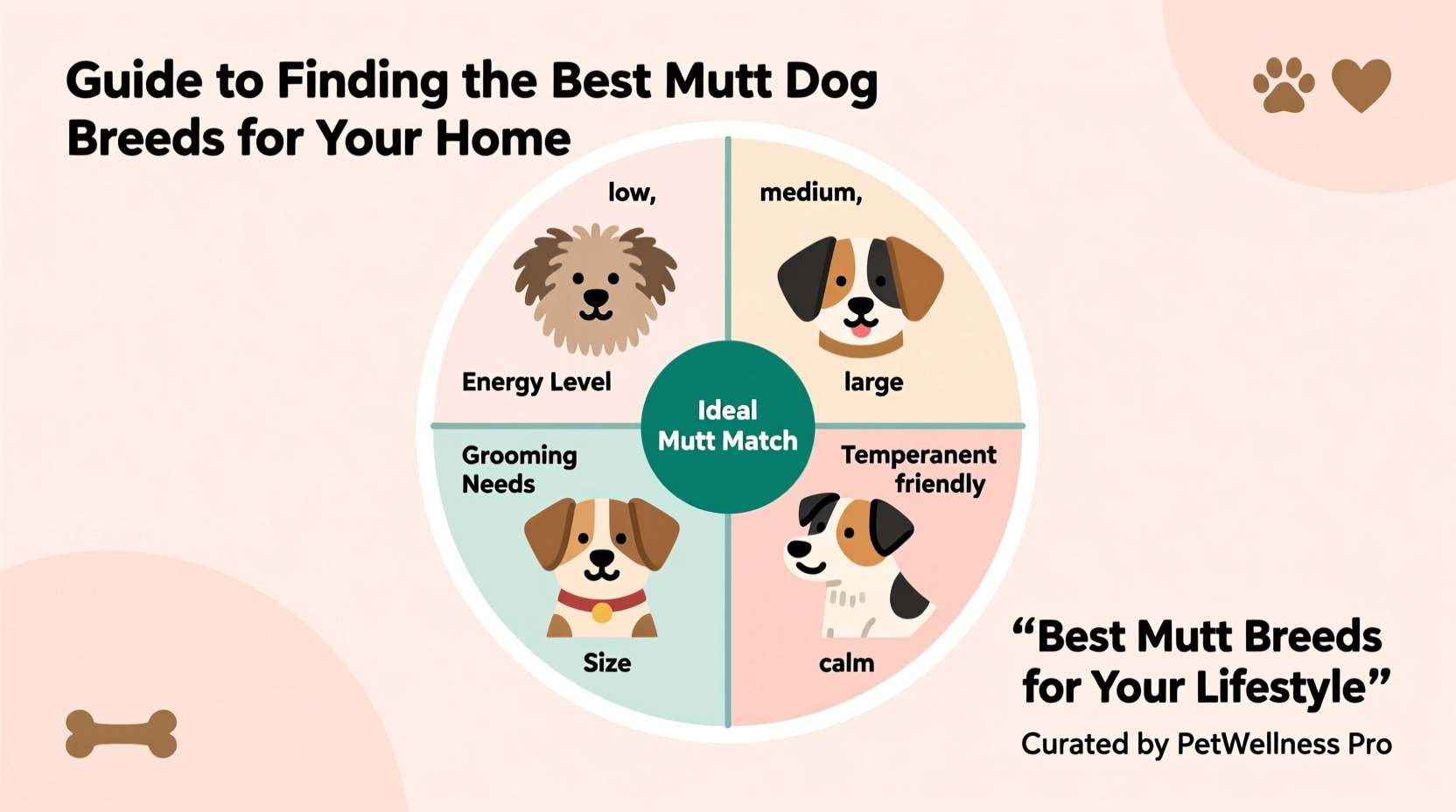
Mixed-breed dogs inherit characteristics from all corners of the canine world. A small terrier mix might have the alertness of a Jack Russell and the soft coat of a spaniel. A large shepherd-cross could combine loyalty, intelligence, and moderate energy. These combinations make mutts fascinating—but also require prospective owners to look beyond appearance and focus on behavior and compatibility.
One major advantage of mutts is hybrid vigor—the increased likelihood of better health due to diverse genetics. Many mixed-breed dogs are less prone to inherited conditions common in purebreds, such as hip dysplasia or brachycephalic syndrome. However, this doesn’t mean they’re immune to health issues; responsible care and regular vet checkups remain essential.
“Mutt dogs often come with fewer genetic health risks and more adaptable temperaments. They’re proof that sometimes, the best things in life are unplanned.” — Dr. Lena Patel, Veterinary BehavioristTip: When meeting a potential adoptee, spend time observing their behavior around people, other animals, and new environments rather than focusing solely on looks.
Assess Your Lifestyle and Home Environment
The foundation of a successful adoption lies in honest self-assessment. Ask yourself: What kind of daily routine do I have? Do I live in an apartment or a house with a yard? Am I active outdoors, or do I prefer quiet evenings at home?
Dogs thrive when their natural instincts align with their owner’s lifestyle. A high-energy border collie mix will struggle in a sedentary household, just as a calm basset hound cross may feel overwhelmed by constant travel or urban chaos.
Consider these factors:
- Space: Large dogs don’t always need yards, but they do need movement. Small apartments suit compact, low-energy mutts better.
- Activity Level: If you hike weekly or run regularly, a medium-to-high energy mutt may be ideal. For retirees or remote workers, a laid-back companion could be perfect.
- Time Commitment: Puppies and young dogs demand training, socialization, and supervision. Adults may already be house-trained and calmer.
- Family Dynamics: Homes with children should prioritize patience, tolerance, and gentle demeanor in a dog.
Use Observation and Background Clues to Predict Traits
Since mutts don’t come with breed-standard guarantees, predicting their adult behavior involves detective work. Start by examining physical features—body structure, ear shape, tail carriage—as these often hint at dominant breed influences.
For example, a dog with a lean build, narrow snout, and deep chest may have herding or sight-hound ancestry, suggesting higher speed and alertness. A stocky frame with floppy ears might point to bulldog or mastiff lineage, indicating lower energy and possible sensitivity to heat.
| Physical Trait | Possible Breed Influence | Expected Behavior |
|---|---|---|
| Long legs, slim body | Greyhound, Whippet, Shepherd | Fast, energetic, may chase small animals |
| Curly tail, thick coat | Spitz-type (e.g., Husky, Pomeranian) | Alert, vocal, cold-tolerant |
| Short legs, long body | Dachshund, Corgi mix | Stubborn, bold, may have back issues |
| Broad head, wrinkled face | Bulldog, Mastiff background | Calm, affectionate, heat-sensitive |
Equally important is behavioral evaluation. Reputable shelters conduct temperament tests that assess sociability, fear responses, toy drive, and reactivity. Request access to these reports before adopting.
Step-by-Step Guide to Choosing Your Ideal Mutt
Finding the right dog isn’t about luck—it’s about process. Follow these steps to increase your chances of a lasting match.
- Define your non-negotiables: List must-have qualities (e.g., good with kids, low shedding) and deal-breakers (e.g., excessive barking, aggression).
- Visit shelters and rescues regularly: Spend time in communal areas or schedule meet-and-greets. Observe how dogs interact.
- Ask detailed questions: Inquire about medical history, known behaviors, crate training, and previous living situations.
- Spend quality time together: Take the dog on a short walk or sit quietly in a visitation room to gauge comfort level.
- Involve household members: Introduce partners, children, or other pets if applicable to test compatibility.
- Start with a trial period if possible: Some organizations offer foster-to-adopt programs to ensure mutual fit.
- Prepare your home: Stock up on food, bedding, toys, and safety items before bringing your new dog home.
Real-Life Example: The Martinez Family Finds Their Match
The Martinez family lived in a third-floor apartment with two young boys and worked full-time jobs. They wanted a dog that was friendly, low-maintenance, and tolerant of noise and activity. After weeks of searching, they met Luna—a 35-pound tan-and-white mutt estimated to be part terrier and part beagle.
Luna had been surrendered after her previous owner moved. Shelter staff noted she was crate-trained, walked well on leash, and enjoyed children. During a supervised visit, she remained calm despite the boys’ excited voices and playful gestures. She showed mild interest in toys but didn’t bark or jump.
The family took her on a weekend trial foster. They discovered Luna adapted quickly, settled into a routine, and became a gentle presence in the home. Six months later, she’s fully integrated—walking twice daily, sleeping through the night, and even learning basic commands via online videos.
Their success came not from chasing a specific look, but from prioritizing temperament and practicality.
Checklist: Before You Adopt a Mutt Dog
Ensure you're fully prepared with this actionable checklist:
- ☐ Determine your lifestyle compatibility (space, time, activity)
- ☐ Research local shelters and rescue groups
- ☐ Review available dogs’ medical and behavioral records
- ☐ Schedule in-person visits or virtual meetups
- ☐ Discuss adoption with all household members
- ☐ Prepare your home (secure fencing, pet-proofing, supplies)
- ☐ Budget for ongoing costs (food, insurance, vet care)
- ☐ Plan for training and socialization support
Frequently Asked Questions
Are mutt dogs harder to train than purebreds?
Not necessarily. Training success depends more on individual temperament, early experiences, and consistency than breed purity. Many mutts are highly intelligent and eager to please. Positive reinforcement works exceptionally well across all types.
How can I estimate the adult size of a mixed-breed puppy?
Veterinarians can provide growth estimates based on paw size and current weight. However, predictions are imprecise. Monitoring growth patterns and consulting shelter records (if available) helps, but some dogs continue growing until age two.
Is it safe to adopt a mutt with an unknown history?
Yes—many dogs with uncertain pasts become loyal, stable companions. Work with reputable rescues that assess behavior and health. Patience, routine, and professional guidance (such as a certified trainer) can help overcome initial challenges.
Final Thoughts: Choose Thoughtfully, Love Deeply
Selecting the best mutt dog for your home isn’t about finding perfection—it’s about finding connection. The right dog won’t just fit your life; they’ll enrich it in ways you can’t predict. Whether you live alone in a studio or share a bustling home with kids and cats, there’s a mixed-breed dog waiting who matches your rhythm.
Take your time. Be honest about what you can offer. And remember: every mutt deserves a chance. By choosing adoption, you’re not just gaining a pet—you’re giving a second chance to a dog who may have never known stability.
💬 Have you adopted a mutt who changed your life? Share your story in the comments and inspire others to open their homes to mixed-breed dogs.








