
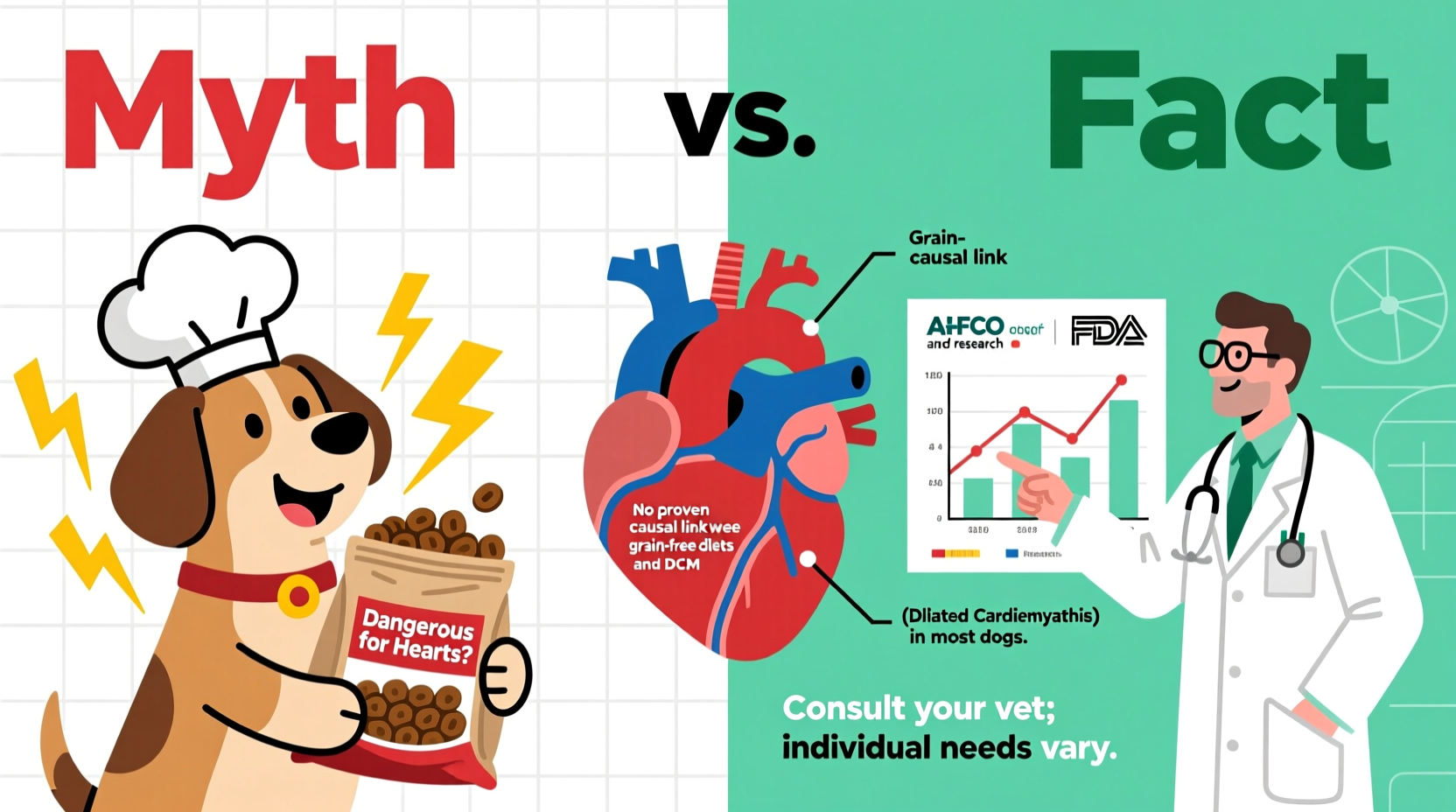
In recent years, grain-free dog food has surged in popularity, often marketed as a healthier, more natural option for pets. Many owners believe that removing grains mimics a wolf-like diet or reduces allergens. But concerns have emerged—especially since the U.S. Food and Drug Administration (FDA) began investigating a potential link between grain-free diets and canine dilated cardiomyopathy (DCM), a serious heart condition. This has led to widespread confusion: Is grain-free dog food truly dangerous for your pet’s heart, or are we misinterpreting the data? Let’s separate fact from fiction.
The Rise of Grain-Free Diets and Consumer Beliefs
Grain-free dog foods typically replace traditional grains like corn, wheat, and rice with alternative carbohydrate sources such as peas, lentils, potatoes, and legumes. These ingredients are often labeled as “ancient” or “paleo-friendly,” appealing to pet owners seeking clean-label products. The trend mirrors human dietary movements, where gluten-free and grain-free lifestyles gained traction despite limited medical necessity for most people.
Many pet owners assume that because dogs are carnivores—or at least omnivores with a meat preference—grains must be unnatural or harmful. However, veterinary nutritionists emphasize that dogs are well-adapted to digesting carbohydrates, including grains, which can provide essential nutrients like fiber, fatty acids, and B vitamins.
The marketing of grain-free food as “premium” or “holistic” has further fueled its adoption, even though there is no universal definition for these terms in pet food labeling. As a result, misconceptions persist: that grains cause allergies (they account for only about 10% of food sensitivities in dogs), or that grain-free automatically means higher protein or better quality.
Tip: Don’t assume \"grain-free\" means healthier—always check the full ingredient list and guaranteed analysis.What the FDA Investigation Revealed
In 2018, the FDA began collecting reports of DCM in dogs not known to have genetic predispositions to the disease. By mid-2023, over 1,100 cases had been reported, with a notable pattern: many affected dogs were eating grain-free diets containing high levels of legumes and potatoes. Breeds not traditionally prone to DCM—like golden retrievers, Labrador retrievers, and whippets—were appearing in the data.
While the investigation did not conclude a definitive causal relationship, the FDA noted a strong statistical association between certain grain-free formulations and DCM. The primary concern lies not with the absence of grains, but with the replacement ingredients. Legumes and pulses (peas, lentils, chickpeas) are rich in plant-based proteins and fibers but may affect taurine metabolism—a critical amino acid for heart function.
Taurine deficiency has long been linked to DCM in cats, and while dogs can synthesize taurine internally, some breeds and individuals may struggle to produce enough, especially when dietary precursors like cysteine and methionine are lacking or when fiber content interferes with absorption.
“While genetics play a role, diet-induced DCM is emerging as a real concern, particularly with boutique or grain-free formulas high in legumes.” — Dr. Lisa Freeman, Tufts University Veterinary Nutritionist
Debunking Common Myths About Grain-Free Dog Food
Amid fear and media coverage, several myths have taken root. Here’s what the evidence says:
- Myth 1: Grain-free diets are inherently bad for all dogs.
Reality: Not all grain-free foods are problematic. The risk appears tied to specific formulations—notably those using legumes as primary ingredients—rather than the absence of grains alone. - Myth 2: Grains are fillers with no nutritional value.
Reality: Whole grains offer digestible energy, essential fatty acids, antioxidants, and fiber. They are not “fillers” when used appropriately. - Myth 3: All dogs with DCM on grain-free diets will recover if they switch food.
Reality: Some dogs improve after dietary changes and taurine supplementation, but others suffer irreversible damage. Early detection is critical. - Myth 4: Only boutique brands are risky.
Reality: While smaller brands dominate the reports, some larger manufacturers also produce grain-free lines with similar ingredient profiles. Brand size isn’t the sole factor. - Myth 5: Taurine supplements fix everything.
Reality: Supplementation helps in deficient cases, but it doesn’t address underlying formulation issues. Prevention through balanced nutrition is superior.
Choosing a Safe and Balanced Diet: A Step-by-Step Guide
If you’re reevaluating your dog’s food due to heart health concerns, follow this practical timeline to make informed decisions:
- Review Current Food Label
Check the first five ingredients. If legumes (peas, lentils, chickpeas) or potatoes appear multiple times in the top slots, consider reassessing. - Consult Your Veterinarian
Discuss your dog’s breed, age, activity level, and any existing conditions. Request a cardiac screening if symptoms like lethargy, coughing, or difficulty breathing are present. - Request Taurine Testing
Ask for both whole blood and plasma taurine levels. Low values may indicate a need for dietary change or supplementation. - Transition Gradually
If switching foods, do so over 7–10 days by mixing increasing amounts of the new food with the old to avoid digestive upset. - Monitor Long-Term
After changing diets, follow up with your vet in 3–6 months to assess taurine levels and cardiac function via echocardiogram if needed.
Real Case Example: Max, the Golden Retriever
Max, a 5-year-old male golden retriever, was brought to a veterinary cardiology clinic after his owner noticed he was tiring easily during walks and had developed a persistent cough. An echocardiogram revealed enlarged heart chambers and reduced contractility—signs of DCM. Surprisingly, Max had no family history of heart disease.
His diet consisted of a popular grain-free kibble with lamb and peas as primary ingredients. Blood tests showed critically low taurine levels. His veterinarian immediately prescribed taurine supplements and recommended switching to a conventional, grain-inclusive diet with animal-based protein as the first ingredient.
Over the next six months, Max’s heart function improved significantly. Follow-up imaging showed reduced chamber size and improved pumping efficiency. While not fully reversed, his prognosis became much more favorable. His case highlights how diet can influence heart health—even in breeds not genetically predisposed to DCM.
Do’s and Don’ts: Grain-Free Feeding Checklist
| Do’s | Don’ts |
|---|---|
| ✔ Choose diets with animal protein as the first ingredient | ✘ Avoid foods where legumes or potatoes dominate the ingredient list |
| ✔ Opt for brands that conduct feeding trials and employ veterinary nutritionists | ✘ Don’t assume “natural” or “organic” means nutritionally complete |
| ✔ Monitor your dog for signs of heart issues (lethargy, coughing, fainting) | ✘ Never self-prescribe taurine without testing |
| ✔ Work with your vet to evaluate dietary needs based on breed and health status | ✘ Don’t switch foods abruptly or based solely on trends |
Expert Insights and Ongoing Research
Veterinary researchers continue to study the complex interaction between diet and canine heart health. One key area of focus is the bioavailability of taurine in different protein sources. Animal-based proteins (like meat, fish, and eggs) are rich in taurine and its precursors, whereas plant-based proteins are not.
Additionally, high-fiber diets—common in grain-free formulas due to legume content—may alter gut microbiota in ways that affect nutrient absorption. Some studies suggest certain bacteria can degrade taurine, potentially exacerbating deficiency.
“We’re seeing a shift in how we view pet food safety—not just in terms of contamination, but formulation. Just because something is legal doesn’t mean it’s optimal.” — Dr. Joseph Wakshlag, Cornell University College of Veterinary Medicine
Researchers also caution against oversimplification. The issue isn't necessarily grain-free diets *per se*, but rather the substitution patterns used in many of them. Foods that replace grains with moderate amounts of vegetables and maintain high-quality animal protein may pose little risk.
Frequently Asked Questions
Can grain-free dog food directly cause heart disease?
There is no conclusive proof that grain-free food directly causes heart disease. However, strong evidence links certain grain-free diets—particularly those high in legumes and potatoes—to an increased risk of diet-associated DCM, especially in susceptible breeds or individuals with taurine metabolism issues.
Should I stop feeding grain-free food altogether?
Not necessarily. If your dog thrives on a grain-free diet, has normal taurine levels, and eats a formula with high-quality animal protein and minimal legumes, the risk may be low. However, if you're using a boutique brand with peas or lentils as main ingredients, consult your vet about transitioning to a safer option.
Are certain dog breeds more at risk?
Yes. While DCM was historically seen in large breeds like Doberman pinschers and Great Danes, recent cases have involved golden retrievers, Labradors, cocker spaniels, and even smaller breeds. Any dog on a legume-heavy grain-free diet may be at elevated risk, regardless of breed.
Conclusion: Making Informed Choices for Your Pet’s Heart Health
The question isn’t whether grain-free dog food is universally dangerous—it’s whether specific formulations pose preventable risks. The heart health of your pet depends less on the presence or absence of grains and more on the overall nutritional balance, ingredient quality, and species-appropriate design of the food.
As consumers, we must look beyond marketing claims and scrutinize what’s actually in the bag. Relying on veterinary expertise, understanding ingredient lists, and monitoring your dog’s health are far more effective than following dietary fads.
🚀 Take action today: Review your dog’s current food, schedule a wellness check with your veterinarian, and ask about taurine testing if you’re feeding a grain-free diet with legumes. Your pet’s heart depends on informed choices—not myths.








