
Choosing between a freshwater and saltwater aquarium often comes down to aesthetics, budget, and experience level. But one question consistently surfaces among both beginners and seasoned hobbyists: Is the maintenance difference really that huge? The short answer is yes—but not for the reasons many assume. While both systems require diligence, the nature of their upkeep diverges significantly due to water chemistry, biological stability, equipment needs, and the sensitivity of their inhabitants.
Understanding these differences isn't about discouraging new aquarists from exploring saltwater environments; it's about setting realistic expectations. This article breaks down the core maintenance distinctions, compares time investment and costs, and provides actionable insights to help you decide which system aligns with your lifestyle and commitment level.
Water Chemistry and Stability
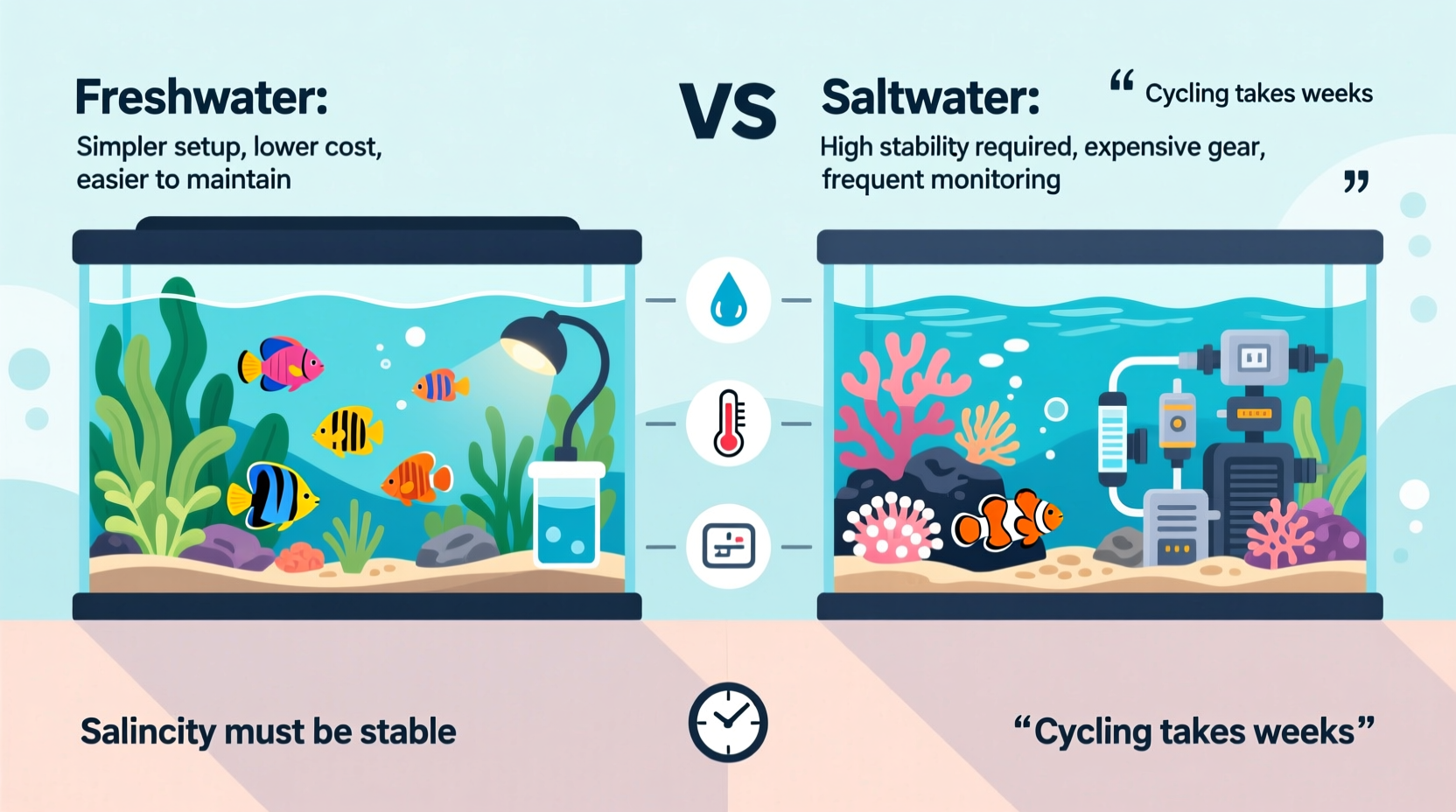
One of the most fundamental differences lies in water chemistry. Freshwater aquariums rely primarily on managing ammonia, nitrite, and nitrate levels through regular partial water changes and filter maintenance. These parameters are relatively stable and easier to test and correct using widely available kits and additives.
Saltwater tanks, however, demand far more precision. In addition to nitrogen cycle compounds, they require consistent monitoring of salinity (measured as specific gravity or parts per thousand), pH, alkalinity, calcium, magnesium, and trace elements like strontium and iodine—especially in reef setups housing corals. Even minor fluctuations in these parameters can stress or kill sensitive marine species.
For example, a sudden 0.02 drop in pH might go unnoticed in a freshwater tank but could trigger coral bleaching in a reef aquarium. This means saltwater keepers must test more frequently and intervene proactively, often daily for critical parameters during initial setup phases.
Tip: Use a calibrated refractometer instead of a hydrometer for accurate salinity readings in saltwater tanks.Equipment and System Complexity
The equipment required for each type of aquarium reflects their differing maintenance demands. Freshwater systems typically use standard hang-on-back filters, basic heaters, and LED lighting. Maintenance involves rinsing filter media in tank water every few weeks and performing weekly 20–30% water changes.
In contrast, saltwater aquariums—especially reef tanks—often incorporate protein skimmers, return pumps, sumps, wave makers, UV sterilizers, and automated dosing systems. These components enhance water quality but introduce more points of failure. A clogged skimmer or failed pump can destabilize conditions within hours.
Moreover, evaporation in saltwater tanks affects salinity more acutely than in freshwater. Without an automatic top-off system (ATO), daily manual topping with RO/DI water becomes necessary to maintain stable salt concentrations. This adds a layer of routine oversight absent in most freshwater setups.
“Saltwater systems are less forgiving because marine organisms evolved in highly stable oceanic conditions. Replicating that stability requires attention to detail at every level.” — Dr. Mark Linville, Marine Biologist & Aquarium Consultant
Maintenance Comparison Table
| Maintenance Factor | Freshwater Aquarium | Saltwater Aquarium |
|---|---|---|
| Water Testing Frequency | Weekly (ammonia, nitrite, nitrate) | Daily to weekly (salinity, pH, alkalinity, calcium, etc.) |
| Water Change Routine | 20–30% weekly | 10–20% bi-weekly or monthly (reefs may vary) |
| Equipment Needs | Filter, heater, light | Skimmer, sump, wavemaker, ATO, chiller (in warm climates) |
| Top-Off Requirements | Occasional, no salinity impact | Daily top-off with RO/DI water essential |
| Biological Sensitivity | Moderate; fish tolerate small fluctuations | High; corals and inverts react quickly to imbalance |
| Initial Learning Curve | Low to moderate | Moderate to steep |
| Avg. Monthly Maintenance Time | 2–3 hours | 5–8 hours (higher for reef tanks) |
Real-World Example: Two Aquarists, Two Systems
Consider Sarah and James, both experienced aquarists who run tanks in their homes. Sarah maintains a 55-gallon planted freshwater community tank with tetras, corydoras, and dwarf cichlids. Her routine includes a 25% water change every Sunday, filter cleaning once a month, and checking ammonia and nitrates biweekly. She spends roughly 2.5 hours per week on maintenance.
James runs a 75-gallon reef tank with live rock, soft and stony corals, clownfish, and cleaner shrimp. His schedule includes daily checks of salinity and temperature, weekly testing of alkalinity and calcium, bi-weekly 15% water changes, monthly skimmer cleanings, and daily top-offs. He also monitors flow rates and adjusts lighting schedules seasonally. His total time investment averages 6–7 hours weekly.
When a power outage disrupted equipment for four hours, Sarah’s tank recovered within a day with no losses. James lost two sensitive Acropora fragments despite backup batteries, highlighting how marine systems are quicker to show signs of instability—even under brief stress.
Step-by-Step Weekly Maintenance Routines
Freshwater Weekly Routine
- Test water for ammonia, nitrite, and nitrate.
- Perform a 20–30% water change using dechlorinated tap water.
- Vacuum substrate to remove detritus.
- Wipe algae from glass using a magnetic or pad cleaner.
- Inspect filter flow and clean mechanical media if clogged.
- Observe fish behavior and feeding response.
Saltwater Weekly Routine
- Check salinity with a refractometer; adjust if needed.
- Test pH, alkalinity, and nitrate levels.
- Perform a 10–20% water change with pre-mixed saltwater.
- Clean protein skimmer cup and neck.
- Scrape viewing panels and scrub overflow boxes if algae buildup is present.
- Refill top-off reservoir with RO/DI water.
- Inspect all pumps and lights for proper operation.
- Feed corals if required (e.g., phytoplankton dosing).
Cost Implications of Maintenance
Maintenance isn’t just about time—it’s also about money. While freshwater tanks have lower ongoing costs, saltwater systems accumulate expenses across multiple fronts:
- Test Kits: Freshwater tests rarely exceed $50/year. Saltwater keepers may spend $150+ annually on comprehensive test kits (Salifert, Red Sea) or invest in digital monitors like the Neptune Systems Apex.
- Water Preparation: RO/DI units ($100–$300) are recommended for both types but are nearly essential for saltwater to prevent contaminants from affecting delicate chemistry.
- Supplements: Reef tanks often require daily or weekly dosing of calcium, alkalinity, and magnesium, adding $30–$80/month depending on tank size and stocking.
- Replacement Parts: Protein skimmer pumps, wavemaker impellers, and heater failures occur more frequently due to salt corrosion, increasing long-term repair costs.
Over five years, a well-maintained saltwater reef tank can incur $1,000–$2,000 more in operational costs than a comparable freshwater system, even excluding livestock replacement.
Frequently Asked Questions
Can a beginner successfully maintain a saltwater aquarium?
Yes, but with caveats. Beginners should start with a fish-only-with-live-rock (FOWLR) setup rather than a reef tank. These are less demanding than coral-dominated systems and allow new hobbyists to learn water testing, salinity management, and nutrient control without the added pressure of keeping fragile invertebrates alive. With proper research and patience, success is achievable.
Do freshwater tanks ever require complex maintenance?
They can, especially heavily planted tanks or those with rare species like discus or wild-caught angelfish. Planted aquariums may need CO₂ injection, iron supplementation, and precise lighting schedules. However, these are optional upgrades, whereas advanced monitoring is standard in most saltwater systems.
Is algae worse in saltwater tanks?
Not necessarily worse, but different. Freshwater tanks commonly battle green spot or hair algae, while saltwater systems face cyanobacteria (\"cyano\"), bubble algae, and diatoms (brown film). Saltwater algae can be harder to eradicate due to underlying chemical imbalances. For instance, persistent cyano often indicates excess phosphates or poor gas exchange, requiring root-cause correction rather than just scraping.
Actionable Checklist: Choosing Your System
Use this checklist to evaluate which aquarium type suits your lifestyle:
- ☐ Do I have 2–3 hours per week for basic maintenance? → Freshwater viable.
- ☐ Can I commit 5+ hours weekly and learn advanced water chemistry? → Saltwater possible.
- ☐ Am I willing to invest $200–$500 upfront in equipment beyond the basics? → Saltwater preparedness.
- ☐ Do I prefer vibrant fish-only displays or intricate coral reefs? → Influences aesthetic goals.
- ☐ Can I afford potential livestock loss during learning phases? → Especially relevant for saltwater.
- ☐ Do I have space for a sump or larger filtration setup? → Saltwater often requires extra room.
- ☐ Am I comfortable mixing saltwater and storing large volumes of pre-made water? → Practical consideration.
Conclusion: Matching Tank to Lifestyle
The maintenance difference between freshwater and saltwater aquariums isn’t exaggerated—it’s real and rooted in biological and chemical realities. Saltwater systems demand greater precision, more equipment, higher costs, and increased time investment. They reward dedication with breathtaking beauty but offer little margin for error.
Freshwater tanks provide flexibility, resilience, and accessibility, making them ideal for families, beginners, or those seeking a low-to-moderate maintenance hobby. Yet they shouldn’t be seen as inferior; advanced planted and biotope setups can rival saltwater in complexity and artistry.
Ultimately, the best aquarium is the one you can care for consistently. Whether you choose the gentle rhythm of a freshwater ecosystem or the dynamic challenge of a saltwater reef, success comes from understanding the responsibilities involved and committing to thoughtful stewardship.
🚀 Ready to take the plunge? Start by researching local fish stores, joining online forums like Reef2Reef or Aquarium Advice, and observing tanks in person. Your perfect aquatic world is waiting—choose wisely and enjoy the journey.








