
For decades, kibble has reigned as the default choice for feeding dogs—affordable, convenient, and widely available. But in recent years, fresh dog food has surged in popularity, promising higher-quality ingredients, improved digestion, and longer lifespans. With price tags often two to four times higher than premium kibble, many pet owners are left wondering: Is the nutritional boost from fresh dog food actually worth the massive price difference?
The answer isn’t simple. It depends on your dog’s health, lifestyle, budget, and how you define “value.” To help you make an informed decision, we’ll compare nutrition, digestibility, long-term health outcomes, and cost-effectiveness—backed by veterinary insights, ingredient analysis, and real owner experiences.
Nutritional Composition: What’s Really in Their Bowl?
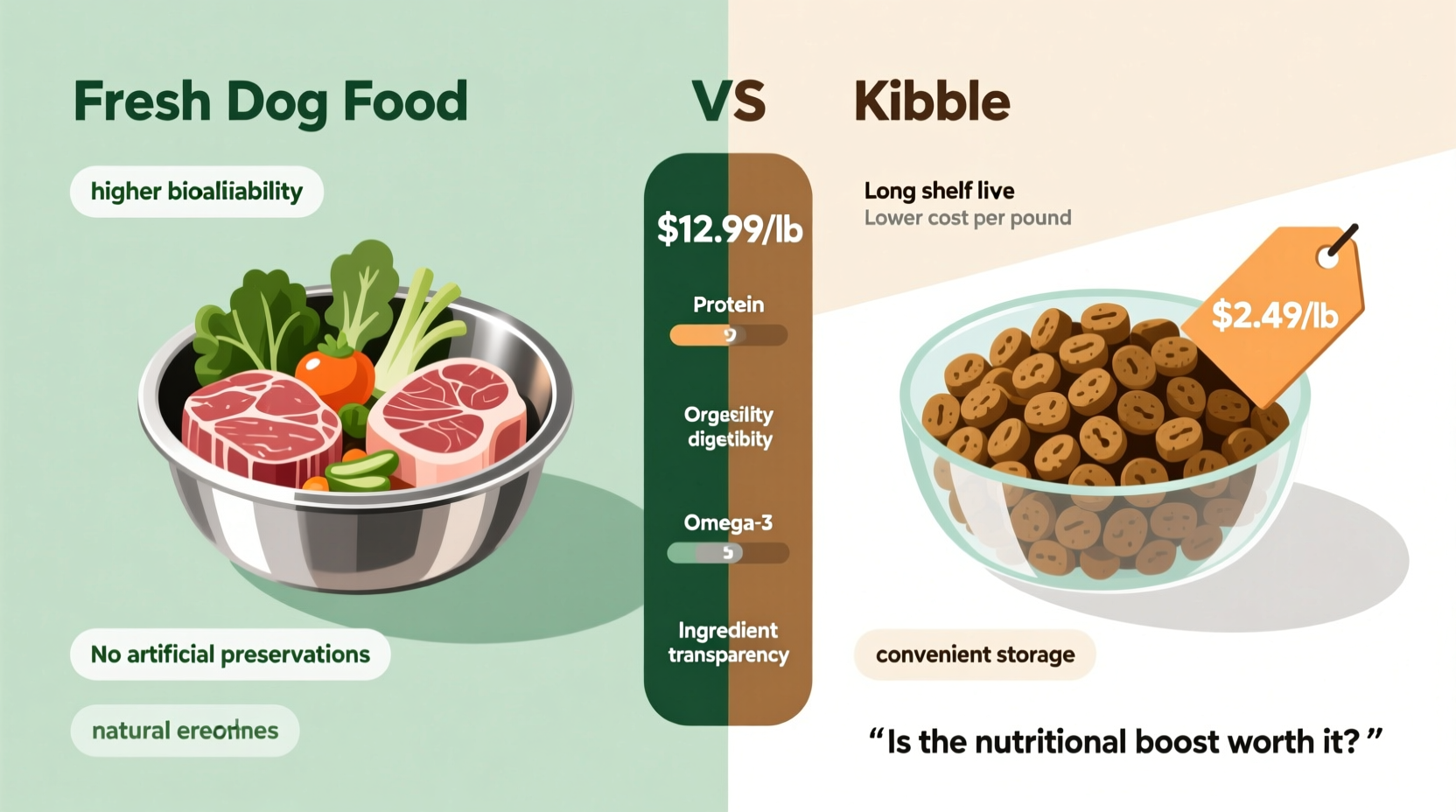
Kibble and fresh dog food differ fundamentally in formulation, processing, and ingredient quality. Kibble is typically made through extrusion—a high-heat process that shapes dry pellets from a mix of meats, grains, vegetables, and preservatives. While this method extends shelf life, it can degrade heat-sensitive nutrients like vitamins B and E, omega-3 fatty acids, and certain amino acids.
Fresh dog food, on the other hand, uses gently cooked or raw ingredients with minimal processing. These meals retain more natural enzymes, moisture, and bioavailable nutrients. Most fresh brands emphasize whole meats (like chicken breast or grass-fed beef), real vegetables, and no artificial fillers or chemical preservatives.
Tip: Look beyond marketing terms like “natural” or “grain-free”—check the first five ingredients. If they’re whole foods, not by-products or meals, you’re likely getting better nutrition.Key Nutritional Differences
| Nutrient Factor | Kibble | Fresh Dog Food |
|---|---|---|
| Protein Source Quality | Often meat meals (concentrated but processed) | Whole meats, organs, sometimes human-grade |
| Moisture Content | 6–10% | 60–75% |
| Carbohydrate Load | High (30–50%, often from grains or legumes) | Low to moderate (from sweet potatoes, peas, etc.) |
| Preservatives | Synthetic (BHA, BHT) or natural (mixed tocopherols) | None or natural (vitamin E, rosemary extract) |
| Digestibility | 70–80% | 85–95% |
The moisture difference alone has implications for urinary health and hydration, especially in dogs prone to kidney issues or those who don’t drink enough water. Higher digestibility means fewer stools, less gas, and more efficient nutrient absorption—something many fresh food users report within weeks.
Digestive Health and Palatability: What Dogs Actually Eat—and Keep Down
One of the most consistent benefits reported by fresh food feeders is improved stool quality. Smaller, firmer, and less frequent bowel movements suggest better nutrient utilization. This aligns with studies showing that highly processed diets can disrupt gut microbiota, while whole-food diets support a healthier digestive ecosystem.
A 2021 study published in *Veterinary Sciences* found that dogs fed fresh-cooked diets had significantly higher levels of beneficial bacteria like *Lactobacillus* and lower levels of inflammation markers compared to kibble-fed counterparts.
“Switching to fresh food often resolves chronic soft stools, excessive shedding, and even skin allergies—not because kibble is ‘bad,’ but because fresh food provides nutrients in forms dogs evolved to use.” — Dr. Lisa Freeman, DVM, PhD, Board-Certified Veterinary Nutritionist
Palatability is another major factor. Fresh food is inherently more aromatic and texturally appealing. Picky eaters, senior dogs, and pets recovering from illness often show renewed interest in meals when switched to fresh options. However, this doesn’t mean kibble is unpalatable—many dogs thrive on it, especially when transitioned properly and matched to their energy needs.
Long-Term Health Impact: Can Fresh Food Extend Lifespan?
While no large-scale longitudinal studies definitively prove that fresh food extends canine lifespan, emerging evidence suggests strong correlations with reduced disease risk. Chronic conditions like obesity, diabetes, and dental disease are influenced by diet quality and feeding patterns.
Fresh diets tend to be lower in starch and free from ultra-processed carbohydrates, which may reduce insulin spikes and fat accumulation. Additionally, the absence of high-heat processing means fewer advanced glycation end products (AGEs)—compounds linked to aging and inflammation.
Veterinarians increasingly report improvements in coat condition, energy levels, and joint mobility in dogs switched to fresh food, particularly among breeds predisposed to allergies or inflammatory conditions (e.g., Labrador Retrievers, German Shepherds).
Mini Case Study: Max, the Senior Beagle with Chronic Ear Infections
Max, a 9-year-old beagle, had suffered recurring ear infections and gastrointestinal upset for over three years. His owner, Sarah, rotated between three premium kibbles, assuming the issue was environmental. After consulting a veterinary dermatologist, she learned that food sensitivities—particularly to poultry by-product meal and corn—could be contributing.
She transitioned Max to a fresh food plan featuring novel proteins (duck and venison) and low-glycemic vegetables. Within six weeks, his ear flare-ups decreased from monthly to once in four months. His stools became well-formed, and his breath improved. Though the monthly food cost rose from $45 to $110, Sarah noted fewer vet visits and medications, offsetting some expenses.
“It’s not just about what’s in the bowl,” Sarah said. “It’s about what stays out of the vet’s office.”
Cost Analysis: Is Fresh Food Worth the Price Premium?
There’s no denying that fresh dog food is expensive. A 30-pound dog might consume $80–$150 worth of fresh food per month, compared to $25–$50 for mid-to-high-end kibble. But cost shouldn’t be measured solely in dollars per bag—it must include value factors like digestibility, waste reduction, and potential medical savings.
- Less waste: Higher digestibility means your dog absorbs more nutrients, so you may feed slightly less volume over time.
- Fewer supplements needed: Many fresh diets are formulated to be complete, reducing the need for added fish oil or probiotics.
- Potential vet bill reduction: Preventative nutrition may lower risks of chronic diseases, though this varies by individual.
Still, the upfront cost remains a barrier. For budget-conscious owners, hybrid approaches—such as mixing fresh food with kibble or using fresh toppers—can offer partial benefits at a lower price point.
Tip: Some fresh food companies offer subscription discounts, starter kits, or auto-ship savings—sometimes up to 20%. Always calculate cost per meal, not just per package.How to Decide: A Step-by-Step Guide to Choosing the Right Diet
Choosing between fresh food and kibble shouldn’t be based on trends or social media testimonials. Follow this practical timeline to make a data-driven decision:
- Evaluate your dog’s current health. Are there signs of poor digestion, dull coat, low energy, or allergies? These may indicate room for dietary improvement.
- Review your budget realistically. Can you afford fresh food long-term, or would a partial switch suffice? Don’t sacrifice emergency savings for premium chow.
- Research brands carefully. Not all fresh food is created equal. Look for AAFCO compliance, transparent sourcing, and veterinary input in formulation.
- Start a trial with a small batch. Many companies offer sample packs. Monitor stool quality, energy, and appetite over 3–4 weeks.
- Consult your veterinarian. Especially if your dog has medical conditions, get professional input before switching.
- Transition gradually. Mix increasing amounts of fresh food with decreasing kibble over 7–10 days to avoid GI upset.
- Reassess after one month. Note changes in weight, coat, breath, and behavior. Adjust portions or formulas as needed.
Frequently Asked Questions
Is fresh dog food safer than kibble?
Fresh food carries a slightly higher risk of bacterial contamination (like Salmonella or Listeria) if not handled properly, especially raw varieties. However, reputable brands use high-pressure processing (HPP) to eliminate pathogens without heat. Kibble is generally safer in terms of microbial risk but may contain contaminants from prolonged storage or poor manufacturing practices.
Can I mix fresh food with kibble?
Yes, and many owners do. Mixing allows you to boost nutrition without full financial commitment. Just ensure the combined diet meets your dog’s caloric and nutrient needs. Avoid mixing raw and kibble if your dog has a sensitive stomach, as differing digestion times may cause discomfort.
Does my dog need fresh food to be healthy?
No. Many dogs live long, vibrant lives on high-quality kibble. The key is choosing a formula appropriate for your dog’s age, size, activity level, and health status. Fresh food offers advantages, but it’s not a prerequisite for good health.
Checklist: Evaluating Fresh vs. Kibble for Your Dog
- ☐ My dog has digestive issues, allergies, or low energy on current diet
- ☐ I can afford $80+/month for food without financial strain
- ☐ I have space to store fresh food (refrigeration or freezer)
- ☐ I’m willing to commit to proper handling and hygiene
- ☐ I’ve consulted my vet about any health concerns
- ☐ I’ve researched at least three fresh food brands for quality and transparency
- ☐ I’m prepared to transition slowly over 7–10 days
Conclusion: Balancing Value, Health, and Realism
Fresh dog food delivers measurable nutritional advantages over kibble—higher digestibility, better ingredient quality, and improved hydration. For dogs with health challenges or picky appetites, the upgrade can be transformative. But the steep price tag means it’s not a one-size-fits-all solution.
The true value lies not in whether fresh food is “better,” but whether it’s better for your dog. For some, the benefits justify the cost. For others, a high-quality kibble—or a blended approach—offers a sustainable balance of health and affordability.
Rather than chasing trends, focus on consistency, ingredient transparency, and your dog’s individual response. Whether you choose fresh, kibble, or a mix, the best diet is one that supports vitality, fits your lifestyle, and brings peace of mind.
💬 Have you tried fresh dog food? What changed for your pet? Share your experience in the comments—your story could help another owner make a confident choice.








