In open-plan offices and hybrid work environments, subtle habits can have outsized impacts. One such habit—using fidget toys—has quietly gained traction over the past decade. What began as a therapeutic tool for children with ADHD or anxiety has evolved into a common sight on office desks. Yet, their presence raises a legitimate question: Are fidget toys at work genuinely helpful for focus, or do they become distractions that disrupt colleagues?
The answer isn’t binary. For some employees, a discreet spinner or stress ball improves concentration, reduces anxiety, and enhances cognitive performance. For others, the rhythmic clicking of a pop-it or the whirring of a fidget cube across the room can be maddening. The real challenge lies not in banning or embracing these tools outright, but in understanding when, how, and why they should be used—and where the line between personal benefit and collective disruption begins.
The Science Behind Fidgeting and Focus
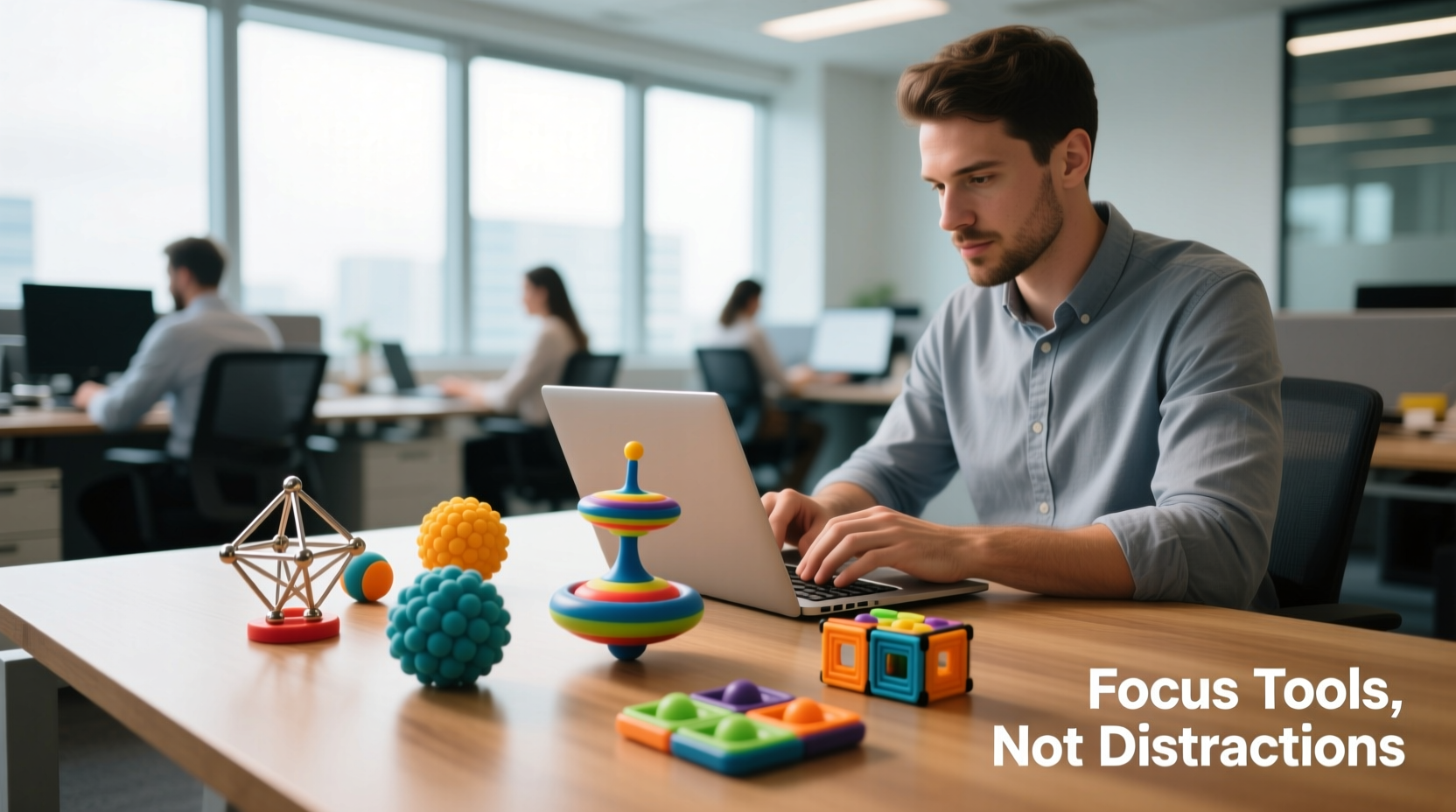
Contrary to the traditional classroom rule of “sit still and pay attention,” research suggests that movement and tactile stimulation can actually enhance cognitive engagement. A 2015 study published in Child Neuropsychology found that children with ADHD who were allowed to fidget performed better on cognitive tasks than those who were restricted. The act of fidgeting appears to stimulate the brain’s executive functions—particularly working memory and attention regulation—by increasing arousal levels without triggering distraction.
Dr. Julie Schweitzer, professor of psychiatry and behavioral sciences at UC Davis, explains:
“For individuals with attention regulation challenges, small motor movements can serve as a regulatory mechanism. It’s not that they’re distracted by fidgeting—it’s that fidgeting helps them stay on task.”
This principle extends beyond clinical populations. Many neurotypical adults report improved focus during long meetings or deep work sessions when using simple tactile tools. The key lies in what researchers call “active distraction”—a low-level sensory input that occupies just enough of the subconscious mind to prevent it from wandering aimlessly.
Tip: Choose silent, non-reflective fidget tools (e.g., putty, fabric cubes) to minimize auditory and visual disturbance to coworkers.When Fidget Toys Help: Use Cases and Benefits
Fidget toys are most effective when aligned with specific work contexts and individual needs. They are not universal productivity enhancers, but rather targeted tools for particular mental states. Here are several scenarios where fidget toys demonstrate measurable benefits:
- During high-focus tasks: Repetitive writing, coding, or data analysis often require sustained attention. A quiet fidget toy can reduce restlessness and improve endurance.
- In virtual meetings: With cameras off, hands may seek stimulation. A small object keeps hands busy without multitasking on unrelated devices.
- Managing anxiety under pressure: Before presentations or performance reviews, tactile stimulation can lower cortisol levels and stabilize breathing.
- Supporting neurodivergent employees: Workers with ADHD, autism, or anxiety disorders often use fidget tools as part of reasonable accommodations.
A 2021 workplace survey by the NeuroLeadership Institute found that 68% of employees who used fidget tools reported increased concentration, while 52% said they helped manage stress during high-pressure periods. Importantly, these benefits were most pronounced when the tools were used discreetly and intentionally—not out of habit or boredom.
When Fidget Toys Hurt: The Distraction Dilemma
Despite their potential advantages, fidget toys can easily cross the line into coworker disruption. The same behaviors that aid one person can become irritants to another, especially in shared or quiet spaces. Common complaints include:
- Repetitive clicking or snapping sounds
- Excessive hand movements visible in peripheral vision
- Overuse during conversations, signaling disengagement
- Bright colors or flashing lights on certain models
In a case study conducted at a mid-sized marketing firm in Portland, an employee introduced a light-up fidget spinner to help manage post-lunch fatigue. While it improved his alertness, two nearby colleagues reported difficulty concentrating due to the intermittent glow reflecting off their monitors. After a week of growing tension, HR mediated a conversation that led to a compromise: the spinner was replaced with a matte-black version operated only beneath the desk.
This example illustrates a broader truth: the acceptability of fidget toys depends less on the object itself and more on its visibility, sound profile, and social context. As workplace psychologist Dr. Lena Torres notes:
“Tools meant to support focus shouldn’t create new sources of cognitive load for others. Mindfulness is the missing ingredient in the fidget toy debate.”
Best Practices for Using Fidget Toys at Work
To balance personal benefit with professional courtesy, employees and managers alike should adopt clear guidelines. These aren’t about policing behavior but fostering mutual respect in shared environments. Below is a practical checklist for responsible fidget toy use:
✅ Fidget Toy Etiquette Checklist
- Use only silent, non-reflective tools (avoid spinners with bearings or LED lights)
- Keep movements below desk level when possible
- Avoid rapid, jerky motions that draw visual attention
- Pause usage during one-on-one conversations or collaborative discussions
- Ask nearby coworkers if the tool is noticeable or bothersome
- Limit use to times of high cognitive demand, not idle browsing
- Store toys out of sight when not actively needed
Choosing the Right Tool: A Comparison Table
| Toy Type | Best For | Potential Distractions | Recommended Workplace Use |
|---|---|---|---|
| Fidget Putty | Quiet tactile stimulation, stress relief | Sticky residue, visible hand movement | High – if kept contained in a tray |
| Metal Spinner (bearing-based) | Motor skill engagement, rhythm | Loud spinning noise, reflective surface | Low – avoid in shared spaces |
| Fabric Cube (textured sides) | Discreet finger engagement | Minimal | Very High – ideal for open offices |
| Pop-It (silicone bubble) | Anxiety reduction, repetitive motion | Clicking sounds, addictive use | Moderate – use sparingly, mute bubbles |
| Tangle Jr. (flexible chain) | Dual-hand coordination, focus anchoring | Visible movement, occasional snap-back noise | High – if used gently |
Creating a Fidget-Friendly Workplace Culture
Rather than enforcing blanket rules, forward-thinking companies are adopting nuanced policies that support neurodiversity while maintaining productivity. Google, for instance, includes fidget tools in its list of approved ergonomic aids, alongside standing desks and footrests. Atlassian provides employees with “focus kits” that include noise-canceling headphones, textured rings, and silicone stress pads—all framed as part of a broader wellness strategy.
Managers play a crucial role in shaping this culture. Instead of reacting to complaints after tensions arise, leaders can proactively normalize the conversation around sensory needs. Simple steps include:
- Discussing fidget tools during team norm-setting sessions
- Encouraging employees to share their focus strategies without judgment
- Providing quiet zones or focus rooms where sensory tools are fully permitted
- Training HR and supervisors on neurodiversity-inclusive practices
One tech startup in Austin implemented a “Fidget Friday” trial, inviting employees to test different tools for a week and submit anonymous feedback. The result? 74% of participants reported improved focus, and the company adopted a policy allowing silent fidget aids with a brief team notification. No formal approvals were required—just mutual awareness.
FAQ: Common Questions About Fidget Toys at Work
Can my employer ban fidget toys?
Yes, employers can set reasonable workplace standards, including restrictions on noisy or visually disruptive items. However, if a fidget toy is used as part of a medical accommodation (e.g., for ADHD or anxiety), banning it could violate disability protections under laws like the Americans with Disabilities Act (ADA). In such cases, employers must engage in an interactive process to find suitable alternatives.
How do I ask my coworker to stop using a noisy fidget toy?
Approach the conversation with empathy. Instead of accusing, use “I” statements: *“I’ve been having trouble focusing lately, and I wonder if we could talk about desk noises?”* This opens dialogue without blame. Most people are unaware of their impact and will adjust once informed.
Are there fidget toys designed specifically for offices?
Yes. Several brands now specialize in professional-grade fidget tools. Examples include the MOXIE Ring (a smooth titanium band for subtle finger rolling), Trilobal Tactile Disc (a silent, palm-sized device with varied textures), and Modarri Desk Slider (a miniature car for quiet hand manipulation). These are designed to be inconspicuous and socially acceptable in corporate settings.
Conclusion: Finding Balance Through Awareness
Fidget toys at work sit at the intersection of personal well-being and collective harmony. When used thoughtfully, they are not crutches or childish novelties—they are cognitive aids that help individuals regulate attention, manage stress, and perform at their best. But like any tool, their value depends on context, intent, and consideration for others.
The goal isn’t to eliminate fidget toys from the office, nor to encourage unchecked use. It’s to cultivate a culture where employees feel empowered to support their focus in ways that don’t undermine the focus of others. That means choosing quieter tools, being mindful of surroundings, and communicating openly when issues arise.
💬 Have you used fidget toys at work? Did they help—or cause tension? Share your experience in the comments and help build a more inclusive, focused workplace for everyone.








