Plush dog toys are beloved by pets and owners alike—soft, cuddly, and perfect for playtime. But frequent chewing, drooling, and outdoor adventures mean these toys quickly accumulate dirt, bacteria, and odors. While tossing them in the washing machine seems like the easiest solution, doing so incorrectly can lead to torn seams, matted fabric, or even damage to your appliance. Knowing how to properly wash plush dog toys ensures they stay hygienic, durable, and safe for your furry friend.
Understand Your Toy’s Construction Before Washing
Not all plush toys are created equal. Some are built to withstand regular cleaning; others are more delicate. Before considering a machine wash, inspect the toy closely. Look for labels indicating care instructions—many manufacturers include washing guidelines. If there's no label, examine the seams, stitching, and materials.
Toys with glued-on eyes, squeakers, or loose stuffing are especially vulnerable. High agitation or heat can cause squeakers to break, glue to weaken, or stuffing to clump. A poorly constructed toy may fall apart after one cycle, creating a choking hazard if ingested by your dog.
Tip: Always remove batteries or electronic components before washing—even if the toy seems sealed.Check for These Features Before Machine Washing
- Durable stitching: Double-stitched seams hold up better under agitation.
- Machine-washable fabric: Polyester and nylon blends typically survive washing well.
- Secure attachments: Eyes, noses, and ribbons should be firmly sewn or molded.
- No water-sensitive components: Avoid machines if the toy contains foam inserts or paper-based sounders.
“Many plush toys marketed for dogs aren’t actually designed for repeated laundering. Always assess material integrity first.” — Dr. Laura Bennett, Veterinary Behaviorist and Pet Product Safety Consultant
Step-by-Step Guide to Safely Washing Plush Dog Toys
Cleaning plush dog toys in a washing machine can be safe and effective when done correctly. Follow this step-by-step process to protect both the toys and your machine.
- Sort and inspect: Separate plush toys from rubber or rope toys. Check each for rips, loose parts, or excessive wear.
- Pre-treat stains: Use a pet-safe stain remover or a paste of baking soda and water to gently scrub dirty areas.
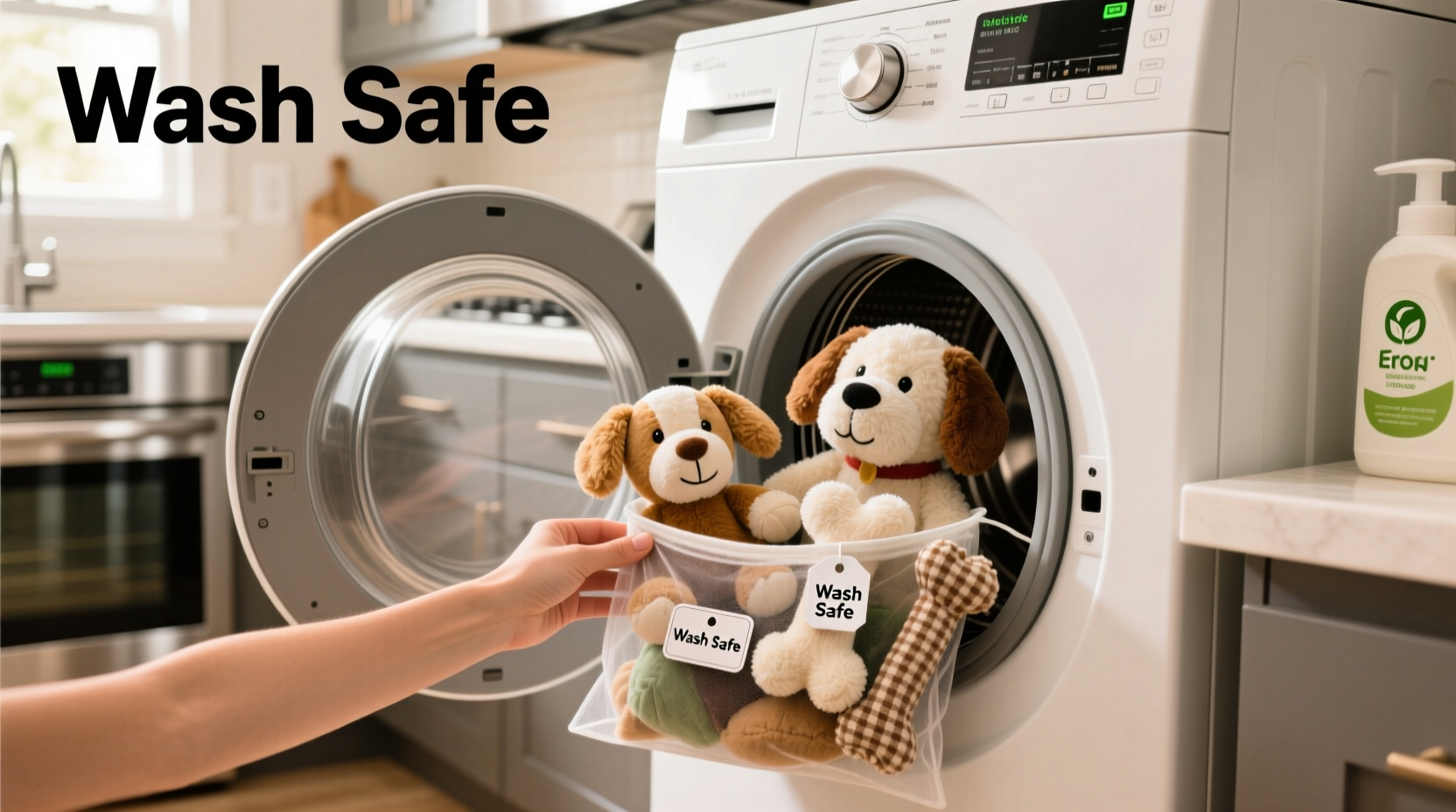
- Place in a mesh laundry bag: This reduces friction and prevents small toys from getting lost or tangled.
- Select a gentle cycle: Use cold or warm water on the “delicate” or “hand wash” setting to minimize stress on seams.
- Use mild detergent: Choose fragrance-free, hypoallergenic detergent without bleach or fabric softeners.
- Add a towel (optional): Toss in a clean bath towel to balance the load and reduce tumbling intensity.
- Air dry completely: Never use a dryer unless the label explicitly allows it. Lay flat in a well-ventilated area away from direct sunlight.
Do’s and Don’ts of Washing Plush Dog Toys
| Do’s | Don’ts |
|---|---|
| Use a mesh laundry bag for protection | Wash toys with sharp edges that could damage the drum |
| Wash similar-sized toys together | Use hot water—it can melt glue or shrink fabrics |
| Air dry thoroughly before returning to your dog | Tumble dry unless the manufacturer approves it |
| Inspect toys post-wash for damage | Ignore broken squeakers or stuffing leaks |
| Wash every 2–4 weeks depending on use | Overload the machine—balance matters |
Real Example: How One Owner Saved Her Dog’s Favorite Toy
Sarah from Portland had a problem: her Labrador, Max, refused to play with any toy except his tattered blue elephant—complete with one dangling ear and a faint squeak. The toy was visibly dirty, smelled musty, and worried Sarah about germs. She considered throwing it out but knew Max would be heartbroken.
Instead, she followed a careful washing protocol. She placed the elephant in a zippered mesh bag, used a cold delicate cycle with a small amount of dye-free detergent, and added an old washcloth to cushion the load. After the cycle, she inspected the toy: the seams held, the squeaker still worked, and the fabric looked refreshed. She air-dried it overnight on a drying rack near an open window.
Max didn’t notice the clean smell—he just recognized his companion. Sarah now washes the toy every three weeks using the same method, extending its life far beyond what she thought possible.
When to Skip the Machine: Alternative Cleaning Methods
Some plush toys simply aren’t machine-safe. For older, fragile, or heavily decorated toys, consider hand-washing as a gentler alternative.
Fill a basin with lukewarm water and a capful of pet-safe detergent. Submerge the toy and gently squeeze the soapy water through the fabric. Avoid twisting or wringing, which can distort shape and damage fibers. Rinse thoroughly with clean water until no suds remain. Press out excess moisture with a clean towel, then air dry completely.
For light maintenance between deep cleans, spot-clean with a cloth dampened with vinegar-water (1:1 ratio) or a pet-safe disinfectant wipe. This helps control odor and bacteria without full immersion.
Quick Cleaning Checklist
- ✅ Inspect toy for damage before washing
- ✅ Remove batteries or electronics
- ✅ Place in a mesh laundry bag
- ✅ Use cold water and gentle cycle
- ✅ Choose mild, pet-safe detergent
- ✅ Air dry completely—no heat
- ✅ Re-inspect for wear after drying
Frequently Asked Questions
Can I wash plush dog toys with my regular laundry?
It’s not recommended. Dog toys carry saliva, dirt, and bacteria that could transfer to clothing. Additionally, mixing loads may expose delicate toys to harsh detergents or high heat settings meant for towels or bedding.
How often should I wash plush dog toys?
Every 2 to 4 weeks is ideal for frequently used toys. If your dog spends hours daily chewing or carrying a plush toy, consider weekly cleaning. Outdoor use or visible soiling warrants immediate washing.
Why does my plush toy smell after washing?
Residual moisture trapped inside the stuffing can cause mildew. Ensure complete drying—fluff the toy occasionally while drying to promote airflow. Adding a cup of white vinegar to the rinse cycle can also help eliminate lingering odors naturally.
Keep Playtime Safe and Clean
Regularly cleaning plush dog toys isn’t just about freshness—it’s a crucial part of pet hygiene. Bacteria from saliva, outdoor debris, and food particles can accumulate quickly, potentially leading to digestive issues or skin irritations. By using the right techniques, you preserve both the toy’s lifespan and your dog’s health.
The key is balance: thorough enough to sanitize, gentle enough to protect. With proper sorting, cycle selection, and drying habits, your washing machine can be a powerful ally in maintaining your dog’s toy collection.
💬 Have a favorite method for cleaning dog toys? Share your experience in the comments and help other pet owners keep their pups’ playthings safe and snuggly!








