Matted fur is a common issue for dogs with long, thick, or curly coats, especially when grooming is inconsistent. While mats may look like simple tangles, they can tighten against the skin, restrict movement, trap moisture, and lead to skin infections. More importantly, removing them incorrectly can cause significant discomfort or even injury to your pet. The key lies not in speed, but in patience, proper tools, and technique. When approached correctly, detangling matted hair can be a safe, low-stress experience for both dog and owner.
Understanding Dog Hair Mats: Causes and Risks
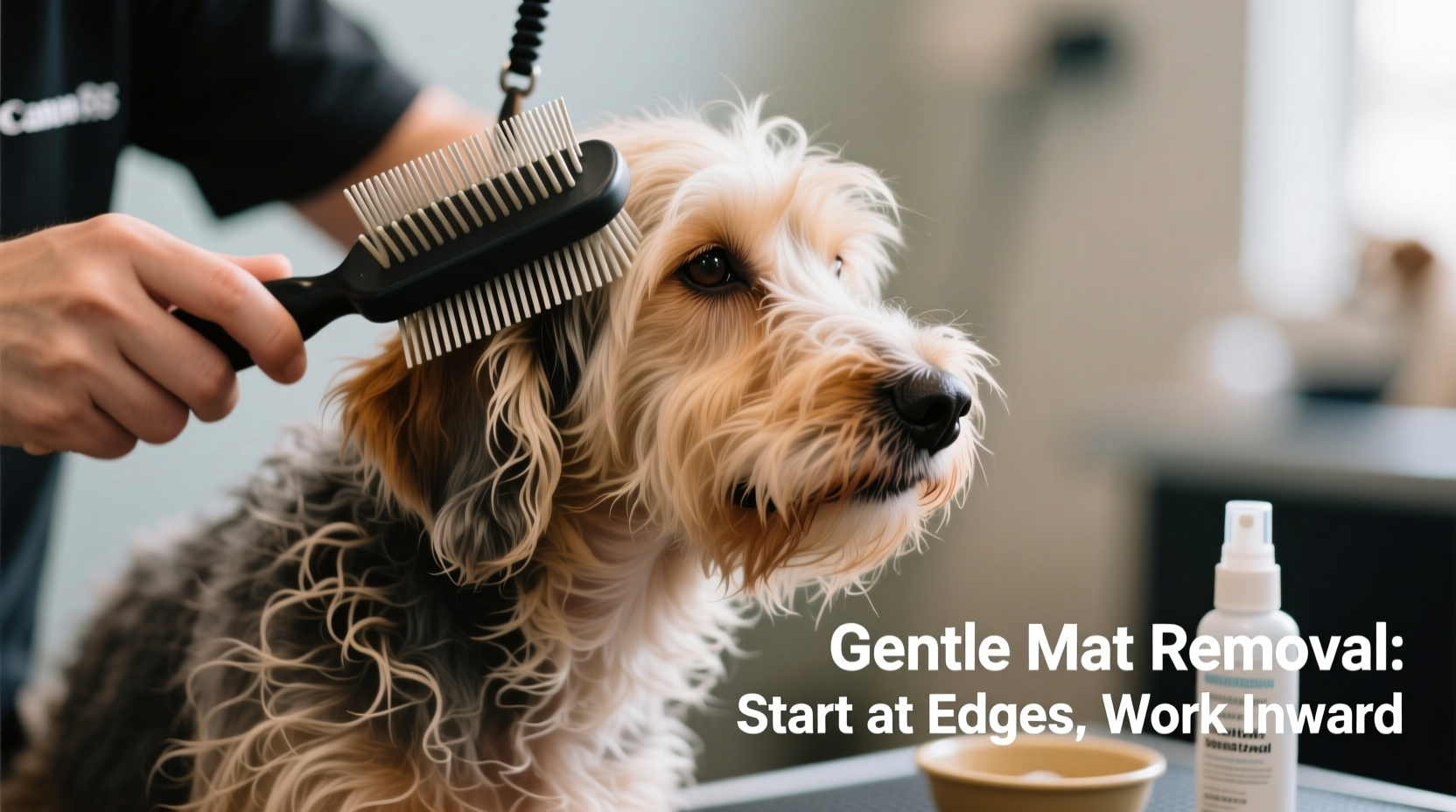
Mats form when loose undercoat, dirt, moisture, and friction combine, causing hair strands to twist into dense clumps. They commonly appear behind the ears, under the legs, around the collar, and along the belly—areas where skin folds or movement creates rubbing. Long-haired breeds like Shih Tzus, Pomeranians, and Old English Sheepdogs are particularly prone, but even short-coated dogs can develop localized mats if neglected.
Left untreated, mats pull on the skin, leading to irritation, sores, and restricted blood flow. In severe cases, they can harbor parasites or promote bacterial growth. Attempting to cut or aggressively pull out large mats without care risks cutting the skin or traumatizing the dog, making future grooming sessions more difficult due to fear or anxiety.
“Mats aren’t just cosmetic—they’re a welfare issue. A dog in pain from tight mats may become withdrawn or aggressive during handling.” — Dr. Lena Torres, DVM, Canine Dermatology Specialist
Essential Tools for Safe Mat Removal
Using the right equipment minimizes discomfort and maximizes effectiveness. Avoid standard brushes or combs on severe tangles; they’ll only tug and worsen the situation. Instead, assemble a grooming kit designed for de-matting:
- De-matting comb (rake-style): Features widely spaced, blunt teeth that slide under mats without pulling.
- Slicker brush: Best used after initial mat breakdown to smooth the coat.
- Mat splitter or dematting blade: A specialized tool with a safety guard that slices through thick mats without touching the skin.
- Detangling spray: A leave-in conditioner that lubricates hair strands, reducing friction during brushing.
- Blunt-tipped scissors: For carefully trimming edge mats when brushing isn’t enough—never use sharp-pointed scissors near the skin.
Step-by-Step Guide to Safely Remove Matted Hair
Removing mats requires a methodical approach. Rushing increases the risk of injury and distress. Follow this sequence for the safest results:
- Assess the severity. Light surface tangles can often be brushed out gently. Dense, skin-tight mats may require professional help or clipping.
- Calm your dog. Choose a quiet time when your dog is relaxed. Offer treats and praise throughout to build positive associations.
- Apply detangling spray. Generously mist the area around and under the mat. Let it sit for 2–3 minutes to penetrate the hair shafts.
- Loosen from the bottom up. Insert the dematting comb beneath the mat, close to the skin, and gently lift upward. Work small sections at a time.
- Use the mat splitter if needed. For thick mats, slide the blade along the underside to slice the mat into manageable pieces. Never force it.
- Brush outward from the skin. Once the bulk is reduced, switch to a slicker brush, starting at the roots and moving toward the tips.
- Trim stubborn remnants. With blunt-tipped scissors, carefully snip remaining clumps, holding the hair taut away from the skin at a 45-degree angle.
- Finish with a full coat check. Run your hands over the entire body to detect hidden mats.
“Always stop if your dog shows signs of pain—whining, flinching, or trying to move away. It’s better to pause and reassess than to cause lasting fear.” — Sarah Kim, Certified Master Groomer
Do’s and Don’ts of De-Matting: A Quick Reference Table
| Do’s | Don’ts |
|---|---|
| Use a detangling spray to reduce friction | Pull or yank on tight mats |
| Work in small sections, starting near the skin | Use regular scissors close to the skin |
| Reward calm behavior with treats and praise | Attempt to remove large, skin-bound mats without proper tools |
| Check for underlying skin irritation after removal | Groom an anxious dog without breaks |
| Seek professional help for extensive matting | Shave severely matted areas with untrained hands |
Real-Life Scenario: Helping a Rescued Shih Tzu
A six-year-old Shih Tzu named Milo was surrendered to a rescue group with severe matting covering his hindquarters and underbelly. The mats were thick, odoriferous, and pulling on his skin. Attempts to brush him caused visible distress. The groomer assessed the situation and decided against full shaving under anesthesia. Instead, she used a combination of detangling spray, a guarded mat splitter, and careful scissor work over three sessions spaced a week apart.
Each session lasted no more than 15 minutes, focused on one section, and included frequent treat breaks. By the third visit, Milo began to relax during grooming. The result? A clean, comfortable coat and a dog who now approaches the grooming table willingly. This case highlights that even severe matting can be managed humanely with patience and the right approach.
Prevention Checklist: Keeping Mats at Bay
Regular maintenance is far easier than dealing with entrenched mats. Use this checklist to keep your dog’s coat healthy between professional groomings:
- Brush your dog at least 2–3 times per week (daily for long-haired breeds)
- Focus on high-friction zones: armpits, behind ears, groin, and tail base
- Use a detangling spray before brushing during shedding seasons
- Bathe and fully dry your dog after swimming or heavy outdoor activity
- Schedule professional grooming every 4–8 weeks, depending on coat type
- Trim excess hair between paw pads and around the rear regularly
- Inspect your dog’s coat weekly for early signs of tangles
Frequently Asked Questions
Can I cut out mats with regular scissors?
No. Regular scissors are too sharp and lack guards, increasing the risk of cutting the skin. Only use blunt-tipped, grooming-specific scissors, and always hold the mat away from the skin while cutting.
How do I know if a mat is too severe to handle at home?
If the mat is larger than a golf ball, pressed tightly against the skin, or causes your dog to flinch when touched, it’s best handled by a professional groomer or veterinarian. Severe cases may require sedation and medical clipping.
Is it okay to shave a heavily matted dog?
Yes, in many cases, shaving is the most humane option. It removes the source of discomfort quickly and allows the skin to breathe. However, this should be done by a trained groomer using proper clippers and technique to avoid nicks or thermal burns.
Final Thoughts: Compassion Over Convenience
Removing matted dog hair isn’t just about appearance—it’s about comfort, hygiene, and respect for your pet’s well-being. Every tug, snip, and stroke sends a message about trust. By choosing gentle, informed methods, you protect not only your dog’s coat but also your bond with them. Invest in the right tools, commit to consistent care, and don’t hesitate to call in professionals when needed. Your dog relies on you to make grooming a safe and soothing experience.
💬 Have a grooming tip that helped your dog stay mat-free? Share your experience in the comments and help fellow pet owners provide safer, kinder care.








