
Walking your dog should be a relaxing ritual—a chance to bond, exercise, and enjoy the outdoors. Yet for many pet owners, it quickly turns into a battle of strength as their dog pulls relentlessly ahead, straining the leash and making every step exhausting. The good news: leash pulling is not an inevitable behavior. With consistent training, the right tools, and a clear understanding of canine psychology, you can transform chaotic walks into peaceful, cooperative experiences.
Dogs pull because they’re excited, curious, or have learned that pulling gets them where they want to go faster. Addressing this habit requires patience, timing, and positive reinforcement—not punishment. This guide breaks down proven techniques used by professional trainers and veterinarians to help dogs walk politely on a leash.
Understanding Why Dogs Pull on the Leash
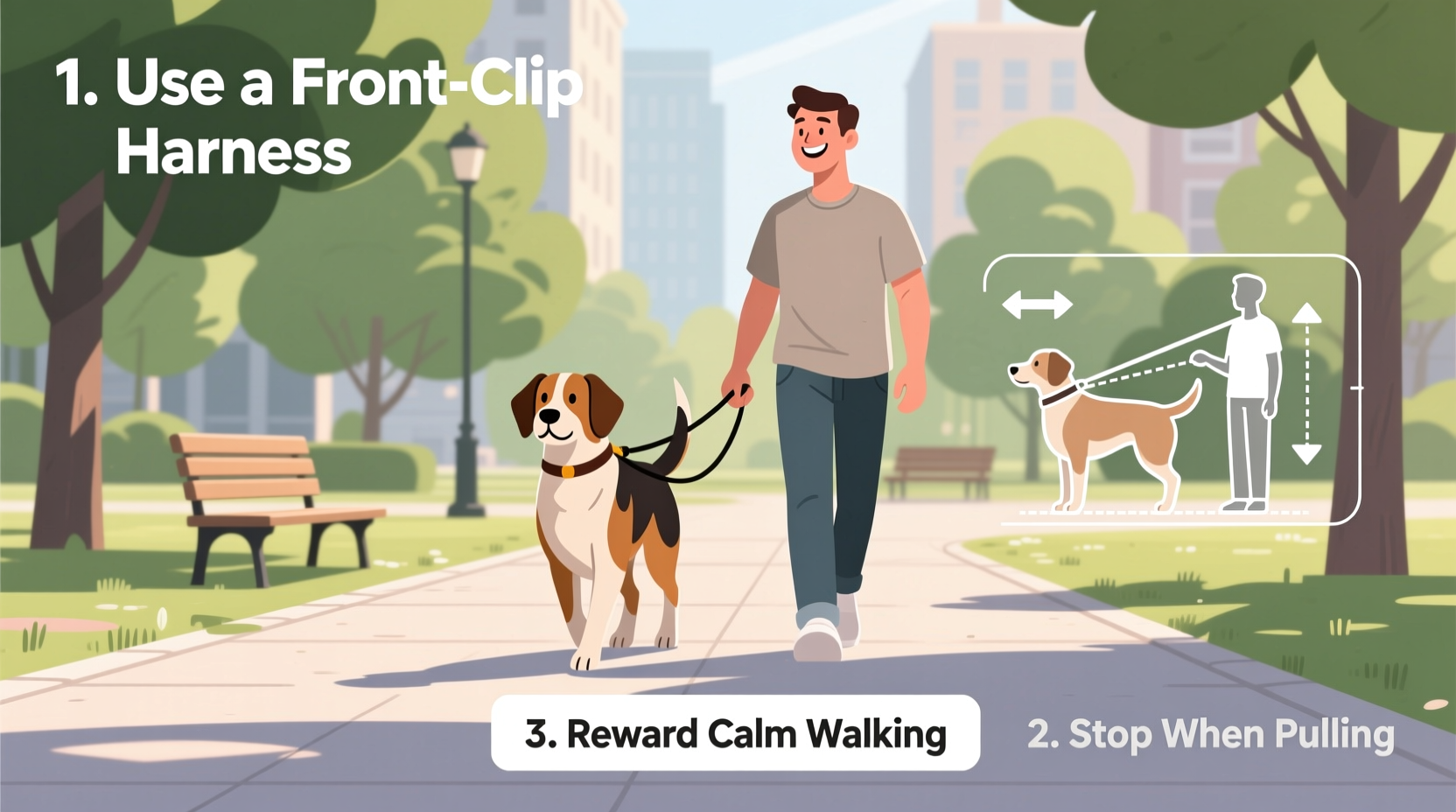
Dogs are naturally driven by scent, movement, and exploration. When walking, they’re drawn toward interesting smells, other animals, or people. Their instinct is to move forward, and if they’ve learned that pulling makes the human follow (or at least doesn’t stop them), the behavior becomes self-reinforcing.
Additionally, many owners unknowingly reinforce pulling by continuing to move forward when the dog is taut on the leash. Even a single step taken while tension exists teaches the dog that pulling works. Over time, this builds a strong association: pull = progress.
“Leash pulling isn’t defiance—it’s communication. The dog is saying, ‘I want to go there!’ Our job is to teach them a better way to ask.” — Dr. Sophia Yin, Veterinary Behaviorist
Essential Tools for Success
The right equipment plays a critical role in managing and retraining leash behavior. Not all gear is created equal, and some collars may even worsen pulling or cause injury.
| Tool | Best For | Why It Works | Avoid If… |
|---|---|---|---|
| Front-clip harness | Dogs who pull strongly | Redirects dog’s momentum sideways when they pull, discouraging forward motion | Dog has neck/spine issues (consult vet) |
| No-pull harness (rear-clip with chest strap) | Moderate pullers | Applies gentle pressure across chest to discourage pulling | Dog slips out easily—ensure proper fit |
| Head halter (e.g., Gentle Leader) | Strong or reactive dogs | Controls direction via head guidance, like a horse halter | Dog is fearful or aggressive—introduce slowly |
| Standard collar + flat leash | Well-trained dogs with mild pulling | Suitable for dogs already responsive to cues | Dog pulls hard—risk of trachea damage |
Step-by-Step Guide to Teaching Loose-Leash Walking
Loose-leash walking means your dog stays within a defined zone beside you, with slack in the leash. The goal isn’t perfect heel position but relaxed companionship. Follow this timeline over 2–6 weeks, depending on your dog’s temperament and consistency.
- Start Indoors or in a Quiet Area: Begin in a distraction-free environment. Use high-value treats (small pieces of chicken or cheese) to keep attention.
- Teach “Let’s Go” Cue: Stand still. When your dog looks at you or moves toward your side, say “Let’s go” and take one step. Reward immediately. Repeat until your dog anticipates moving with you.
- Add Movement in Short Bursts: Take three steps forward with your dog beside you. Stop as soon as the leash tightens. Stand still until slack returns—even if it takes 10 seconds. Then say “Yes!” and treat. Resume walking.
- Turns and Changes of Direction: Randomly change direction. If your dog follows correctly, reward. If they continue forward and pull, stop and wait. This teaches them to pay attention to your movements.
- Incorporate Distractions Gradually: Move to a quiet sidewalk, then busier areas. Reduce treat frequency as reliability increases, replacing food rewards with praise or play.
- Practice Daily: Aim for two 10-minute sessions per day rather than one long walk. Short, focused training builds better habits.
Common Mistakes That Reinforce Pulling
Even well-meaning owners accidentally undermine their training efforts. Avoid these pitfalls:
- Moving forward when the leash is tight: This rewards pulling. Instead, freeze until slack returns.
- Punishing or yanking the leash: This damages trust and can increase anxiety or reactivity.
- Expecting perfection too soon: Learning takes time. Celebrate small improvements.
- Using retractable leashes during training: They encourage pulling by allowing dogs to surge ahead.
- Overlooking attention skills: A dog that checks in with you is less likely to pull. Practice “watch me” commands regularly.
Real-Life Example: Transforming Max, the Energetic Terrier
Max, a 2-year-old Jack Russell Terrier, would lunge at squirrels, bark at bikes, and drag his owner Sarah halfway down the block before she could react. Frustrated, she consulted a certified trainer who recommended a front-clip harness and structured training.
For two weeks, Sarah practiced “let’s go” and stopping at tension in her backyard. She used chicken bits to mark attention and short bursts of walking. By week three, Max began checking in before charging ahead. On walks, Sarah turned the moment he surged forward. Within a month, Max walked calmly past previously triggering stimuli. The key? Consistency and never rewarding forward motion under tension.
Today, their walks are peaceful. Max still sniffs and explores—but now he does so with slack in the leash and frequent check-ins.
Checklist: Building a Pull-Free Walk Routine
- ✅ Choose a no-pull harness or head halter suited to your dog
- ✅ Use high-value treats during training phases
- ✅ Start training in low-distraction environments
- ✅ Freeze and wait when the leash tightens—do not move forward
- ✅ Reward your dog for walking beside you or looking up at you
- ✅ Practice short, frequent sessions instead of long, infrequent ones
- ✅ Gradually increase distractions as skills improve
- ✅ End each walk on a positive note, even if progress was slow
Frequently Asked Questions
How long does it take to stop a dog from pulling?
Most dogs show improvement within 2–4 weeks of consistent daily practice. However, full reliability in high-distraction environments may take several months. Older dogs or those with ingrained habits may require more time, but progress is always possible with patience.
Can I use treats forever?
No—once your dog reliably walks without pulling, begin fading treats by using them intermittently. Replace them with verbal praise, petting, or access to sniffing as rewards. This creates a more natural, sustainable behavior pattern.
Is it okay to let my dog sniff during walks?
Absolutely. Sniffing is mentally enriching and calming for dogs. Allow sniffing as a reward after periods of good walking. Say “go sniff” to give permission—this reinforces control while meeting your dog’s needs.
Final Thoughts: Patience Leads to Progress
Walking your dog without pulling isn’t about dominance or control—it’s about communication and cooperation. Every time you stop when the leash tightens, you’re teaching your dog that calm behavior leads to forward motion. Every reward for attention strengthens the bond between you.
Progress may feel slow at times, especially in the early stages. But with consistent application of these strategies, most dogs learn to walk politely. The result? Walks that are no longer a tug-of-war but a shared experience of trust and enjoyment.
💬 Have a pulling dog? Start today with a five-minute session in your yard. Small steps lead to big changes. Share your journey or tips in the comments below—we’d love to hear your story!








