Water chemistry is one of the most critical factors influencing the health of both fish and aquatic plants. Among the many parameters, carbonate hardness (KH) plays a vital role in stabilizing pH and buffering against sudden shifts. While adequate KH prevents dangerous pH crashes, excessively high levels can hinder the growth of soft-water species and acid-loving plants. For aquarists aiming to cultivate species like tetras, discus, or certain carpeting plants, lowering KH safely becomes essential. This guide explores proven, responsible methods to reduce KH without compromising the stability and safety of your aquatic ecosystem.
Understanding KH: Why It Matters
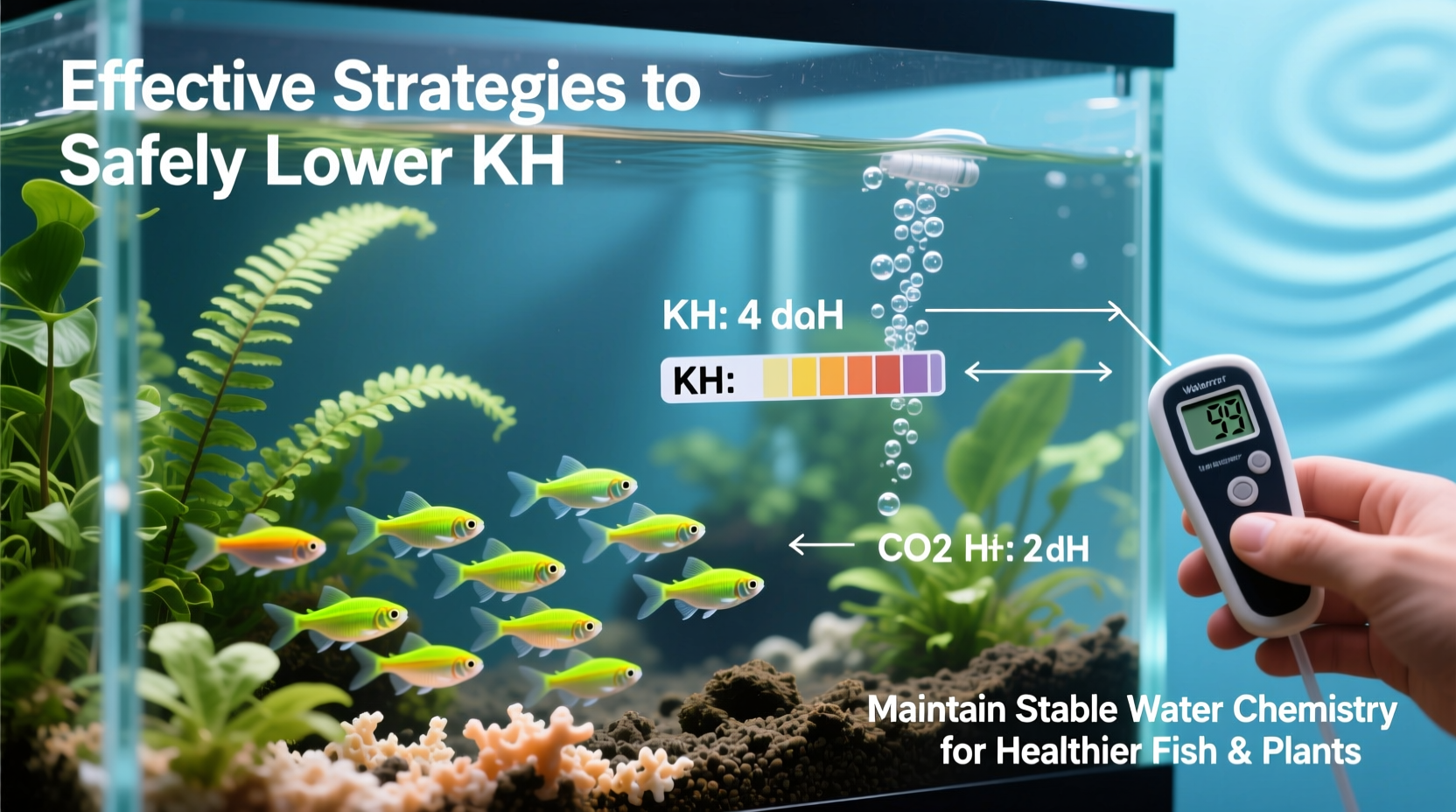
Carbonate hardness (KH), measured in degrees (dKH) or parts per million (ppm), reflects the concentration of bicarbonate and carbonate ions in water. These compounds act as a buffer, resisting changes in pH when acids are introduced—such as from fish waste or CO₂ injection. While this buffering capacity is generally beneficial, overly high KH (above 8–10 dKH) can lock pH into an alkaline range, making it difficult to maintain conditions suitable for soft-water species.
Fish native to blackwater environments—like neon tetras, rams, or wild angelfish—thrive in low-KH, slightly acidic water (pH 5.5–6.8). Similarly, many stem plants and carpeting species grow more vigorously under softer water conditions. However, reducing KH must be approached with caution. Rapid drops can destabilize pH, stress fish, and disrupt biological filtration.
Tip: Always test KH, GH, and pH simultaneously. A sudden drop in KH without monitoring pH can lead to a dangerous pH crash.Safe Methods to Lower KH
Lowering KH isn't about brute force—it's about precision and patience. The goal is gradual change that allows aquatic life to adapt. Below are the most effective and reliable techniques used by experienced aquarists.
1. Use Reverse Osmosis (RO) Water
RO water is nearly free of all dissolved minerals, including carbonates. By replacing tap water with RO water during water changes, you dilute existing KH levels. This method offers maximum control and is especially useful for breeding tanks or planted aquariums with sensitive species.
To use RO water effectively:
- Mix RO water with tap water to achieve desired KH levels gradually.
- Replenish essential minerals using remineralization salts (e.g., Seachem Equilibrium) to support plant and fish health.
- Test KH weekly to monitor changes and adjust mixing ratios as needed.
2. Add Peat Moss
Peat moss naturally releases organic acids (humic and fulvic acids) that bind with carbonate ions, effectively reducing KH over time. It also imparts a tea-colored tint, mimicking natural blackwater environments.
How to use peat moss:
- Rinse thoroughly to remove dust and debris.
- Place in a mesh bag inside the filter or sump.
- Start with a small amount (e.g., 1 cup per 20 gallons) and monitor KH weekly.
- Replace every 2–3 months as its effectiveness diminishes.
3. Driftwood and Indian Almond Leaves
Natural decor items like driftwood and catappa leaves slowly release tannins, which mildly lower KH and pH. While their impact is gentler than peat or RO water, they contribute to long-term stability and offer antimicrobial benefits.
Use these materials as part of a holistic approach rather than a primary KH-lowering tool. Their effects build slowly, making them ideal for maintaining low KH after initial reduction.
4. Controlled CO₂ Injection
In planted aquariums, injecting CO₂ forms carbonic acid, which temporarily reduces pH and consumes some buffering capacity. While CO₂ doesn’t permanently lower KH, consistent use helps maintain lower pH in moderately buffered water.
This method works best in conjunction with reduced KH via RO water or peat. Never rely on CO₂ alone to compensate for high KH, as turning off the system at night can cause wide pH swings.
Step-by-Step Guide to Safely Reduce KH
Follow this timeline to lower KH without endangering your aquarium inhabitants:
- Test Current Levels: Measure KH, GH, and pH. Record baseline values.
- Set a Target: Aim for a KH between 3–5 dKH for soft-water species. Avoid dropping below 3 dKH unless experienced, as too little buffering risks pH instability.
- Begin Dilution: Replace 25% of tank water with a mix of RO and tap water (e.g., 50/50) to reduce KH by 1–2 dKH per week.
- Add Peat or Tannin Sources: Introduce peat moss or catappa leaves to enhance the effect and stabilize conditions.
- Monitor Daily: Check pH and KH every 2–3 days. If pH drops more than 0.2 units in 24 hours, pause reductions.
- Stabilize: Once target KH is reached, perform regular water changes using pre-mixed RO/tap water to maintain consistency.
Common Mistakes to Avoid
| Mistake | Why It’s Harmful | Better Alternative |
|---|---|---|
| Using vinegar or lemon juice | Causes rapid pH drops; toxic to fish | Use RO water or peat for gradual change |
| Changing 100% of water at once | Shocks fish and crashes pH | Limited to 30–50% changes weekly |
| Ignoring GH after lowering KH | Low mineral content harms osmoregulation | Remineralize with magnesium/calcium salts |
| Removing all buffering overnight | Leaves tank vulnerable to pH swings | Maintain minimum 3 dKH for stability |
Expert Insight
“Many beginners focus only on pH, but KH is the real driver of stability. You can’t manage pH sustainably without understanding KH. Gradual, monitored reduction using RO water and natural tannins is far safer than chemical shortcuts.” — Dr. Lena Torres, Aquatic Biologist & Aquarium Consultant
Mini Case Study: Creating a Discus-Friendly Environment
A hobbyist in Florida maintained a 75-gallon planted tank with persistent KH of 10 dKH due to hard tap water. His discus showed signs of stress—clamped fins and poor coloration—despite stable temperature and ammonia levels. After testing, he identified high KH (and consequently high pH of 7.8) as the likely culprit.
He began a 4-week plan: mixing 70% RO water with 30% tap for biweekly 30% water changes, adding a mesh bag of peat moss to his canister filter, and introducing two pieces of Malaysian driftwood. He also started using Seachem Equilibrium to restore GH to 4 dGH while keeping KH at 4 dKH.
Within five weeks, KH stabilized at 4 dKH, pH settled at 6.6, and the discus began displaying vibrant colors and increased activity. Plant growth, particularly of Hemianthus callitrichoides, also improved significantly.
Checklist: Lowering KH Safely
- ✅ Test KH, GH, and pH before starting
- ✅ Determine target KH based on livestock needs
- ✅ Acquire RO water or install an RO unit
- ✅ Prepare remineralization additives for RO water
- ✅ Introduce peat moss or tannin sources gradually
- ✅ Limit water changes to 30% weekly during transition
- ✅ Monitor parameters every 2–3 days
- ✅ Stabilize before adding sensitive new fish
FAQ
Can I use distilled water instead of RO water?
Distilled water lacks minerals just like RO water, so yes—it can be used. However, RO is more cost-effective for larger tanks and removes more contaminants. Both require remineralization before use.
Will lowering KH harm my beneficial bacteria?
Beneficial bacteria colonies are more sensitive to sudden pH changes than KH itself. As long as pH remains stable during the KH reduction process, your biofilter should remain intact. Avoid drastic changes.
How low can KH go before it’s dangerous?
KH below 3 dKH offers minimal buffering and increases the risk of pH crashes, especially in heavily stocked tanks. Maintain at least 3 dKH unless you have advanced monitoring and CO₂ control systems in place.
Conclusion
Successfully lowering KH is not about speed—it’s about stewardship. By using reverse osmosis water, natural buffers like peat moss, and careful monitoring, you can create a thriving environment tailored to soft-water fish and lush aquatic plants. Stability, not perfection, is the ultimate goal. Every adjustment should prioritize the well-being of your aquatic community over cosmetic results.
💬 Have experience lowering KH in your aquarium? Share your story or tips in the comments to help fellow aquarists achieve balanced, healthy tanks!








