Leather dog collars and leashes are prized for their strength, elegance, and longevity. Unlike synthetic materials, high-quality leather ages beautifully when properly cared for, developing a rich patina over time. However, neglect can lead to cracking, stiffness, mold, or unpleasant odors—especially given the exposure to dirt, moisture, and daily wear. Maintaining your leather pet gear isn’t just about appearance; it’s about safety, comfort, and extending its usable life. With consistent care, a well-made leather collar and leash set can last for years, even through active outdoor use.
Understanding Leather Types in Pet Accessories
Not all leather is created equal. The type of leather used significantly influences how you should clean and maintain it. Most premium dog collars and leashes are made from one of three common types:
- Full-grain leather: The highest quality, durable, and naturally resistant to wear. It develops a deep patina but requires regular conditioning.
- Top-grain leather: Sanded and refinished for a smoother look. More affordable than full-grain but less breathable and slightly less durable.
- Corrected-grain or bonded leather: Lower-tier options often coated with pigments. These require gentler cleaning and are more prone to peeling if over-conditioned.
Always check manufacturer labels before applying any product. Using a heavy conditioner on bonded leather, for example, may cause the surface layer to separate.
Tip: If unsure about the leather type, test any cleaner or conditioner on a small, hidden area first.Step-by-Step Guide: Cleaning Your Leather Collar and Leash
Regular cleaning removes dirt, oils, and bacteria that accumulate from your dog’s fur, sweat, and outdoor environments. Follow this method every 4–6 weeks, or more often if used frequently in wet or muddy conditions.
- Remove hardware (if possible): Detach buckles or D-rings if they’re designed to be taken off. This allows thorough cleaning without damaging metal components.
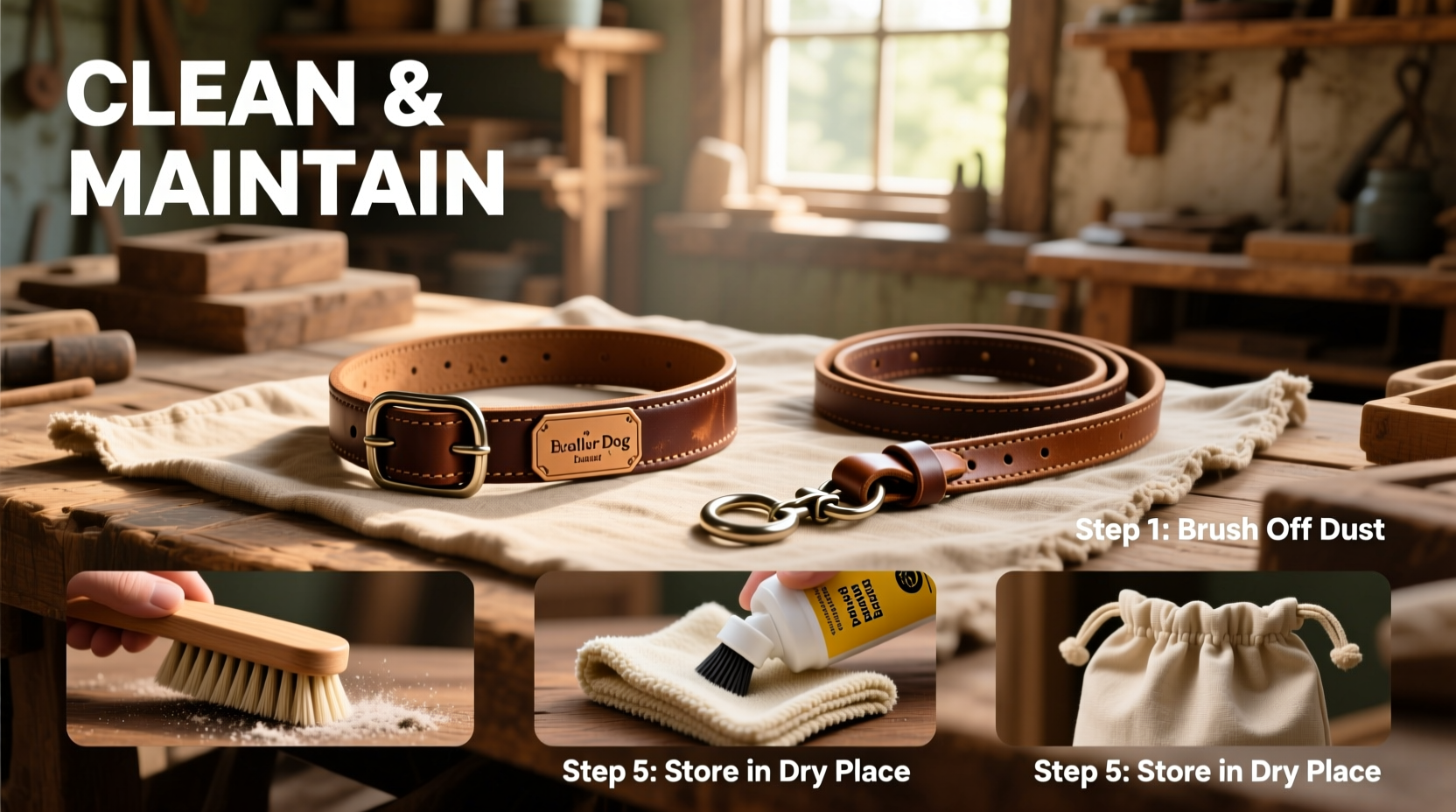
- Dust and dry brush: Use a soft-bristled brush or dry microfiber cloth to remove surface dust, hair, and debris. Pay attention to crevices around stitching.
- Prepare a mild cleaning solution: Mix a few drops of pH-neutral soap (like saddle soap or castile soap) with lukewarm water. Avoid dish detergents—they strip natural oils.
- Clean gently with a damp cloth: Dip a clean cloth into the solution, wring it until nearly dry, and wipe down the entire surface. Never soak leather.
- Tackle stubborn stains: For mud or grass stains, lightly scrub with a soft toothbrush. For odor, sprinkle baking soda, let sit for 15 minutes, then brush off.
- Air dry thoroughly: Lay flat in a well-ventilated area away from direct sunlight or heat sources. Do not use a hairdryer or radiator.
Once completely dry (usually 12–24 hours), proceed to conditioning.
The Importance of Conditioning: Restoring Natural Oils
Leather is a natural material derived from animal hides, which contain oils that keep them supple. Over time, exposure to air, UV light, and friction causes these oils to evaporate, leading to dryness and cracking. Conditioning replenishes moisture and forms a protective barrier.
Use a leather conditioner specifically formulated for pet or equestrian gear—these are typically non-toxic and safe if licked. Apply every 2–3 months, or monthly in dry climates.
“Leather that isn’t conditioned regularly loses flexibility and becomes brittle—just like human skin in winter.” — Dr. Rebecca Lang, Animal Product Materials Specialist
To apply:
- Use a lint-free cloth to rub a small amount of conditioner in circular motions.
- Cover the entire surface, including edges and backside.
- Let it absorb for 1–2 hours, then buff with a dry cloth to remove residue.
Do’s and Don’ts of Leather Care: A Quick Reference Table
| Do’s | Don’ts |
|---|---|
| Wipe down after exposure to rain or mud | Soak leather in water or submerge |
| Store in a cool, dry place with good airflow | Leave in a hot car or near heaters |
| Use pH-balanced, non-toxic cleaners | Use alcohol-based wipes or household cleaners |
| Condition 2–4 times per year | Apply silicone sprays or petroleum jelly |
| Rotate multiple collars to reduce wear | Machine wash or tumble dry |
Real Example: How Proper Care Saved a Working Dog’s Gear
Sam, a search-and-rescue handler in Colorado, uses full-grain leather collars and leashes for his German Shepherd, Kai. Due to frequent hikes in snow, mud, and forest terrain, the gear faces extreme conditions. Initially, Sam cleaned only when visibly dirty—about once every few months. After six months, the collar began stiffening and developed fine cracks near the buckle.
He consulted a field equipment specialist who recommended immediate cleaning, conditioning, and a maintenance schedule. Sam started wiping the gear after each mission, deep-cleaning monthly, and conditioning every eight weeks. Within three months, the leather regained flexibility, and two years later, the same set remains in excellent condition—saving him replacement costs and ensuring reliability during critical operations.
Storage and Long-Term Maintenance Tips
How you store your leather collar and leash between uses plays a crucial role in preserving integrity.
- Hanging vs. laying flat: Hang the leash to prevent creasing; lay the collar flat or loosely roll it to avoid permanent folds.
- Avoid plastic bags: Trapped moisture encourages mold. Use a breathable cotton bag or open shelf instead.
- Keep away from pets and children: Even non-toxic conditioners shouldn’t be ingested. Store out of reach.
- Seasonal rotation: If you own multiple sets, rotate usage to distribute wear evenly.
Frequently Asked Questions
Can I use coconut oil to condition my dog’s leather collar?
While coconut oil is natural and moisturizing, it can go rancid over time and attract dust. It’s also not pH-balanced for leather. Stick to commercial leather conditioners designed for pet or equestrian use for best results.
What if my leather smells musty?
A musty odor usually indicates trapped moisture or early mold. Wipe with a 50/50 mix of water and white vinegar on a cloth, then dry thoroughly in fresh air. Once dry, condition lightly. If the smell persists, consider professional cleaning or replacement.
How do I know when it’s time to replace the set?
Inspect for deep cracks, frayed stitching, warped hardware, or areas where the leather layers have separated. If the collar no longer lies flat or shows signs of structural weakness, retire it—even if it looks vintage-cool. Safety comes first.
Final Thoughts: Small Efforts, Lasting Results
Maintaining a leather dog collar and leash set doesn’t require hours of work—just consistency and attention to detail. A few minutes every few weeks can preserve both function and beauty for years. Think of it as an investment in your dog’s comfort and your peace of mind. Well-maintained leather reflects care, just like the bond you share with your pet.
💬 Have a favorite leather care product or routine? Share your experience in the comments and help fellow pet owners keep their gear in top shape!








