
In an era where tablets are handed to toddlers and coding kits are marketed as essential for preschoolers, a quiet transformation is reshaping childhood. The rise of so-called “educational toys” — often digital, screen-based, or app-connected — has sparked a critical conversation: Are we trading the timeless value of traditional toys like building blocks, dolls, and puzzles for flashy gadgets promising cognitive gains? While technology offers undeniable tools for learning, its rapid integration into early play raises questions about what children might be losing in exchange.
The core of this debate isn’t simply about plastic versus pixels. It’s about how children learn, grow, and develop foundational skills through play. Traditional toys have long served as silent teachers, fostering creativity, motor coordination, social interaction, and problem-solving without a single battery. Educational toys, particularly those with screens, promise targeted skill development—alphabet recognition, math drills, language acquisition—but often at the cost of open-ended exploration. As parents and educators navigate this shift, understanding the strengths and limitations of both worlds becomes essential.
The Rise of Educational Toys: Promise and Pitfalls
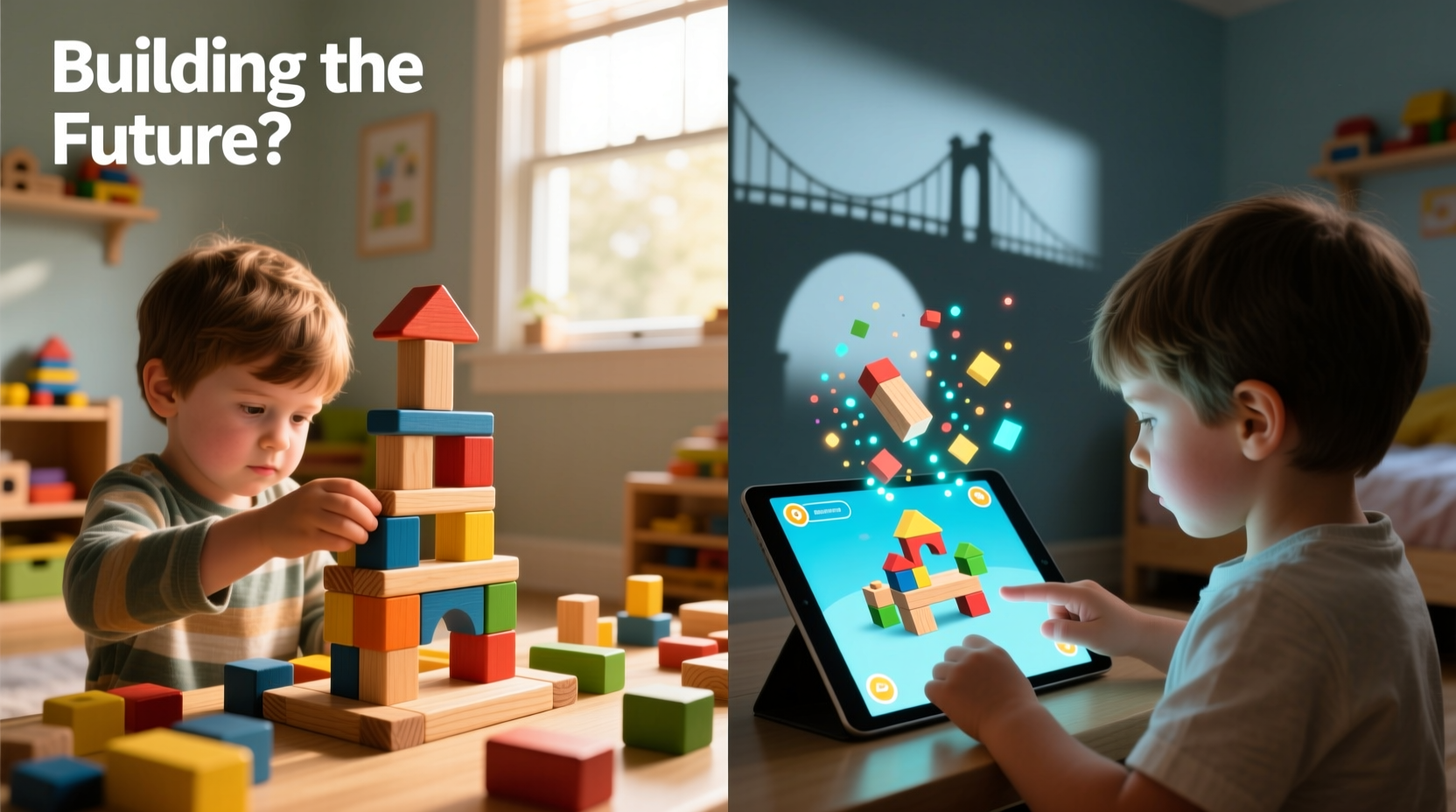
Educational toys have evolved from simple flashcards and alphabet blocks into interactive devices embedded with artificial intelligence, voice response, and adaptive learning algorithms. Brands now offer robotic companions that teach coding, touchscreen tablets preloaded with phonics games, and augmented reality puzzles that blend physical pieces with digital overlays. These products are often backed by research claims and marketed with phrases like “STEM-ready” or “brain-boosting,” appealing to parents eager to give their children a developmental edge.
There’s no denying that some tech-based toys can support specific learning goals. For example, a tablet app designed to teach letter formation through guided tracing can help children practice fine motor control in a structured way. Similarly, programmable robots introduce logic and sequencing in an engaging format. However, the concern lies not in their existence but in their dominance. When screen-based play replaces hands-on, imaginative activities, children may miss out on deeper forms of cognitive and emotional growth.
Tip: Limit screen-based toy use to 20–30 minutes per session for children under 6, and always co-play to reinforce learning.What Traditional Toys Teach That Screens Can’t
Traditional toys—building blocks, wooden trains, art supplies, dress-up clothes—are deceptively simple. They lack lights, sounds, and progress tracking, yet they offer something more valuable: open-ended play. A set of blocks doesn’t dictate outcomes; it invites experimentation. Children learn physics by discovering how towers fall, negotiation by sharing pieces, and storytelling by creating imaginary cities. This kind of self-directed play is where executive function, resilience, and creativity take root.
Research consistently shows that unstructured play with low-tech toys enhances language development, emotional regulation, and spatial reasoning. According to Dr. Kathy Hirsh-Pasek, professor of psychology at Temple University and author of Einstein Never Used Flashcards:
“Children learn best through active, engaged, meaningful, and socially interactive experiences. A screen may deliver information, but it rarely provides the depth of interaction that real-world play does.” — Dr. Kathy Hirsh-Pasek, Child Development Expert
Building blocks, in particular, serve as a cornerstone of developmental play. They encourage symmetry, balance, planning, and persistence. Unlike a digital game that resets after failure, a collapsed block tower teaches cause-and-effect in a tangible, memorable way.
Comparing Learning Outcomes: A Side-by-Side Analysis
| Skill Area | Traditional Toys (e.g., Blocks, Puzzles) | Educational Screen Toys (e.g., Tablets, Smart Robots) |
|---|---|---|
| Creativity & Imagination | High – Encourages open-ended storytelling and invention | Low to Moderate – Often follows predefined paths or narratives |
| Fine Motor Skills | High – Requires grasping, stacking, manipulating physical objects | Moderate – Limited to swiping or tapping |
| Social Interaction | High – Naturally promotes sharing, collaboration, role-play | Low – Typically solitary; even multiplayer apps lack face-to-face dynamics |
| Problem-Solving | High – Trial-and-error with real-world consequences | Moderate – Solutions often guided or revealed by the system |
| Attention Span | Develops sustained focus over time | Risk of fragmented attention due to rapid stimuli |
A Real-Life Scenario: Two Siblings, Two Playstyles
Consider the household of the Martinez family. Six-year-old Leo spends his afternoons building elaborate marble runs with wooden tracks and connectors. He adjusts angles, tests speed, and explains gravity to his younger sister. Meanwhile, four-year-old Mia uses a branded learning tablet with animated quizzes. She enjoys the instant rewards and cheerful voices, but often loses interest after 15 minutes.
During a parent-teacher conference, Leo’s kindergarten teacher notes his strong spatial awareness, patience, and ability to explain his ideas clearly. Mia’s preschool instructor observes she recognizes letters and numbers early but struggles with turn-taking and independent play. The difference isn’t about intelligence—it’s about the type of engagement each toy fosters. Leo’s hands-on construction nurtures persistence and communication; Mia’s tablet delivers knowledge but limits opportunities for deep cognitive processing.
Striking the Right Balance: A Practical Checklist
Parents don’t need to choose between technology and tradition. The goal is thoughtful integration. Use this checklist to ensure a healthy play environment:
- ✅ Prioritize physical toys as the foundation of daily play
- ✅ Limit screen-based toy usage to short, supervised sessions
- ✅ Choose tech toys that require interaction, not passive watching
- ✅ Co-play with digital toys to discuss concepts and extend learning
- ✅ Rotate toys regularly to maintain novelty and curiosity
- ✅ Create tech-free zones (e.g., bedrooms, dining areas)
- ✅ Encourage outdoor and sensory play (sand, water, nature)
When Technology Adds Value: Guidelines for Smart Use
Not all screen-based toys are equal. Some genuinely enhance learning when used intentionally. Follow this step-by-step approach to evaluate and integrate educational tech:
- Assess the toy’s interactivity: Does it respond to the child’s input meaningfully, or just play videos?
- Check for open-ended features: Can the child create, design, or explore freely, or is it linear?
- Determine adult involvement needed: Will a caregiver need to guide or discuss the experience?
- Observe engagement quality: Is the child thinking, laughing, explaining—or just staring?
- Measure replacement risk: Is this toy displacing hands-on play, or complementing it?
For example, a programmable robot like LEGO Education SPIKE Essential introduces engineering concepts while still involving physical building. In contrast, a cartoon-heavy alphabet app may entertain more than educate.
Frequently Asked Questions
Are all screen-based toys bad for young children?
No—not inherently. High-quality, interactive educational apps and toys can support learning when used in moderation and with adult guidance. The issue arises when screens dominate playtime or replace tactile, social experiences.
At what age are educational tech toys appropriate?
The American Academy of Pediatrics recommends avoiding screens for children under 18 months, except video chatting. For ages 2–5, limit screen time to one hour per day of high-quality programming or interactive play—with co-viewing. Even then, traditional toys should remain the primary tools for learning.
Can traditional toys teach STEM skills?
Absolutely. Building blocks teach engineering and physics. Sorting beads develop pattern recognition. Water play introduces volume and flow. Open-ended materials often provide richer STEM learning than digital alternatives because they allow for experimentation and discovery.
Conclusion: Reclaiming the Essence of Play
The question isn’t whether educational toys have a place in modern childhood—it’s whether we’re letting them overshadow the irreplaceable benefits of traditional play. Screens can inform, but blocks build minds. Apps can quiz, but puzzles cultivate patience. Technology evolves rapidly, but the fundamentals of child development do not.
The most powerful learning happens when children are active creators, not passive consumers. By preserving space for unstructured, imaginative, hands-on play, we nurture not just smarter kids, but more resilient, creative, and empathetic human beings. Let screens be tools, not replacements. Let building blocks remain exactly where they belong—at the heart of childhood.
🚀 Ready to rebalance your child’s playtime? Start today by swapping one screen session for a building challenge, art project, or outdoor exploration. Share your favorite non-digital toy in the comments and inspire others to play beyond the screen.








