
Seeing your dog throw up repeatedly is distressing. While an occasional bout of vomiting may be harmless—perhaps due to eating too fast or ingesting grass—constant vomiting is a red flag. It can signal anything from mild gastrointestinal upset to life-threatening conditions like pancreatitis, poisoning, or intestinal blockages. Understanding the underlying causes, recognizing warning signs, and knowing when to seek veterinary help are crucial for your dog’s health and recovery.
Common Causes of Constant Vomiting in Dogs
Dogs vomit for many reasons, some benign and others serious. Frequent or persistent vomiting typically points to an issue that requires attention. The most frequent causes include:
- Dietary indiscretion: Eating spoiled food, garbage, or non-food items (like toys or socks).
- Sudden diet changes: Abruptly switching foods can disrupt digestion.
- Food intolerance or allergies: Reactions to certain proteins or ingredients.
- Infections: Viral (e.g., parvovirus) or bacterial infections affecting the digestive tract.
- Pancreatitis: Inflammation of the pancreas, often linked to high-fat meals.
- Toxin ingestion: Consuming household chemicals, medications, or toxic plants.
- Intestinal obstruction: A physical blockage from foreign objects or tumors.
- Kidney or liver disease: Chronic organ dysfunction can lead to nausea and vomiting.
- Motion sickness: Especially common in puppies or infrequent travelers.
- Medication side effects: Some drugs irritate the stomach lining.
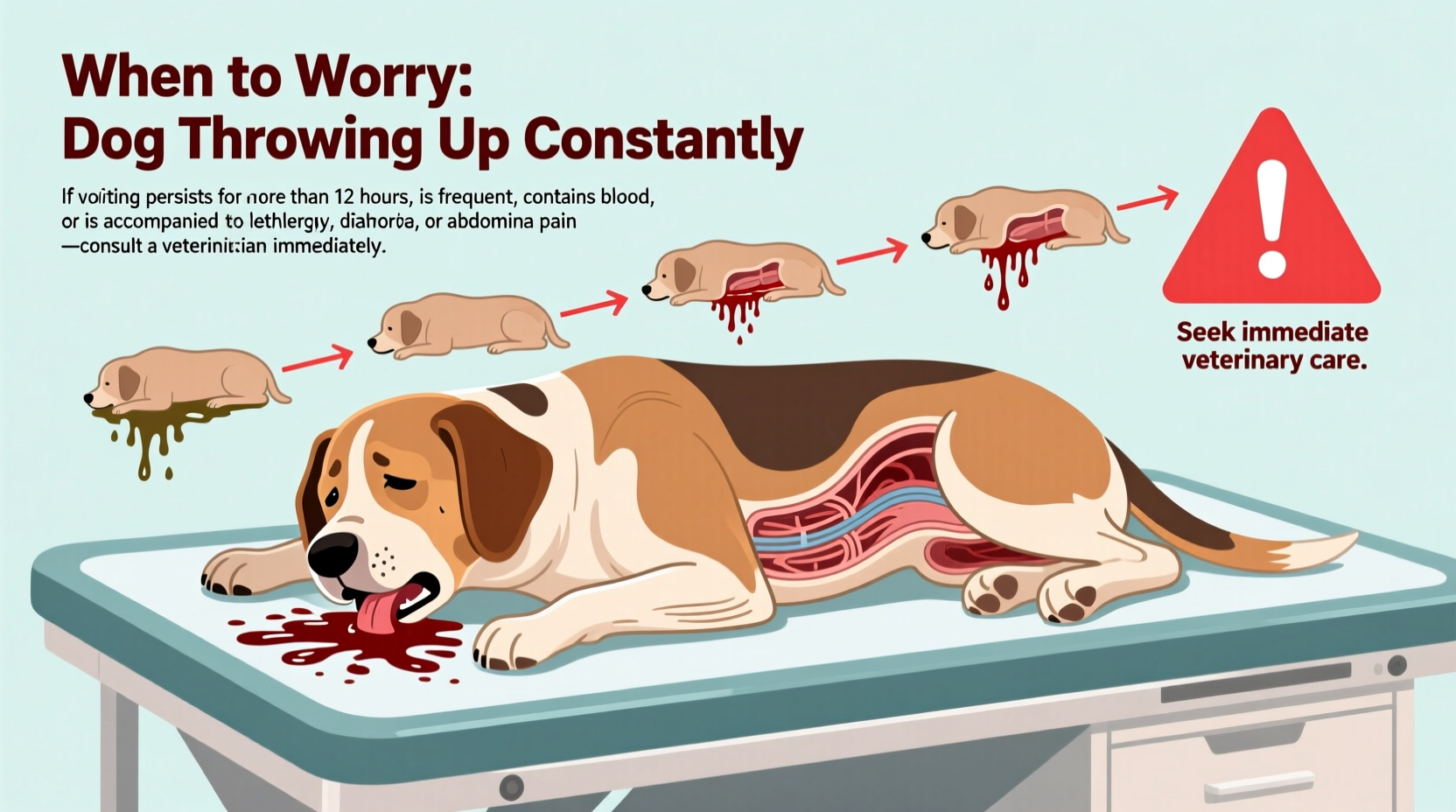
When to Worry: Red Flags That Demand Immediate Attention
Not all vomiting episodes require an emergency visit, but certain symptoms indicate a serious problem. Seek urgent veterinary care if your dog shows any of the following:
- Vomiting more than 3 times in 24 hours
- Unable to keep water down
- Lethargy, weakness, or collapse
- Blood in vomit (bright red or coffee-ground appearance)
- Swollen or painful abdomen
- Diarrhea accompanying vomiting
- Signs of dehydration (dry gums, sunken eyes, skin tenting)
- Known ingestion of toxins or foreign objects
- Persistent retching without producing vomit (possible bloat)
“Repeated vomiting without a break can quickly lead to dehydration and electrolyte imbalances. If your dog can’t hold water down for more than 12 hours, it’s time to see a vet.” — Dr. Laura Simmons, DVM, Small Animal Internal Medicine Specialist
Treatment Options Based on Underlying Cause
Treatment depends entirely on the diagnosis. Your veterinarian will likely start with a physical exam and may recommend diagnostics such as blood work, X-rays, or ultrasound. Once the cause is identified, treatment may include:
| Condition | Treatment Approach | Typical Recovery Time |
|---|---|---|
| Dietary indiscretion | Fasting for 12–24 hours, then bland diet (boiled chicken and rice) | 1–2 days |
| Pancreatitis | IV fluids, anti-nausea meds, low-fat diet, hospitalization | 3–7 days (severe cases longer) |
| Intestinal blockage | Surgery or endoscopic removal of object | 1–2 weeks post-op |
| Kidney disease | Fluid therapy, prescription diet, medication | Chronic management needed |
| Parvovirus | Aggressive IV support, antibiotics, isolation | 5–10 days with intensive care |
In mild cases, your vet might prescribe anti-emetic drugs like maropitant (Cerenia) to stop vomiting and allow the gut to rest. Never administer human medications like Pepto-Bismol or ibuprofen—many are toxic to dogs.
Step-by-Step Guide: What to Do When Your Dog Won’t Stop Vomiting
If your dog begins vomiting repeatedly, follow these steps to protect their health and gather useful information for your vet:
- Withhold food for 12–24 hours: This gives the digestive system a chance to rest. Offer small sips of water every few hours.
- Monitor closely: Note frequency, color, and content of vomit (e.g., yellow bile, undigested food, blood).
- Check for other symptoms: Diarrhea, fever, pain, or behavioral changes can help pinpoint the cause.
- Contact your vet: Describe symptoms, timing, and any possible exposure to toxins or foreign objects.
- Follow veterinary instructions: They may advise bringing your dog in or trying home care first.
- Reintroduce food slowly: After fasting, offer small portions of a bland diet every few hours.
- Gradually return to regular food: Over 2–3 days, mix increasing amounts of regular food with the bland diet.
Mini Case Study: Max the Labrador and the Sock Incident
Max, a 3-year-old Labrador, started vomiting every few hours after a day at the park. His owner noticed he was unusually quiet and refused food. By evening, Max had vomited five times and couldn’t keep water down. A trip to the emergency clinic revealed a sock lodged in his stomach via X-ray. After surgical removal, Max recovered fully within ten days. His case highlights how seemingly playful behavior (chewing random objects) can lead to life-threatening obstructions—and why persistent vomiting should never be ignored.
Prevention Checklist: Reduce the Risk of Recurrent Vomiting
While not all causes are preventable, many are. Use this checklist to minimize risks:
- ✅ Supervise your dog outdoors and during playtime to prevent ingestion of foreign objects.
- ✅ Introduce new foods gradually over 7–10 days.
- ✅ Store trash, cleaning supplies, and medications out of reach.
- ✅ Avoid giving bones, especially cooked ones, which can splinter.
- ✅ Feed a consistent, high-quality diet suited to your dog’s age and health needs.
- ✅ Schedule annual vet checkups to catch early signs of chronic illness.
- ✅ Use puzzle feeders or slow-feed bowls to prevent gulping food.
Frequently Asked Questions
Is it normal for dogs to vomit in the morning?
Occasional morning vomiting, especially with yellow bile, may indicate an empty stomach causing acid buildup. This is common in dogs fed once daily. Try splitting meals into two or adding a small snack before bed. If it persists, consult your vet to rule out gastrointestinal disorders.
Can stress cause my dog to throw up?
Yes. Anxiety from travel, loud noises, or changes in routine can trigger vomiting. Identify and reduce stressors where possible. In severe cases, your vet may recommend behavioral training or anti-anxiety supplements.
What does it mean if my dog is dry heaving?
Dry heaving—retching without producing vomit—can be a sign of bloat (gastric dilatation-volvulus), especially in large breeds. This is a life-threatening emergency requiring immediate surgery. Other signs include a distended abdomen, restlessness, and drooling.
Conclusion: Act Early, Protect Your Dog’s Health
Constant vomiting in dogs is never something to wait out. While some causes resolve quickly with simple interventions, others demand urgent medical care. Recognizing the difference between a minor stomach upset and a serious condition can save your dog’s life. Keep a close eye on symptoms, act swiftly when red flags appear, and maintain open communication with your veterinarian. Your dog relies on you to make smart, timely decisions—don’t hesitate to seek help when something feels off.
💬 Has your dog experienced persistent vomiting? Share your experience or questions below to help other pet owners recognize warning signs and find solutions.








