Walking your dog should be a peaceful experience, not a battle of strength down the sidewalk. Yet for many owners, every outing turns into a tug-of-war. Traditional collars often fail to manage strong pullers, leading pet parents to consider alternatives like head halters. But are these devices effective—or do they cross the line into cruelty? The debate around head halters versus standard collars isn't just about control; it's about comfort, communication, and canine well-being.
Understanding how each tool works—and how dogs respond to them—is essential for making an informed, compassionate choice. This article breaks down the mechanics, benefits, and potential drawbacks of both options, backed by veterinary insight and behavioral science.
How Head Halters Work: Mechanics and Misconceptions
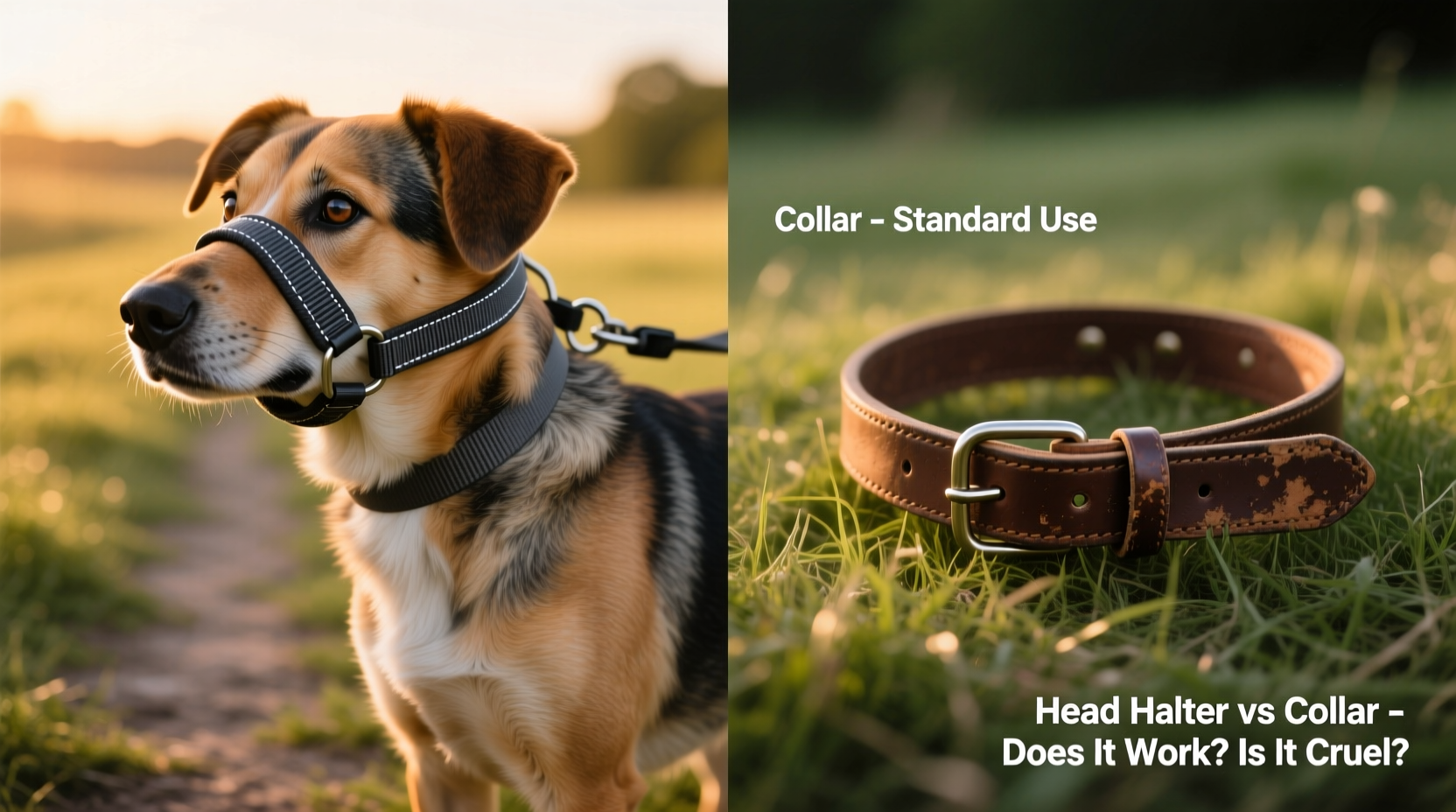
A dog head halter wraps around the muzzle and behind the neck, similar in concept to a horse halter. When the dog pulls forward, gentle pressure is applied to the side of the face and neck, redirecting the head toward the handler. This design leverages natural biomechanics: when a dog turns its head, its body follows. Unlike choke or prong collars that punish pulling through pain, head halters aim to prevent it through redirection.
Despite their growing popularity, head halters are often misunderstood. Critics claim they \"dominate\" or \"muzzle\" the dog, but this misrepresents their function. A properly fitted head halter doesn’t restrict breathing, eating, or barking. It simply gives the handler more influence over the dog’s direction before momentum builds.
“Head halters are among the most humane tools for managing leash reactivity and pulling when introduced correctly.” — Dr. Sophia Yin, DVM, Applied Animal Behaviorist
Collars: Simplicity with Limitations
Flat collars are the default for identification tags and everyday use. They sit high on the neck and connect directly to the leash. For calm, well-trained dogs, they’re perfectly adequate. However, for dogs that pull, lunge, or react to stimuli, traditional collars pose significant risks:
- Pressure concentrates on the trachea, increasing risk of injury.
- Pulling triggers a self-rewarding cycle—more tension leads to more forward motion.
- Little control during reactive episodes (e.g., barking at other dogs).
Even martingale collars, designed to tighten gently under load, don’t solve the core issue: they still apply force to the neck. Over time, chronic strain can lead to thyroid issues, ocular damage, or cervical spine stress—especially in small breeds or dogs with pre-existing conditions.
Head Halter vs Collar: A Practical Comparison
| Feature | Head Halter | Traditional Collar |
|---|---|---|
| Control Level | High – redirects head and body | Low to moderate – limited directional influence |
| Safety (Trachea) | Reduced strain – force distributed | High risk under tension |
| Learning Curve | Moderate – requires gradual introduction | Minimal |
| Dog Comfort (Proper Fit) | Generally good after acclimation | Comfortable unless pulling occurs |
| Use with Reactive Dogs | Highly effective | Limited effectiveness |
| Risk of Injury | Low if used correctly | Moderate to high with frequent pulling |
Are Head Halters Cruel? Addressing the Ethics
The accusation of cruelty often stems from misuse or misunderstanding. A head halter is not a muzzle, nor is it meant to suppress behavior through discomfort. When improperly sized or abruptly introduced, dogs may paw at it, resist wearing it, or appear distressed. These reactions are typically due to fear or poor training—not inherent harm.
Cruelty arises not from the tool itself, but from how it’s used. Jerking the leash, forcing prolonged wear, or using a head halter as punishment transforms a helpful device into a source of stress. In contrast, positive reinforcement during introduction—pairing the halter with treats, play, and short walks—builds trust and acceptance.
Veterinary behaviorists emphasize that humane training prioritizes low-stress methods. Head halters, when combined with reward-based techniques, reduce anxiety during walks by giving dogs clearer guidance and preventing chaotic pulling episodes that overwhelm both parties.
Mini Case Study: Transforming a Puller with a Head Halter
Max, a two-year-old Labrador mix, would lunge at squirrels and drag his owner past neighbors mid-conversation. Walks were exhausting and embarrassing. His owner tried harnesses and retractable leashes with no success. After consulting a certified trainer, she introduced a Gentle Leader head halter using a seven-day acclimation plan:
- Let Max sniff and investigate the halter; rewarded with treats.
- Fitted loosely for 5 minutes indoors with playtime.
- Short backyard walks with praise.
- Gradual transition to sidewalk walks.
Within two weeks, Max walked calmly beside her. He didn’t hate the halter—he associated it with freedom to explore without chaos. The key wasn’t the device alone, but the patient process behind it.
Step-by-Step Guide to Introducing a Head Halter
Success depends on patience and positivity. Follow this timeline to ensure your dog accepts the halter without fear:
- Day 1–2: Familiarization
Place the halter near meals or toys. Let your dog sniff and nudge it. Reward any interaction. - Day 3: Touch & Treat
Touch the halter to your dog’s muzzle briefly. Immediately give a treat. Repeat 5–10 times per session. - Day 4: Brief Fitting
Put the halter on for 30 seconds. Remove and reward. Extend duration daily. - Day 5–6: Leash Introduction
Attach a lightweight leash indoors. Guide your dog through simple tasks (sit, turn) with treats. - Day 7+: Outdoor Trials
Begin short walks in low-distraction areas. Praise calm behavior. End on a positive note.
Checklist: Choosing the Right Tool for Your Dog
- ✅ Assess your dog’s pulling intensity and reactivity level.
- ✅ Consult a trainer or vet if unsure about equipment choices.
- ✅ Try a front-clip harness first if mild pulling.
- ✅ Consider a head halter for strong pullers or reactive dogs.
- ✅ Commit to a slow, reward-based introduction process.
- ✅ Monitor fit: you should fit two fingers behind the noseband and neck strap.
- ✅ Avoid using head halters with dogs prone to rapid head-shaking (e.g., some brachycephalic breeds) unless supervised.
Frequently Asked Questions
Can dogs breathe and pant normally in a head halter?
Yes. Most modern designs, like the Gentle Leader or Halti, allow full mouth opening, panting, drinking, and barking. The nose loop sits just behind the snout, not over the mouth.
Do head halters hurt dogs?
Not when used correctly. Discomfort usually results from improper fit, sudden jerking, or rushed introduction. Pain-free use relies on proper training and handling.
Is a head halter better than a no-pull harness?
It depends. Front-clip harnesses reduce pulling by redirecting shoulder movement, but some dogs lean harder. Head halters offer more precise head control, especially useful for reactive dogs. Many trainers recommend trying both to see what suits the dog best.
Conclusion: Tools Are Neutral—Training Makes the Difference
The question isn’t whether head halters stop pulling—they do, often dramatically. The real question is whether we use them humanely. Like any training aid, a head halter is only as good as the hands guiding it. Paired with patience, consistency, and positive reinforcement, it can transform stressful walks into cooperative experiences. Dismissing it as “cruel” overlooks its potential to protect dogs from neck injuries and reduce anxiety.
If your dog pulls relentlessly, consider the long-term impact of unmanaged tension on their body and mind. A head halter, introduced with care, isn’t domination—it’s communication. It gives your dog a chance to walk beside you, not ahead of you, in a way that respects both safety and dignity.
💬 Have experience with head halters or collars? Share your story or tips in the comments—your insight could help another dog owner find peace on the leash.








