
Every dog owner has faced the moment: standing in a pet store aisle, staring at rows of collars and harnesses, wondering which one truly serves their dog’s needs. The debate between using a dog harness versus a collar isn’t new, but it’s gained momentum with the rise of positive reinforcement training and increased awareness about canine biomechanics. Advocates for harnesses claim they prevent injury, reduce pulling, and improve control. Traditionalists argue that collars are simpler, more practical, and sufficient for well-trained dogs. So, is a harness genuinely better for training—or is the trend more marketing than medicine?
The truth lies somewhere in between. Both tools have their place, and the best choice depends on your dog’s breed, behavior, health, and training goals. Let’s look beyond the hype and examine what science, trainers, and everyday experience reveal.
Understanding the Mechanics: How Force Affects Your Dog
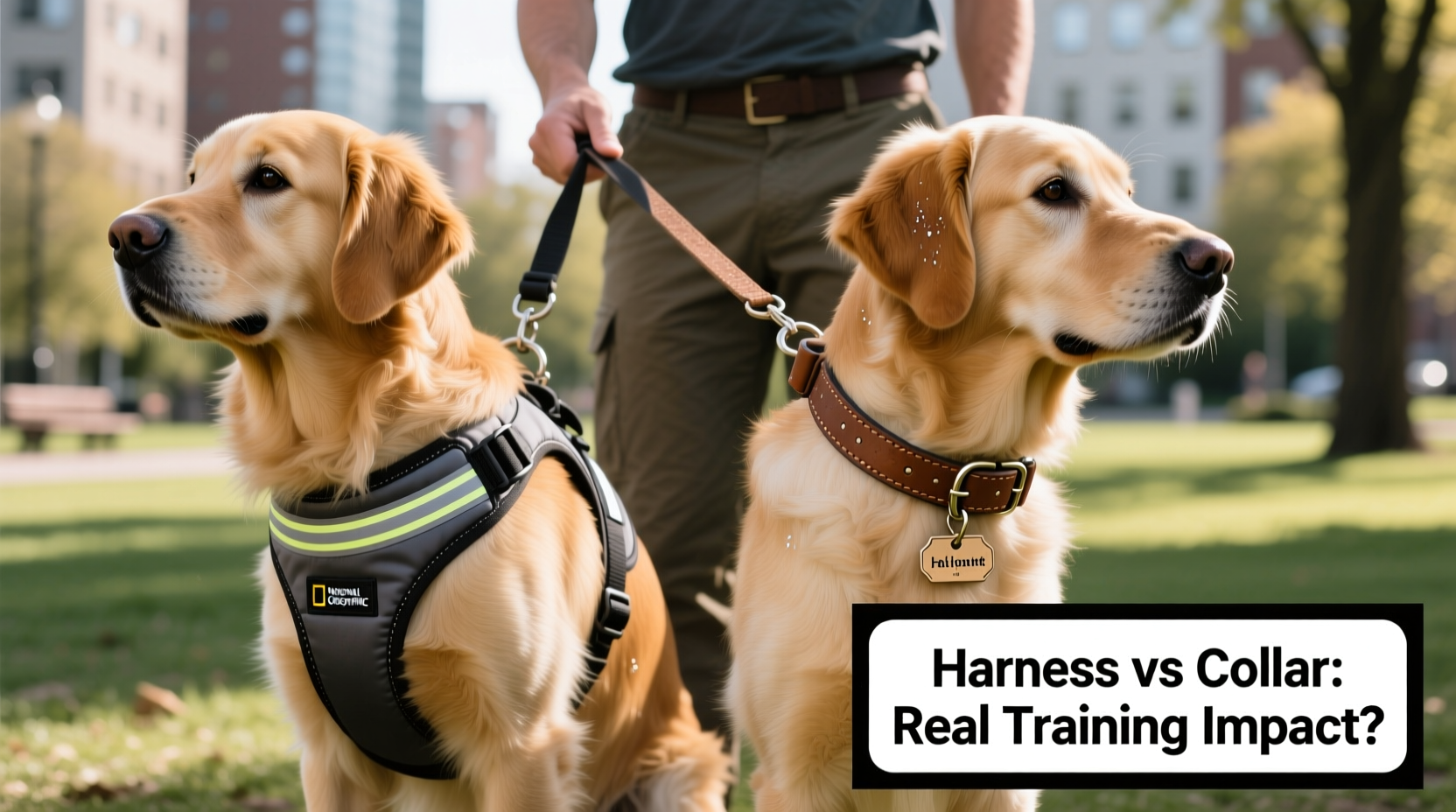
When a dog pulls on a leash, tension is transmitted through the neck if wearing a collar, or distributed across the chest and shoulders if wearing a harness. This fundamental difference impacts both comfort and safety.
Dogs are not built to withstand constant pressure on their trachea. Repeated strain from pulling on a collar can lead to tracheal collapse, especially in small breeds like Pomeranians or Yorkshire Terriers. It can also increase intraocular pressure, which is dangerous for dogs with glaucoma. In contrast, front-clip harnesses redirect forward motion by gently turning the dog’s body when they pull, reducing strain and encouraging them to reorient toward the handler.
“Distributing force away from the neck is not just about comfort—it’s about preventing long-term structural damage.” — Dr. Karen Bennett, Veterinary Behaviorist
However, not all harnesses are created equal. Back-clip harnesses, while safer than collars for tracheal protection, can actually encourage pulling by acting like a sled—pulling against resistance only reinforces the behavior in many dogs. This nuance is often missed in mainstream discussions.
Training Effectiveness: Harness vs Collar
When evaluating tools for training, effectiveness must be measured by how well they support learning, not just control.
- Collars provide direct feedback through the neck, making them useful for teaching loose-leash walking in attentive, responsive dogs. However, they carry risks if the dog lunges suddenly or has respiratory sensitivities.
- Front-clip harnesses interrupt pulling behavior mechanically. When the dog moves forward, the leash attachment on the chest turns them slightly, making it harder to forge ahead. This built-in consequence supports training without physical punishment.
- No-pull collars (e.g., martingales) are sometimes used as a middle ground. They tighten slightly under tension to discourage pulling but are less harsh than choke chains. Still, they concentrate pressure on the neck and should be used cautiously.
Real Example: Training a Reactive Border Collie
Consider Max, a two-year-old Border Collie adopted from a shelter. He was intelligent but reactive to other dogs and prone to explosive lunging. His owner initially used a standard collar, but after two vet visits for coughing and strained vocalizations, they switched to a front-clip harness.
The change wasn’t magical—but it created space for progress. With reduced physical strain, Max could focus during training sessions. His handler used the harness’s redirection feature to pair turns with treats, teaching him to check in rather than charge forward. Over eight weeks, with consistent practice, Max improved dramatically. The harness didn’t “fix” him; it enabled humane, effective training.
Comparative Breakdown: Harness vs Collar
| Feature | Collar | Front-Clip Harness | Back-Clip Harness |
|---|---|---|---|
| Safety (Trachea/Spine) | Poor for pullers | High | Moderate |
| Pulling Reduction | Low (can worsen) | High | Low to None |
| Training Support | Moderate (for advanced dogs) | High | Low |
| Ease of Use | High | Moderate | High |
| Risk of Escape | Low (if fitted) | Varies (depends on design) | Moderate (slip-out risk) |
| Breed Suitability | All, except brachycephalic/small | Ideal for pullers, reactivity | Cautious use in strong dogs |
This comparison shows no single tool wins across all categories. The key is matching the gear to the dog’s current behavior and training stage.
Step-by-Step: Choosing the Right Tool for Your Dog
Follow this decision-making process to determine whether a harness or collar is right for your dog’s training phase:
- Assess pulling behavior: Does your dog lunge, pull constantly, or react to stimuli? If yes, start with a front-clip harness.
- Check health factors: Small breeds, dogs with collapsing trachea, or those with neck/spine issues should avoid collar-only walking.
- Test fit and comfort: A harness should allow two fingers beneath straps, not rub armpits, and sit securely without shifting.
- Begin training: Use the harness as a management tool while reinforcing attention, heel work, and turn-arounds with rewards.
- Reevaluate monthly: As your dog improves, test brief walks on a collar. If pulling returns, return to the harness.
- Aim for flexibility: Advanced dogs may walk politely on either, allowing you to switch based on context (e.g., harness for crowded areas).
Common Myths Debunked
Several misconceptions cloud the harness vs collar debate:
- Myth: Harnesses make dogs pull more. This applies only to back-clip models. Front-clip harnesses are specifically designed to reduce pulling.
- Myth: Only “bad” dogs need harnesses. Many well-trained dogs wear harnesses for health reasons, such as avoiding neck strain during scent work or agility.
- Myth: Collars are more “natural.” Dogs evolved to run free, not walk on leashes. Neither tool is “natural,” but both can be used responsibly.
FAQ
Can I use a harness for all types of training?
Yes, but consider the type. Front-clip harnesses are excellent for leash manners. For obedience or off-leash work, a flat collar or head halter might be more appropriate. Avoid using restrictive harnesses in high-exertion activities unless designed for it (e.g., working dog vests).
Is it okay to leave a harness on my dog all day?
No. Harnesses should be removed when not in use. Extended wear can cause skin irritation, chafing, or even pressure sores. Unlike collars (which can hold ID tags), harnesses are activity-specific gear.
Do service dogs use harnesses or collars?
It depends on the task. Guide dogs often use specialized harnesses for directional control, while detection dogs may wear collars for ease of movement. Function dictates form in professional settings.
Tip: Always supervise your dog during first few harness uses. Some dogs paw at new gear or get tangled if left unattended.Final Checklist: Selecting & Using Your Tool Wisely
- ✅ Measure your dog’s girth and neck before purchasing.
- ✅ Choose a front-clip harness if pulling or reactivity is an issue.
- ✅ Ensure secure fasteners and reflective elements for visibility.
- ✅ Introduce the harness gradually with positive associations (treats, praise).
- ✅ Combine equipment with consistent training—gear alone won’t fix behavior.
- ✅ Rotate between harness and collar if appropriate, based on activity and behavior.
Conclusion: Beyond the Hype, Toward Smart Choices
The question isn’t whether harnesses are universally better than collars. The real answer is more nuanced: the right tool, used correctly, makes training safer and more effective. For dogs still learning leash manners, reactive by nature, or physically vulnerable, a well-fitted front-clip harness is not hype—it’s a responsible choice backed by veterinary and behavioral science.
But tools don’t replace training. A harness won’t teach your dog to walk politely any more than a spoon teaches someone to cook. It creates the conditions for success. Pair it with patience, consistency, and positive reinforcement, and you’ll see real progress.
💬 What’s your experience? Have you made the switch from collar to harness—or back again? Share your story and help others make informed decisions for their dogs.








