For outdoor enthusiasts who bring their dogs along on hiking trails, a pet tracking collar can feel like peace of mind wrapped in plastic and circuitry. But when you're miles from the trailhead with no power source in sight, one question looms: will your pet tracker still be working when you need it most? Battery life is the Achilles’ heel of many GPS-enabled pet collars, especially under demanding conditions like extended hikes. While these devices promise real-time location updates and geofencing alerts, their actual reliability often hinges on how quickly they deplete their charge.
The short answer: yes, some pet tracking collars do drain battery too fast to be fully reliable on long hikes—especially if used continuously. However, not all trackers are created equal. With the right model, proper settings, and smart usage habits, a pet tracking collar can remain a dependable companion even on multi-day backcountry trips.
How Pet Tracking Collars Work—and Why They Consume Power
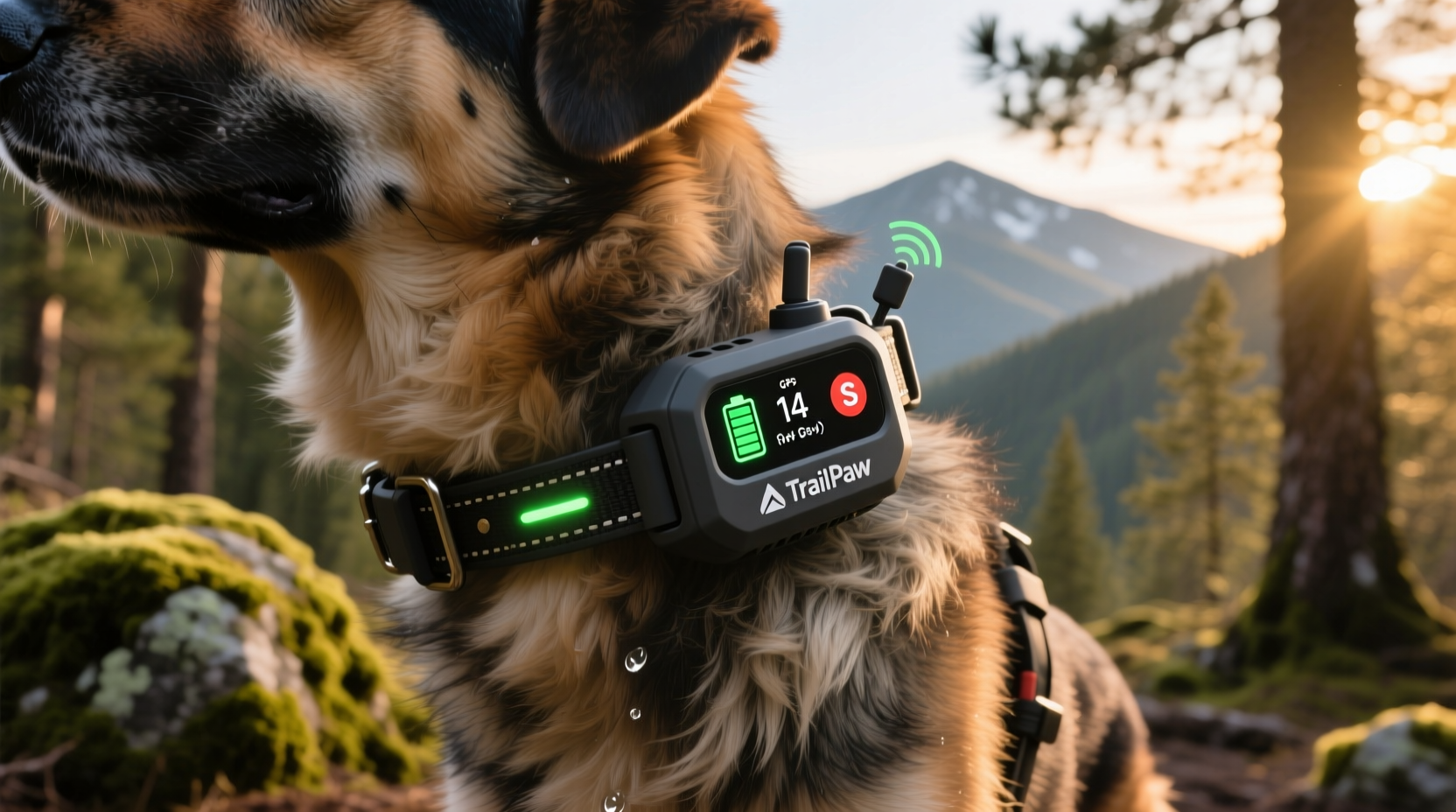
Pet tracking collars use a combination of technologies to determine and transmit your pet’s location. Most rely on GPS (Global Positioning System) for precise outdoor positioning, assisted by cellular networks (like LTE-M or NB-IoT) to send that data to your smartphone. Some also incorporate Bluetooth or Wi-Fi for short-range detection, useful in urban environments but less so on remote trails.
Each of these components consumes energy:
- GPS Module: Constantly calculating position using satellite signals is power-intensive. The more frequently the device checks location, the faster the battery drains.
- Cellular Radio: Transmitting data over mobile networks requires significant power, particularly in areas with weak signal where the device must \"shout\" louder to connect.
- Accelerometer & Sensors: Many trackers include motion sensors to detect activity levels or sleep patterns, which run continuously and add to power draw.
- Screen or LED Indicators: Models with status lights or small displays further reduce battery longevity.
In ideal conditions—such as low update frequency and strong network coverage—a high-end tracker might last up to 7–10 days. But during an active hike with frequent location pings, that same device could die within 24 hours.
Tip: Disable non-essential features like step counting or constant LED indicators before heading out on a hike to conserve battery.Battery Performance Across Top Hiking-Friendly Trackers
Not all pet tracking collars are designed for rugged outdoor use. Below is a comparison of leading models known for durability and performance in wilderness settings, evaluated based on real-world hiking battery life and reliability.
| Model | Advertised Battery Life | Realistic Hike Battery Life | Update Frequency (Hiking Mode) | Water Resistance |
|---|---|---|---|---|
| Fi Series 3 | Up to 3 months | ~36–48 hours (active tracking) | Every 2–5 minutes | IP68 (fully waterproof) |
| Whistle GO Explore | Up to 20 days | ~24–30 hours (continuous tracking) | Every 2–15 minutes | IPX7 (water-resistant) |
| LinkSmart Pet Tracker 4G | Up to 14 days | ~18–24 hours (high-frequency mode) | Every 1–3 minutes | IP67 (dust/water resistant) |
| Tractive GPS Dog Tracker (LTE) | Up to 5 days | ~12–18 hours (live tracking enabled) | Every 30 seconds–2 minutes | IPX7 |
| Pod 4 by Pawtrack | Up to 10 days | ~40–50 hours (adaptive mode) | Every 1–10 minutes (adaptive) | IP68 |
Note that advertised battery life typically reflects “smart” or low-power modes—where location updates occur every few hours. During hikes, users often switch to live tracking or high-frequency updates, drastically reducing operational time. The Tractive unit, while excellent for real-time pursuit, is notorious for rapid drain in continuous mode. In contrast, the Fi Series 3 and Pod 4 offer adaptive tracking algorithms that extend usability by adjusting ping intervals based on movement.
“Battery efficiency in pet trackers isn’t just about capacity—it’s about intelligence. Devices that dynamically adjust GPS usage based on motion and environment perform far better in the wild.” — Dr. Lena Patel, Embedded Systems Engineer & Pet Tech Consultant
Strategies to Maximize Battery Life on Hikes
You don’t have to choose between safety and battery life. By optimizing how you use your tracker, you can significantly extend its runtime without sacrificing critical functionality.
1. Use Adaptive or Interval-Based Tracking
Instead of enabling live tracking (which may ping every 30 seconds), set your device to update every 5–10 minutes. Most lost pets are found within a mile of where they went missing. Frequent updates beyond this interval offer diminishing returns and massive power costs.
2. Pre-Download Trail Maps and Disable Unneeded Features
If your tracker app supports offline maps, download them beforehand. This reduces reliance on constant data transmission. Also disable features like health monitoring, social sharing, or cloud syncing while hiking.
3. Carry a Portable Charger Designed for Trackers
Some brands, like Fi, offer compact magnetic charging docks that fit in a backpack. Though you can’t recharge the collar while worn, removing it briefly at camp to top up can extend coverage across multi-day treks.
4. Pair with a Secondary Locator (RF Beacon)
Consider supplementing your GPS collar with a radio frequency (RF) beacon like those used in hunting dog systems. These consume minimal power and allow you to locate your pet within a 1–2 mile range using directional signals—ideal when GPS fails or batteries die.
5. Monitor Signal Strength Beforehand
Poor cellular coverage forces trackers to work harder, increasing power consumption. Check your carrier’s coverage map for the trail area. If service is spotty, opt for a satellite-based tracker (e.g., Garmin Astro with satellite capability), albeit at higher cost and weight.
Tip: Turn off the tracker when your pet is securely leashed or close by, then reactivate it in open areas where escape risk is higher.Real-World Scenario: A Weekend Hike Gone Wrong
Daniel and his Border Collie, Scout, embarked on a two-day backpacking trip through the Sawtooth Mountains. He relied on his Whistle GO Explore tracker set to update every 3 minutes in “adventure mode.” On the first afternoon, Scout chased a deer off-trail and disappeared.
Daniel opened the app—only to find the last GPS ping was 45 minutes old. The tracker had shut down due to low battery. Without cell service, he couldn’t trigger a refresh. It took two anxious hours of calling and searching before he spotted Scout waiting near the trail junction.
Post-hike analysis revealed the issue: Daniel had forgotten to disable the activity monitor and sleep tracker, both running in the background. Combined with cold temperatures (which reduce lithium-ion battery efficiency), the device drained 40% faster than expected.
Afterward, Daniel switched to the Fi Series 3, enabled adaptive tracking, and began pre-checking battery levels. On subsequent trips, the tracker lasted the full weekend—even after Scout bolted again (this time successfully recovered via timely GPS data).
When GPS Isn’t Enough: Alternative Tracking Solutions
For serious off-grid adventurers, relying solely on cellular-connected GPS collars carries inherent risks. Satellite-based systems offer greater resilience, though they come with trade-offs in price and size.
- Garmin Delta XC – Uses GPS + GLONASS and integrates with handheld Garmin devices. No cellular dependency; instead, it works with a handheld receiver. Battery lasts 20+ hours in tracking mode.
- Spot Gen4 with Pet Mount – Not a collar per se, but can be attached. Sends location via satellite regardless of cellular coverage. Updates every 10–60 minutes. Lasts up to 7 days.
- Apple AirTag (with rugged case) – Low-cost option using Bluetooth and Apple’s Find My network. Limited range (~30 feet), but effective in populated or well-trafficked areas. Battery: ~1 year (CR2032).
Satellite options eliminate the fear of dead zones but are bulkier and pricier. For most casual hikers, optimizing GPS collar usage remains the best balance of cost, convenience, and reliability.
Frequently Asked Questions
Can I recharge a pet tracker during a multi-day hike?
Yes—if you carry a portable charger compatible with your model. Some trackers, like the Fi Series 3, support quick-charge docks that add several hours of life in 15–20 minutes. Just remember the collar must be removed to charge, so plan stops accordingly.
Does cold weather affect tracker battery life?
Significantly. Lithium-ion batteries lose efficiency below 50°F (10°C). In freezing conditions, battery drain can increase by 30–50%. Keep the collar close to your body when not in use, or consider insulating it with a neoprene sleeve.
Are there pet trackers that don’t rely on cellular networks?
Yes. Radio frequency (RF) trackers like those from Garmin or SportDOG operate independently of cellular service and are ideal for hunters or remote-area hikers. They require a separate handheld receiver but offer consistent performance without subscription fees.
Checklist: Preparing Your Pet Tracker for a Hike
- Charge the tracker to 100% the night before.
- Disable non-essential features (health tracking, notifications).
- Set update frequency to 5–10 minutes unless real-time tracking is critical.
- Verify cellular coverage on your route using your provider’s map.
- Pack a backup power solution (portable charger or spare battery).
- Test the connection and GPS lock in your backyard before leaving.
- Carry a physical ID tag as a fail-safe if electronics fail.
Conclusion: Balancing Reliability and Realism
Pet tracking collars can be reliable on hikes—but only if you understand their limitations and plan accordingly. Battery drain is a real concern, especially with high-frequency GPS use in remote areas. Yet, with smarter settings, supplemental tools, and informed expectations, these devices remain invaluable for pet safety.
The key is treating your tracker not as a magic bullet, but as one layer in a broader safety strategy. Combine technology with training, supervision, and preparedness. That way, whether you’re scrambling up a ridge or navigating a dense forest, you and your furry companion can explore with confidence.
💬 Have a hiking story where your pet tracker saved the day—or let you down? Share your experience in the comments to help others make smarter choices in the wild.








