
For millions of dog owners, leaving their pets at home alone is a source of guilt and concern. Separation anxiety affects up to 20% of dogs, manifesting in destructive behavior, excessive barking, or house soiling. In response, the pet tech industry has surged with smart devices—especially pet cameras equipped with two-way audio and remote treat dispensers. These gadgets promise peace of mind and emotional support for anxious dogs. But do they actually work?
This article examines whether pet cameras with treat dispensers genuinely alleviate canine anxiety. We’ll explore behavioral science, user experiences, limitations, and best practices for using these tools effectively.
The Science Behind Dog Anxiety and Human Interaction
Dogs are social animals that form strong attachments to their caregivers. When left alone, especially for extended periods, some dogs experience distress similar to separation anxiety in humans. The symptoms can range from mild restlessness to severe panic, including chewing furniture, scratching doors, or self-harm.
Studies have shown that auditory and olfactory cues from familiar humans—such as voice recordings or scent items—can temporarily soothe anxious dogs. A 2020 study published in *Applied Animal Behaviour Science* found that hearing an owner’s voice via video call reduced stress markers like heart rate and vocalization in mildly anxious dogs. However, the effect was short-lived and less effective in dogs with clinical-level separation anxiety.
Treats play a role too. Positive reinforcement through food rewards activates the brain’s reward centers, potentially interrupting anxious thought patterns. When combined, sound interaction and food delivery could theoretically provide dual comfort: emotional reassurance and distraction.
“While technology can offer momentary relief, it's not a substitute for foundational behavioral training or environmental enrichment.” — Dr. Sarah Lee, Veterinary Behaviorist, DACVB
How Pet Cameras with Treat Dispensers Work
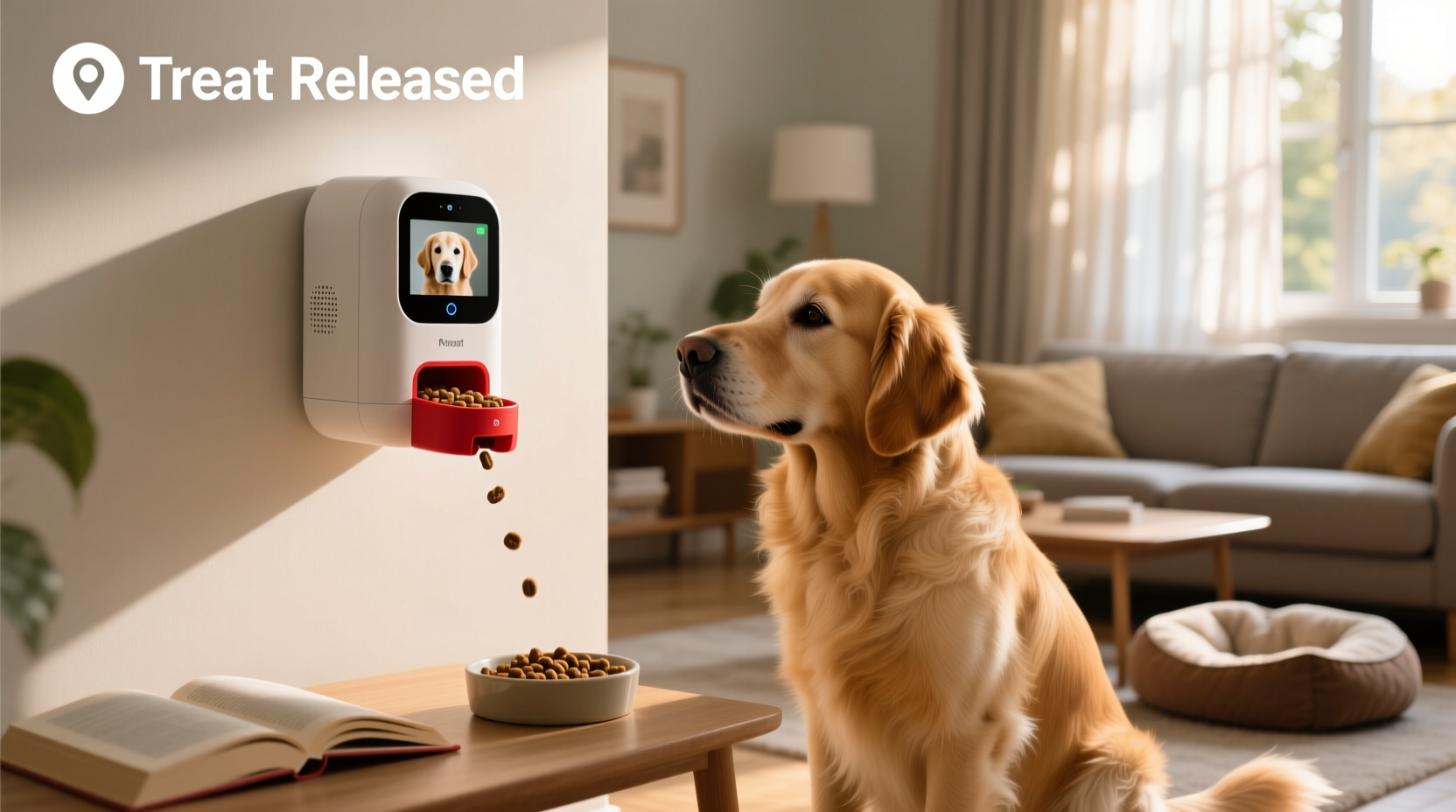
Modern pet cameras typically include HD video, night vision, motion detection alerts, two-way audio, and a built-in treat dispenser controlled via smartphone app. Popular models include Furbo, Petcube, and Wagz.
When a dog barks or moves into view, the owner receives a notification. They can then speak to the dog through the camera, offering verbal comfort, and dispense a treat remotely. Some models even launch treats into the air for added engagement.
The underlying idea is simple: if your dog feels lonely or stressed, seeing and hearing you—and receiving a surprise snack—might calm them down. But does this logic hold up under real-world conditions?
Key Features and Their Psychological Impact
| Feature | Potential Benefit | Likely Limitation |
|---|---|---|
| Two-Way Audio | Familiar voice may reduce immediate distress | Voice lacks physical presence; effect diminishes over time |
| Remote Treat Dispensing | Positive distraction and reward association | Risk of reinforcing attention-seeking barking |
| Live Video Feed | Owner monitoring helps assess anxiety severity | No direct intervention capability beyond talking/treats |
| Motion & Sound Alerts | Early warning system for problematic behaviors | May increase owner anxiety; false alarms common |
Real-World Effectiveness: What Owners Report
Anecdotal evidence from online forums, product reviews, and veterinary consultations paints a mixed picture. Many owners report noticeable improvements in their dog’s behavior when using treat-dispensing cameras—especially in mild cases of loneliness or boredom.
Mini Case Study: Max, the Rescue Terrier
Max, a 3-year-old Jack Russell Terrier adopted from a shelter, began chewing door frames and barking incessantly after his owner returned to office work. His owner installed a Furbo camera and started checking in every few hours, dispensing a treat and speaking calmly when Max appeared restless.
Within two weeks, barking episodes dropped by nearly 70%, and no new damage occurred. However, on days when the internet failed or the owner forgot to charge the device, Max regressed. A behaviorist later noted that while the camera helped manage symptoms, it didn’t address Max’s underlying insecurity stemming from early-life instability.
The family eventually supplemented the tech with crate training, puzzle toys, and a midday dog walker. Only then did Max show lasting improvement.
This case illustrates a common pattern: pet cameras can act as a useful bridge, but rarely serve as standalone solutions.
When Treat Dispensers Help—and When They Don’t
The success of a treat-dispensing camera depends heavily on the dog’s temperament, the root cause of anxiety, and how the device is used.
Situations Where It Can Be Effective
- Mild separation distress: Dogs that whine or pace briefly when left alone may respond well to periodic check-ins.
- Boredom-related behaviors: Intelligent breeds needing mental stimulation benefit from surprise treats and interaction.
- Reinforcing positive routines: Using the camera to dispense treats when the dog lies quietly on a mat builds good habits.
Scenarios Where It Falls Short
- Clinical separation anxiety: Dogs that panic, salivate excessively, or injure themselves require professional intervention (e.g., medication, desensitization).
- Attention-seeking barking: If a dog learns that barking triggers treats, the behavior worsens—a phenomenon known as negative reinforcement.
- Food-motivation issues: Some dogs aren’t food-driven, especially when highly stressed. A treat won’t distract them from distress.
“We’ve seen dogs become more agitated after repeated failed attempts to trigger the treat dispenser. The anticipation without fulfillment can heighten anxiety.” — Dr. Lena Torres, Canine Cognitive Research Lab, University of Colorado
Best Practices for Using Pet Cameras to Reduce Anxiety
To maximize benefits and avoid unintended consequences, follow this step-by-step approach:
- Assess your dog’s anxiety level. Is it mild restlessness or full-blown panic? Consult a veterinarian or certified behaviorist before relying on tech.
- Introduce the camera gradually. Let your dog explore it with treats and praise so it becomes a neutral or positive object.
- Use treats strategically. Dispense them when your dog is calm—not in response to barking—to reinforce desired behavior.
- Pair audio with routine cues. Say soothing phrases like “Good boy, I’ll be back” to build predictability.
- Limit sessions to 1–2 minutes. Prolonged interaction can increase dependency and prolong distress upon disconnection.
- Combine with other tools. Use calming music, pheromone diffusers (like Adaptil), and interactive toys for a multi-sensory environment.
Checklist: Using Your Pet Camera Responsibly
- ✅ Confirm your dog responds to treats when calm
- ✅ Test audio clarity and treat mechanism regularly
- ✅ Avoid dispensing treats during barking or destructive acts
- ✅ Monitor usage frequency to prevent overfeeding
- ✅ Pair camera use with environmental enrichment (toys, safe spaces)
- ✅ Seek professional help if signs of severe anxiety persist
FAQ: Common Questions About Pet Cameras and Dog Anxiety
Can a pet camera cure separation anxiety?
No. While cameras with treat dispensers may reduce symptoms temporarily, true separation anxiety requires structured behavioral modification, such as gradual desensitization to departures and, in some cases, anti-anxiety medication prescribed by a vet.
Will my dog get used to the camera and stop responding?
Possibly. Like any stimulus, the novelty wears off. To maintain effectiveness, vary the timing of interactions and combine the camera with other calming strategies so it doesn’t become the sole crutch.
Are there breeds that benefit more from these devices?
Highly social or intelligent breeds—such as Border Collies, Poodles, or Cavalier King Charles Spaniels—may respond better due to their sensitivity to human cues and need for mental engagement. However, individual temperament matters more than breed.
Conclusion: Technology as a Tool, Not a Cure
Pet cameras with treat dispensers can play a supportive role in managing mild dog anxiety. For many owners, the ability to check in, offer comfort, and deliver a surprise snack brings peace of mind—and for some dogs, it provides a meaningful connection during solitude.
However, these devices are not magic fixes. They work best when integrated into a broader strategy that includes proper training, environmental enrichment, and, when necessary, professional guidance. Used incorrectly, they can even exacerbate problems by reinforcing unwanted behaviors or creating unrealistic expectations.
If your dog struggles with anxiety, start by understanding the root cause. Use technology wisely—as a supplement, not a substitute. Observe your pet’s responses, adjust your approach, and prioritize long-term well-being over quick fixes.
💬 Have you tried a treat-dispensing pet camera? Share your experience in the comments—your insights could help another dog owner find balance between innovation and care.








