Choosing the right cat litter isn't just about convenience—it affects your cat’s health, your home’s cleanliness, and your monthly budget. In recent years, crystal (silica gel) litter has gained popularity for its superior odor control and low tracking. But how does it truly stack up against traditional clay litter, especially when it costs two or three times as much? Let’s break down the science, practicality, and long-term value of both options.
Understanding the Basics: What Are Crystal and Clay Litters?
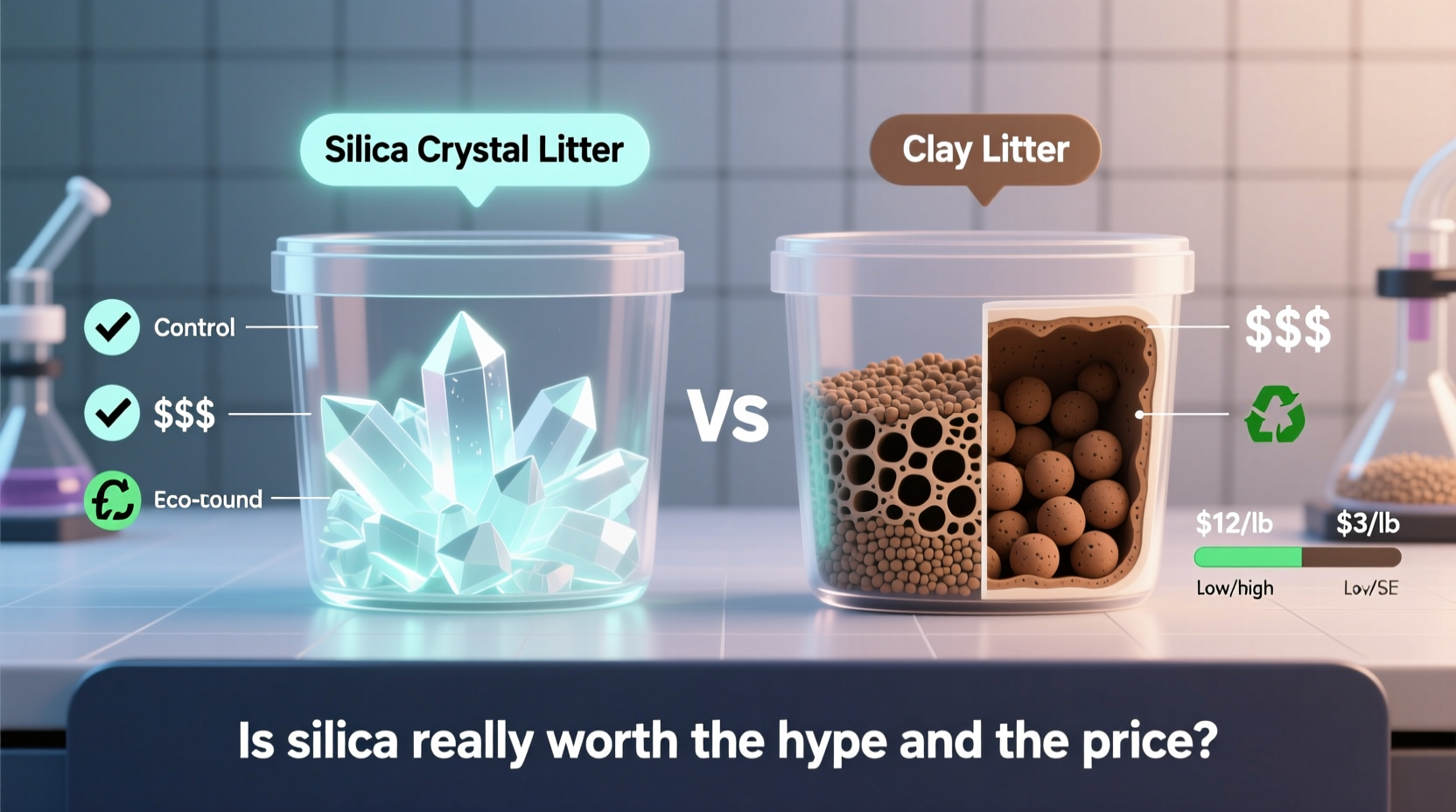
Clay litter is made from natural sodium bentonite, a type of absorbent clay that clumps when wet. It's been the standard in cat care for decades due to its affordability and widespread availability. When your cat urinates, the liquid forms solid clumps that can be scooped out easily, leaving the rest of the litter usable.
Crystal litter, on the other hand, is composed of silica gel beads—tiny porous particles that absorb moisture like a sponge. Unlike clay, it doesn’t clump; instead, it traps liquid inside the beads and evaporates it slowly. The surface stays dry, and odors are locked in through micropores in the silica structure.
The fundamental difference lies in their absorption mechanism: clay relies on chemical clumping, while silica uses physical absorption. This distinction drives differences in performance, maintenance, and cost.
Performance Comparison: Odor Control, Dust, and Tracking
When evaluating litters, three factors matter most to pet owners: smell, mess, and respiratory safety.
| Feature | Clay Litter | Crystal Litter |
|---|---|---|
| Odor Control | Moderate; requires frequent changing. Ammonia smell builds quickly if not scooped daily. | Excellent; silica traps and neutralizes odors at the molecular level for up to 30 days. |
| Dust Level | High; generates significant dust, which can irritate cats and humans with allergies or asthma. | Very low; nearly dust-free, making it ideal for sensitive households. |
| Tracking | High; fine granules stick to paws and scatter across floors. | Moderate; larger beads are less likely to be kicked out, though some still escape. |
| Lifespan per Box | 1–2 weeks with daily scooping for one cat. | Up to 4–5 weeks with proper ventilation and scooping. |
| Flushability | Some clumping types claim flushability, but most experts advise against it due to plumbing risks. | No; never flush silica crystals. They don’t break down and can cause blockages. |
While clay litter performs adequately in small doses, crystal litter excels in odor suppression and dust reduction. For multi-cat homes or those with allergy concerns, this difference is often decisive.
Tip: Place a rubber mat under the litter box to reduce tracking with either type—especially effective with clay.Health and Safety: What Vets and Experts Say
Respiratory health is a growing concern among feline veterinarians. Dr. Linda Wilson, a board-certified veterinary internal medicine specialist, notes:
“Silica-based litters are generally safer for cats with asthma or chronic bronchitis because they produce minimal airborne particulates. However, any litter should be used in a well-ventilated area to prevent ammonia buildup.” — Dr. Linda Wilson, DVM
Clay litter dust contains crystalline silica and bentonite, which—when inhaled over time—may contribute to lung irritation in both pets and humans. Some scented clay litters also include synthetic fragrances that can trigger allergic reactions.
On the flip side, concerns have been raised about the potential for silica crystals to adhere to kittens’ paws or be ingested during grooming. While there’s no conclusive evidence of toxicity in healthy adult cats, many vets recommend avoiding crystal litter for kittens under 4 months old.
Another consideration: biodegradability. Clay is strip-mined, non-renewable, and ends up in landfills indefinitely. Silica gel is also non-biodegradable, though its longer lifespan means less frequent disposal.
Cost Analysis: Is Silica Worth the Premium Price?
At first glance, crystal litter is undeniably more expensive. A 14-pound bag of premium clumping clay might cost $12–$15, while an equivalent volume of silica crystals ranges from $25–$35. But the real cost comparison depends on usage duration.
Consider this scenario:
- Clay litter: Replaced every 10 days → ~3 changes per month = $45/month
- Silica litter: Lasts 30 days → 1 change per month = $30/month
In this case, despite the higher upfront cost, silica becomes the more economical choice over time. Add in reduced cleaning frequency and fewer odor-masking products, and the savings compound.
However, this assumes consistent scooping of solid waste and good airflow in the litter area. Without these, even silica will degrade faster, negating its longevity benefits.
Real Example: A Multi-Cat Household Transitions to Silica
The Thompson family had two cats using conventional clay litter. Despite daily scooping, they struggled with persistent ammonia smells in their small apartment. After switching to a silica-based product, they noticed an immediate improvement. “We went from changing the entire box weekly to doing a full change once a month,” says Maria Thompson. “And we haven’t needed air fresheners since.”
They did invest in a covered litter box with carbon filters to enhance odor control and placed a deep-entry mat to minimize crystal scatter. The initial setup cost was around $60, but within two months, they broke even on litter expenses alone.
How to Choose the Right Litter for Your Home: A Step-by-Step Guide
Deciding between crystal and clay shouldn’t be arbitrary. Follow this process to make an informed decision:
- Evaluate your cat’s age and health. Kittens and cats with respiratory conditions may benefit from low-dust silica—but monitor ingestion behavior closely.
- Assess your living space. Small or poorly ventilated areas amplify odors; silica may be worth the investment here.
- Calculate your current litter spending. Track how often you replace clay and multiply by cost. Compare that to the monthly cost of silica.
- Test a small bag first. Not all cats accept texture changes. Introduce the new litter gradually by mixing it with the old.
- Monitor acceptance and results. If your cat avoids the box or tracks excessively, reconsider your choice—even if it’s technically superior.
Frequently Asked Questions
Can I mix crystal and clay litter together?
Technically yes, but it defeats the purpose of both. Clay will clump around the crystals, creating awkward chunks and reducing silica’s absorption efficiency. It’s better to transition fully or stick with one type.
Is silica litter safe if my cat licks it?
Silica gel is non-toxic in small amounts, but it’s not meant to be ingested regularly. Most brands are labeled as safe if incidental grooming occurs, but excessive licking could lead to digestive discomfort. Watch for signs of nausea or constipation.
Why does my crystal litter turn yellow?
Yellowing indicates urine saturation. Each bead can only absorb so much before it loses effectiveness. When more than 10–15% of the crystals appear dark or damp, it’s time for a full change—even if the odor seems under control.
Final Verdict: Is Silica Worth It?
For many cat owners, especially those dealing with strong odors, dust sensitivity, or high maintenance demands, crystal litter delivers measurable benefits that justify its price. Its extended lifespan, superior odor control, and cleaner handling often result in long-term savings and improved quality of life—for both cats and humans.
That said, clay litter remains a viable option for budget-conscious households with single cats, large litter boxes, and excellent ventilation. It’s also easier to dispose of in rural areas where landfill impact is less of a concern.
The key is matching the litter to your specific needs, not following trends. Try a trial size of silica. If it reduces your cleaning load, eliminates lingering smells, and your cat adapts well, then yes—the hype is real, and the price is justified.
🚀 Ready to upgrade your litter routine? Start with a small bag of silica litter and track your time, cost, and satisfaction over four weeks. Share your experience in the comments—your insights could help another cat owner make the leap!








