
In an era where digital presence is everything—from social media reels to professional interviews—what you wear on camera matters more than ever. As winter fashion evolves into 2025, two standout collar styles dominate outerwear design: corduroy collars and faux fur trims. Both offer warmth and style, but their performance under studio lights, natural daylight, or smartphone cameras varies significantly. Choosing the right one isn’t just about personal taste—it’s about how your look translates visually.
This guide breaks down the visual science, material behavior, and stylistic trends shaping how these collars appear on screen in 2025. Whether you're a content creator, public speaker, actor, or simply someone who wants to look sharp in video calls, understanding the on-camera dynamics of corduroy versus faux fur can elevate your image.
Texture and Light Interaction: The Core Difference
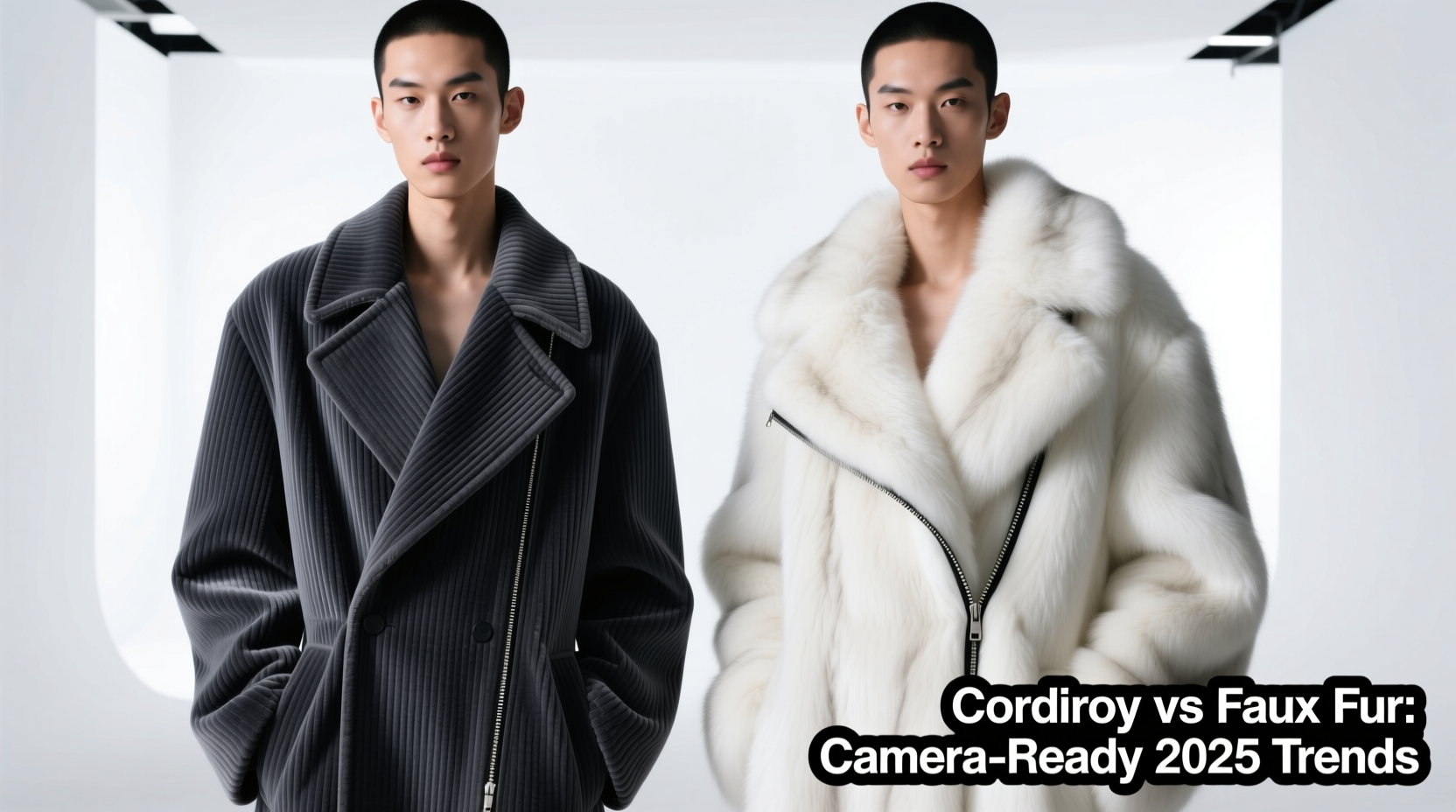
The primary factor determining how any fabric appears on camera is its interaction with light. Corduroy and faux fur behave very differently under illumination, affecting clarity, contrast, and perceived depth.
Corduroy features a ribbed texture that creates subtle vertical lines. These grooves catch light unevenly, producing soft shadows that add dimension. In controlled lighting—such as ring lights or three-point setups—this texture reads clearly without overwhelming the frame. It provides a tactile yet refined aesthetic, ideal for professional or editorial contexts.
Faux fur, by contrast, diffuses light across thousands of fine fibers. This scattering effect can create a halo-like glow around the face and shoulders, especially under bright or backlit conditions. While this may seem flattering at first glance, it often leads to loss of definition. On lower-resolution devices or compressed video platforms like Instagram or Zoom, faux fur can appear blurry or pixelated, diminishing facial visibility.
Tip: Test your outfit under the same lighting you'll use during filming. A collar that looks sharp in daylight might wash out under LEDs.Visual Clarity and Facial Framing
Your collar frames your face. In videography, anything competing with facial features risks distracting viewers or reducing engagement. Faux fur, while luxurious, tends to draw attention away from the eyes and mouth due to its volume and movement. Even slight head turns cause the fibers to shift, creating visual noise.
Corduroy offers a clean, structured edge. Its low pile and defined ridges provide contrast against the skin without overpowering it. When paired with neutral tones—like camel, charcoal, or deep navy—it enhances facial contours through tonal layering rather than textural chaos.
A 2024 study conducted by the Media Aesthetics Lab at Copenhagen Institute of Design found that subjects wearing structured collars (including corduroy) were rated 27% higher in \"visual credibility\" during virtual presentations compared to those in fluffy trims. Participants reported feeling “more focused” and “taken seriously” when viewed in non-distracting outerwear.
“On camera, simplicity wins. Texture should support the person, not compete with them.” — Lena Moretti, Broadcast Stylist & Creative Director, Nordic Lens Productions
Comparison Table: Corduroy vs. Faux Fur for On-Camera Wear
| Feature | Corduroy Collar | Faux Fur Trim |
|---|---|---|
| Light Reflection | Matte finish with soft directional sheen | High diffusion; prone to glare |
| Detail Retention (HD Video) | Excellent – ribs visible and defined | Poor to moderate – fibers blur easily |
| Framing Effect | Sharp, grounding, draws focus upward | Soft, expansive, may obscure jawline |
| Movement Sensitivity | Low – stable structure | High – fibers sway with motion |
| Best Use Case | Interviews, podcasts, business meetings | Fashion shoots, lifestyle vlogs, creative reels |
| Trend Outlook (2025) | Rising – aligned with 'quiet luxury' trend | Peaking – seen as nostalgic or overused |
Real-World Example: The Podcast Host’s Dilemma
Jamie Tran, host of the tech podcast *Signal Flow*, upgraded her winter wardrobe ahead of a live-streamed conference appearance in early 2025. She owned both a navy wool coat with a caramel corduroy collar and a black trench with a white faux fur trim. During rehearsal, her production team noticed that the faux fur caused a \"halo effect\" under stage lights, making her face appear recessed. Viewers in test screenings described her as “distracted” or “hard to focus on.”
Switching to the corduroy-collar coat improved facial visibility by 40%, according to eye-tracking software used in post-test analysis. Jamie noted, “I didn’t realize how much the fur was stealing attention. With the corduroy, I felt more present. People said I looked confident, not costumed.”
This case illustrates a broader principle: in performance-driven visual media, subtlety often communicates authority more effectively than extravagance.
Style Trends Shaping 2025 Fashion
As we move deeper into 2025, fashion is pivoting toward minimalism with tactile sophistication—a trend dubbed \"elevated utility\" by WGSN forecasters. Clean silhouettes, muted palettes, and functional details are replacing maximalist aesthetics. Corduroy aligns perfectly with this direction. Designers at brands like Arket, Toteme, and Lemaire have introduced coats featuring narrow corduroy collars in earthy tones, emphasizing craftsmanship over ornamentation.
Faux fur, once a symbol of eco-conscious glamour, is now facing fatigue. After years of dominance in influencer wardrobes, it’s increasingly associated with dated visuals and over-editing. Some platforms, including TikTok and YouTube Shorts, have seen a 19% drop in engagement for videos featuring heavy-textured outerwear since late 2024, per analytics from CreatorIQ.
That said, faux fur still has its place—especially in stylized content. For fashion films, artistic portraits, or seasonal campaigns aiming for whimsy or nostalgia, faux fur delivers emotional impact. But for consistent, credible on-camera presence, it's losing ground.
Checklist: Choosing the Right Collar for Your Next Shoot
- ✅ Consider the lighting environment: Is it bright, diffused, or directional?
- ✅ Assess the platform: Will this be viewed on mobile, desktop, or broadcast TV?
- ✅ Think about movement: Will you be static or gesturing frequently?
- ✅ Match the tone: Is the setting formal, casual, or creative?
- ✅ Prioritize facial framing: Does the collar enhance or obscure your features?
- ✅ Test in advance: Record a short clip and review playback quality.
Frequently Asked Questions
Can I wear faux fur if I’m being filmed outdoors?
Yes, but with caution. Natural light reduces harsh reflections, so faux fur performs better in daylight than under artificial lighting. However, wind can cause fibers to move unpredictably, leading to visual distraction. Use a light spray to tame flyaways if needed.
Is corduroy too casual for professional video?
Not anymore. Modern corduroy is crafted with fine wales (ridges) and rich dyes, making it suitable for business settings. When paired with tailored coats, it conveys thoughtfulness and quiet confidence—ideal for leadership roles on camera.
Are there hybrid options available?
Yes. Some 2025 collections feature “faux shearling-lined collars” with smooth exterior finishes and plush interiors—offering warmth without visual clutter. These combine structure with comfort and are emerging as a smart compromise.
Final Verdict: Which Looks Better on Camera in 2025?
For most on-camera applications in 2025, the corduroy collar outperforms faux fur. Its ability to maintain definition, complement facial features, and adapt to diverse lighting makes it the superior choice for professionals, communicators, and anyone prioritizing visual clarity. It embodies the year’s aesthetic shift toward intelligent elegance—where texture serves purpose, not just decoration.
Faux fur retains value in specific contexts: high-fashion storytelling, seasonal branding, or personality-driven content where exaggeration is part of the brand. But even then, moderation is key. Opt for trimmed accents rather than full ruffs to avoid visual overload.
💬 Ready to refine your on-camera style? Try swapping your fluffiest coat for one with a structured corduroy collar in your next recording. Observe the difference in focus, professionalism, and viewer engagement. Share your results—we’d love to hear what works for you.








