
For men who take pride in their facial hair, maintaining a well-groomed beard is more than a routine—it’s a ritual. With the rise of at-home grooming, two tools have emerged as essential: cordless clippers and trimmers. While they may look similar and are often used interchangeably, they serve distinct purposes. Choosing the wrong one can lead to uneven lines, frustration, or even damage to your beard’s natural shape. Understanding the functional differences, strengths, and ideal use cases will help you make an informed decision that aligns with your grooming goals.
Understanding the Core Differences
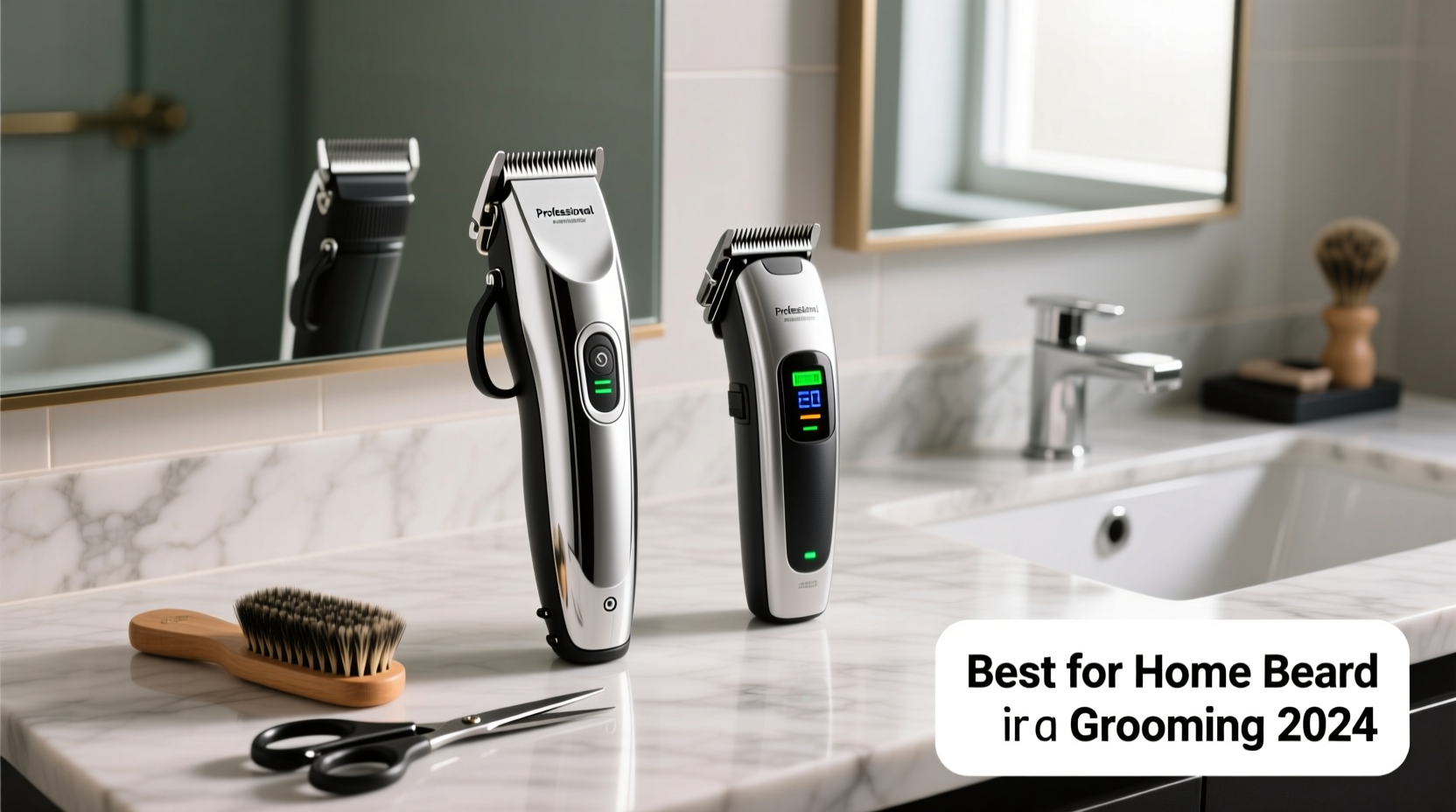
The first step in selecting the right tool is recognizing what sets cordless clippers and trimmers apart. Though both are battery-powered and designed for precision, their design, blade size, and cutting mechanisms cater to different tasks.
Cordless clippers are built for bulk hair removal. They feature wider blades—typically ranging from 1 to 2 inches—and are engineered to cut through dense hair quickly. Originally designed for head haircuts, modern versions are now optimized for full beard shaping and length reduction. They excel when you need to shorten your beard significantly or maintain a uniform length across thick growth.
Trimmers, on the other hand, are precision instruments. With narrower blades (usually under 1 inch) and finer teeth, they’re ideal for detailing work: defining cheek lines, sharpening neck edges, shaping mustaches, and cleaning up around the ears. Their compact size allows for greater control in tight areas where larger clippers can’t maneuver effectively.
Tip: Never use a trimmer for bulk beard reduction—it’s inefficient and can overheat the motor.Performance Comparison: Where Each Excels
To determine which tool suits your needs, consider how you typically groom your beard. The following table outlines key performance factors between cordless clippers and trimmers:
| Feature | Cordless Clippers | Trimmers |
|---|---|---|
| Blade Width | 1–2 inches | 0.5–1 inch |
| Primary Use | Bulk cutting, length reduction | Detailing, edging, shaping |
| Precision Level | Moderate | High |
| Battery Life | 45–90 minutes | 60–120 minutes |
| Attachments | Multiple guards (1–10mm) | Fewer guards, sometimes none |
| Best For | Beards longer than 1/2 inch | Clean lines and short styles |
While clippers save time during major trims, trimmers offer unmatched accuracy. Many grooming experts recommend owning both tools for optimal results—one for shaping, the other for refining.
“Using only a clipper for beard maintenance is like using a chainsaw to sculpt wood. You’ll get the job done, but you won’t achieve finesse.” — Marcus Reed, Master Barber & Grooming Consultant
When to Use Clippers vs. Trimmers: A Practical Guide
Your beard’s length, texture, and desired style dictate whether clippers or trimmers should take center stage. Here’s a step-by-step approach to help you decide based on real-world scenarios.
Step 1: Assess Your Beard Length and Density
- If your beard is longer than 1 inch and growing out, start with cordless clippers fitted with a guard (e.g., 6mm or 8mm).
- For shorter beards (under 1/2 inch), especially those styled close to the skin, skip the clippers and go straight to a trimmer.
Step 2: Define Your Grooming Goal
- Goal: Reduce overall length? → Use clippers with adjustable guards to maintain evenness.
- Goal: Clean up edges? → Switch to a trimmer for sharp cheek and neckline definition.
- Goal: Style a goatee or soul patch? → A trimmer provides the necessary precision.
Step 3: Combine Tools for Professional Results
Most professional barbers use both tools in sequence. Begin with clippers to set the base length, then switch to a trimmer for detailing. This two-step method ensures efficiency without sacrificing polish.
Tip: Always trim your beard after a shower when hairs are softer and less prone to tugging.Real-Life Example: From Overgrown to Sharp in 20 Minutes
Take James, a 34-year-old software engineer who decided to grow his beard during a remote work phase. After three months, his beard was full but unruly—patchy near the jawline and too long on the sides. He wanted a clean, professional look without visiting a barber.
He started with cordless clippers using a 5mm guard to reduce the overall length evenly. Next, he switched to a precision trimmer to outline his cheek lines and define the edge along his neck. Finally, he used the same trimmer to neaten his mustache and remove stray hairs above his lip. The entire process took 18 minutes, and the result mimicked a salon-quality trim.
This case illustrates how combining both tools maximizes efficiency and outcome. Had James relied solely on clippers, his edges would have looked sloppy. If he’d used only a trimmer, reducing the bulk would have taken twice as long and risked motor strain.
What to Look for When Buying
Not all cordless clippers and trimmers are created equal. To avoid buyer’s remorse, focus on these five critical features:
- Motor Power: Look for high-torque motors that don’t bog down in thick hair. Lithium-ion batteries offer consistent power output.
- Blade Quality: Stainless steel or titanium-coated blades resist corrosion and stay sharp longer. Self-sharpening blades are a premium bonus.
- Ergonomic Design: A non-slip grip and balanced weight reduce hand fatigue during detailed work.
- Adjustable Guards: Clippers should come with multiple comb attachments (1–10mm). Trimmers benefit from a taper lever for fade-style blending.
- Water Resistance: Fully washable tools simplify cleaning and hygiene—essential for facial grooming.
Brands like Wahl, Andis, Philips Norelco, and Braun consistently deliver reliable models tailored to home users. Entry-level kits often bundle both tools, offering better value than purchasing separately.
Common Mistakes to Avoid
Even experienced users make errors that compromise results. Steering clear of these pitfalls ensures longevity of your tools and quality of your grooming:
- Using dull blades: Dull edges pull hair instead of cutting it, causing irritation. Replace or sharpen blades every 6–12 months.
- Skipping lubrication: Clipper blades require a drop of oil after every few uses to prevent friction buildup.
- Pressing too hard: Let the blade do the work. Excessive pressure increases skin contact risk and reduces blade life.
- Ignoring charging cycles: Deep discharging lithium batteries regularly shortens lifespan. Recharge before the battery fully drains.
- Using head clippers on face without guards: Some assume any clipper works universally. Facial skin is more sensitive; always use facial-safe guards.
Essential Grooming Checklist
Follow this checklist each time you groom for consistent, clean results:
- Wash and towel-dry your beard to remove oils and soften hair.
- Comb through your beard to detangle and identify overgrown areas.
- Select clippers with appropriate guard for desired length.
- Cut with the grain first, then re-trim against the grain if needed.
- Switch to trimmer for neckline, cheek lines, and mustache shaping.
- Clean blades with brush and apply oil post-use.
- Reassess symmetry in natural light before finishing.
Frequently Asked Questions
Can I use hair clippers for my beard?
Yes, but only if they come with facial guards and are designed for close-to-skin use. Standard hair clippers may be too aggressive or lack the precision needed for facial contours.
Do I really need both a clipper and a trimmer?
For occasional touch-ups, a high-quality trimmer might suffice. However, if you frequently change beard lengths or have thick growth, having both tools gives you complete control over shape and finish.
How often should I replace the blades?
Depends on usage. For daily grooming, replace blades every 6 months. For weekly use, once per year is sufficient. Signs of dullness include pulling, inconsistent cuts, and increased noise during operation.
Final Thoughts: Choose Based on Purpose, Not Preference
The debate between cordless clippers and trimmers isn’t about superiority—it’s about suitability. Clippers are your workhorse for managing volume and setting foundation length. Trimmers are your artist’s tool for refinement and definition. The most effective at-home grooming setup includes both, allowing you to transition seamlessly from shaping to sharpening.
Investing in quality tools pays dividends in time saved, comfort, and confidence. Whether you’re maintaining a rugged lumberjack beard or a crisp executive stubble, understanding the role of each device empowers you to achieve salon-level results in your bathroom.
💬 Ready to upgrade your grooming game? Evaluate your current routine, identify gaps, and consider adding the missing tool to your kit. Share your favorite combo or ask questions in the comments below—we’re all growing better beards together.








