Creating a stable and clean environment in your aquarium starts with the right filtration system. For beginners, one of the most reliable, affordable, and fish-friendly options is the sponge filter paired with an air pump. Unlike complex canister or hang-on-back filters, sponge filters provide mechanical and biological filtration without creating strong currents—ideal for tanks housing fry, bettas, shrimp, or small community fish.
This guide walks you through everything you need to know: selecting the right equipment, assembling it properly, cycling your tank effectively, and maintaining long-term water quality. Whether you're starting your first 5-gallon nano tank or adding supplemental filtration to a larger setup, this method supports a thriving aquatic ecosystem from day one.
Why Choose a Sponge Filter with Air Pump?
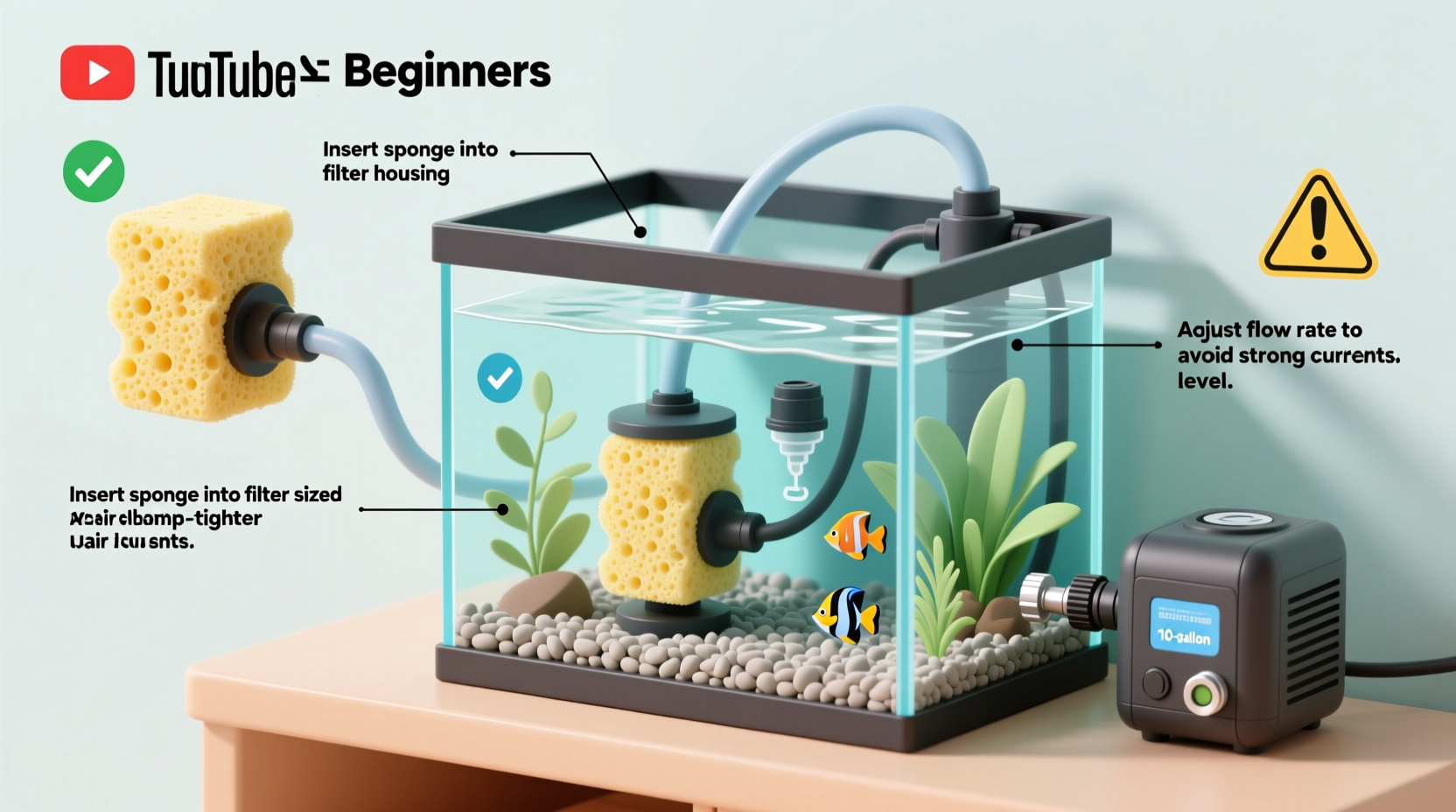
Sponge filters are among the oldest yet most effective filtration systems in the hobby. They work by drawing water through a porous sponge via airflow generated by an external air pump. As water passes through, debris is trapped (mechanical filtration), while beneficial bacteria colonize the sponge’s surface to break down harmful ammonia and nitrites (biological filtration).
Key advantages include:
- Gentle water flow – Safe for delicate species like baby fish or dwarf shrimp.
- No risk of sucking in small organisms – The sponge’s large pores prevent injury.
- Dual filtration action – Combines physical trapping and bacterial processing.
- Low maintenance and cost-effective – Fewer parts to replace compared to power filters.
- Excellent for cycled tanks and hospital setups – Easily seeded with mature bio-media.
“Sponge filters remain a gold standard for low-tech, high-efficiency biological filtration—especially in breeding and quarantine applications.” — Dr. Alan Wong, Aquatic Systems Biologist
Step-by-Step Setup Process
Setting up a sponge filter correctly ensures immediate function and supports faster nitrogen cycle establishment. Follow these steps carefully.
- Unpack and inspect all components: You should have a sponge filter body (with sponge pre-installed), air tubing, check valve (optional but recommended), and an air pump rated for your tank size.
- Rinse the sponge gently: Use dechlorinated water or old tank water—never tap water, as chlorine can kill beneficial bacteria if seeding later.
- Attach the air lift tube: Insert the rigid plastic tube into the center of the sponge assembly. This creates the pathway for rising bubbles to pull water upward.
- Connect the airline tubing: Attach one end to the top of the filter’s outlet and the other to the air pump outlet. Ensure there are no kinks.
- Install a check valve near the pump: Prevents water siphoning back into the pump during power outages.
- Place the filter inside the tank: Position it near the bottom, leaning slightly against the glass if needed for stability.
- Plug in the air pump: Turn it on and observe bubble flow. Adjust airflow using a gang valve or control knob if available.
- Wait for consistent flow: It may take a few minutes for the venturi effect to fully engage and initiate steady water movement through the sponge.
Essential Equipment Checklist
Before beginning, verify you have all necessary components. Missing even one part can delay setup or compromise performance.
| Item | Purpose | Notes |
|---|---|---|
| Sponge Filter Unit | Primary filtration media and structure | Choose size based on tank volume (e.g., HOB-style for 10+ gallons) |
| Air Pump | Generates airflow to drive filtration | Select dual-outlet if supporting multiple tanks/devices |
| Airline Tubing (3–6 ft) | Connects pump to filter | Use UV-resistant tubing to prevent cracking |
| Check Valve | Prevents backflow after power loss | Install close to the pump |
| Air Stone (Optional) | Diffuses bubbles for quieter operation | Can be placed inside the lift tube |
| Gang Valve (Optional) | Controls airflow to multiple filters | Helpful for fine-tuning bubble rate |
Cycling Your Tank with a Sponge Filter
Filtration only becomes truly effective once beneficial bacteria colonies are established—a process known as “cycling.” A new sponge filter has minimal bacterial presence, so allowing time for colonization is critical before adding livestock.
The safest method is the fishless cycle:
- Add a source of ammonia (e.g., pure ammonium chloride or flake food) to simulate waste.
- Dose daily to maintain 2–3 ppm ammonia levels.
- Test water every 2–3 days using a liquid test kit for ammonia, nitrite, and nitrate.
- After 2–6 weeks, ammonia and nitrite will drop to zero, and nitrates will rise—indicating a completed cycle.
- Perform a 50% water change before introducing any fish.
Real Example: Setting Up a 5-Gallon Betta Tank
Jamie purchased her first betta and wanted a safe, simple filtration system. She chose a small corner-mounted sponge filter and a quiet dual-diaphragm air pump. After rinsing the sponge in conditioned water, she assembled the unit and connected 4 feet of airline tubing.
She installed a check valve within inches of the pump and positioned the filter in the rear corner of the tank. Upon powering the pump, bubbles began rising steadily, and water started flowing through the sponge within 90 seconds.
To cycle the tank, Jamie added three drops of liquid ammonia daily. By day 18, tests showed 0 ppm ammonia and nitrite, with detectable nitrates. After a partial water change, she introduced her betta. Six months later, the filter still runs smoothly with only monthly sponge rinses in old tank water.
Maintenance Best Practices
Proper upkeep keeps your sponge filter functioning optimally without disrupting the biological balance.
- Rinse monthly: Swirl the sponge in a bucket of removed tank water during water changes to remove debris while preserving bacteria.
- Never replace the entire sponge at once: Replace only if torn; otherwise, reuse indefinitely. If replacing, keep half the old material temporarily.
- Inspect tubing regularly: Look for cracks, algae buildup, or blockages that restrict airflow.
- Clean the air pump outlet: Dust or moisture can reduce efficiency over time.
- Monitor bubble stream: Sudden reduction indicates clogs or failing pump diaphragms.
Frequently Asked Questions
Can I run a sponge filter without an air pump?
No—sponge filters rely on the air pump to create the suction needed for water flow. Without it, filtration stops. Some internal powerheads can be adapted, but traditional sponge filters require airflow.
Is a sponge filter enough for a 20-gallon community tank?
For lightly stocked tanks, yes—especially when combined with regular maintenance. However, heavily stocked tanks may benefit from additional filtration such as a hang-on-back or sponge filter doubling as pre-filter on another system.
How do I stop my air pump from making noise?
Vibrations are common. Place the pump on a soft mat or shelf above the tank. Use a gang valve to reduce excessive pressure, and ensure tubing isn't pinched. Consider upgrading to a diaphragm-style pump designed for quiet operation.
Final Tips for Long-Term Success
Success with a sponge filter comes down to consistency and understanding its role in your ecosystem. It won’t polish water like a chemical filter, nor remove odors like activated carbon—but it provides unmatched biological support in a simple, durable package.
Pair it with routine water testing, weekly partial changes, and careful stocking decisions, and you’ll maintain crystal-clear water and healthy fish for years. Remember: clarity doesn’t always mean health—stable parameters do.
💬 Ready to build a healthier aquarium? Start with a properly set-up sponge filter today—your fish (and future self) will thank you.








