
In May 2018, a football match between Chivas and Tigres UANL sent shockwaves through Mexican sports culture. It wasn’t just another Liga MX final—it became a national moment, a convergence of history, identity, regional pride, and elite performance. The demand for tickets skyrocketed to unprecedented levels, with fans camping outside stadiums, scalpers charging five times face value, and social media ablaze with speculation and emotion. But what made this particular game so magnetic? Why did millions care so deeply about who won—and why were tickets nearly impossible to get?
The answer lies beyond the pitch. This was more than sport; it was a symbolic clash of ideologies, economic narratives, and decades of rivalry distilled into two legs of high-stakes football.
A Clash of Philosophies: More Than Just Football
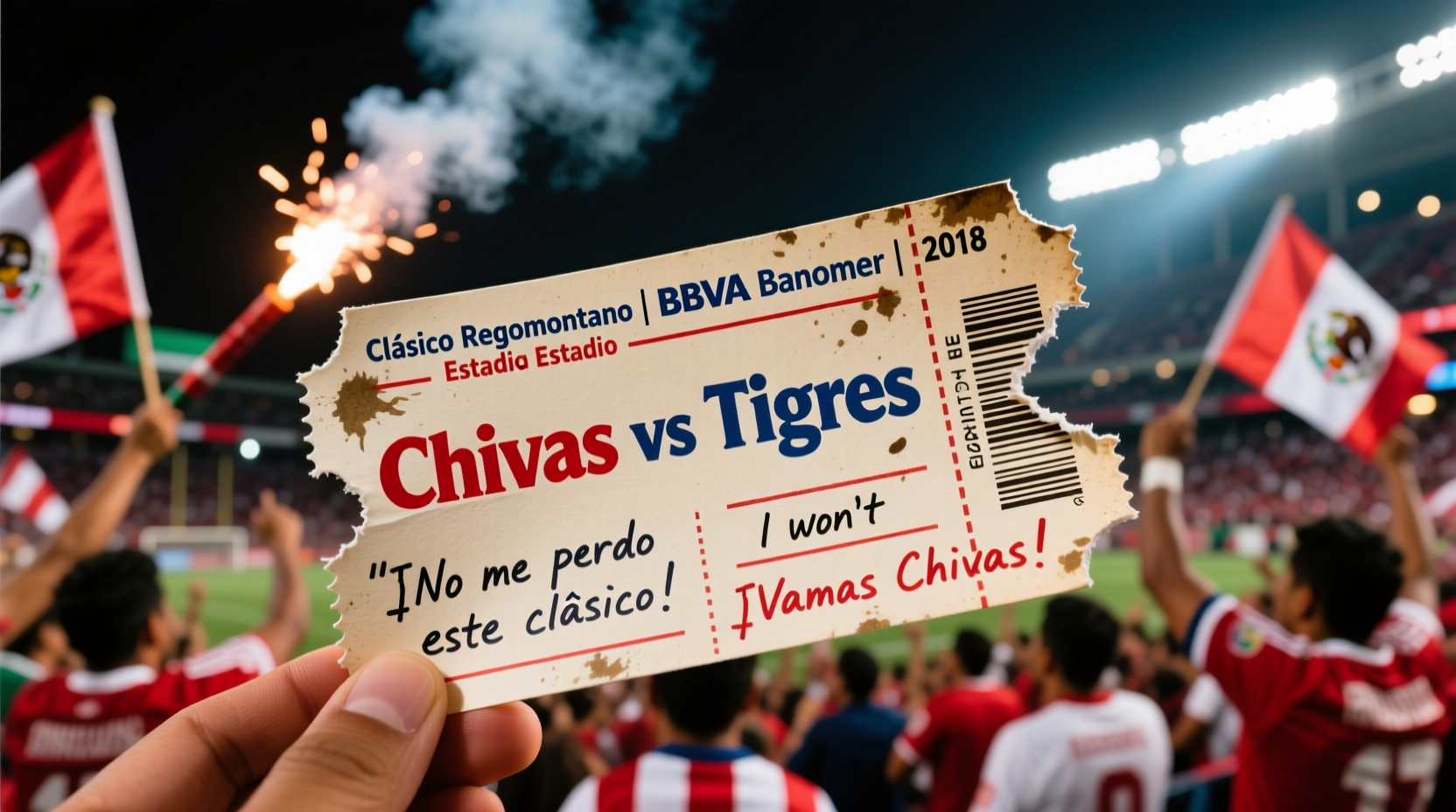
At its core, the Chivas vs Tigres rivalry represents two opposing models of success in Mexican football. Chivas, officially known as C.D. Guadalajara, has long prided itself on fielding only Mexican players—a policy rooted in nationalist pride dating back to the 1900s. Their identity is built on authenticity, tradition, and grassroots development. To many fans, supporting Chivas means supporting *mexicanidad*—a celebration of domestic talent.
Tigres UANL, by contrast, emerged as a symbol of modernization and investment. Backed by the powerful telecommunications giant Grupo Salinas and later Universidad Autónoma de Nuevo León’s institutional support, Tigres embraced foreign signings, professionalized operations, and global ambitions. They weren’t just playing for trophies—they were building a brand.
By 2018, both teams had evolved into powerhouses. Chivas had reasserted dominance domestically and internationally, winning the CONCACAF Champions League in 2018. Tigres had become serial champions, claiming multiple Liga MX titles and consistently reaching continental finals. When they met in the Apertura 2017 final (which extended into early 2018 due to scheduling), it felt like destiny.
“Chivas vs Tigres isn’t just a game—it’s a referendum on what Mexican football values.” — Andrés Ybarra, Sports Analyst at ESPN Deportes
The Ticket Frenzy: Scarcity, Demand, and Emotional Currency
When tickets for the final went on sale, the response was immediate and overwhelming. The Estadio Akron in Zapopan and Estadio Universitario in San Nicolás de los Garza each hold around 50,000 fans. With both clubs boasting massive national followings—and international interest from expatriate communities—the supply was dwarfed by demand.
Fans reported website crashes within minutes of online sales opening. Physical lines formed overnight, with families staking spots for relatives unable to attend. Secondary markets exploded, with verified resale platforms and informal brokers listing tickets for up to $600 USD—nearly five times their original price—for standard seats.
But the obsession wasn’t purely financial. For many, attending the match represented a once-in-a-lifetime opportunity to witness history. Winning meant not just lifting a trophy, but proving a philosophy right.
Tip: Always use official ticket vendors during high-demand events—verify URLs and avoid third-party resellers without buyer protection.Cultural Impact: How the Game Transcended Sport
The buildup to the final permeated everyday life across Mexico. Businesses closed early on match days. Schools delayed exams. Public viewings were organized in plazas from Tijuana to Cancún. Brands capitalized on the moment, launching limited-edition merchandise, while musicians released tribute songs blending traditional banda rhythms with modern beats.
Social media trends surged globally. Hashtags like #SúperClásicoMexicano and #ChivasVsTigres2018 trended for days. Memes compared the teams’ styles: Chivas as passionate underdogs fueled by heart, Tigres as cold, calculated machines. These narratives weren’t entirely accurate—but they resonated emotionally.
Even non-football fans felt drawn in. The stakes felt existential. Was Mexican football better served by purity or progress? Could tradition defeat innovation?
Timeline of Key Events Leading to the Final
- October 2017: Both Chivas and Tigres advance to the Liga MX Apertura semifinals.
- December 1, 2017: Official announcement of the final matchup after both teams win their respective semifinal series.
- December 10, 2017: First leg held at Estadio Universitario—ends in a 2–2 draw.
- December 17, 2017: Second leg at Estadio Akron—Chivas wins 2–1, claiming the title 4–3 on aggregate.
- January–February 2018: Aftermath dominates sports discourse; ticket resale investigations launched amid fraud reports.
Mini Case Study: A Fan’s Journey to the Match
Juan Carlos Méndez, a 34-year-old teacher from Oaxaca City, hadn’t seen Chivas play live in over a decade. When the final was announced, he knew he had to go. “My father took me to my first Chivas game when I was eight,” he said. “He passed away two years ago. This was for him.”
With no tickets available online, Juan joined a community group coordinating group purchases. He paid $420 USD for a midfield seat—more than half his monthly salary—but arranged transportation and lodging through a shared network of fans. On match day, he arrived 12 hours early, wearing his late father’s vintage jersey.
“When Rodolfo Pizarro scored in the second half, I cried,” Juan recalled. “Not just because we were winning. Because I felt my dad was there.” His story, shared on Twitter, went viral—embodying why tickets weren’t just access passes, but emotional conduits.
Do’s and Don’ts: Buying Tickets for High-Demand Matches
| Do’s | Don’ts |
|---|---|
| Register early on official club websites | Buy from unverified street vendors |
| Set up alerts for presales and member-only windows | Share personal login details with third parties |
| Use secure payment methods with fraud protection | Pay in cash without receipts or verification |
| Verify seating maps and stadium entry rules | Assume all listings on social media are legitimate |
Expert Insight: The Economics Behind the Hype
Dr. Laura Fernández, an economist specializing in sports markets at ITAM, explains that the 2018 Chivas-Tigres final exemplified “peak event scarcity.”
“When you combine two top-tier teams, a narrative-rich rivalry, and limited physical capacity, you create perfect conditions for hyper-demand. The emotional premium—the intangible value fans attach to being present—often exceeds monetary cost.” — Dr. Laura Fernández, Instituto Tecnológico Autónomo de México
She notes that secondary market inflation during this period reached levels typically seen only during World Cup knockout stages. Yet unlike international tournaments, this was a domestic league final—highlighting how localized passion can rival global spectacle.
FAQ
Were there any fake tickets sold during the 2018 final?
Yes. Authorities confirmed dozens of counterfeit tickets circulated in both Guadalajara and Monterrey. Many included forged QR codes or reused serial numbers. Fans were advised to purchase only through official channels like Boletomático or directly from club stores.
Why did the final take place in late 2017 but feel like a 2018 event?
The Liga MX Apertura season runs from July to December, with playoffs concluding in mid-December. However, media coverage, celebrations, and cultural impact extended well into January 2018, leading many to associate the event with the new year.
Has Chivas vs Tigres matched this level of intensity since 2018?
While subsequent meetings have been competitive, none have carried the same weight. The 2017 Apertura final remains the only time these two teams faced off in a championship decider—making it uniquely historic.
Conclusion: Why the Obsession Endures
The Chivas vs Tigres ticket frenzy of 2018 wasn’t about greed or exclusivity. It was about belonging. In a country where football shapes identity, being physically present at such a pivotal moment meant participating in a collective story—one that questioned values, celebrated heritage, and showcased excellence.
Tickets were never just paper or digital codes. They were keys to memory-making, to connection, to legacy. That’s why people camped out, paid premiums, and risked scams. They weren’t buying entry—they were buying meaning.
🚀 What match would you travel anywhere to see? Share your ultimate football dream experience in the comments below—because some games aren’t just played on the field. They’re lived in the heart.








