Walking a cat on a leash may seem unusual to some, but for many pet owners, it’s a rewarding way to provide mental stimulation, physical exercise, and safe outdoor exploration. However, choosing the right gear—specifically between a cat harness vest and a traditional cat collar—is critical for both safety and comfort. While collars are common for ID tags and indoor use, they may not be suitable for walking. This article breaks down the key differences, risks, benefits, and expert-backed recommendations to help you decide which option truly keeps your cat safer during outdoor adventures.
Safety First: Why Equipment Matters for Cat Walks
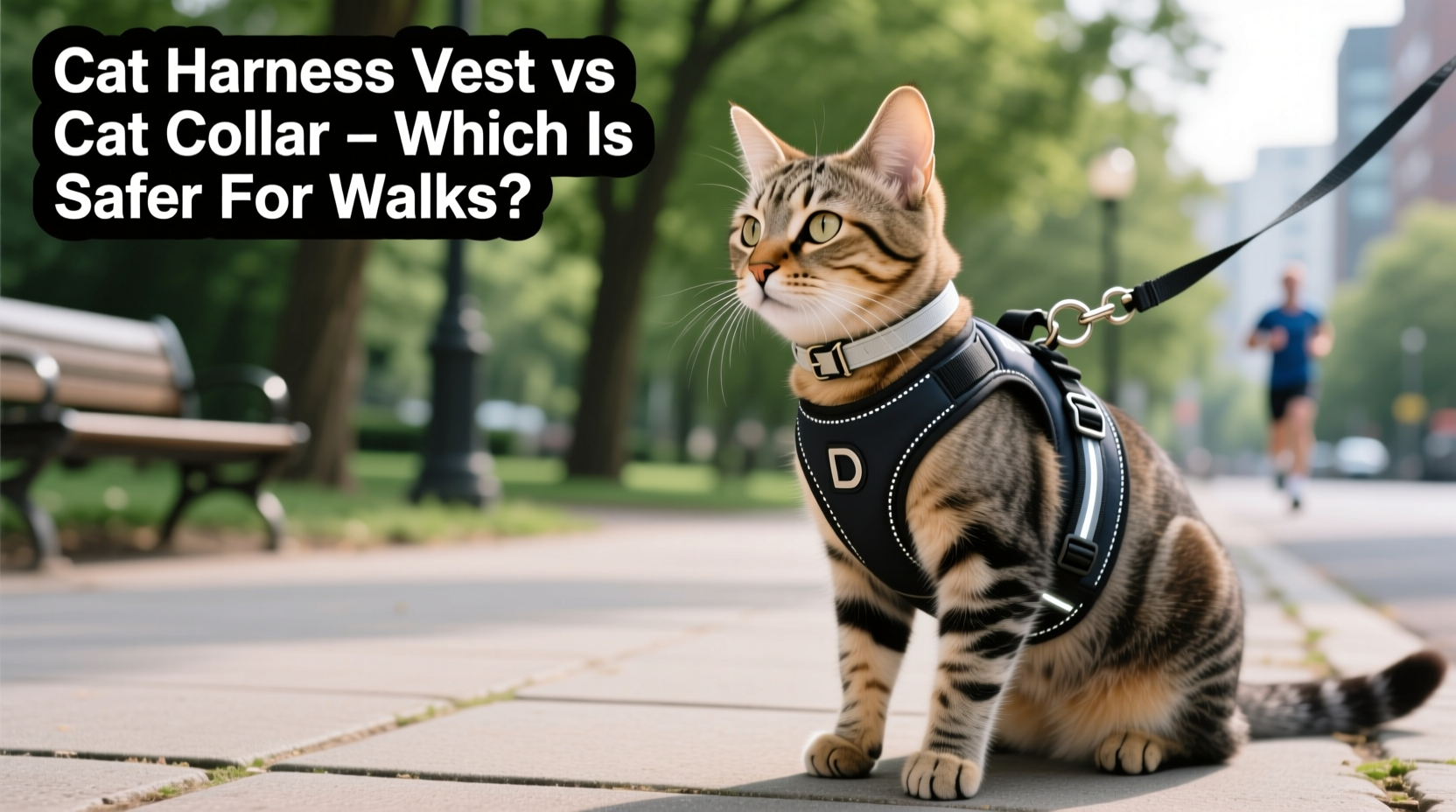
Cats are naturally agile and reactive animals. A sudden noise, scent, or movement can trigger a bolt response. When this happens, any poorly fitted or inappropriate restraint can lead to injury—or worse, escape. Unlike dogs, cats have more delicate tracheas and are prone to slipping out of loose collars. Their narrow heads relative to their necks mean that even snug-fitting collars can come off under stress.
A walking system must distribute pressure evenly and prevent escape without restricting movement or breathing. This is where the fundamental design difference between a harness vest and a collar becomes crucial. Collars concentrate force around the neck, while well-designed harnesses spread tension across the chest and torso, reducing strain and increasing control.
Tip: Never attach a leash directly to a standard cat collar—even if it's breakaway. It poses a serious risk of neck injury.How Cat Harness Vests Work: Design and Advantages
A cat harness vest wraps around the cat’s body with multiple adjustment points, typically securing behind the front legs and around the chest and belly. Most feature two leash attachment points: one at the back (for casual strolling) and one on the chest (to discourage pulling).
The vest-style design offers several advantages:
- Distribution of pressure: Force from a tug is dispersed across the chest and shoulders rather than focused on the neck.
- Escape prevention: The dual-loop or figure-eight construction makes it extremely difficult for cats to wriggle free.
- Comfort: Padded versions reduce chafing and allow longer wear times.
- Visibility: Many harness vests include reflective stitching or loops for attaching lights or tags.
Veterinarians and feline behaviorists consistently recommend harness vests over collars for leash walking. Dr. Sarah Elliott, a certified feline practitioner, explains:
“Cats are not built like dogs. Their anatomy requires restraint systems that avoid the neck entirely. A properly fitted harness vest is the only safe method for leash walking.” — Dr. Sarah Elliott, DVM, Feline Behavior Consultant
Collars: When and Where They’re Appropriate
It’s important to clarify that collars are not inherently unsafe—they serve a different purpose. Breakaway collars with ID tags are essential for every cat, indoors or out. If a cat gets caught on furniture or branches, a breakaway collar releases to prevent strangulation.
However, collars are not designed for sustained tension. Even \"walking\" collars lack structural support and rely solely on a tight fit, which can cause skin irritation, hair loss, or tracheal damage if pulled. Moreover, cats can easily slip out when startled.
In short: collars are ideal for identification and microchip backup. They are not appropriate as primary walking equipment.
Comparative Analysis: Harness Vest vs. Collar
| Feature | Harness Vest | Cat Collar |
|---|---|---|
| Leash Attachment Suitability | Yes – designed for controlled tension | No – not intended for pulling |
| Escape Risk | Low – secure fit, multiple straps | High – cats can slip out easily |
| Pressure Distribution | Even across chest and torso | Concentrated on neck |
| Comfort for Extended Wear | High – especially padded models | Moderate to low – can rub or choke |
| ID Tag Compatibility | Limited – some have tag loops | Excellent – standard feature |
| Best Use Case | Outdoor walks, training, vet transport | Indoor ID, emergency identification |
Real-World Example: Luna’s Near-Escape
Maria from Portland adopted Luna, a curious tabby mix, and wanted to give her outdoor time. She started with a basic nylon collar and leash. On their third walk, a passing squirrel triggered Luna’s chase instinct. She lunged forward—and slipped straight out of the collar, vanishing into nearby bushes.
Thankfully, Luna returned home that evening, unharmed but clearly stressed. Maria consulted her vet, who recommended a step-by-step transition to a soft harness vest. After two weeks of gradual desensitization and indoor practice, Luna began enjoying short, controlled walks—securely restrained and visibly more relaxed.
This scenario is common. According to a 2022 survey by the American Association of Feline Practitioners, nearly 40% of cats walked with collars had attempted or succeeded in escaping during a walk.
Step-by-Step: Transitioning Your Cat to a Harness Vest
Introducing a harness requires patience and positive reinforcement. Follow this timeline for best results:
- Day 1–2: Place the harness near your cat’s favorite spot. Let them sniff and investigate it with treats nearby.
- Day 3–4: Drape the harness over their back briefly while offering high-value treats. Remove immediately after a few seconds.
- Day 5–6: Fasten the harness loosely for short periods (under 1 minute), then gradually increase duration.
- Day 7–10: Attach a lightweight leash indoors. Guide gently, allowing your cat to lead.
- Day 11+: Begin short outdoor sessions in a quiet, enclosed area like a backyard.
Never force the process. Signs of distress—panting, flattened ears, attempts to hide—mean you should slow down.
Tip: Use tuna flakes, chicken bits, or freeze-dried treats to create positive associations with the harness.Frequently Asked Questions
Can I use a dog harness for my cat?
Generally not recommended. Dog harnesses are often too bulky and don’t account for a cat’s shorter torso and narrower build. Some small dog harnesses may work, but a cat-specific design ensures better fit and safety.
What if my cat hates the harness?
Not all cats adapt to walking. Respect their limits. Focus on enriching indoor environments with window perches, catios, or interactive toys instead. Forcing a fearful cat can damage trust.
Should my cat wear a collar even if I use a harness?
Yes. Always use a breakaway collar with ID tags in addition to the harness. The collar stays on at home; remove the harness when not in use to prevent chewing or entanglement.
Final Checklist Before Walking Your Cat
- ✅ Use a properly fitted harness vest—not a collar—for walking
- ✅ Choose a harness with adjustable straps and secure buckles
- ✅ Introduce the harness gradually with positive reinforcement
- ✅ Practice indoors before going outside
- ✅ Keep initial walks short and calm
- ✅ Ensure your cat wears a breakaway collar with ID at all times
- ✅ Avoid busy streets, loud areas, or off-leash dogs
Conclusion: Safety Wins Over Convenience
When it comes to walking your cat, the harness vest is unequivocally safer than a collar. While collars play an important role in identification, they are not engineered to handle the forces of a leash walk. A well-fitted harness vest protects your cat’s airway, prevents escapes, and allows for enjoyable, controlled outdoor experiences.
Your cat’s safety depends not just on what you use, but how you use it. Take the time to choose quality gear, train patiently, and respect your cat’s temperament. With the right approach, leash walking can become a joyful part of your routine—one that strengthens your bond and enriches your cat’s life.
💬 Have experience with cat harnesses or collars? Share your story or tips in the comments to help fellow cat owners make safer choices.








