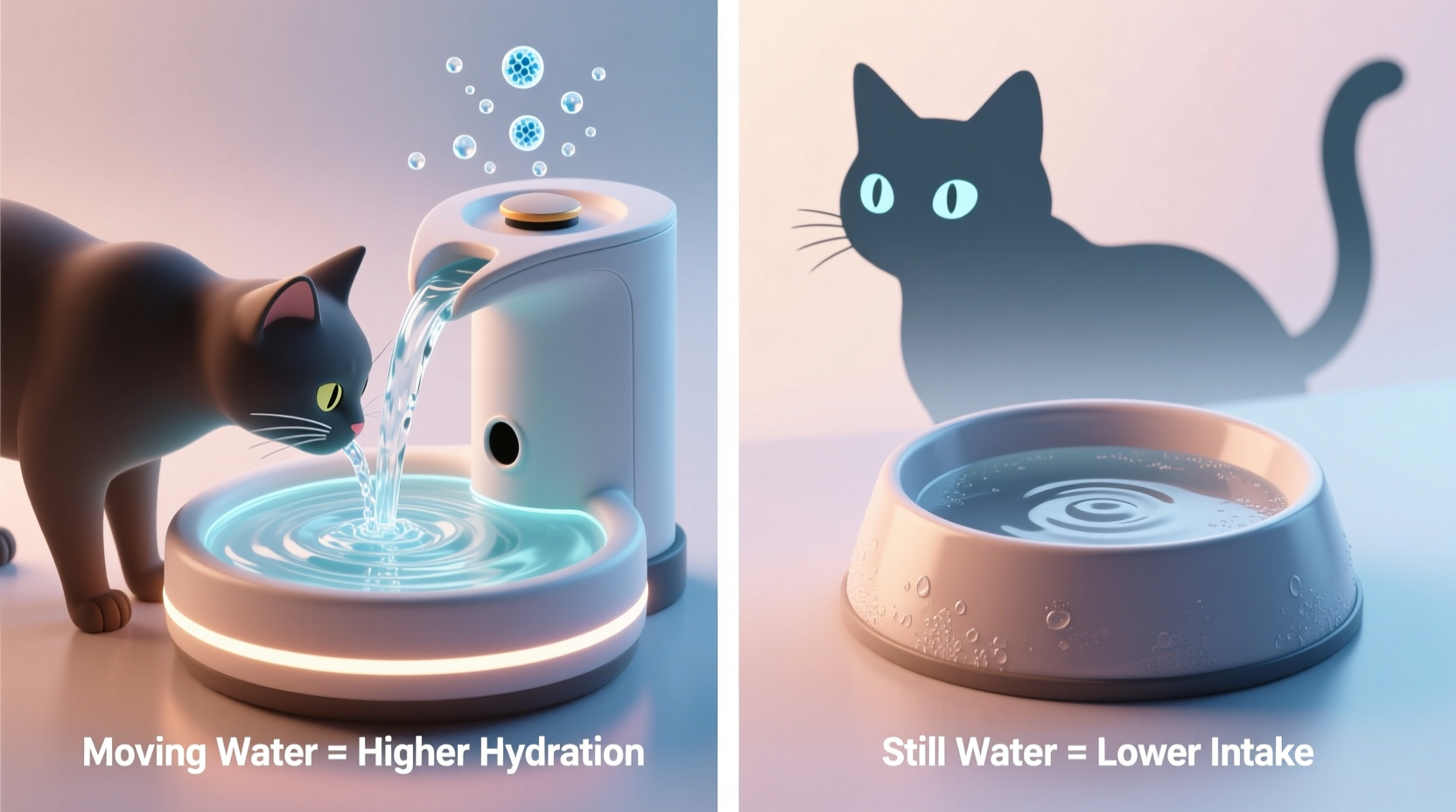
Cats are notoriously selective about their water sources. Unlike dogs, who will drink from puddles, sinks, or garden hoses with enthusiasm, many cats seem to ignore their water bowls entirely—until they're sipping from a dripping faucet or pawing at a fish tank. This behavior isn’t just quirky; it’s rooted in instinct. In the wild, flowing water signals freshness and safety, while stagnant water may harbor bacteria or predators. So when we place a still bowl of water in the corner of the kitchen, our cats might perceive it as less appealing—or even risky.
This natural preference has led to the growing popularity of cat fountains. These devices circulate and often filter water, mimicking the movement and clarity of a stream. But do they actually get cats to drink more? And is that increased intake enough to justify the cost, maintenance, and electrical use? Let’s examine the evidence, compare key features, and determine whether switching from a traditional bowl to a fountain makes a measurable difference in your cat’s hydration habits.
Why Hydration Matters for Cats
Proper hydration is critical for feline health. Cats have a low thirst drive compared to other animals, a trait inherited from desert-dwelling ancestors who obtained most of their moisture from prey. Today’s domestic cats, especially those on dry food diets, often don’t consume enough water. Chronic mild dehydration can contribute to urinary tract issues, kidney disease, and constipation—all common conditions in adult and senior cats.
Adequate water intake helps maintain kidney function, supports digestion, regulates body temperature, and flushes out toxins. Yet studies show that up to 80% of cats fed exclusively dry kibble do not drink sufficient water to compensate for the lack of moisture in their diet. This gap underscores the importance of encouraging voluntary drinking through accessible, appealing water sources.
Tip: Monitor your cat’s daily water consumption. A healthy cat should drink approximately 3.5–4.5 ounces of water per 5 pounds of body weight each day.The Science Behind Moving Water Appeal
Multiple behavioral studies suggest that cats prefer running water. A 2014 study published in the *Journal of Feline Medicine and Surgery* observed that cats given a choice between still and flowing water consistently approached the fountain first and spent more time interacting with it. While total daily intake varied by individual, the trend favored increased consumption from fountains over time.
The reasons are both sensory and evolutionary:
- Freshness perception: Flowing water appears cleaner and oxygenated, reducing the risk of bacterial growth in the cat’s mind.
- Sound and motion: The gentle trickle activates curiosity and hunting instincts, drawing cats closer.
- Temperature regulation: Many fountains include charcoal or foam filters that keep water cooler, which cats often prefer.
- Reduced whisker stress: Wide, shallow bowls can cause discomfort due to whisker fatigue. Fountains typically offer multiple access points and depths.
“Cats evolved to seek out moving water because it was safer to drink. Replicating that environment at home taps into deep-seated instincts.” — Dr. Sarah Ellis, Certified Cat Behaviorist and Co-Author of *The Trainable Cat*
Comparing Cat Fountains and Traditional Water Bowls
To understand the practical differences, let’s break down the core aspects of each option using a direct comparison.
| Feature | Cat Fountain | Water Bowl |
|---|---|---|
| Water Movement | Continuous circulation via pump | Still, unless manually refreshed |
| Hygiene Maintenance | Requires weekly cleaning; filters need monthly replacement | Easier to clean daily but prone to biofilm if neglected |
| Water Freshness | Improved through filtration and aeration | Stagnates quickly, especially in warm environments |
| Cat Attraction | High—motion and sound draw interest | Low to moderate; depends on placement and design |
| Cost Over Time | Higher initial cost + replacement filters | Low upfront and ongoing cost |
| Energy Use | Minimal electricity (low-wattage pump) | None |
| Lifetime Durability | Plastic models may degrade; ceramic/metal last longer | Stainless steel and ceramic very durable |
While fountains score higher in attraction and perceived freshness, they require more commitment in upkeep. On the other hand, a well-maintained stainless steel or ceramic bowl placed strategically can still support good hydration—especially if refilled multiple times a day.
Real-World Impact: A Case Study
Samantha, a veterinarian technician in Portland, noticed her 7-year-old tabby, Milo, was producing concentrated urine during routine checkups. Though Milo ate dry food and had constant access to water, he rarely drank. Concerned about early signs of kidney strain, Samantha introduced a stainless steel cat fountain with a triple-flow setting.
Initially skeptical, she placed the fountain beside his usual bowl and monitored behavior. Within two days, Milo began pawing at the fountain’s stream. By day five, he was drinking from it regularly and ignoring the still bowl. Over the next three weeks, Samantha tracked his litter box output and noted a visible lightening of urine color. A follow-up urinalysis showed improved hydration levels and reduced specific gravity—a clear indicator of better fluid intake.
“It wasn’t magic,” she said. “But the fountain gave him a reason to engage with water. Once he started, the habit stuck.”
This case illustrates a common pattern: the right water delivery system doesn’t just offer convenience—it can shift behavior in meaningful ways, particularly for cats already at risk for urinary or renal conditions.
How to Maximize Hydration, With or Without a Fountain
Whether you choose a fountain or stick with bowls, several strategies can boost your cat’s water consumption. Here’s a step-by-step guide to creating a hydration-friendly environment:
- Place multiple water stations around the house, especially away from food and litter boxes (cats avoid drinking near these areas).
- Use wide, shallow containers to prevent whisker stress—avoid narrow, deep bowls.
- Refresh water at least twice daily, even if the bowl looks full. Stale water loses appeal quickly.
- Choose materials wisely: Stainless steel, glass, or ceramic resist bacterial buildup better than plastic.
- Consider flavor enhancement temporarily—add a splash of low-sodium tuna juice or boiled chicken water to entice drinking (discontinue once habit is established).
- Incorporate wet food into the diet; it contains 70–80% moisture versus 10–12% in dry kibble.
- Run a faucet periodically for curious cats who love running water—just ensure they don’t develop a dependency on it.
FAQ: Common Questions About Cat Hydration
Do all cats prefer fountains?
No—not every cat will be drawn to a fountain. Individual preferences vary based on age, past experiences, and personality. Some cats adapt quickly; others ignore the device altogether. It’s worth trying, but not a guaranteed solution.
Can I use tap water in a cat fountain?
Yes, but if your tap water is high in minerals or chlorine, consider using filtered water. Hard water can lead to limescale buildup in the pump, shortening its lifespan. Always follow manufacturer guidelines.
Are cat fountains safe?
Most modern fountains are designed with low-voltage pumps and sealed motors, making them safe for household use. However, ensure cords are secured and out of reach to prevent chewing. Regular cleaning also prevents mold or bacterial growth inside the unit.
Checklist: Choosing the Right Water System for Your Cat
- ☐ Assess your cat’s current drinking habits—do they avoid the bowl or seek moving water?
- ☐ Measure available space and electrical outlets near feeding zones.
- ☐ Decide on material: plastic (lightweight, affordable), stainless steel (durable, hygienic), or ceramic (heavy, stable).
- ☐ Check noise level—some fountains hum noticeably, which may deter sensitive cats.
- ☐ Confirm ease of disassembly and dishwasher compatibility for cleaning.
- ☐ Look for BPA-free construction and replaceable filters.
- ☐ Read reviews focusing on long-term reliability and pump durability.
Final Verdict: Does Moving Water Encourage Drinking?
The evidence strongly suggests that yes—moving water does encourage many cats to drink more. While not a universal fix, cat fountains leverage instinctual preferences for fresh, flowing sources, making hydration more appealing. For cats on dry diets, seniors, or those with urinary histories, this small change can yield significant health benefits.
That said, a fountain isn’t mandatory. A thoughtfully managed bowl system—clean, strategically placed, and frequently refreshed—can also support adequate intake. The key is consistency, observation, and willingness to adapt based on your cat’s behavior.
Ultimately, the goal isn’t just to provide water, but to inspire its consumption. Whether through the gentle ripple of a fountain or the careful placement of a ceramic bowl, every effort counts toward keeping your cat healthier, happier, and better hydrated.
🚀 Ready to improve your cat’s hydration? Try introducing a fountain for two weeks or optimize your current setup using the tips above. Track changes in drinking and litter habits—and share your experience with fellow cat owners. Small changes today can lead to better health tomorrow.








