Cat owners know the struggle: after every meal, there's a trail of wet kibble, splattered gravy, or a puddle of drool near the feeding area. While cats are famously fastidious groomers, their eating habits can be anything but tidy. Two popular solutions have emerged to combat this—cat drool bibs and cat food mats. But which one truly wins in the battle against post-meal mess?
The answer isn't always straightforward. Each product serves a slightly different purpose, and their effectiveness depends on your cat’s behavior, diet, and physical traits. Understanding how each works—and where they fall short—is key to choosing the right tool for your home.
Understanding the Problem: Why Cats Make a Mess When Eating
Not all cats drool excessively, but many leave behind some kind of mess during or after meals. The causes vary:
- Salivation response: Some cats naturally produce more saliva when they eat, especially if they’re excited or fed strong-smelling wet food.
- Jaw structure: Breeds like Persians or Scottish Folds with flatter faces may struggle to contain liquids, leading to dribbling.
- Eating style: Aggressive eaters tend to fling food and moisture around as they dig in.
- Medical factors: Dental disease, nausea, or gastrointestinal discomfort can increase drooling.
Before investing in accessories, rule out health issues with a vet visit. Once medical concerns are addressed, focus shifts to containment.
Tip: Observe your cat’s eating pattern for a few days. Is the mess concentrated under the chin or spread across the floor? This helps determine whether a bib or mat is better suited.What Is a Cat Drool Bib and How Does It Work?
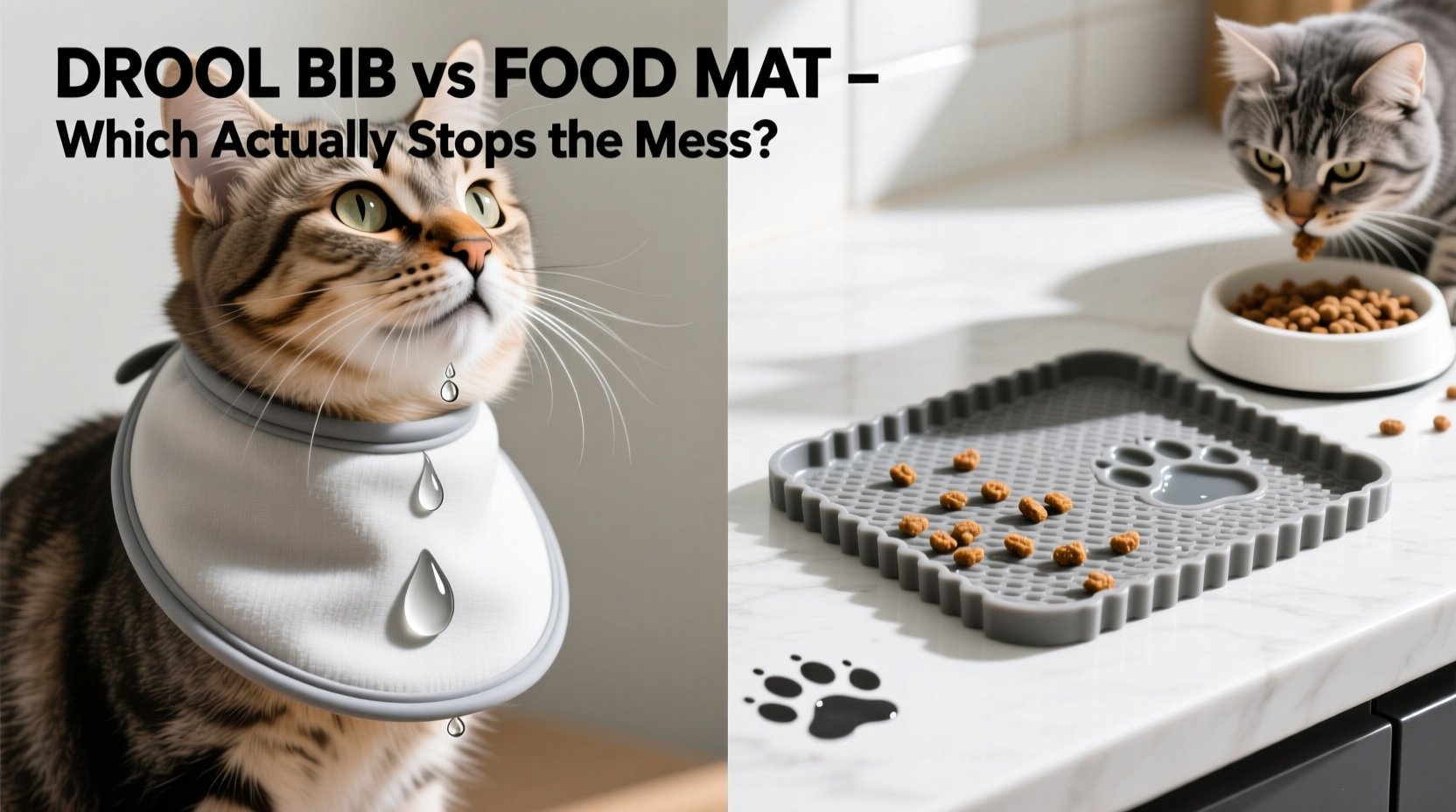
A cat drool bib is a small wearable accessory designed to hang around the cat’s neck during mealtime. Typically made from waterproof or absorbent materials like neoprene, microfiber, or silicone, these bibs catch drool, food bits, and sauce before they land on fur or the floor.
They often feature adjustable Velcro or snap closures and come in various sizes. Some mimic collars; others resemble mini aprons. Because they're worn directly, they act as a first line of defense—intercepting mess at the source.
Bibs work best for cats that:
- Drool consistently while eating
- Have long fur prone to getting matted with food residue
- Tend to lick their paws after meals, spreading moisture
However, not all cats tolerate wearing anything around their necks. Introducing a bib requires patience and positive reinforcement.
How a Cat Food Mat Contains the Mess
In contrast, a cat food mat sits beneath the food and water bowls. These mats range from simple rubber trays to textured silicone surfaces with raised edges designed to trap stray kibble, liquid, and crumbs.
Popular designs include:
- Splash guards: Raised sides prevent food from rolling off.
- Textured grooves: Channel liquids toward the center or outer rim.
- Non-slip bases: Keep the mat stable even during enthusiastic eating.
Food mats don’t stop drool—they collect it after it falls. They’re ideal for multi-cat households or messy eaters who knock over bowls or scatter food widely. Most are easy to wipe down or toss in the dishwasher, making cleanup efficient.
“While bibs address personal hygiene, mats manage environmental cleanliness. Often, you need both.” — Dr. Lena Torres, Feline Behavior Consultant
Head-to-Head Comparison: Bib vs. Mat
| Feature | Cat Drool Bib | Cat Food Mat |
|---|---|---|
| Primary Function | Catches drool and food splatter at the source | Contains mess after it falls |
| Best For | Cats that drool heavily or have long fur | Messy eaters, bowl-knockers, dry food feeders |
| Comfort Level | Varies by cat; some resist wearing it | No contact with cat; generally stress-free |
| Cleanup Ease | Machine washable (most), but requires removal | Wipe clean or dishwasher-safe |
| Durability | Moderate; wear from friction and chewing | High; resistant to claws and spills |
| Cost Range | $8–$18 | $10–$25 |
Real-World Example: A Multi-Cat Household Test
In a household with three cats—one senior with dental issues, one playful kitten, and one picky adult eater—the owner tested both products over four weeks.
The senior cat, prone to excessive drooling due to tooth loss, wore a soft microfiber bib during meals. Within days, the owner noticed less dampness on the cat’s chest fur and fewer stains on the carpet beneath the feeding station.
The food mat, placed under all three bowls, captured flying kibble from the kitten and pooled broth from the adult cat’s canned food. Without the mat, vacuuming was needed daily. With it, weekly wiping sufficed.
Conclusion? The bib helped one cat stay cleaner. The mat kept the entire area manageable. Used together, they reduced cleanup time by nearly 70%.
When One Works Better Than the Other
Choosing between a bib and a mat shouldn’t be an either/or decision. Consider pairing them based on individual needs. That said, certain scenarios favor one over the other.
Choose a Cat Drool Bib If:
- Your cat has long hair that gets soiled easily
- You notice drool dripping onto the floor or into the food bowl
- Your cat grooms excessively after eating, ingesting sticky residue
- You want to protect your cat’s skin from prolonged moisture exposure
Choose a Cat Food Mat If:
- Multiple cats eat in the same spot
- Food is frequently knocked out of bowls
- You feed dry kibble that scatters easily
- You prefer low-maintenance, hands-off solutions
Step-by-Step: How to Implement Both Solutions Safely
- Assess your cat’s eating behavior. Watch closely during meals for 2–3 days. Note drooling, bowl movement, and food scattering.
- Select the right bib size. Measure your cat’s neck and choose an adjustable model. Avoid tight fits—two fingers should fit comfortably underneath.
- Introduce the bib gradually. Let your cat sniff it first. Wear it for just a few minutes with treats, then slowly extend use to mealtime only.
- Pick a high-quality food mat. Look for non-toxic silicone with raised edges and a non-slip base. Size should accommodate both food and water bowls with room to spare.
- Place the mat on a hard surface. Carpet absorbs spills and hides messes; tile or hardwood makes cleaning easier and improves mat stability.
- Monitor comfort and hygiene. Remove the bib immediately after eating. Wash both bib and mat weekly to prevent bacterial buildup.
Frequently Asked Questions
Can my cat choke on a drool bib?
Well-designed bibs are safe when properly fitted. Always supervise your cat during initial use. Never leave a bib on unattended or overnight. Opt for breakaway-style fasteners if available.
Are food mats safe for kittens?
Yes, as long as the material is non-toxic and the edges aren’t sharp. Avoid mats with small removable parts. Supervise young kittens to ensure they don’t chew on the mat.
Do drool bibs really make a difference?
For cats that drool heavily, yes. Owners report visibly cleaner chins, less fur matting, and reduced grooming-related hairballs. However, results depend on consistent use and proper fit.
Final Verdict: Which One Actually Stops the Mess?
Neither solution alone completely eliminates the mess—but used strategically, both significantly reduce it. The cat drool bib excels at protecting the cat itself, preventing drool from soiling fur and skin. The food mat shines in protecting your floors and simplifying cleanup.
If forced to pick one, the food mat offers broader utility across multiple cats and feeding styles. But for cats with chronic drooling or sensitive skin, a bib provides targeted, hygienic benefits that a mat can’t replicate.
The most effective approach? Combine both. Use a lightweight, comfortable bib during meals and place it on a high-traction, spill-resistant mat. This two-tier system catches mess at the source and contains what slips through.
💬 Ready to reclaim your kitchen floor? Try pairing a soft drool bib with a deep-catch feeding mat for one week. Track the difference in cleanup time and share your experience with fellow cat parents!