Choosing the right skillet can shape a new cook’s experience in the kitchen—literally. For beginners, the decision between a cast iron skillet and a nonstick pan often comes down to simplicity, safety, and success rate. Both have passionate advocates, but when it comes to learning the basics of searing, sautéing, and frying, one might be more forgiving than the other. Understanding the strengths and limitations of each helps set realistic expectations and builds confidence early on.
The Nonstick Pan: A Beginner’s Safety Net
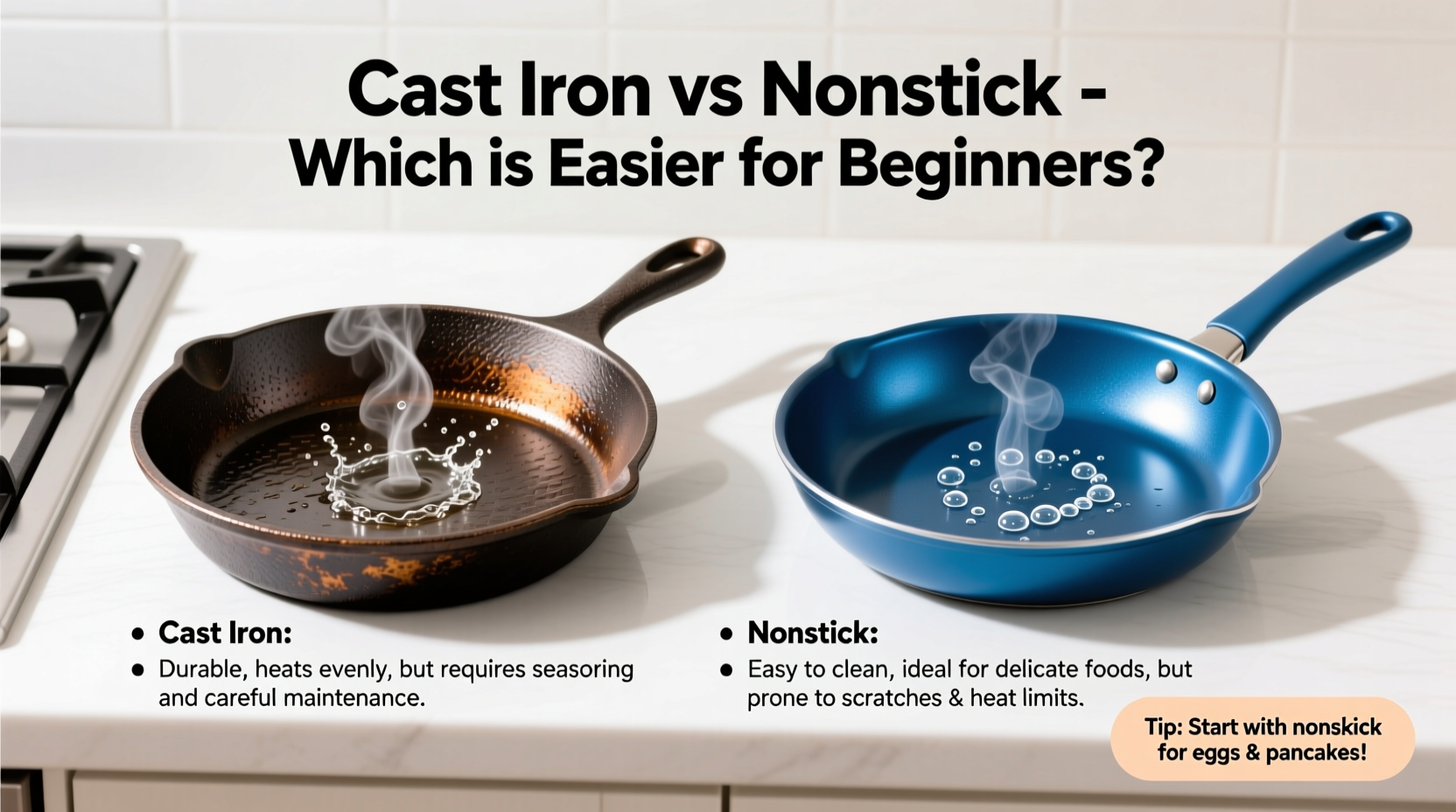
Nonstick skillets are often the default choice for novice cooks—and for good reason. Their surface prevents food from sticking, making them ideal for delicate items like eggs, fish, or pancakes. This feature reduces frustration during early cooking attempts, where timing and heat control are still being mastered.
Most nonstick pans are made with an aluminum base coated in polytetrafluoroethylene (PTFE), commonly known as Teflon, or ceramic-based materials. They heat up quickly and evenly at low to medium temperatures, which aligns well with typical beginner recipes. Cleanup is minimal—often requiring just a wipe or light wash—making post-cooking cleanup less intimidating.
Tip: Always use silicone, wood, or nylon utensils with nonstick pans to avoid scratching the coating.However, nonstick pans have notable drawbacks. They degrade over time, especially when exposed to high heat or metal tools. Most manufacturers recommend replacing them every 2–3 years, depending on usage. Additionally, they’re not suitable for browning meats deeply or achieving a flavorful fond—the browned bits left in the pan that form the base of sauces.
Cast Iron Skillet: Built to Last, But Demanding Respect
Cast iron skillets are legendary in the culinary world for their durability, heat retention, and ability to develop a natural nonstick surface over time through seasoning. Made from poured iron, these pans can last generations if properly cared for. They excel at tasks like searing steaks, baking cornbread, or even roasting vegetables in the oven.
When seasoned correctly—a process involving repeated oiling and heating—cast iron develops a polymerized layer that resists sticking and protects against rust. Once established, this surface rivals synthetic nonstick coatings in performance, particularly for foods like eggs or chicken thighs.
“Mastering a cast iron skillet teaches patience and attention—two essential traits in cooking.” — Chef Marcus Bell, Culinary Instructor at Midwest Institute of Food Arts
But for beginners, cast iron presents a steeper learning curve. It requires careful cleaning—no soap (or only a tiny amount of mild soap, according to modern experts), immediate drying, and regular re-oiling. If neglected, it can rust or lose its seasoning. It's also heavy, which can be awkward for those unaccustomed to handling bulky cookware.
Head-to-Head Comparison: Key Factors for Beginners
| Feature | Nonstick Skillet | Cast Iron Skillet |
|---|---|---|
| Learning Curve | Low – intuitive and forgiving | High – requires technique and consistency |
| Heat Control | Best at low-medium heat | Excellent at high heat; retains heat well |
| Stick Resistance | Immediate – no seasoning needed | Develops over time with proper care |
| Durability | Fair – coating degrades with use | Exceptional – lasts decades |
| Cleaning & Maintenance | Easy – hand wash, dry, store | Moderate – requires drying, oiling, storage care |
| Oven Use | Limited – check manufacturer guidelines | Yes – fully oven-safe, including broilers |
| Weight | Light to moderate | Heavy – can be difficult to handle |
| Price Over Time | Higher long-term cost due to replacement | Lower lifetime cost; one-time investment |
Real Kitchen Experience: A Case Study
Sophie, a 25-year-old software developer, decided to start cooking at home after moving into her first apartment. She bought a budget nonstick skillet and a discounted pre-seasoned cast iron pan, hoping to try both. Her first few weeks revealed stark differences.
She scrambled eggs successfully on day two using the nonstick pan—no butter, medium heat, easy cleanup. Encouraged, she tried the same recipe in the cast iron skillet the next week. Despite heating it slowly, the eggs stuck, leaving behind a stubborn residue. Frustrated, she scrubbed too hard with steel wool, damaging the seasoning.
After reading about proper cast iron care, she started again: heating gently, using enough fat, and cleaning with a brush and hot water. Within three uses, her results improved. By week six, she was confidently searing salmon and flipping pancakes without major sticking.
Her takeaway? The nonstick pan gave her early wins. The cast iron demanded patience—but rewarded her with better flavor and versatility over time.
Step-by-Step Guide: Starting Strong with Either Pan
Whether you choose nonstick or cast iron, following a structured approach improves outcomes. Here’s how to begin:
- Choose your first skillet wisely. For absolute beginners, a mid-range nonstick pan with an ergonomic handle and oven-safe capability (up to 400°F) offers flexibility. Alternatively, a pre-seasoned 10-inch cast iron skillet from a reputable brand (like Lodge) lowers the initial barrier.
- Learn heat management. Start all cooking on medium heat. Nonstick pans don’t need high heat; cast iron heats slowly but holds temperature well. Avoid cranking the burner immediately.
- Use enough fat. Even nonstick benefits from a small amount of oil or butter. For cast iron, fat is essential—especially while building seasoning. Olive oil, avocado oil, or clarified butter work well.
- Don’t overcrowd the pan. Whether cooking vegetables or proteins, spacing ensures even browning and reduces steam buildup, which causes sticking.
- Clean immediately after use. For nonstick, cool slightly, then wash with warm water and soft sponge. For cast iron, clean with hot water and a brush or chainmail scrubber. Dry thoroughly on the stove, then apply a thin layer of oil before storing.
- Store properly. Keep nonstick pans stacked with protective liners or hung individually. Store cast iron in a dry place—never sealed in plastic or stored while damp.
- Track progress. Note what works: heat level, oil type, food type. Small adjustments lead to big improvements.
Expert Tips for Long-Term Success
- Avoid cooking acidic foods (like tomato sauce) in cast iron until the seasoning is well-established, as acidity can strip the protective layer.
- Never put a hot cast iron skillet under cold water—thermal shock can cause cracking.
- Use high-smoke-point oils for seasoning such as flaxseed, grapeseed, or vegetable oil. Apply a thin coat and bake upside down at 375°F for one hour.
- Replace nonstick pans when the surface shows scratches or food starts sticking more frequently—degraded coatings can release harmful fumes at high heat.
- Consider owning both types. Many experienced home cooks keep a nonstick pan for eggs and delicate fish, and a cast iron skillet for searing, roasting, and stovetop-to-oven meals.
Frequently Asked Questions
Can I use soap on a cast iron skillet?
Modern culinary experts agree that a small amount of mild soap is safe, especially if the seasoning is well-developed. However, avoid harsh detergents and prolonged soaking. The key is to dry immediately and re-oil after washing.
Why does my nonstick pan smoke at medium heat?
Nonstick coatings begin to break down at temperatures above 500°F. If your pan smokes at medium heat, your stove may run hot, or the pan could be damaged. Replace it if smoking persists—it’s a health risk.
Is a pre-seasoned cast iron skillet truly ready to use?
Pre-seasoned pans offer a head start, but they rarely perform like a well-maintained heirloom skillet out of the box. Expect to build additional layers of seasoning through regular use, especially with fatty foods.
Final Verdict: Which Is Easier for Beginners?
For ease of use, consistency, and low stress during early cooking attempts, the nonstick skillet is objectively easier for beginner cooks. It delivers reliable results with minimal technique, encourages experimentation, and simplifies cleanup—critical factors when building confidence.
However, cast iron offers unmatched long-term value, versatility, and performance once the learning curve is overcome. It’s not inherently harder, but it demands more attention to detail and routine.
The smart approach? Start with a good nonstick pan to build foundational skills—understanding heat levels, timing, and basic techniques. As comfort grows, introduce a cast iron skillet for weekend projects or high-heat cooking. Over time, many beginners find themselves reaching for cast iron more often, not because it’s easier, but because it produces better food.
Take the Next Step in Your Cooking Journey
Great cooking begins with the right tools—and the willingness to learn from each meal. Whether you begin with a nonstick skillet or dive straight into cast iron, what matters most is consistency. Practice regularly, pay attention to results, and adjust accordingly. The kitchen rewards curiosity and care.
🚀 Ready to upgrade your cookware? Try one new recipe this week using either a nonstick or cast iron skillet—and note how the pan influences the outcome. Share your experience in the comments below!








