When it comes to choosing cookware, health should be a top priority. Two of the most popular options—cast iron skillets and non-stick pans—are staples in kitchens worldwide, but they differ dramatically in materials, performance, and long-term safety. While both have loyal followings, understanding their health implications can help you make a more informed decision. This article breaks down the science, practical use, and real-world risks behind each type to answer the pressing question: which is actually healthier?
Material Composition and Health Implications
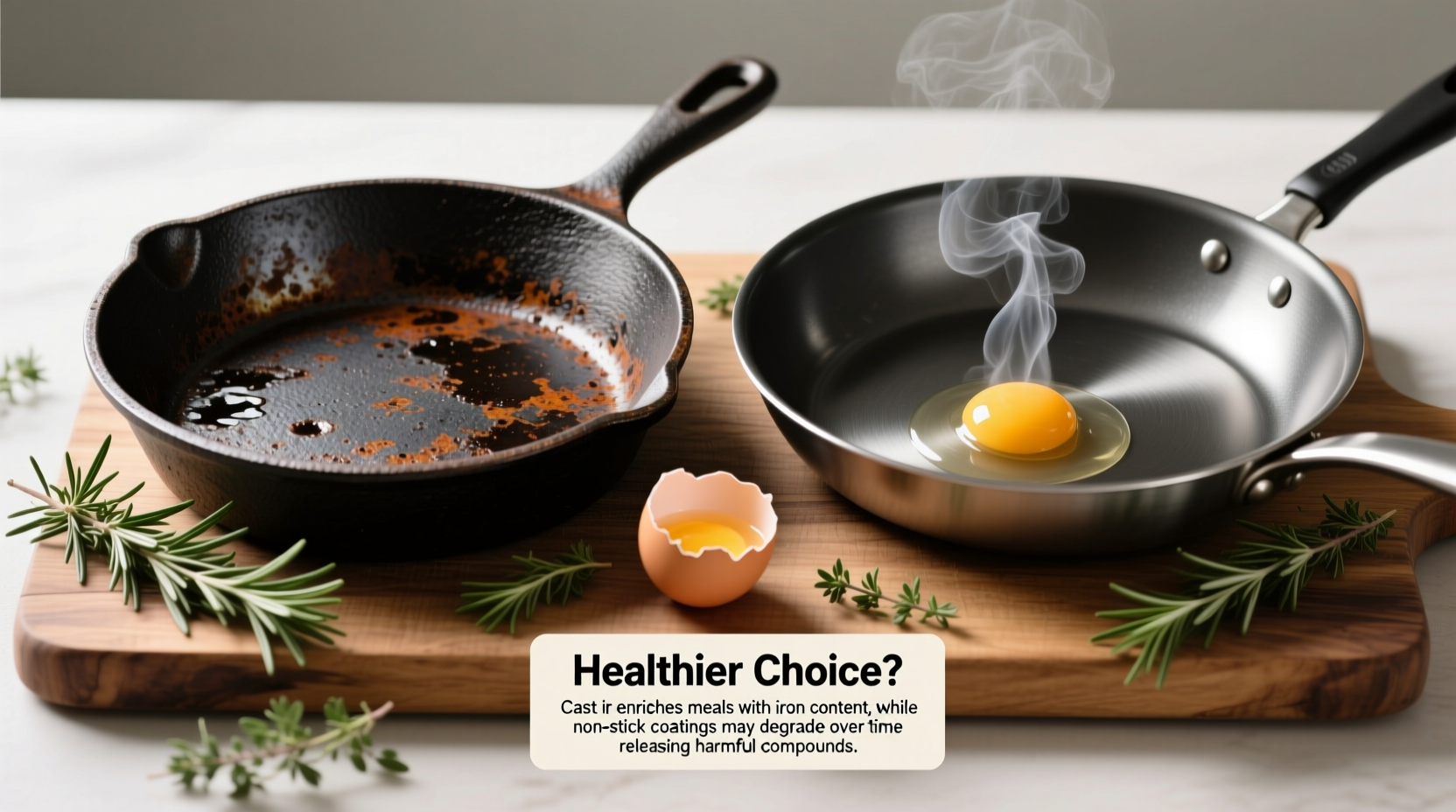
The foundation of any cookware’s safety lies in what it’s made of. Cast iron skillets are typically composed of 95–99% iron, with small amounts of carbon. They are inert when properly seasoned and do not release harmful chemicals under normal cooking conditions. In fact, cooking with cast iron can increase dietary iron intake—a benefit particularly valuable for individuals with iron deficiency.
In contrast, traditional non-stick pans are coated with polytetrafluoroethylene (PTFE), commonly known by the brand name Teflon. While PTFE is stable at typical cooking temperatures, it begins to degrade above 500°F (260°C), releasing toxic fumes that can cause polymer fume fever in humans and be lethal to birds. Additionally, older non-stick coatings may contain perfluorooctanoic acid (PFOA), a chemical linked to cancer and hormonal disruption. Although most major manufacturers phased out PFOA by 2015, concerns remain about replacement chemicals like GenX and PFBS, which are still under scrutiny for environmental persistence and potential health effects.
“Cookware that avoids synthetic coatings reduces exposure to endocrine-disrupting chemicals over time.” — Dr. Lena Patel, Environmental Health Scientist
Durability and Long-Term Safety
One key factor in health-related cookware choices is longevity. The longer a pan lasts without degrading, the less likely it is to leach harmful substances into food.
Cast iron skillets, when properly maintained, can last generations. Their seasoning—a layer of polymerized oil—creates a natural non-stick surface that improves with use. Scratches or chips don’t compromise safety; instead, they can be re-seasoned. There’s no risk of coating flaking into food, a common issue with worn non-stick pans.
Non-stick pans, on the other hand, have a limited lifespan. Most experts recommend replacing them every 2–5 years, depending on usage. Once the coating starts peeling—even slightly—tiny particles can migrate into food. While the FDA considers small ingested flakes not acutely toxic, the long-term effects of chronic low-level exposure to fluorinated compounds are still poorly understood.
Tip: If your non-stick pan has scratches or visible wear, replace it immediately to avoid ingestion of coating fragments.Heat Performance and Chemical Release
Cooking temperature plays a crucial role in determining whether a pan becomes a health hazard. Many everyday cooking techniques—like searing steak, stir-frying, or preheating an empty pan—can easily exceed 500°F, especially on high-powered stovetops.
Studies show that Teflon-coated pans can emit toxic fumes within minutes when heated beyond 570°F (300°C). These fumes have been associated with flu-like symptoms in humans, known as “Teflon flu” or polymer fume fever. Birds, due to their sensitive respiratory systems, can die from exposure even at lower concentrations.
Cast iron handles high heat with ease. It can safely reach temperatures well over 700°F without emitting harmful substances. This makes it ideal for high-heat cooking methods such as searing, broiling, and deep frying. Moreover, its excellent heat retention allows for lower burner settings once heated, reducing overall energy use and minimizing hot spots.
| Pan Type | Max Safe Temp | Toxic Fumes? | Best Heat Level |
|---|---|---|---|
| Cast Iron | 700°F+ (370°C+) | No | Medium-high to high |
| Non-Stick (PTFE) | 500°F (260°C) | Yes, above 500°F | Low to medium |
| Ceramic Non-Stick | 450°F (230°C) | Rarely, but coating degrades faster | Low to medium |
Nutritional Benefits and Dietary Impact
Beyond chemical safety, cookware can influence the nutritional content of your meals. Cooking acidic foods—like tomato sauce, lemon-based dishes, or wine reductions—in cast iron can result in measurable iron transfer. A study published in the *Journal of the American Dietetic Association* found that cooking spaghetti sauce in cast iron increased its iron content from 0.6 mg to 5.7 mg per serving.
This effect can be beneficial for people with iron-deficiency anemia, especially women and vegetarians who may struggle to meet daily iron needs. However, individuals with hemochromatosis—a condition causing excessive iron absorption—should avoid regular use of cast iron for cooking acidic foods.
Non-stick pans offer no such nutritional contribution. Their primary advantage is enabling low-fat cooking, allowing eggs or delicate fish to slide off without added oils or butter. But this convenience comes at the cost of material trade-offs. Even newer ceramic non-stick coatings, marketed as safer alternatives, often lack the durability of traditional non-stick and may contain nanoparticles whose long-term health effects are still being studied.
Real Example: A Home Cook’s Dilemma
Sarah, a mother of two in Portland, used non-stick pans exclusively for breakfast because they made flipping pancakes and scrambling eggs effortless. After reading about PTFE risks, she switched to a well-seasoned cast iron skillet. Initially, she struggled with sticking and uneven browning. But after a few weeks of adjusting her heat control and using a little more oil, she mastered the technique. She noticed her family’s meals tasted richer, and she felt reassured knowing her cookware wouldn’t emit toxins if accidentally overheated. When her old non-stick pan started flaking, she replaced it with cast iron—not just for safety, but for peace of mind.
Maintenance and Practical Considerations
Health isn't just about materials—it's also about how realistically you can maintain your cookware. Poor maintenance can turn even safe pans into hazards.
Cast iron requires regular seasoning and careful drying to prevent rust. Contrary to myth, you can use mild soap to clean it, though aggressive scrubbing or soaking should be avoided. Over time, proper care builds a naturally non-stick, bacteria-resistant surface. Some users report fewer issues with food spoilage when storing leftovers briefly in cast iron, thanks to its slight antimicrobial properties from iron ions.
Non-stick pans demand gentler treatment too. Metal utensils, abrasive sponges, and dishwasher cleaning accelerate coating degradation. Even with careful use, microscopic abrasions accumulate, increasing the chance of particle shedding. Ceramic-coated alternatives fare slightly better in eco-toxicity but tend to lose non-stick performance within a year or two.
Step-by-Step Guide: Transitioning Safely to Cast Iron
- Choose the right size: Start with a 10- or 12-inch skillet for versatility.
- Preheat slowly: Use medium heat for 5–7 minutes to ensure even heating.
- Use enough fat: Apply oil or butter before adding food to prevent sticking.
- Avoid sudden temperature shocks: Don’t plunge a hot pan into cold water.
- After cooking, clean gently: Wipe with a sponge and warm water; use salt for stuck bits.
- Re-season weekly: Coat with thin oil layer and bake upside-down at 375°F for one hour.
- Store dry: Keep in a dry cabinet, optionally with a paper towel inside to absorb moisture.
Expert Recommendations and Industry Trends
Public health organizations increasingly advocate for minimizing exposure to per- and polyfluoroalkyl substances (PFAS), the broader class of chemicals that includes PTFE and PFOA. The Environmental Working Group (EWG) advises consumers to opt for PFAS-free cookware, citing growing evidence of bioaccumulation and links to thyroid disease, infertility, and immune suppression.
As awareness grows, many brands now offer ceramic, enamel-coated, or carbon steel alternatives. Carbon steel, like cast iron, develops a natural patina and withstands high heat, but is lighter and smoother. Enamel-coated cast iron (e.g., Dutch ovens) avoids direct iron leaching while retaining durability, though chipped enamel can expose underlying metal.
“The safest cookware is inert, durable, and free of synthetic coatings. That points clearly toward well-maintained cast iron.” — Dr. Mark Tran, Toxicologist at the Center for Public Ingredient Safety
Frequently Asked Questions
Can cooking with cast iron really increase my iron levels?
Yes, especially when preparing acidic foods like tomato sauce, chili, or citrus-based dishes. The amount transferred varies, but it can contribute meaningfully to daily intake. Those with iron overload disorders should consult a doctor before regular use.
Are all non-stick pans dangerous?
Not inherently, but they require careful use. Avoid heating above 500°F, never leave them unattended on high heat, and replace them at the first sign of wear. Newer PFAS-free ceramic options are safer but less durable.
Is it safe to use olive oil to season cast iron?
It’s not ideal. Olive oil has a low smoke point and can leave a sticky residue. Use high-smoke-point oils like flaxseed, grapeseed, or refined avocado oil for best results.
Final Verdict: Which Is Actually Healthier?
When evaluating long-term health, environmental impact, and safety under real-world conditions, cast iron emerges as the superior choice. It doesn’t release toxic fumes, resists degradation, and can enhance nutrition. While non-stick pans offer short-term convenience, their chemical composition, temperature limitations, and finite lifespan introduce risks that accumulate over time.
That said, the healthiest kitchen isn’t defined by a single pan. A balanced approach includes using cast iron for high-heat tasks, stainless steel for boiling and sautéing, and reserving non-stick only for occasional low-temperature use—especially if you have pets like birds at home.
Tip: Rotate your cookware based on cooking method. Save non-stick for delicate eggs, but rely on cast iron for searing, frying, and baking.Action Checklist: Choosing Safer Cookware
- ✅ Replace scratched or peeling non-stick pans immediately
- ✅ Invest in a high-quality cast iron skillet from a reputable brand
- ✅ Avoid preheating non-stick pans empty
- ✅ Use wooden or silicone utensils with all non-stick surfaces
- ✅ Season cast iron monthly (or more often with heavy use)
- ✅ Store pans in a dry place to prevent corrosion
- ✅ Research brands for PFAS-free certifications
Conclusion
The debate between cast iron and non-stick isn’t just about cooking performance—it’s about long-term wellness. While non-stick pans offer convenience, they come with hidden health trade-offs that become more significant over time. Cast iron, though requiring more care, proves to be the safer, more sustainable, and even nutritionally beneficial option for most cooking tasks. By making informed choices today, you protect not only your immediate meals but your household’s health for years to come.
🚀 Ready to upgrade your kitchen for better health? Start by replacing one worn non-stick pan with a cast iron skillet—and experience the difference in taste, safety, and durability.








