
Stress is a familiar companion in modern life. Deadlines, responsibilities, and constant connectivity keep many people operating at high alert. But when stress persists without relief, it can evolve into something more insidious: burnout. While often used interchangeably, burnout and stress are not the same. Understanding the distinction isn’t just academic—it’s essential for effective recovery and long-term well-being.
Left unaddressed, chronic stress can erode resilience, and burnout can dismantle motivation, identity, and health. Recognizing where you stand on this spectrum determines the right path forward. This article breaks down the physiological, emotional, and behavioral differences between stress and burnout, explores evidence-based treatment strategies, and provides practical tools to regain balance.
The Core Difference: Stress vs Burnout
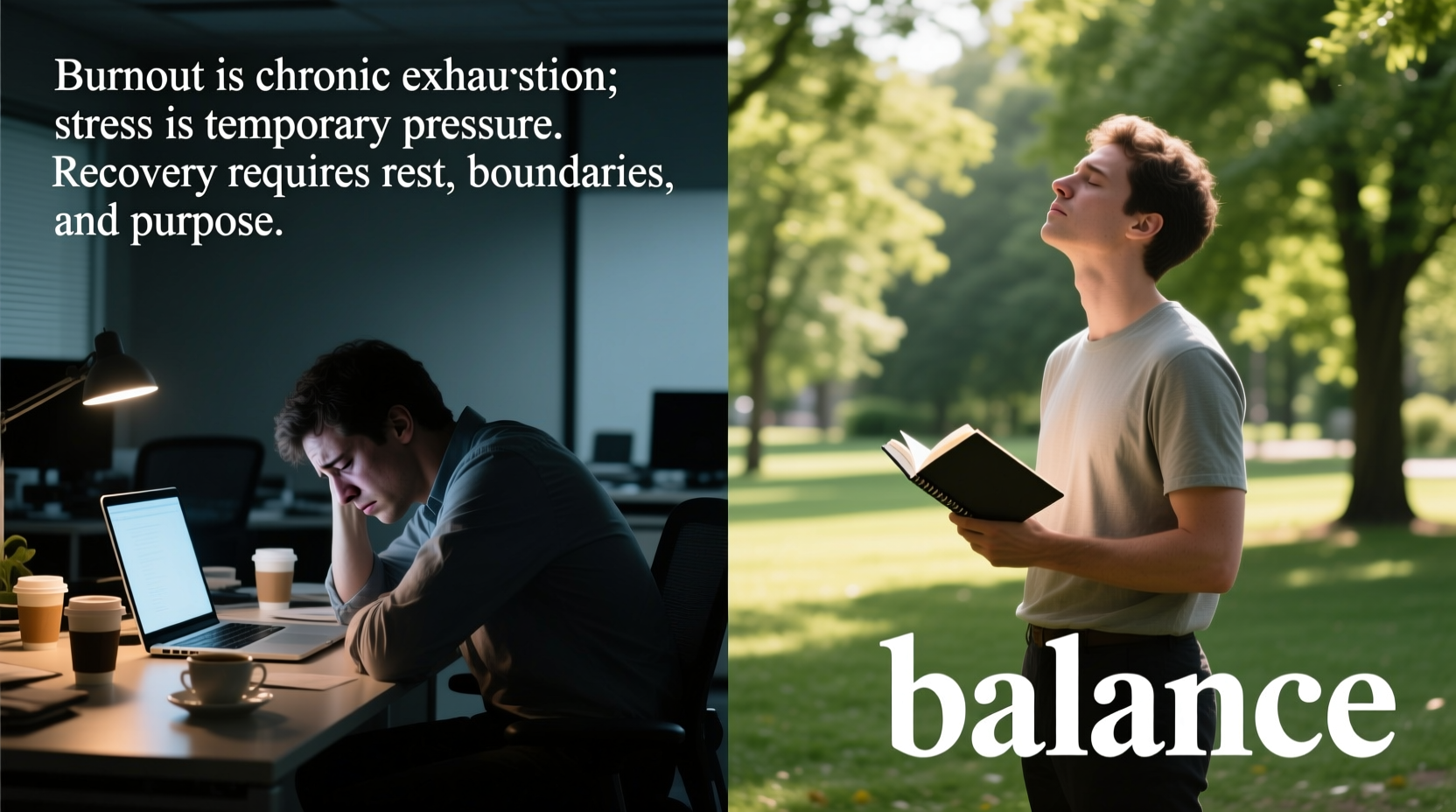
At first glance, stress and burnout may appear similar—both involve exhaustion, irritability, and difficulty concentrating. However, they differ fundamentally in duration, intensity, and psychological impact.
Stress is the body’s short-term response to pressure or perceived threat. It activates the sympathetic nervous system, triggering the “fight-or-flight” reaction. Heart rate increases, cortisol surges, and mental focus sharpens. This response is adaptive when temporary—helping you meet a deadline or avoid danger.
Burnout, by contrast, is a state of chronic workplace or life-related exhaustion recognized by the World Health Organization (WHO) as an occupational phenomenon. It results from prolonged exposure to unmanaged stress, especially in environments with high demands and low control. Unlike stress, which energizes in the short term, burnout depletes. People experiencing burnout report emotional detachment, cynicism, and a sense of ineffectiveness—even when external pressures have lessened.
“Stress is feeling overwhelmed by too much. Burnout is feeling empty from giving too much for too long.” — Dr. Christina Maslach, psychologist and pioneer in burnout research
Symptoms Comparison: Spotting the Shift
Recognizing whether you're dealing with acute stress or full-blown burnout requires attention to patterns over time. The table below outlines key differences:
| Indicator | Stress | Burnout |
|---|---|---|
| Energy Level | Hyperactive, anxious, tense | Exhausted, flat, drained |
| Emotional State | Anxious, worried, fearful | Numb, detached, hopeless |
| Focus | Over-focused on problems | Unable to concentrate, disengaged |
| Outlook | \"I can’t keep up\" | \"Nothing matters\" |
| Duration | Short-term, situational | Chronic, lasting weeks to months |
| Physical Signs | Tension headaches, insomnia, digestive issues | Chronic fatigue, weakened immunity, pain without cause |
The shift from stress to burnout often follows a trajectory: initial over-engagement, then chronic strain, followed by disengagement. Where stress says, “I need a break,” burnout whispers, “I don’t care anymore.”
Tip: Track your mood and energy weekly. A sudden drop in motivation despite reduced workload may signal burnout, not stress.Root Causes: Why One Leads to the Other
Stress becomes burnout when coping mechanisms fail and recovery is absent. Research identifies six core mismatches that fuel burnout, according to the Maslach Burnout Inventory:
- Workload overload: Unmanageable tasks, unrealistic deadlines, or insufficient resources.
- Lack of control: Inability to influence decisions about how or when work gets done.
- Inadequate rewards: Low pay, lack of recognition, or absence of meaningful feedback.
- Breakdown in community: Toxic culture, isolation, or conflict with colleagues.
- Absence of fairness: Perceived inequity in treatment, promotions, or workload distribution.
- Value conflict: Doing work that contradicts personal ethics or beliefs.
These factors create a feedback loop. For example, a nurse working double shifts (workload) without input on scheduling (control) who feels underappreciated (rewards) amid staffing shortages (community) may begin questioning her career choice (values). Over time, this erosion of meaning accelerates burnout.
Unlike stress—which might stem from a single project—burnout reflects systemic misalignment between a person and their environment. It’s not a personal failure; it’s a structural one.
Treatment Approaches: Healing Stress vs Reversing Burnout
Treating stress and burnout requires different strategies because their underlying dynamics differ. Stress management focuses on regulation and resilience. Burnout recovery demands restoration and reevaluation.
For Acute Stress: Regulation Techniques
When stress is situational, the goal is to calm the nervous system and restore balance.
- Diaphragmatic breathing: Slow, deep breaths activate the parasympathetic nervous system, reducing cortisol.
- Mindful pauses: Take 60 seconds every few hours to check in with your body and thoughts.
- Task segmentation: Break large projects into 25-minute focused intervals (Pomodoro technique).
- Physical movement: A 10-minute walk can reset mental clarity and reduce muscle tension.
For Burnout: A Four-Phase Recovery Plan
Burnout recovery is not a quick fix. It requires intentional withdrawal, reflection, restructuring, and reinvestment. Here’s a step-by-step guide:
- Phase 1: Withdrawal (1–2 weeks)
Remove yourself from the source of strain. This may mean taking vacation, medical leave, or reducing responsibilities. The goal is physical and emotional rest—not productivity. - Phase 2: Reflection (Ongoing)
Journal daily. Ask: What drained me? What gave me energy? When did I feel most disconnected? Identify the root causes using the six mismatches framework. - Phase 3: Restructuring (Weeks 3–8)
Negotiate changes. This could include adjusting workload, setting boundaries, switching teams, or even changing roles. Communicate needs clearly with supervisors using data (e.g., hours worked, output trends). - Phase 4: Reinvention (3+ months)
Rebuild purpose. Explore new projects, skills, or roles aligned with values. Consider mentorship, coaching, or therapy to support identity reconstruction.
“You can’t meditate away burnout. You must change the conditions that created it.” — Dr. Michael Leiter, co-author of *The Truth About Burnout*Tip: Return to work gradually. A phased re-entry (e.g., part-time for the first week) reduces relapse risk by 40%, according to occupational health studies.
Real Example: From Executive Collapse to Renewal
Sarah, a 42-year-old marketing director, was consistently praised for her performance. She worked 60-hour weeks, answered emails at midnight, and rarely took vacation. Initially, she felt proud of her stamina. But after two years, she began dreading Mondays, snapping at her team, and struggling to complete basic reports.
Her doctor diagnosed burnout. Blood tests showed elevated inflammatory markers, and she reported constant fatigue despite sleeping 8 hours. Sarah took a four-week medical leave. During Phase 1, she stopped all work communication and focused on sleep hygiene and gentle yoga.
In Phase 2, journaling revealed a deep conflict: she valued creativity but spent 80% of her time on administrative tasks. She realized her role had shifted from innovator to manager—a misalignment with her core motivation.
Upon return, Sarah renegotiated her role. She delegated routine work, reclaimed 10 hours weekly for strategic projects, and set email boundaries (no messages after 7 PM). Six months later, engagement scores improved, and she launched a successful campaign that reignited her passion.
Sarah’s story illustrates a critical truth: burnout recovery isn’t about working smarter. It’s about working differently.
Prevention Checklist: Build Resilience Before Crisis
Preventing burnout starts long before exhaustion sets in. Use this checklist monthly to assess your risk level:
- ✅ I take at least one full day off per week without work tasks.
- ✅ I disconnect from work devices for at least 8 consecutive hours daily.
- ✅ I’ve identified my top three personal work values (e.g., autonomy, growth, impact).
- ✅ My current role aligns with at least two of those values.
- ✅ I’ve had a candid conversation with my manager about workload in the past 60 days.
- ✅ I engage in at least one non-work activity weekly that brings joy or flow.
- ✅ I notice early signs of stress (irritability, insomnia) and act immediately.
Missing more than two items signals increasing vulnerability. Address gaps proactively—not reactively.
FAQ: Common Questions About Burnout and Stress
Can you have burnout outside of work?
While the WHO defines burnout as occupational, people experience similar syndromes in caregiving, parenting, or activism. The pattern—chronic emotional exhaustion, cynicism, inefficacy—mirrors job-related burnout. Though not clinically classified, the experience is real and requires similar recovery strategies.
Is burnout a mental illness?
No. Burnout is not a diagnosable mental disorder like depression or anxiety, though it often coexists with them. It’s classified as an “occupational phenomenon” to emphasize its environmental roots. However, untreated burnout increases the risk of clinical depression by threefold.
Can lifestyle changes alone cure burnout?
Lifestyle adjustments—better sleep, exercise, mindfulness—are necessary but insufficient. They support recovery but don’t resolve the structural issues (e.g., unfair workload) that caused burnout. Sustainable healing requires both personal and organizational change.
Conclusion: Reclaim Your Energy and Purpose
Understanding the difference between stress and burnout is the first step toward meaningful recovery. Stress calls for better coping. Burnout demands deeper change—of environment, expectations, and often, identity.
If you’re stressed, implement regulation techniques now. If you’re burned out, know that healing is possible—but it begins with permission to step back, reflect, and rebuild. Employers, too, must recognize their role in creating sustainable work cultures.
Your exhaustion is not weakness. It’s a signal. Listen to it. Respond with courage, not shame. Whether through boundary-setting, role redesign, or career transition, reclaiming your energy is not an indulgence—it’s a necessity for a life of contribution and meaning.
🚀 Take action today: Pick one item from the prevention checklist and address it this week. Share this article with someone who might be struggling—you might help them see their situation more clearly.








