Birds attacking windows is a surprisingly common issue, especially during spring and early summer. If you've noticed a robin, cardinal, or other songbird repeatedly flying into or pecking at your glass, you're not imagining things—and the bird isn't trying to get inside. This behavior, while startling, is driven by instinct rather than aggression toward you. Understanding the root cause is key to resolving it without harming the bird or disrupting your peace.
This territorial display typically occurs when birds see their own reflection in windowpanes and mistake it for an intruder. The result? Persistent pecking, tapping, and even full-flight collisions as they attempt to drive off what they perceive as a rival. While usually harmless to humans, it can stress both the bird and the homeowner—and in rare cases, lead to injury. The good news: this behavior is temporary and highly preventable with the right strategies.
Why Birds Attack Windows: The Science Behind the Behavior
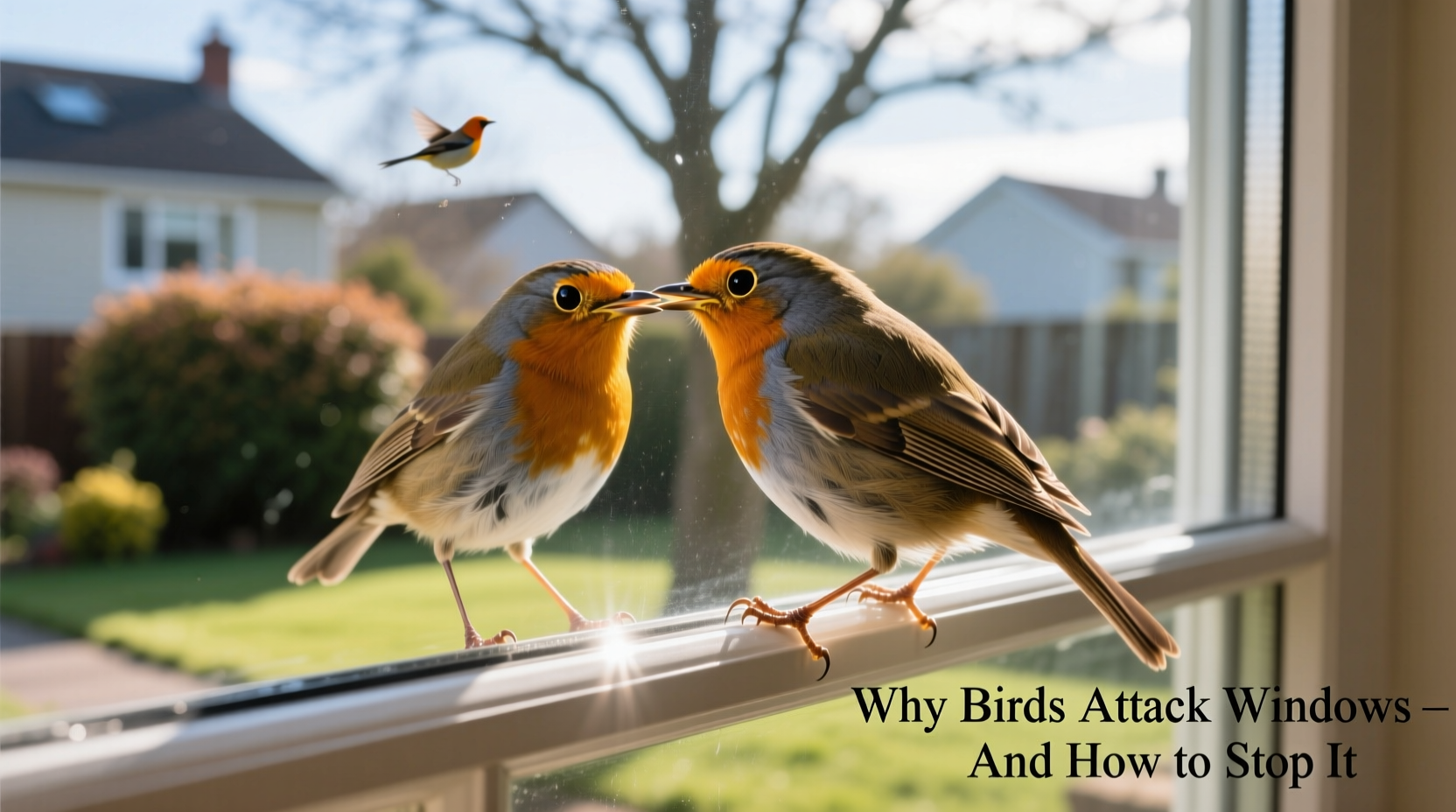
The primary reason birds peck at windows is reflection-based territorial defense. During breeding season, many species—especially males—become hyper-vigilant about protecting their nesting area. When a bird sees its reflection in a window, it interprets the image as another bird encroaching on its territory. This triggers a defensive response that can last for days or even weeks, depending on the species and local conditions.
Species most commonly involved include:
- American Robin
- Northern Cardinal
- Blue Jay
- Mockingbird
- Gray Catbird
These birds are highly territorial and have strong site fidelity, meaning once they’ve claimed an area, they’ll defend it aggressively—even against illusions.
“Birds don’t recognize reflections as themselves. To them, that’s a real threat, and they’ll respond accordingly until the perceived intruder is gone.” — Dr. Laura Farwell, Ornithologist, Cornell Lab of Ornithology
The behavior is most frequent in early morning hours when light conditions create the clearest reflections. It often peaks between March and July, aligning with mating and nesting cycles. Juvenile birds may also tap at windows out of curiosity, but repeated, forceful attacks are almost always territorial.
Tip: The problem is visual, not structural. Solutions should focus on eliminating reflections, not reinforcing windows.Proven Methods to Stop Birds from Pecking at Windows
Stopping window attacks requires breaking the reflection cycle. The goal isn’t to scare the bird away permanently, but to make the surface non-reflective so the bird no longer sees a rival. Here are the most effective, humane approaches:
1. Apply External Window Treatments
Since reflections occur on the outside surface, solutions must be applied externally. Interior blinds or curtains won’t help—the bird still sees its reflection from the outside.
Effective external options include:
- Decals or stickers: Place them close together (no more than 2–4 inches apart) to break up reflections. Avoid large, isolated decals—they may not cover enough area.
- Tempered frosted film: Transparent films that reduce reflectivity while maintaining visibility from inside.
- Masking tape strips: Applied in a grid pattern, these are inexpensive and effective during short-term outbreaks.
2. Use Hanging Deterrents
Moving objects near the window create visual disruption and reduce reflective clarity. These work best when placed within 3 inches of the glass so the bird doesn’t perceive them as part of the environment.
Recommended options:
- Wind chimes with reflective surfaces
- Hanging ribbons or Mylar tape
- Old CDs or reflective pinwheels
- Fishing line with suspended cutouts (e.g., plastic owls or butterflies)
3. Block the View Temporarily
If the behavior is intense but short-lived, simply covering the outside of the window for 2–3 days can reset the bird’s perception. Once the “intruder” disappears, the bird often stops returning.
Tip: Use cardboard, newspaper, or a removable static-cling film. Remove gradually after activity subsides.Do’s and Don’ts: A Quick Reference Table
| Do | Don’t |
|---|---|
| Apply deterrents on the outside of the window | Rely on interior blinds or curtains alone |
| Use closely spaced decals (2–4 inch gaps) | Place a single hawk silhouette in the center |
| Try temporary coverings during peak season | Use loud noises or water sprays regularly |
| Be patient—behavior often resolves naturally | Assume the bird is trapped or injured without evidence |
Real Example: How One Homeowner Stopped a Persistent Robin
In suburban Maryland, a homeowner reported a male American Robin attacking her kitchen window every morning for over two weeks. The bird would arrive around 5:30 a.m., pecking vigorously for up to 30 minutes. Concerned about disturbing neighbors and fearing the bird might injure itself, she tried several methods.
Initially, she hung a fake owl inside the window. It had no effect. She then placed a single hawk decal in the center—but the robin continued attacking around it. Finally, she applied a set of UV-reflective window decals in a tight grid pattern on the outside surface. Within 48 hours, the attacks stopped completely.
“I realized the bird wasn’t seeing the decoys—I needed to break the mirror effect,” she said. “Once I covered more of the glass, it was like the fight just ended.”
Step-by-Step Plan to Stop Window Attacks
- Observe and identify: Note which window is targeted, the time of day, and the bird species if possible.
- Confirm reflection: Stand outside and see if you can see a clear reflection of sky, trees, or the bird itself.
- Apply an external solution: Choose one method—decal grid, tape, film, or hanging deterrent—and install it on the outer pane.
- Monitor for 48 hours: Most birds will stop within two days if the reflection is eliminated.
- Remove gradually: After activity ceases, remove one section at a time to test if the behavior returns.
- Reassess if needed: If pecking resumes, try a different method or combine approaches (e.g., film + hanging ribbons).
FAQ: Common Questions About Birds Pecking at Windows
Will the bird hurt itself by pecking at the window?
Most birds do not seriously injure themselves from pecking, though repeated impacts can cause minor trauma. Full-speed collisions are more dangerous, but pecking is typically a lower-force behavior. Still, it’s best to intervene to reduce stress on the animal.
Does this mean the bird is nesting nearby?
Very likely. Territorial birds only attack windows near their established nesting site. Look for nests in shrubs, eaves, or nearby trees. The behavior usually stops once nesting concludes or fledglings leave the area.
Can I relocate the bird or nest?
No. In most countries, including the U.S., it’s illegal to disturb active nests of native birds under the Migratory Bird Treaty Act. The best approach is to wait it out or use non-invasive deterrents.
Conclusion: Peace for You and the Bird
Birds pecking at windows is a natural, seasonal behavior rooted in survival instincts—not a sign of aggression or distress. With a clear understanding of why it happens, you can apply simple, humane solutions that protect both your home and the bird. The key is to eliminate reflections using external treatments, giving the bird no reason to see a threat.
Most cases resolve within days once the visual trigger is removed. By acting quickly and compassionately, you can restore quiet to your mornings and let the bird focus on raising its young—not fighting a phantom rival.
💬 Have a story about a persistent window-pecker? Share your experience or solution in the comments—your tip could help another homeowner find peace!








