
Glitter has long been a symbol of celebration, creativity, and self-expression. From festival fashion to children’s crafts, its shimmering appeal is undeniable. But beneath the sparkle lies a growing environmental concern: what happens when that glitter washes down the drain or blows into nature? Traditional glitter is made from plastic, contributing to microplastic pollution. In response, biodegradable glitter has emerged as a greener alternative. But how much safer is it really? This article dives deep into the differences between biodegradable and regular glitter, their environmental impacts, and whether switching makes a meaningful difference.
The Hidden Cost of Regular Glitter
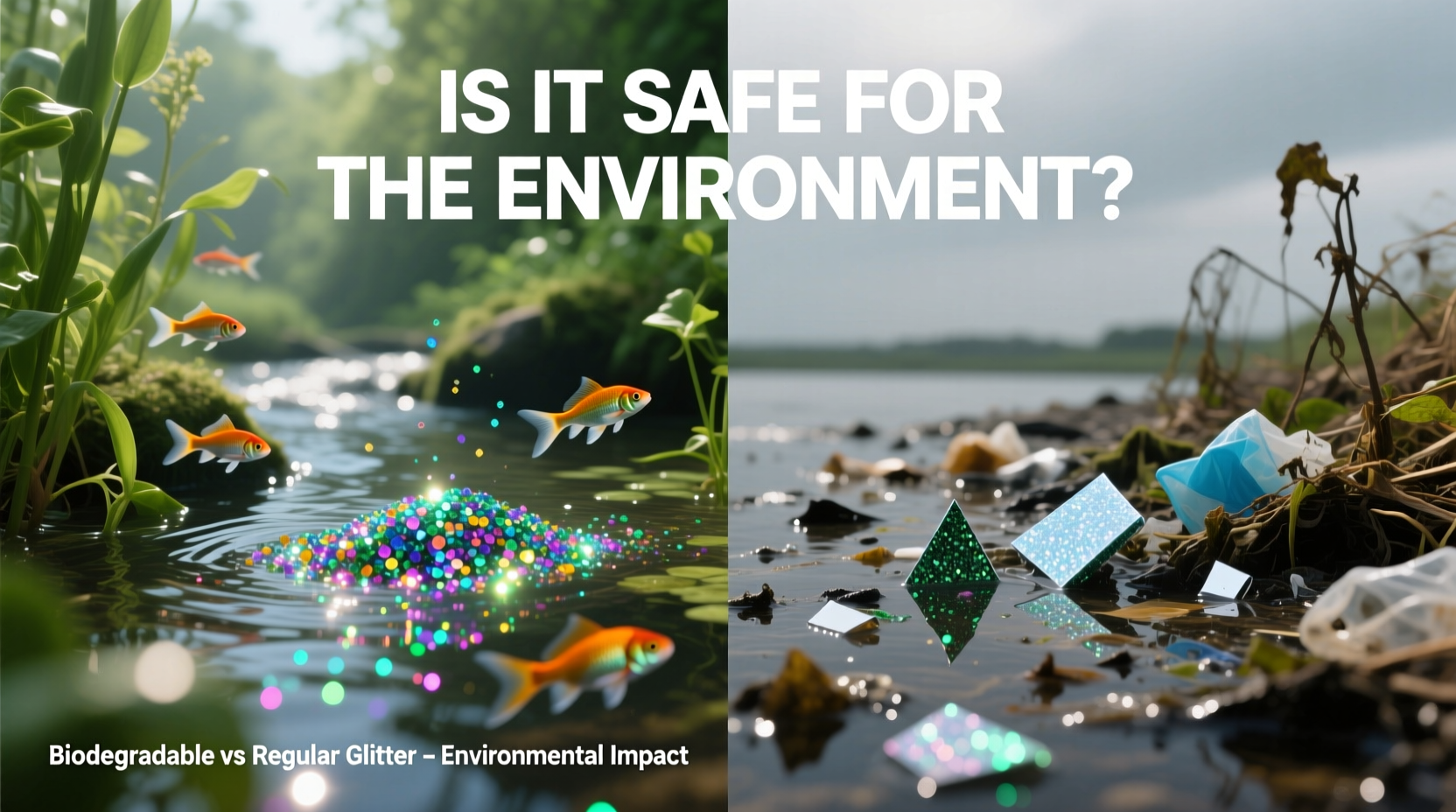
Regular glitter—often labeled as \"cosmetic,\" \"craft,\" or simply \"glitter\"—is typically composed of tiny pieces of polyethylene terephthalate (PET), aluminum, and plastic film. These particles are engineered to reflect light and resist degradation, making them durable but environmentally persistent.
When used in cosmetics, body art, or crafts, glitter easily enters waterways through sinks, showers, or wind dispersal. Once released, these microplastics do not break down. Instead, they accumulate in oceans, rivers, and soil, where they can be ingested by marine life and enter the food chain. A single gram of glitter can contain thousands of microplastic fragments, each capable of absorbing toxic pollutants like PCBs and pesticides.
“Microplastics like those in traditional glitter are now found in every ocean, from surface waters to deep-sea sediments. They’re not just litter—they’re invasive contaminants.” — Dr. Lena Moretti, Marine Microplastics Researcher, Plymouth University
Studies have shown that even small aquatic organisms, such as zooplankton, ingest microplastics. This can lead to physical blockages, reduced feeding, and increased mortality. As these creatures are consumed by larger animals, the plastics—and their associated toxins—move up the food web, eventually reaching humans who consume seafood.
Tip: Avoid using regular glitter in outdoor events or near water sources, as wind and rain accelerate its spread into natural ecosystems.What Is Biodegradable Glitter Made Of?
Biodegradable glitter is marketed as an eco-friendly alternative. Unlike conventional glitter, it is designed to decompose under specific environmental conditions. Most biodegradable glitters are made from a plant-based cellulose film—often derived from eucalyptus or other sustainably sourced wood pulp—coated with non-toxic dyes and minerals for shine.
The key differentiator is biodegradability. When exposed to moisture, heat, and microbial activity (such as in compost or wastewater treatment systems), the cellulose base breaks down into water, carbon dioxide, and biomass within weeks or months—depending on conditions. Reputable brands often certify their products as meeting international standards like ISO 14851 (freshwater biodegradation) or OK Biodegradable WATER (TÜV Austria).
However, “biodegradable” does not mean “instantly disappears.” The rate of breakdown depends heavily on the environment. In a controlled industrial compost setting, biodegradable glitter may degrade within 4–8 weeks. In colder, less active environments like oceans or home compost bins, the process slows significantly—sometimes taking many months.
How It Breaks Down: A Step-by-Step Timeline
- Application: Glitter is applied to skin, hair, or crafts.
- Washing Off: Rinsed into wastewater via sink or shower.
- Entry into Sewage System: Travels through pipes to wastewater treatment plants.
- Exposure to Microbes: In aerobic treatment tanks, bacteria begin breaking down the cellulose film.
- Mineralization: Over time, the material converts into CO₂, water, and organic matter.
- Residual Output: Fully degraded with no persistent microplastics left behind—under optimal conditions.
This timeline assumes proper disposal and treatment infrastructure. If biodegradable glitter ends up in landfills or natural environments without sufficient microbial activity, degradation is delayed or incomplete.
Comparing Environmental Impact: A Detailed Table
| Feature | Regular Glitter | Biodegradable Glitter |
|---|---|---|
| Base Material | Plastic (PET/Aluminum) | Plant cellulose (e.g., eucalyptus) |
| Biodegradability | No – persists for decades | Yes – degrades in 4–12 weeks under ideal conditions |
| Microplastic Release | High – contributes to pollution | None – fully mineralizes |
| Toxicity | May leach additives; adsorbs pollutants | Non-toxic dyes; safe breakdown byproducts |
| Marine Safety | Harmful – ingested by wildlife | Safer – but still avoid direct release into nature |
| Certifications Available | None relevant | OK Biodegradable WATER, ISO 14851 |
Real-World Example: Festival Waste Management
In 2019, the UK’s Glastonbury Festival banned all non-biodegradable glitter after environmental groups highlighted the extent of microplastic contamination in nearby fields and watercourses. Organizers encouraged attendees to use certified biodegradable glitter instead.
Post-event soil and water samples collected by the University of the West of England showed a significant reduction in microplastic levels compared to previous years. However, researchers noted that while biodegradable glitter was present initially, it had largely disappeared within eight weeks—unlike PET-based glitter, which remained detectable months later.
Still, the study emphasized that “biodegradable” does not mean “harmless if littered.” Large quantities overwhelmed local microbial communities, slowing decomposition. The takeaway: even eco-friendly glitter should be minimized and properly managed.
Common Misconceptions About Biodegradable Glitter
Despite its green reputation, biodegradable glitter is often misunderstood. Here are three myths that need clarification:
- Myth 1: It dissolves in water instantly.
Reality: It requires microbial action, not just water. A quick rinse won’t make it vanish. - Myth 2: All “eco-glitter” is truly biodegradable.
Reality: Some brands use misleading labels like “plant-based” or “compostable” without certification. Always check for third-party verification. - Myth 3: It’s safe to scatter outdoors.
Reality: Even biodegradable materials contribute to nutrient overload and physical pollution if released in bulk. Natural settings aren’t designed to process human-made substances quickly.
How to Use Glitter Responsibly: A Practical Checklist
Whether you're a parent helping kids with crafts, a makeup artist, or a festival-goer, you can reduce your glitter footprint. Follow this checklist to make more sustainable choices:
- ✅ Choose certified biodegradable glitter from reputable brands (e.g., EcoStardust, BioGlitz).
- ✅ Check for independent certifications—don’t rely on marketing terms alone.
- ✅ Use sparingly. Less glitter means less environmental load.
- ✅ Apply indoors over a tray or towel to catch fallout and prevent drainage.
- ✅ Remove glitter with a damp cloth before washing—capture particles before they enter water.
- ✅ Dispose of wipes or cloths in the trash, not the toilet or sink.
- ✅ Never release glitter into natural environments—even if labeled biodegradable.
- ✅ Educate others. Share why responsible glitter use matters.
Frequently Asked Questions
Can I compost biodegradable glitter at home?
Most home compost systems lack the consistent heat, moisture, and microbial diversity needed for full degradation. While small amounts may break down over time, it's safer to treat used glitter as residual waste unless you have access to industrial composting. Even then, confirm with your facility whether they accept cosmetic materials.
Is biodegradable glitter safe for kids and sensitive skin?
Yes, most certified biodegradable glitters are non-toxic and free from heavy metals and irritants. Many are approved for use in cosmetics and safe for facial application. However, always patch-test first, especially for children with allergies or eczema. Avoid getting any glitter—biodegradable or not—in eyes or mouth.
Does biodegradable glitter sparkle as much as regular glitter?
Modern biodegradable glitters come very close in appearance. Advances in coating technology allow for high-shine finishes in a wide range of colors and particle sizes. While some users note a slightly softer shimmer compared to plastic glitter, the visual difference is minimal in most lighting conditions.
Conclusion: Shining a Light on Sustainable Choices
The shift from regular to biodegradable glitter represents progress—but not perfection. While biodegradable options are undeniably safer for the environment, they are not a license to glitter freely. Their benefit lies in responsible use, proper disposal, and consumer awareness.
True sustainability isn’t just about swapping one product for another. It’s about rethinking our relationship with disposable aesthetics. Every speck of glitter, no matter how small, has a destination. By choosing certified biodegradable glitter and handling it mindfully, we reduce our contribution to microplastic pollution and protect ecosystems that can’t speak for themselves.
The most beautiful sparkle isn’t just in how something looks—it’s in knowing it won’t cost the Earth.
💬 Have you switched to biodegradable glitter? Share your experience, favorite brands, or crafting tips in the comments below. Let’s build a cleaner, shinier future—together.








