Betta fish—vibrant, intelligent, and often misunderstood—are among the most popular pets in the aquarium hobby. Yet, despite their widespread appeal, they remain one of the most mistreated species due to persistent myths about their care. Chief among these is the belief that bettas can thrive in small bowls or cramped containers. This idea has been perpetuated by pet stores, outdated advice, and misleading marketing for decades. The truth is far different: a bowl is never enough for a betta fish. Understanding the myth versus reality of betta tank size is essential for anyone who wants to provide humane, responsible care.
The Myth: Bettas Thrive in Tiny Spaces
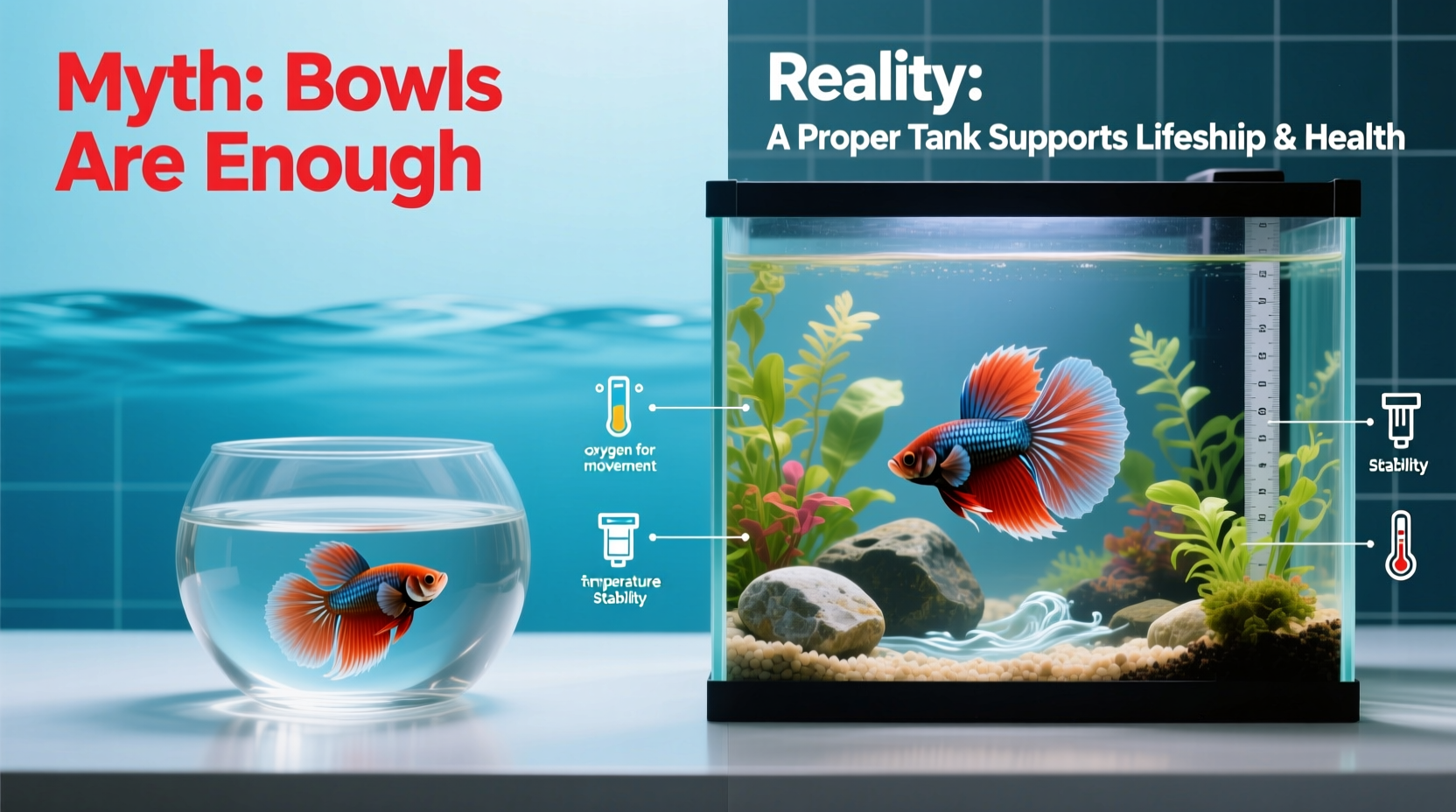
The most damaging misconception about betta fish is that they naturally live in puddles and mud holes in the wild, so they don’t need much space in captivity. While it’s true that bettas originate from shallow, slow-moving waters in Southeast Asia—including rice paddies, drainage ditches, and stagnant pools—these environments are expansive compared to a 1-gallon bowl. In nature, bettas have access to vegetation, natural filtration, temperature stability, and room to swim. A decorative bowl offers none of this.
Worse, the myth is reinforced by how bettas are sold. Many are kept in tiny cups at pet stores, leading consumers to believe this is acceptable long-term housing. Some even claim bettas “prefer” solitude in minimal water because they’re territorial. While bettas do exhibit territorial behavior, especially males toward other males, this doesn’t mean they benefit from isolation in poor conditions. Solitude does not equal suffering.
Tip: Never judge a fish’s needs based on how it’s displayed for sale. Retail practices often prioritize profit over welfare.The Reality: Bettas Need Space, Stability, and Enrichment
Bettas are labyrinth fish, meaning they can breathe atmospheric air—a trait that allows them to survive in low-oxygen environments. However, survival is not the same as thriving. Just because a betta *can* live in a bowl doesn’t mean it *should*. Long-term confinement in undersized tanks leads to stunted growth, weakened immune systems, chronic stress, and shortened lifespans.
A properly cared-for betta can live 3 to 5 years, sometimes longer. In contrast, those kept in unheated, unfiltered bowls often die within months. The difference lies in water quality, temperature regulation, and swimming space—all of which are impossible to maintain in a bowl.
Why Tank Size Matters
Water volume directly impacts stability. Small volumes fluctuate rapidly in temperature and chemistry. Ammonia spikes happen faster and are more toxic in confined spaces. Without a filter, waste accumulates quickly. Even with frequent water changes, a bowl cannot replicate the biological balance of a cycled aquarium.
In a 5-gallon tank or larger, parameters like pH, ammonia, nitrite, and nitrate remain stable for longer, giving the keeper time to respond to changes. Temperature can be maintained with a heater, which is non-negotiable for tropical fish like bettas. Most importantly, a larger tank allows for environmental enrichment—plants, hiding spots, and swimming room—that supports natural behaviors.
“Bettas are not disposable pets. They are intelligent, interactive animals that deserve proper housing. A bowl is a death sentence disguised as convenience.” — Dr. Jessica Raymond, Aquatic Veterinarian
Tank Size Comparison: Bowl vs. Proper Setup
| Feature | Fish Bowl (1–2 gallons) | Minimum Recommended Tank (5 gallons) |
|---|---|---|
| Water Stability | Poor – rapid fluctuations in temp & chemistry | Good – easier to maintain consistent parameters |
| Filtration | Not feasible or effective | Compatible with sponge or small filter |
| Heating | Difficult to regulate; uneven heat distribution | Stable with submersible heater |
| Swimming Space | Severely limited; no horizontal movement | Adequate room to explore and exercise |
| Maintenance Frequency | Daily partial changes needed | Weekly changes sufficient with filtration |
| Lifespan Potential | Often less than 1 year | 3–5+ years with proper care |
| Enrichment Options | Minimal; plants may decay quickly | Live plants, caves, silk decor, etc. |
Common Misconceptions Debunked
- “Bettas come from puddles, so they like small spaces.” While bettas inhabit shallow waters, these areas are part of large, interconnected ecosystems with natural filtration and seasonal expansion. A bowl lacks every critical element of that environment.
- “They don’t swim much, so they don’t need space.” Bettas are active hunters and explorers. In spacious tanks, they patrol territories, interact with decor, and display natural fin-flaring behaviors. Confinement suppresses activity, not preference.
- “Filters are dangerous—they’ll suck up the betta.” Modern sponge filters or adjustable low-flow filters are safe and essential for biological filtration. Surface agitation should be gentle but present.
- “I change the water every day, so it’s fine.” Frequent water changes cause stress through constant disruption. Stable, cycled tanks reduce the need for daily intervention and are healthier overall.
Step-by-Step Guide to Setting Up a Proper Betta Habitat
Transitioning from a bowl to a healthy tank setup is simple and affordable. Follow this guide to create a sustainable home for your betta:
- Choose the right tank size: Start with a minimum of 5 gallons. Larger is better if space allows. Rectangular tanks offer more surface area than tall, narrow ones.
- Add a heater: Bettas require a stable temperature between 76°F and 80°F (24°C–27°C). Use a reliable submersible heater with a guard.
- Install a gentle filter: Opt for a sponge filter or a hang-on-back filter with adjustable flow. Avoid strong currents that could damage delicate fins.
- Condition the water: Always use dechlorinator when adding tap water. Chlorine and chloramine are lethal to fish.
- Cycle the tank: Allow the tank to cycle for 2–6 weeks before introducing your betta. This establishes beneficial bacteria that break down waste.
- Add substrate and decor: Use smooth gravel or sand. Include live or silk plants, caves, and driftwood to provide hiding spots and mental stimulation.
- Introduce the betta slowly: Float the bag for 15 minutes, then drip-acclimate over 30–60 minutes to minimize shock.
- Maintain weekly: Perform 25% water changes weekly, test water parameters, and clean algae as needed.
Mini Case Study: From Bowl to Thriving Tank
Sarah adopted a male betta named Azure from a local pet store, where he was living in a cramped cup with no filtration. She placed him in a 1-gallon bowl at home, changing the water every two days. Within three weeks, Azure stopped flaring his fins, lost color, and began gasping at the surface.
After researching proper care, Sarah upgraded to a 5-gallon tank with a sponge filter, heater, and live plants. She cycled the tank properly and transferred Azure using drip acclimation. Over the next month, his color returned, he began exploring actively, and his appetite improved. Six months later, Azure displays vibrant blues and purples, swims confidently, and interacts with her during feeding. His transformation highlights what’s possible when myth gives way to science-based care.
Essential Care Checklist for Betta Owners
Use this checklist to ensure your betta lives in a healthy, enriching environment:
- ✅ Tank size: Minimum 5 gallons
- ✅ Heated to 76–80°F (24–27°C)
- ✅ Filtered with gentle flow
- ✅ Cycled before adding fish
- ✅ Weekly 25% water changes
- ✅ Dechlorinated water only
- ✅ Hiding places and plant cover
- ✅ No sharp or rough decorations
- ✅ High-quality betta pellets or frozen foods
- ✅ Regular observation for signs of illness
Frequently Asked Questions
Can I keep a betta in a vase with a plant on top?
No. “Betta vases” are inhumane. The roots of plants like peace lilies are not a food source, and the confined space prevents proper heating and filtration. These setups severely compromise health and are banned in several countries.
Do bettas get lonely?
Bettas are solitary and territorial, especially males. They do not require companionship from other fish. However, they benefit from environmental stimulation. A well-decorated tank with visual variety keeps them mentally engaged.
Is a 2.5-gallon tank acceptable?
While slightly better than a bowl, a 2.5-gallon tank is still too small for long-term health. It’s difficult to stabilize temperature and water chemistry, and filtration options are limited. Aim for 5 gallons or more for optimal care.
Conclusion: Rethinking the Betta Standard
The image of a betta fish swirling in a glass bowl is iconic—but it’s also outdated and harmful. Science, veterinary expertise, and countless real-world experiences confirm that bowls fail to meet even the basic needs of these remarkable fish. Temperature swings, toxic water buildup, lack of filtration, and zero enrichment make bowls a recipe for chronic stress and early death.
Providing a proper 5-gallon tank with a heater, filter, and thoughtful decor isn’t excessive—it’s the bare minimum for ethical care. Every betta deserves clean, stable water, room to swim, and a habitat that supports natural behaviors. Moving beyond the bowl myth isn’t just about better fishkeeping; it’s about respect for life.
🚀 Your betta doesn’t need a bowl—he needs a home. Upgrade today, share this knowledge, and help end the myth once and for all.








