The term “Pitbull” often sparks strong reactions—ranging from admiration to misunderstanding. In truth, there is no single breed officially named “Pitbull.” Instead, it’s a broad label commonly used to describe several closely related breeds known for their strength, loyalty, and intelligence. Understanding which dogs fall under this umbrella and identifying the best among them requires clarity, research, and respect for each breed’s unique traits. This guide cuts through the noise to deliver accurate, trustworthy information about the best types of Pitbull dogs, helping potential owners make informed decisions based on temperament, care needs, and compatibility.
Understanding the \"Pitbull\" Label
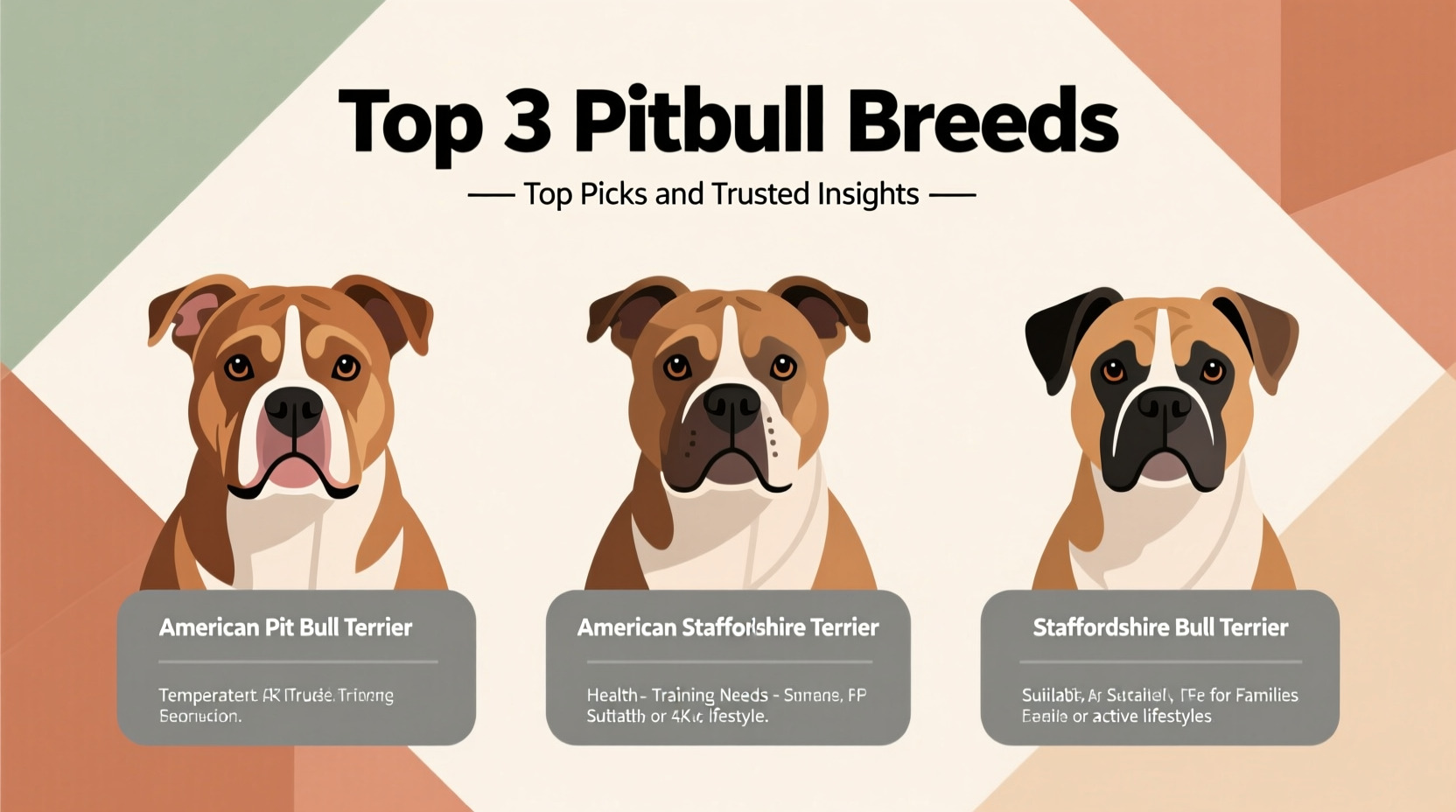
Before evaluating individual breeds, it's essential to clarify what \"Pitbull\" actually means. The term typically refers to dogs descending from bulldog and terrier crosses developed in the 19th century for physical work and companionship. Today, four main breeds are most frequently associated with the Pitbull label:
- American Pit Bull Terrier (APBT)
- American Staffordshire Terrier
- Staffordshire Bull Terrier
- American Bully
These breeds share common ancestry but differ significantly in size, appearance, and purpose. While they’re often grouped together in public discourse—and sometimes legislation—each has its own breed standard, temperament profile, and suitability for different households.
Tip: Always verify a dog’s actual breed through pedigree documentation or DNA testing rather than relying on visual identification, especially in areas with breed-specific legislation.Top 4 Pitbull-Type Breeds Compared
| Breed | Average Weight | Temperament | Lifespan | Best For |
|---|---|---|---|---|
| American Pit Bull Terrier | 30–60 lbs | Confident, affectionate, energetic | 12–16 years | Active families, experienced owners |
| American Staffordshire Terrier | 50–70 lbs | Loyal, bold, people-oriented | 12–15 years | Families, urban homes with training |
| Staffordshire Bull Terrier | 24–38 lbs | Gentle, brave, child-friendly | 12–14 years | Smaller homes, families with children |
| American Bully | 50–150 lbs (varies by type) | Calm, protective, companionable | 10–12 years | Owners seeking a loyal guardian |
The American Pit Bull Terrier stands out as the most widely recognized and historically consistent representation of what many consider the “true” Pitbull. Bred for agility and resilience, APBTs excel in obedience, dog sports, and family life when raised responsibly.
Why the American Pit Bull Terrier Ranks as the Best Pick
Among Pitbull-type dogs, the American Pit Bull Terrier consistently earns top marks from canine experts and responsible breeders for its balanced temperament, adaptability, and trainability. Recognized by the United Kennel Club (UKC) since 1898, the APBT was originally bred not for aggression, but for tenacity, courage, and a strong bond with humans—a trait known as “gameness” paired with “affinity for people.”
Modern APBTs, when sourced from ethical breeders and properly socialized, are remarkably stable, affectionate, and eager to please. They thrive in active homes where mental stimulation and structured exercise are part of daily life. Their medium build makes them manageable in various living environments, provided they receive sufficient outdoor activity.
“The American Pit Bull Terrier, when bred for temperament and health, is one of the most reliable, loving companions you can have. Misconceptions about the breed stem more from misuse than genetics.” — Dr. Karen Overall, Veterinary Behaviorist
Essential Care and Training Guidelines
Owning any Pitbull-type dog comes with responsibilities that go beyond basic feeding and walking. These intelligent, high-energy breeds require consistent leadership and early socialization to reach their full potential as well-mannered members of society.
Step-by-Step Guide to Raising a Well-Behaved Pitbull
- Select a Reputable Breeder: Look for breeders who health-test parents (hips, heart, patellas), prioritize temperament, and allow interaction with puppies and parents.
- Begin Socialization Early (8–16 weeks): Expose your puppy to diverse people, animals, sounds, and environments in a positive way.
- Enroll in Positive Reinforcement Training: Use reward-based methods; avoid punishment, which can trigger fear or defensiveness.
- Establish Leadership Without Dominance: Be consistent with rules, routines, and boundaries while remaining kind and patient.
- Maintain Physical and Mental Exercise: Aim for at least 60 minutes of activity daily, including walks, play, and puzzle games.
- Practice Public Manners: Leash training, polite greetings, and impulse control prevent behavioral issues as your dog matures.
Real-Life Example: A Responsible Adoption Success Story
Carlos, a schoolteacher in Austin, Texas, adopted an American Pit Bull Terrier named Luna from a local rescue after months of research. He attended beginner obedience classes, practiced controlled interactions with other dogs, and made sure Luna got daily runs at a secure off-leash park. Within six months, Luna earned her Canine Good Citizen certification and began volunteering with Carlos at a reading program for elementary students. Children look forward to reading aloud to Luna, who sits calmly beside them, offering silent encouragement.
This story reflects what is possible when a Pitbull-type dog is raised with patience, structure, and love. It also highlights how these dogs can become ambassadors for their breed—challenging stereotypes through positive community presence.
Common Myths and Mistakes to Avoid
Despite growing awareness, misconceptions persist. Here are three widespread myths and the truths behind them:
- Myth: Pitbulls are inherently aggressive.
Truth: Aggression is not breed-specific. Reputable studies, including those by the American Temperament Test Society, show APBTs pass temperament tests at rates comparable to Golden Retrievers (over 86% success rate). - Myth: They have locking jaws.
Truth: No scientific evidence supports this. Their jaw structure is similar to other breeds; their strength comes from powerful neck muscles and determination, not anatomy. - Myth: They don’t get along with other animals.
Truth: While some have high prey drive or same-sex dog reactivity, proper socialization and management can lead to peaceful multi-pet households.
Checklist: Before You Bring Home a Pitbull-Type Dog
- ✅ Research breed-specific laws in your city or rental agreement
- ✅ Budget for higher insurance or pet deposit costs (if applicable)
- ✅ Commit to ongoing training and socialization
- ✅ Secure a fenced yard or access to safe off-leash areas
- ✅ Choose a veterinarian familiar with bully breeds
- ✅ Prepare for public scrutiny and be a calm, confident handler
Frequently Asked Questions
Are Pitbulls good with children?
Yes, when properly raised and supervised. Many Pitbull-type dogs are exceptionally gentle and patient with kids. The Staffordshire Bull Terrier, in particular, is nicknamed “the nanny dog” due to its historical role protecting children. However, no dog should ever be left unsupervised with young children, regardless of breed.
Which Pitbull breed lives the longest?
The American Pit Bull Terrier and Staffordshire Bull Terrier typically live the longest—up to 14–16 years—with proper care. Smaller size and fewer extreme physical features contribute to better long-term health compared to bulkier variants like the XXL American Bully.
Do I need prior dog experience to own a Pitbull?
While not an absolute rule, prior experience is strongly recommended. These dogs are intelligent and strong-willed. First-time owners can succeed, but only with dedication to education, training, and consistency. Consider working with a certified dog trainer during the first year.
Final Thoughts: Choosing Trust Over Trends
Selecting the best breed of Pitbull dog isn't about chasing popularity or intimidation factor—it's about finding a companion whose energy, size, and personality align with your lifestyle. The American Pit Bull Terrier remains the gold standard among Pitbull-type breeds due to its proven temperament, versatility, and enduring loyalty. But regardless of which variant you choose, your responsibility extends beyond ownership to advocacy. How you train, present, and care for your dog shapes public perception.
💬 Have experience with a Pitbull-type breed? Share your story or tips in the comments below—your insight could help someone make a life-changing decision.








