
For pet owners juggling work, travel, or unpredictable schedules, ensuring their pets feel safe and cared for in their absence is a top priority. Two popular tools—automatic pet feeders and timed treat dispensers—are often marketed as solutions to support pet well-being. While both deliver food on a schedule, they serve different psychological functions. The key question isn’t just about convenience; it’s about emotional impact. Which device actually helps reduce pet anxiety more effectively?
Understanding the distinction between nutritional consistency and emotional reassurance is crucial. Automatic feeders provide meals at set times, reinforcing routine. Timed treat dispensers offer surprise rewards that stimulate positive anticipation. Each influences a pet’s emotional state differently. This article explores how these devices affect pet anxiety, backed by behavioral science, expert insights, and real-world use cases.
The Role of Routine in Pet Mental Health
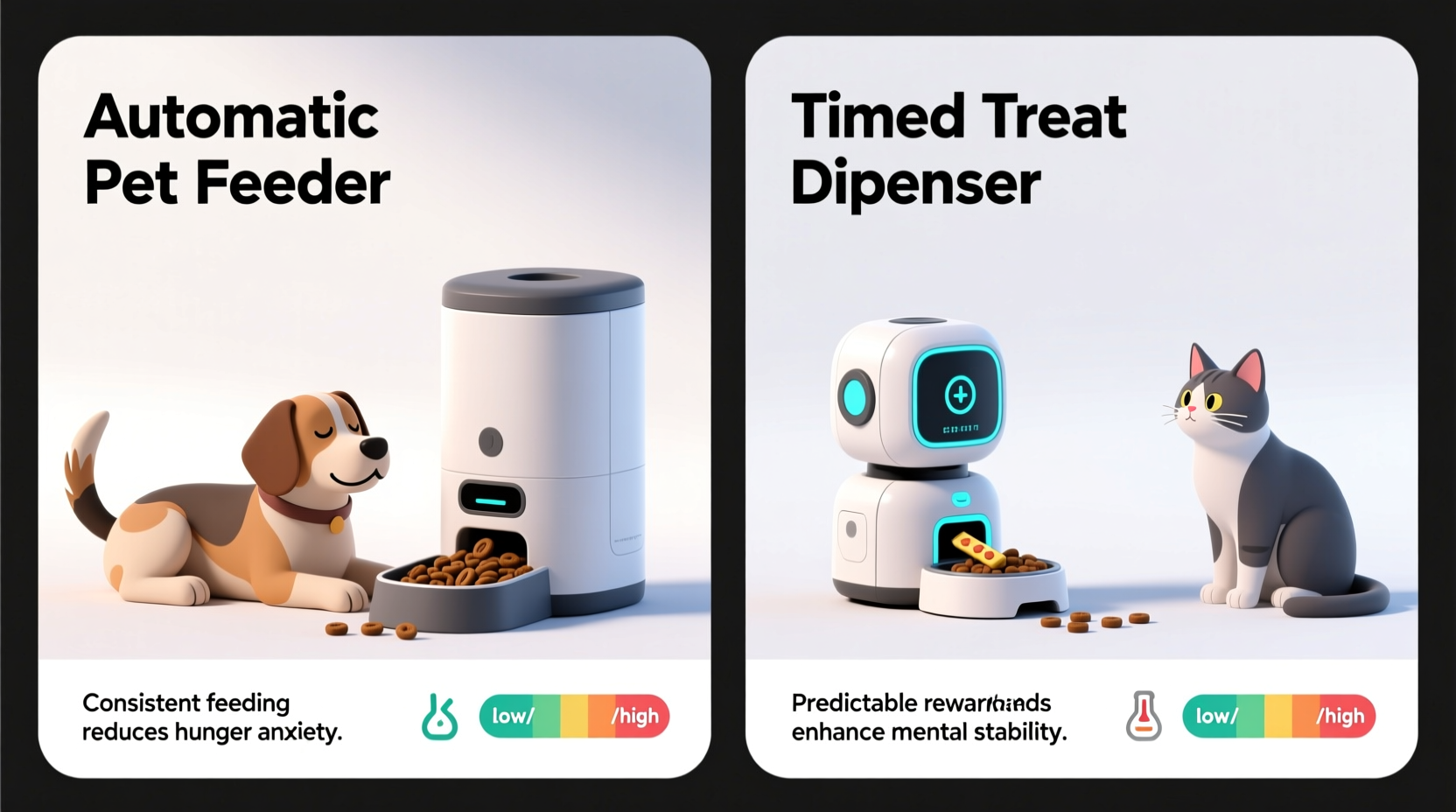
Dogs and cats are creatures of habit. Their sense of security is deeply tied to predictability. A consistent daily rhythm—including feeding times—helps regulate their internal clocks and reduces uncertainty, a major trigger for anxiety.
When meals arrive at erratic times, pets may become hyper-vigilant, pacing, whining, or displaying destructive behaviors. In contrast, a reliable feeding schedule signals safety. This is where automatic pet feeders shine. By dispensing full meals at precise intervals, they reinforce structure, especially when owners are away for long stretches.
“Predictable routines are one of the most effective non-pharmaceutical tools we have for managing separation anxiety in dogs.” — Dr. Laura Bennett, Veterinary Behaviorist
However, while regular meals reduce baseline stress, they don’t necessarily address momentary spikes in anxiety—such as sudden noises, storms, or loneliness during midday lulls. That’s where timed treat dispensers come into play, offering a different kind of emotional support.
How Timed Treat Dispensers Target Anxiety Differently
Unlike automatic feeders that dispense full meals, timed treat dispensers release small, high-value treats at predetermined moments. These aren’t meant to replace nutrition but to create positive associations and interrupt anxious thought patterns.
The mechanism relies on classical and operant conditioning. When a dog hears a beep or sees a treat drop unexpectedly, dopamine is released, creating a pleasurable experience. Over time, the pet begins to associate being alone with potential rewards rather than abandonment.
This approach is particularly effective for pets suffering from mild to moderate separation anxiety. Instead of waiting passively for their owner’s return, they’re engaged in an active, rewarding environment. Some advanced models even allow remote treat release via smartphone, enabling owners to soothe their pet during stressful events like thunderstorms or fireworks.
Tip: Use high-value treats like freeze-dried liver or peanut butter drops in timed dispensers to maximize the dopamine response and emotional impact.Comparing Features and Emotional Impact
To understand which device better reduces anxiety, it helps to compare their core functions, design goals, and psychological effects. The table below outlines key differences:
| Feature | Automatic Pet Feeder | Timed Treat Dispenser |
|---|---|---|
| Primary Purpose | Nutritional delivery on schedule | Emotional reinforcement through surprise rewards |
| Food Type | Full meals (dry or wet) | Small treats only |
| Frequency | 1–2 times per day (meal-based) | Multiple times daily (snack-based) |
| Psychological Effect | Reduces baseline anxiety via routine | Interrupts anxious episodes with positive stimuli |
| User Control | Schedule-based, limited interaction | Often includes remote triggering and monitoring |
| Best For | Pets needing meal consistency | Pets with situational or separation anxiety |
The data suggests that while both devices contribute to emotional stability, they do so in fundamentally different ways. Automatic feeders prevent anxiety by fulfilling a biological need reliably. Timed treat dispensers actively combat anxiety by introducing joy and distraction.
Real-World Example: Managing Separation Anxiety in a Rescue Dog
Consider Max, a 3-year-old mixed-breed rescue adopted after spending months in a shelter. Though loving, Max exhibited signs of separation anxiety—chewing furniture, barking excessively, and refusing to eat when left alone.
His owner, Sarah, first installed an automatic feeder to ensure he received breakfast and dinner on time. While this improved his eating habits, his midday distress remained unchanged. He would still pace near the door and growl at strangers passing by.
After consulting a trainer, Sarah added a timed treat dispenser programmed to release a treat every 90 minutes. She paired the initial releases with verbal cues played through the device (“Good boy, Max! Mommy loves you!”). Within two weeks, Max began resting more during the day. The unexpected treats broke his cycle of vigilance, and the voice messages reinforced her presence.
Over time, Max’s destructive behaviors decreased by over 70%. The combination of scheduled meals and intermittent rewards created a balanced emotional environment—one that addressed both physical and psychological needs.
Choosing the Right Tool: A Step-by-Step Guide
Selecting between an automatic feeder and a treat dispenser depends on your pet’s specific anxiety triggers and lifestyle. Follow this decision-making process:
- Assess Your Pet’s Behavior: Does your pet skip meals when alone (routine issue), or do they pace, bark, or destroy items (emotional distress)?
- Determine Primary Need: If nutrition is inconsistent, start with an automatic feeder. If emotional reactivity is high, prioritize a treat dispenser.
- Test One Device at a Time: Introduce either the feeder or dispenser and monitor behavior for 7–10 days. Note changes in activity, appetite, and vocalization.
- Evaluate Interaction Level: Do you want passive scheduling or active engagement? Treat dispensers with app control allow real-time bonding.
- Combine for Maximum Effect: For pets with moderate to severe anxiety, using both devices often yields the best results—structure plus surprise.
Expert Recommendations and Common Pitfalls
Veterinary behaviorists emphasize that technology should complement, not replace, foundational care. “Devices are tools, not substitutes for training or socialization,” warns Dr. Bennett. “If a dog is severely anxious, a treat dispenser alone won’t fix the underlying issue.”
Common mistakes include:
- Using low-value treats that don’t excite the pet
- Over-scheduling treats, leading to weight gain
- Placing devices in noisy or inaccessible areas
- Expecting immediate results without gradual acclimation
Experts recommend pairing device use with environmental enrichment—like puzzle toys, calming music, or pheromone diffusers—for a holistic anxiety-reduction strategy.
Checklist: Optimizing Device Use for Anxiety Reduction
Use this checklist to get the most out of your chosen device:
- ✅ Choose high-value, anxiety-soothing treats (e.g., calming chews with L-theanine)
- ✅ Program consistent meal times if using an automatic feeder
- ✅ Schedule treat releases during known stress periods (e.g., noon for separation)
- ✅ Acclimate your pet gradually—start with manual dispensing before automation
- ✅ Monitor food intake to avoid overfeeding
- ✅ Combine with other calming aids like white noise or a worn t-shirt with your scent
- ✅ Update firmware and check battery levels weekly to prevent malfunctions
Frequently Asked Questions
Can I use human food as treats in a timed dispenser?
Only if it’s pet-safe and cut into small, dry pieces. Avoid toxic foods like chocolate, grapes, onions, or anything with xylitol. Stick to vet-approved options like plain cooked chicken or commercial soft treats designed for dispensers.
Will my pet become dependent on the device?
No more than they depend on any routine. Pets adapt well to changes when transitions are managed slowly. If you plan to discontinue use, phase it out over several weeks while increasing direct interaction.
Are there smart dispensers that detect anxiety and respond automatically?
Emerging models use AI to monitor barking, movement, or heart rate (via collars) to trigger treat release during stress spikes. While promising, these are still in early development and vary in reliability. Most current devices rely on pre-set schedules or manual activation.
Conclusion: Matching Technology to Emotional Needs
Neither automatic pet feeders nor timed treat dispensers universally reduce anxiety better—they serve complementary roles. Feeders provide the comfort of predictability, essential for pets who thrive on routine. Treat dispensers offer the joy of surprise, ideal for interrupting cycles of stress and boredom.
The most effective approach often combines both. A dog fed consistently in the morning and evening gains stability from the feeder, while intermittent midday treats from a dispenser keep their mind engaged and emotions balanced. For cats, who may be less food-motivated, pairing treat drops with interactive features like recorded voices can make a significant difference.
Ultimately, reducing pet anxiety isn’t about choosing one gadget over another—it’s about understanding your pet’s emotional language and responding with empathy and intention. Technology, when used wisely, becomes an extension of your care.
🚀 Ready to ease your pet’s anxiety? Start by observing their behavior, then choose a device—or combination—that aligns with their needs. Share your experience in the comments to help fellow pet lovers find what works.








