
For pet owners juggling busy schedules or managing pets with specific dietary needs, choosing the right feeding system can be a game-changer. Two popular options dominate the market: automatic pet feeders and gravity feeders. One promises precision and scheduling; the other offers simplicity and constant access. But as technology creeps into pet care, a critical question arises—does the portion control of an automatic feeder justify the risk of tech malfunctions? This article breaks down both systems, weighs their pros and cons, and helps you decide which solution aligns best with your pet’s health and your lifestyle.
The Core Differences: How They Work
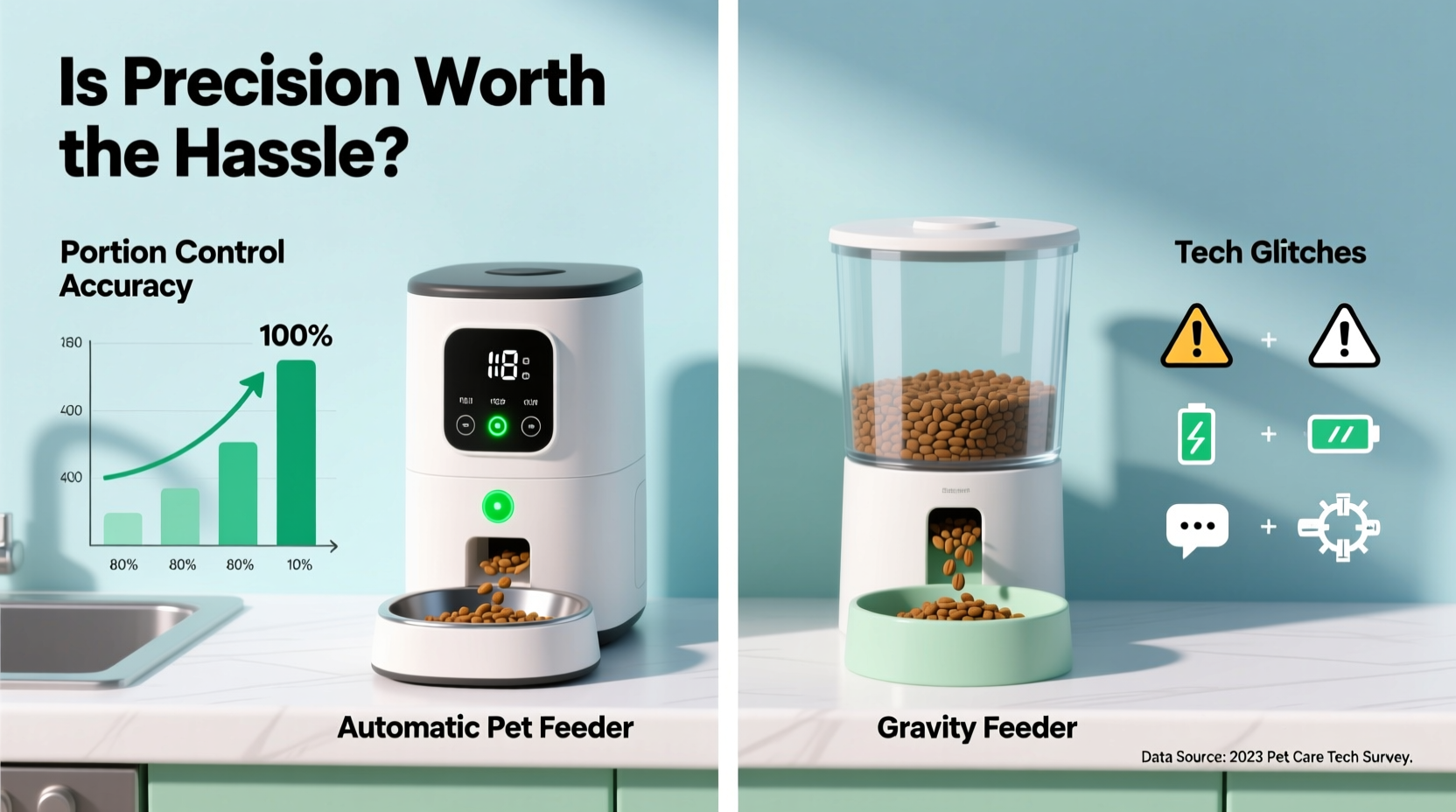
An automatic pet feeder operates on a programmed schedule. Using a digital interface or smartphone app, owners set exact times and portion sizes for meals. Motors dispense kibble into a tray at the scheduled time. Some models include voice recording features to call pets to eat, while others offer dual bowls for multiple pets or wet/dry food combinations.
In contrast, a gravity feeder relies on basic physics. It consists of a large hopper connected to a bowl. As the pet eats from the bowl, more food flows down from the reservoir to replace it. There's no timer, no motor, no programming—just continuous access to dry food.
The fundamental distinction lies in control versus convenience. Automatic feeders give you command over *when* and *how much* your pet eats. Gravity feeders prioritize ease of use and uninterrupted access, but surrender all control over portions and timing.
Portion Control: Why It Matters
Obesity is one of the most common health issues in domestic pets. According to the Association for Pet Obesity Prevention, over 60% of cats and dogs in the U.S. are overweight or obese. Uncontrolled eating—especially free-feeding via gravity feeders—plays a major role.
Portion control isn’t just about weight management. It supports consistent digestion, prevents begging behaviors, and helps manage conditions like diabetes, pancreatitis, or food allergies. For pets on prescription diets or calorie-restricted plans, measured meals are non-negotiable.
“Consistent portioning is one of the simplest yet most effective tools in preventing diet-related disease in pets.” — Dr. Lena Torres, DVM, Veterinary Nutrition Specialist
Automatic feeders excel here. You program the exact amount per meal based on your vet’s recommendations. No guesswork, no overfilling. The system enforces discipline—even when you’re not home.
Tip: If using an automatic feeder, calibrate the portion size during a trial run. Observe how much your pet actually consumes to avoid waste or underfeeding.Tech Glitches: Real Risks of Automatic Feeders
No piece of technology is immune to failure—and pet feeders are no exception. Common issues include:
- Power outages: Most units require electricity or charged batteries. A dead battery means no feeding.
- App connectivity problems: Wi-Fi disruptions can prevent remote access or cause missed meals.
- Motor jams: Moisture, clumping kibble, or debris can block the dispensing mechanism.
- Programming errors: Accidental double-scheduling or incorrect portion settings can lead to over- or underfeeding.
- Hacking vulnerabilities: Internet-connected devices may pose privacy or security risks if not properly secured.
A 2022 consumer survey by PetTech Watch found that 23% of automatic feeder owners experienced at least one malfunction within the first six months of use. While most were minor, 7% reported complete device failure requiring replacement.
These aren’t hypothetical concerns. Consider the case of Maya, a Boston Terrier in Austin, Texas. Her owner relied on a Wi-Fi-enabled feeder while traveling for work. When a router update disrupted the network, the feeder failed to dispense breakfast for three consecutive days. By the time the issue was noticed, Maya had become lethargic and dehydrated. Fortunately, a neighbor intervened. The incident underscores a sobering reality: automation introduces dependency.
Mini Case Study: The Weekend Trip That Went Wrong
Sarah, a software engineer and cat owner, installed a high-end automatic feeder before a long weekend getaway. She tested it thoroughly and felt confident. Midway through her trip, however, the feeder’s internal clock reset due to a firmware bug. Meals were delayed by five hours each day. Her cat, Oliver, began meowing incessantly and eventually started scavenging in the trash.
Sarah couldn’t adjust the schedule remotely because the app had lost sync. She called a friend to intervene, but by then, Oliver had developed mild gastrointestinal upset from eating inappropriate items. The experience led Sarah to switch back to a gravity feeder supplemented with timed hand-feedings when possible.
Her takeaway? “Technology should serve the pet—not become the pet’s lifeline.”
When Simplicity Wins: The Strengths of Gravity Feeders
Gravity feeders have been around for decades—and for good reason. They are inexpensive, reliable, and require zero maintenance beyond regular cleaning. With no electronics, there’s nothing to break. Fill the hopper, let physics do the rest.
They work well for multi-pet households where animals self-regulate, or for pets who prefer grazing throughout the day. Cats, in particular, often favor small, frequent meals—a pattern gravity feeders naturally support.
However, success depends entirely on the pet’s ability to practice self-control. Not all animals can. Breeds like Labradors, Beagles, or Pugs are notorious for overeating when given unlimited access. In such cases, a gravity feeder becomes less a convenience and more a health hazard.
Do’s and Don’ts: Using a Gravity Feeder Responsibly
| Do | Don’t |
|---|---|
| Choose slow-feed bowls to extend eating time | Use with pets prone to binging |
| Clean the entire unit weekly to prevent mold | Leave food in the hopper for more than 2–3 days |
| Monitor daily intake to detect changes in appetite | Assume all pets will self-regulate |
| Use only dry food (moisture causes clumping and spoilage) | Place near humid areas like kitchens or laundry rooms |
Making the Decision: Key Factors to Consider
Choosing between an automatic and gravity feeder isn’t about which is universally better—it’s about which fits your unique situation. Consider these factors:
- Pet’s eating behavior: Does your pet stop when full, or eat until the food is gone?
- Dietary requirements: Is your pet on a strict meal plan, medication schedule, or weight-loss regimen?
- Your routine: Are you frequently away from home, or do you maintain a consistent daily presence?
- Budget: Automatic feeders range from $50 to over $200; gravity feeders cost $15–$40.
- Technical comfort: Are you comfortable troubleshooting apps, charging batteries, and maintaining firmware updates?
Checklist: Choosing the Right Feeder for Your Home
- ☐ Assess your pet’s tendency to overeat
- ☐ Consult your vet about ideal portion sizes and feeding frequency
- ☐ Determine how often you’ll be away from home
- ☐ Evaluate your Wi-Fi reliability and power backup options
- ☐ Read user reviews focusing on long-term reliability, not just features
- ☐ Test any automatic feeder at home before relying on it during travel
- ☐ Plan a backup feeding strategy (e.g., neighbor, pet sitter, secondary feeder)
Hybrid Approach: Best of Both Worlds?
Some pet owners find success combining both systems. For example:
- Use an automatic feeder for primary meals (breakfast and dinner), and a small gravity-style bowl for midday grazing.
- Pair a smart feeder with a manual backup bowl filled with a day’s ration in case of failure.
- Use a gravity feeder at home but switch to an automatic model when traveling or working late.
This hybrid method balances precision with redundancy. It reduces the risk of total feeding failure while still promoting portion discipline.
Another emerging trend is semi-automatic feeders—manual dispensers with portion markers. These don’t automate timing but help owners measure accurately without tech dependencies. Ideal for those who want control without complexity.
FAQ
Can I use an automatic feeder for wet food?
Most standard automatic feeders are designed for dry kibble only. Wet food can clog mechanisms and spoil quickly. However, some premium models feature refrigerated compartments or disposable pods for wet food. These are significantly more expensive and require careful cleaning.
Are gravity feeders bad for pets?
Not inherently. They’re unsuitable for pets that overeat or for homes where food sits too long and degrades. But for self-regulating animals in clean environments, they’re safe and practical.
How do I prevent my automatic feeder from jamming?
Use dry, uniform kibble without excessive dust or oil coating. Clean the dispenser chute monthly. Avoid mixing treat-heavy diets with regular food in the hopper. Store the feeder in a low-humidity area.
Conclusion: Weighing Control Against Reliability
The debate between automatic and gravity feeders ultimately centers on trade-offs. Automatic feeders deliver unmatched portion control and scheduling flexibility—critical for pets with medical needs or owners with erratic routines. But they introduce technological fragility. A single glitch can disrupt feeding, stress your pet, and compromise health.
Gravity feeders offer bulletproof reliability and simplicity. They’re affordable, easy to use, and mechanically sound. Yet they relinquish control, making them risky for pets predisposed to obesity or binge eating.
The portion control of automatic feeders is absolutely worth it—for the right pet and owner. If your animal requires measured meals and you can manage the tech responsibly, the benefits outweigh the risks. But if your pet grazes well and your lifestyle doesn’t demand automation, a gravity feeder might be the smarter, safer choice.
Technology should enhance pet care, not endanger it. Whichever option you choose, build in safeguards: test devices thoroughly, maintain backups, and monitor your pet’s response. After all, the goal isn’t just to feed—but to nourish reliably, every single day.
🚀 Ready to make a decision? Audit your pet’s current feeding habits, consult your vet, and test one option for two weeks. Share your experience in the comments—your insight could help another pet parent avoid a costly mistake.








