Leaving home for vacation brings excitement — but for pet owners, it also brings concern. One of the most pressing questions is simple: Will my pet eat on time if I’m not there? Automatic feeders promise a solution, offering scheduled meals with the push of a button. But can you truly rely on them when you’re miles away? The answer isn’t a simple yes or no. While modern feeders have advanced significantly, their reliability depends on model quality, setup accuracy, pet behavior, and backup planning.
This article dives into the realities of using automatic feeders during extended absences. From technical capabilities to real-life pitfalls, we’ll examine what works, what doesn’t, and how to use these devices responsibly to ensure your pet stays nourished and safe in your absence.
How Automatic Feeders Work: A Closer Look
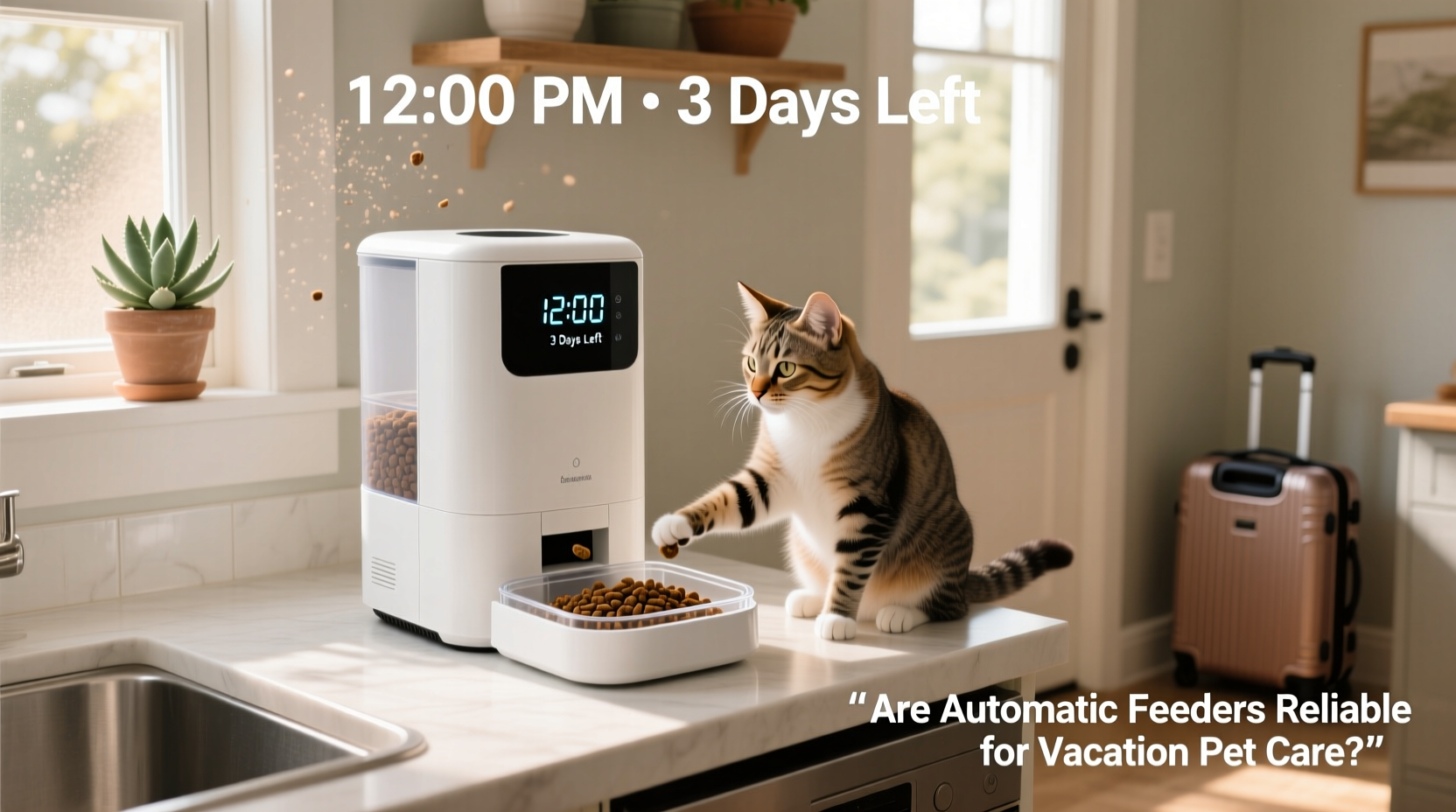
Automatic pet feeders operate by dispensing pre-loaded food at set times. Most models use battery power or plug-in electricity, paired with a digital timer or app-based control system. Dry kibble is stored in an internal hopper, and a motorized mechanism releases a portioned amount when triggered by the schedule.
Advanced models now include Wi-Fi connectivity, allowing owners to monitor feeding via smartphone apps, adjust schedules remotely, receive alerts, and even view live video feeds. Some units offer voice recording features to call pets to meals, which can help maintain routine and reduce anxiety.
Despite technological progress, mechanical failures, power outages, and software glitches remain possible. For example, clumping kibble due to humidity can jam dispensers, while low battery levels may cause missed meals. Understanding these limitations is critical before relying solely on automation.
Tip: Always test your feeder for at least three days at home before leaving to catch any mechanical or scheduling issues.Evaluating Reliability: Key Factors That Matter
Not all automatic feeders are created equal. Reliability hinges on several factors that pet owners must evaluate carefully.
Build Quality and Mechanism Design
Cheaply made feeders often use flimsy plastic gears or inconsistent portion controls. Higher-end models from reputable brands like PetSafe, Wopet, and CatMate use reinforced components and precision dispensing mechanisms. Look for feeders with dual power options (AC adapter + battery backup) to prevent disruption during power outages.
Portion Control Accuracy
Inconsistent portions can lead to overfeeding or underfeeding. Some feeders allow granular control — dispensing as little as 1/8 cup per meal — while others only offer preset increments. If your pet has specific dietary needs or medical conditions, precise control is non-negotiable.
Digital Features and App Integration
Wi-Fi-enabled feeders provide peace of mind through remote monitoring. You can check if a meal was dispensed, change schedules mid-vacation, or receive notifications if the device disconnects. However, reliance on internet stability introduces new risks. A router crash or weak signal can disable remote access, rendering smart features useless.
Pet Compatibility
Some pets adapt quickly to automated feeders; others may ignore the food altogether. Cats, in particular, can be finicky and may wait for human interaction before eating. Dogs might paw at the device or attempt to tip it over. Consider your pet’s temperament and past reactions to new equipment.
“While automatic feeders are helpful tools, they should never replace human oversight entirely. Pets thrive on routine and social cues — technology can support, but not substitute, that.” — Dr. Lena Torres, DVM, Veterinary Behavior Specialist
Real-World Scenarios: When Feeders Succeed — and Fail
To understand the practical reliability of automatic feeders, consider two contrasting cases.
Case Study: The Smooth Two-Week Vacation
Sarah, a dog owner in Portland, used a high-end Wi-Fi feeder for her 5-year-old Labrador during a two-week trip. She programmed four meals daily, tested the device thoroughly, and arranged for a neighbor to check in twice weekly. The feeder dispensed food accurately each time, and Sarah received confirmation alerts via the app. Her dog maintained his weight and energy levels, and the system worked flawlessly.
Key success factors: premium device, dry climate (reducing kibble clumping), regular human check-ins, and prior testing.
Case Study: The Missed Meals Incident
Mark left his cat alone for five days with a budget feeder he’d never tested. He assumed the device would work out of the box. On day three, the motor stalled due to a kibble jam. His cat went without food for 36 hours until a friend stopped by unexpectedly. Though the cat recovered, the experience was stressful and avoidable.
Failures stemmed from lack of preparation, poor device quality, and no monitoring plan. This case underscores that even short absences require careful planning.
Best Practices for Safe Use During Vacations
If you choose to use an automatic feeder while traveling, follow these steps to maximize safety and reliability.
Step-by-Step Guide: Preparing Your Feeder for Vacation
- Choose a high-quality model with positive reviews, dual power options, and portion control.
- Test the feeder at home for at least 72 hours. Confirm every scheduled meal dispenses correctly.
- Use fresh, dry kibble to minimize clumping. Avoid moist or soft foods unless the feeder is specifically designed for them.
- Set up a secondary power source, such as a battery backup or UPS, especially in areas prone to outages.
- Install a smart camera nearby to visually confirm meals are dispensed and eaten.
- Arrange a human check-in every 2–3 days for longer trips, even if using automation.
- Leave emergency instructions with a trusted contact, including feeder model, reset procedures, and vet details.
Comparison: Top Feeder Types for Vacation Use
| Type | Best For | Pros | Cons | Reliability Score (1–5) |
|---|---|---|---|---|
| Budget Mechanical | Short absences, backup use | Affordable, simple operation | No battery backup, frequent jams, no alerts | 2 |
| Wi-Fi Smart Feeder | Long trips, remote monitoring | App control, notifications, camera integration | Dependent on internet, higher price | 4.5 |
| Gravity Feeder | Free-feeding pets | No power needed, constant access | No portion control, risk of overeating | 3 |
| Double-Bowl Timer Feeder | Homes with multiple pets | Independent compartments, customizable schedules | Larger footprint, complex setup | 4 |
| Hybrid (Feeder + Camera) | High-anxiety pets, first-time users | Live video, two-way audio, feeding verification | Expensive, requires strong Wi-Fi | 5 |
When Automation Isn’t Enough: Knowing the Limits
Automatic feeders excel at delivering food on schedule, but they cannot address other critical aspects of pet care. They don’t refill water bowls, clean litter boxes, administer medication, or respond to emergencies like illness or injury. A pet showing signs of lethargy or vomiting won’t benefit from perfectly timed meals if no one is around to intervene.
Veterinarians generally advise against leaving pets unattended for more than 48 hours without checks, regardless of feeder use. For vacations exceeding three days, combining a feeder with periodic human visits is the gold standard. Even tech-savvy pet owners agree: automation should enhance care, not replace it.
Checklist: Is Your Pet Ready for an Automatic Feeder?
- ✅ Has your pet used the feeder successfully at home?
- ✅ Is the feeder placed in a secure, accessible location?
- ✅ Are batteries charged and AC power connected?
- ✅ Have you tested for kibble jams or timing errors?
- ✅ Is someone checking on your pet every 2–3 days?
- ✅ Do you have a working camera to monitor feeding?
- ✅ Are emergency contacts informed and equipped with instructions?
Frequently Asked Questions
Can I leave my cat alone for a week with an automatic feeder?
Technically, some cats may survive a week with food and water, but it’s not recommended. Cats can develop urinary tract issues, stop eating due to stress, or knock over water bowls. Combine a feeder with at least two in-person visits to ensure safety.
What happens if the feeder fails while I’m away?
If the feeder malfunctions and no one checks in, your pet could go hungry. This risk increases with longer trips. Always have a backup plan — whether it’s a neighbor visit, pet sitter, or boarding arrangement — especially for trips over four days.
Are smart feeders worth the extra cost?
For frequent travelers or those seeking peace of mind, yes. Smart feeders with app alerts and cameras allow real-time verification of meals. The added cost is justified if it prevents a crisis or gives confidence during travel.
Final Thoughts: Balancing Technology and Responsibility
Automatic feeders are valuable tools in modern pet care, particularly for maintaining feeding routines during short absences. They’ve evolved from unreliable gadgets to sophisticated systems capable of supporting responsible ownership. However, their reliability is conditional — dependent on proper selection, testing, and integration with human oversight.
No machine can replicate the attentiveness of a caring pet owner. While technology can bridge gaps, it should never become a crutch for neglect. The most reliable vacation care strategy combines automation with accountability: a tested feeder, a watchful neighbor, and a clear emergency plan.
💬 Your pet's well-being matters. Have you used an automatic feeder on vacation? Share your story, tips, or concerns in the comments to help others make safer choices.








