Choosing the right feeding method for your pet isn’t just about convenience—it directly impacts their health, behavior, and home environment. Two popular options—automatic feeders and gravity bowls—are often compared for their ability to reduce mess and prevent overeating. While both serve the purpose of delivering food, they operate on fundamentally different principles, with varying outcomes for pet wellness and household cleanliness. Understanding these differences helps pet owners make informed decisions tailored to their pet’s needs.
How Automatic Feeders Work
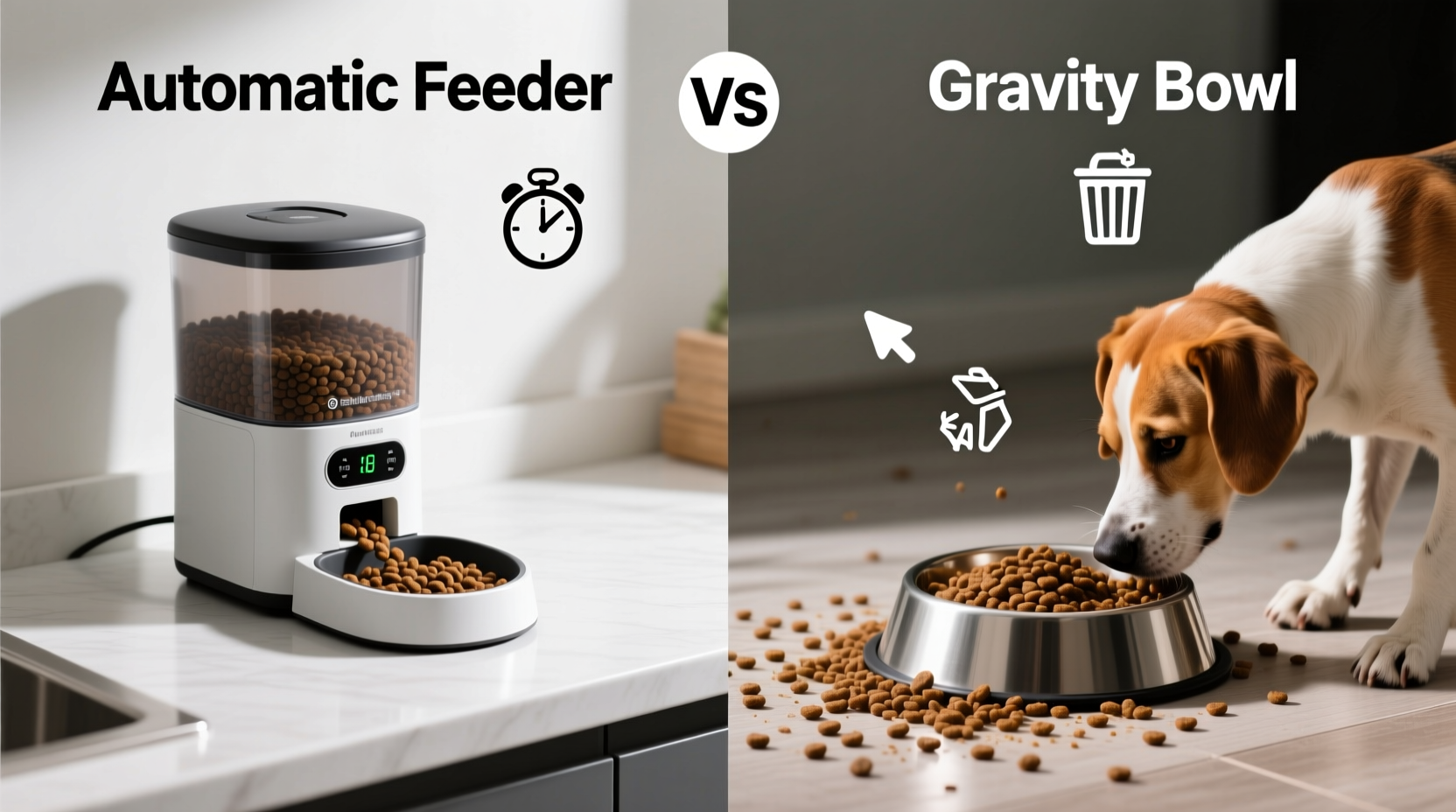
Automatic feeders are programmable devices that dispense a set amount of food at scheduled times. Most models run on batteries or plug into an outlet and feature digital timers, portion controls, and sometimes even Wi-Fi connectivity for remote management via smartphone apps. These feeders are ideal for households with strict feeding routines, pets requiring precise meal portions, or owners with unpredictable schedules.
The core benefit lies in controlled portioning. By setting specific quantities per meal, automatic feeders eliminate the risk of continuous grazing. This structured approach supports weight management and prevents digestive issues caused by irregular eating patterns. Additionally, because food is released only during mealtimes, there’s less opportunity for spills, scattering, or contamination from dust and pests.
Tip: Choose an automatic feeder with a wide base and non-slip feet to minimize tipping, especially if you have multiple pets or an enthusiastic eater.Understanding Gravity Bowls
Gravity bowls rely on a simple mechanical design: a large hopper or container sits above a feeding tray, continuously refilling it as the pet eats. As long as the hopper contains food, the bowl remains full. This system mimics free-feeding, allowing pets to eat whenever they choose.
While convenient for owners who want minimal daily involvement, gravity bowls encourage constant access to food. For many pets, especially dogs prone to food obsession or cats with low activity levels, this can lead to overconsumption. Moreover, kibble left exposed for hours attracts moisture, dust, and insects, degrading quality and increasing the risk of spoilage. The open design also makes it easy for pets to paw at or push food out, creating scattered messes across floors.
“Free-choice feeding may work for highly active animals, but for the average pet, it increases the likelihood of obesity and poor eating habits.” — Dr. Rebecca Langston, DVM, Veterinary Nutrition Specialist
Comparing Mess Levels: Design and Daily Impact
Mess reduction is a key concern for pet owners, particularly in multi-pet homes or small living spaces. The physical design and operation of each feeding system play a major role in how much cleanup is required.
Automatic feeders typically have enclosed storage compartments and narrow dispensing chutes, minimizing exposure and spillage. High-end models include sealed lids and sound alerts to deter pets from attempting to access food between meals. Since food is only available during short windows, there's less chance for kibble to be kicked around.
In contrast, gravity bowls remain open and full throughout the day. Even slight nudges from a curious nose or wagging tail can send pellets flying. Over time, accumulated crumbs under furniture and along baseboards become a persistent cleaning challenge. Some gravity feeders come with wider trays or side barriers, but these offer limited protection against determined or large pets.
| Feature | Automatic Feeder | Gravity Bowl |
|---|---|---|
| Portion Control | High – pre-set amounts per meal | None – continuous refill |
| Mess Potential | Low – food dispensed only at set times | High – open bowl invites scattering |
| Risk of Overeating | Low – limits access to scheduled meals | High – enables constant grazing |
| Food Freshness | High – sealed container preserves kibble | Low – prolonged air/moisture exposure |
| Suitability for Multi-Pet Homes | Moderate – requires supervision to prevent competition | Low – dominant pets may monopolize food |
Overeating: Causes, Risks, and Prevention Strategies
Overeating in pets stems from biological instincts, environmental factors, and feeding methods. In the wild, animals eat when food is available, not on a schedule. Domesticated pets retain this instinct, leading them to consume more when food is constantly accessible. Obesity in pets is linked to serious health conditions including diabetes, joint degeneration, heart disease, and reduced lifespan.
Automatic feeders address overeating by enforcing meal discipline. They allow owners to align feeding times with natural activity cycles—such as before walks or after play sessions—promoting better digestion and energy use. Many models also support dual compartments for wet and dry food, enabling balanced nutrition without excess calorie intake.
Gravity bowls, while seemingly harmless, disrupt satiety cues. Pets don’t always eat out of hunger; boredom, anxiety, or social competition can trigger unnecessary snacking. Without portion boundaries, this behavior escalates into chronic overconsumption. Even pets labeled as “grazers” benefit from structure—controlled portions twice daily are often sufficient for healthy metabolism.
Mini Case Study: Managing a Labrador’s Weight with an Automatic Feeder
Max, a 3-year-old Labrador Retriever, lived in a two-dog household where both pets used a shared gravity feeder. Despite regular exercise, Max gained 12 pounds over eight months. His veterinarian diagnosed mild obesity and recommended switching to timed meals. The owner installed a dual-compartment automatic feeder programmed for two 1-cup servings per day, one in the morning and one in the evening.
Within ten weeks, Max lost 7 pounds. His energy improved, and food-related aggression toward the other dog decreased. The owner noted significantly less kibble tracked through the house and no more ants near the feeding area. The structured routine also made it easier to administer supplements and monitor appetite changes.
Choosing the Right Option: A Step-by-Step Decision Guide
Selecting between an automatic feeder and a gravity bowl depends on your pet’s species, age, health, and lifestyle. Follow this step-by-step process to determine the best fit:
- Evaluate your pet’s current weight and activity level. Consult your vet to determine ideal daily caloric intake. Active, working dogs may tolerate free feeding better than sedentary indoor cats.
- Observe eating behaviors. Does your pet finish meals quickly, leave food, or return repeatedly throughout the day? Rapid consumption followed by begging suggests poor satiety regulation.
- Assess your daily routine. If you're frequently away or have inconsistent mealtimes, an automatic feeder ensures consistency. If you’re home most of the day, supervised feeding may suffice.
- Consider household dynamics. In multi-pet homes, gravity bowls often lead to dominance issues. One animal may guard the feeder, preventing others from eating. Automatic feeders with individual programming help maintain fairness.
- Test and adjust. Start with an automatic feeder for 3–4 weeks. Monitor weight, stool quality, and behavior. If your pet shows signs of stress or refuses scheduled meals, consult a vet before reverting to free feeding.
Actionable Tips for Reducing Mess and Promoting Healthy Eating
- Place feeders on washable mats to catch stray kibble and simplify cleanup.
- Clean food containers weekly to prevent oil buildup and bacterial growth.
- Avoid overfilling gravity hoppers—only load enough food for 24–48 hours to maintain freshness.
- Use slow-feed bowls in conjunction with automatic feeders to extend mealtime and improve digestion.
- Store pet food in airtight containers away from heat and sunlight to preserve nutrient integrity.
Frequently Asked Questions
Can I use an automatic feeder for multiple pets?
Yes, but carefully. If pets eat at the same time, ensure the feeder dispenses enough food simultaneously. For competitive eaters, consider separate feeding stations or staggered meal times to prevent conflict.
Are gravity bowls bad for all pets?
Not necessarily. Highly active outdoor cats or working dogs with high caloric demands may benefit from constant access. However, most indoor companion animals do better with portion-controlled meals.
Do automatic feeders work during power outages?
Most battery-powered models continue operating for 24–72 hours without electricity. Always keep spare batteries on hand and test backup function monthly.
Final Recommendations and Expert Insights
When prioritizing mess reduction and prevention of overeating, automatic feeders consistently outperform gravity bowls. Their ability to regulate portions, protect food quality, and enforce feeding schedules makes them a superior choice for long-term pet health. While gravity bowls offer simplicity, their drawbacks—uncontrolled intake, degraded kibble, and increased mess—often outweigh the convenience.
Veterinary professionals increasingly recommend scheduled feeding protocols. As Dr. Langston notes, “Pets thrive on routine. Just like children, they benefit from boundaries around mealtimes. An automatic feeder isn’t just a gadget—it’s a tool for responsible pet parenting.”
Technology has evolved to meet diverse needs: some automatic feeders now include facial recognition to identify individual pets, voice recording features to call animals to dinner, and integration with smart home systems. These innovations enhance reliability and user control, making it easier than ever to maintain healthy feeding practices.
Conclusion: Make the Switch for Healthier Habits
Reducing mess and preventing overeating starts with rethinking how food is delivered. Automatic feeders provide structure, precision, and cleanliness that gravity bowls simply can’t match. Whether managing weight, improving home hygiene, or supporting a busy lifestyle, upgrading to a timed feeding system delivers measurable benefits for both pets and owners.
💬 Ready to transform your pet’s feeding routine? Evaluate your current setup today and consider investing in an automatic feeder tailored to your pet’s needs. Share your experience or questions in the comments—your insight could help another pet parent make a healthier choice.








