Pet ownership has evolved from basic care to lifestyle expression. As pets become integral family members, owners increasingly invest in premium accessories—none more visible than the collar. Designer pet collars now range from $50 to over $300, with brands like Hermès, Ralph Lauren, and smaller luxury labels dominating boutique shelves and Instagram feeds. But beneath the polished hardware and monogrammed leather lies a pressing question: Are these collars genuinely superior, or are consumers simply paying for a label?
This article examines the tangible differences between high-end and standard pet collars, evaluates construction quality, safety features, and brand influence, and provides a clear framework for determining whether designer collars offer real value—or if they're primarily marketing-driven purchases.
What Defines a \"Designer\" Pet Collar?
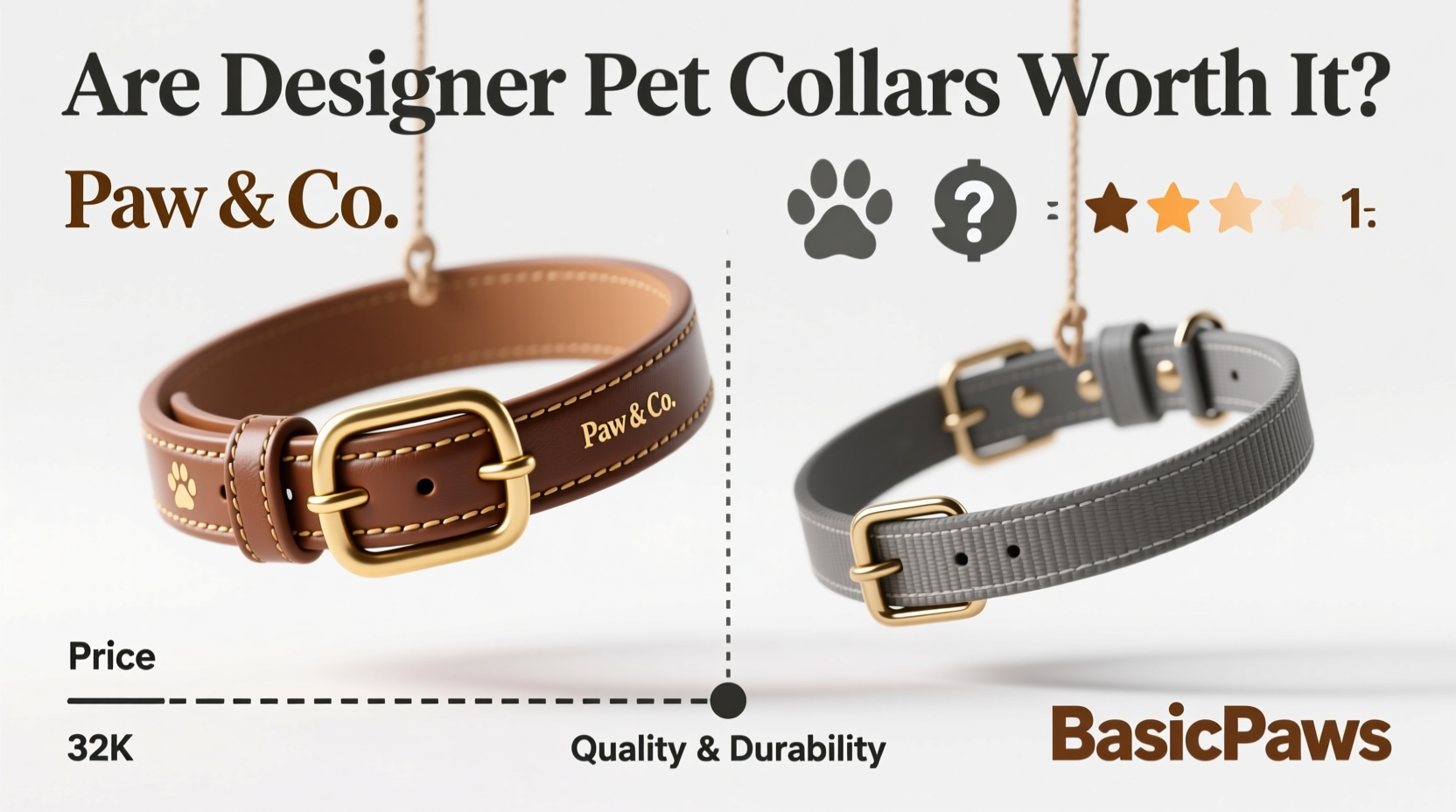
The term “designer” typically refers to products created by recognized fashion houses or independent designers with curated aesthetics, limited runs, and elevated branding. In the pet world, this translates to collars featuring:
- Premium materials like full-grain leather, solid brass hardware, or hand-stitched detailing
- Signature design elements (e.g., embossed logos, custom buckles)
- Artisanal craftsmanship, often made in small batches
- Aesthetic alignment with human fashion trends
However, unlike functional categories such as orthopedic dog beds or GPS trackers, collars serve both practical and symbolic roles. They must secure identification and withstand daily wear, but they also act as fashion statements. This duality complicates value assessment—because part of what’s being purchased isn’t utility, but identity.
Tip: A collar’s aesthetic appeal should never compromise its structural integrity or safety function.Material Quality vs. Brand Markup: Where Does the Money Go?
To assess whether designer collars justify their price, it’s essential to dissect cost components. A breakdown reveals that while some premium collars use superior materials, others rely heavily on branding to inflate perceived value.
| Feature | Budget Collar ($15–$30) | Mid-Tier Collar ($40–$80) | Designer Collar ($100+) |
|---|---|---|---|
| Leather Type | Split-grain or bonded leather | Top-grain leather | Full-grain or Italian vegetable-tanned leather |
| Hardware | Zinc alloy or plated metal | Solid brass or nickel-plated steel | Solid brass, engraved or custom-designed |
| Stitching | Synthetic thread, single row | Dual stitching with reinforced stress points | Hand saddle-stitched, waxed thread |
| Production | Mass-produced overseas | Small-batch, possibly domestic | Limited edition, artisan-made |
| Brand Markup Influence | Low | Moderate | High (30–70% of final price) |
The table illustrates a clear progression in material quality. Full-grain leather, for instance, is more durable and ages better than split-grain, which tends to crack. Solid brass resists corrosion far better than zinc alloy, which can degrade when exposed to moisture. Hand saddle-stitching won’t unravel like machine stitching under strain—a critical factor during sudden pulls.
Yet, even with these upgrades, the actual production cost of a high-end collar rarely exceeds $60–$80. The remainder reflects branding, packaging, exclusivity, and retail margins. For example, a $225 Hermès dog collar uses excellent materials and French craftsmanship, but its price also reflects the brand’s legacy and desirability.
���Luxury pet products mirror human luxury goods: craftsmanship matters, but so does the story behind the product.” — Dr. Lena Patel, Consumer Behavior Researcher at Cornell University
Safety and Functionality: Do Designer Collars Perform Better?
A collar’s primary role is safety—not style. It must securely hold ID tags, resist breakage during walks, and avoid causing skin irritation. When evaluated on functionality alone, many designer collars perform comparably to well-made mid-tier options.
Independent tests by pet safety organizations show that break strength—the force required to snap a collar—varies more by material than by brand. A well-constructed top-grain leather collar with solid hardware can exceed 250 lbs of tensile strength, rivaling most designer versions. Meanwhile, some ornate designer collars prioritize thin profiles or decorative elements that reduce structural resilience.
One concern with ultra-thin designer collars is pressure distribution. Narrow widths (under ¾ inch) concentrate force on a smaller area of the neck, increasing the risk of tracheal damage in small dogs or those prone to pulling. Wider, ergonomically designed collars—even non-designer ones—often provide better support.
Real-World Case: The Broken Clasp Incident
In 2022, a Boston Terrier owner in Portland reported her dog escaping during a walk after the clasp on a $180 designer collar snapped. The collar, marketed for “urban elegance,” used a custom magnetic closure instead of a traditional side-release buckle. While stylish, the mechanism failed under moderate strain when the dog lunged at a squirrel.
After switching to a $55 Ruffwear collar with a proven YKK plastic buckle, she noted, “It’s not flashy, but I trust it with my dog’s life. That matters more than matching my outfit.”
This case highlights a key trade-off: innovation in design doesn’t always align with reliability. Magnetic or decorative clasps may look sleek but lack the fail-safe engineering of standardized buckles tested across millions of units.
When Designer Collars Are Worth the Investment
Not all high-priced collars are unjustified. There are specific scenarios where the premium pays off:
- Dogs with sensitive skin: Full-grain, vegetable-tanned leather is less likely to cause allergic reactions than synthetic or chrome-tanned leathers.
- Show dogs or public figures’ pets: Aesthetics matter in competitions or media appearances, where presentation contributes to reputation.
- Owners seeking longevity: A $150 handcrafted collar lasting five years costs less per year than replacing three $30 collars every 18 months.
- Supporting ethical craftsmanship: Many small designer brands produce locally, pay fair wages, and use sustainable sourcing—values some consumers prioritize.
Moreover, certain niche designers integrate smart features into luxury models—like hidden RFID pockets for microchip info or water-resistant linings—adding functional value beyond appearance.
Tip: If considering a designer collar, verify whether it includes unique functional benefits—not just cosmetic ones.How to Evaluate Value: A Practical Checklist
Before purchasing any collar, especially a high-end one, use this checklist to separate substance from hype:
- ✅ Is the leash attachment D-ring welded or solidly anchored?
- ✅ Does the buckle have a proven track record (e.g., Side-Saddle, ITW Nexus)?
- ✅ Is the material appropriate for your pet’s size, coat type, and activity level?
- ✅ Can you return or exchange if it doesn’t fit or causes irritation?
- ✅ Does the brand publish details about sourcing, manufacturing, or testing?
- ❌ Avoid collars with excessive embellishments near stress points (e.g., rhinestones over stitching).
- ❌ Steer clear of untested novelty closures (magnets, sliding knots) for everyday use.
Transparency is a strong indicator of legitimacy. Brands that openly discuss their supply chain, share factory photos, or offer repair services tend to prioritize long-term value over short-term profit.
Alternatives That Offer Comparable Benefits at Lower Cost
You don’t need a designer label to get a safe, durable, and attractive collar. Several non-luxury brands deliver exceptional quality:
- Ruffsustained: Uses eco-tanned leather and solid brass, priced between $65–$95.
- Wild One: Minimalist design, odor-resistant webbing, $48 with lifetime warranty.
- Blue-9: Known for wide, padded collars ideal for dogs with neck sensitivities.
These brands focus on performance and sustainability rather than status. Their products often undergo rigorous field testing and come with warranties—something many designer labels omit, despite higher prices.
Frequently Asked Questions
Can a designer collar improve my dog’s comfort?
Only if it uses superior materials suited to your dog’s needs. A soft, breathable lining or contoured shape can enhance comfort. However, many designer collars prioritize slim profiles over padding, which may reduce comfort during extended wear.
Are expensive collars more durable?
Not automatically. Durability depends on material thickness, stitching method, and hardware quality—not brand name. A $70 collar with double-box stitching and UV-resistant thread may outlast a fragile $200 designer piece.
Do designer collars increase pet safety?
No direct evidence suggests they do. Safety hinges on proper fit, secure fasteners, and visibility (e.g., reflective strips). Most designer collars lack built-in reflectivity, whereas functional brands often include it as standard.
Final Verdict: Style, Substance, or Status?
Designer pet collars occupy a gray zone between necessity and luxury. For some owners, wearing a recognizable logo or owning a handcrafted piece brings genuine joy—an emotional benefit that transcends utility. Others see them as symbols of excess in an already over-commercialized pet industry.
The truth is nuanced: some designer collars offer measurable advantages in materials, craftsmanship, and longevity. These justify their cost for discerning buyers who value quality and ethics. But many others are priced more for image than innovation, relying on aspirational marketing to drive sales.
If you’re drawn to a designer collar, ask yourself: Am I paying for something my dog needs, or something I want? There’s no wrong answer—but clarity ensures your purchase aligns with your values and your pet’s well-being.
💬 Have you tried a designer pet collar? Did it live up to the hype? Share your experience in the comments and help fellow pet owners make informed choices.








