For cat owners, few things are more perplexing than watching their feline companions nibble on houseplants, carpets, or blades of grass during outdoor excursions. This behavior isn’t just quirky—it’s instinctual. Cats consume grass to aid digestion, expel hairballs, and possibly soothe an upset stomach. As a result, \"cat grass\" has become a popular addition to pet care routines. But with ready-made kits available online and in pet stores, many owners wonder: Is it really necessary to buy a kit, or can you grow cat grass just as effectively at home?
The answer depends on your priorities—convenience, cost, control, and consistency. While commercial kits offer simplicity, growing your own from scratch is often cheaper, more sustainable, and equally effective. This article breaks down both options, compares their pros and cons, and provides practical guidance for anyone considering bringing cat grass into their home.
What Is Cat Grass, and Why Do Cats Need It?
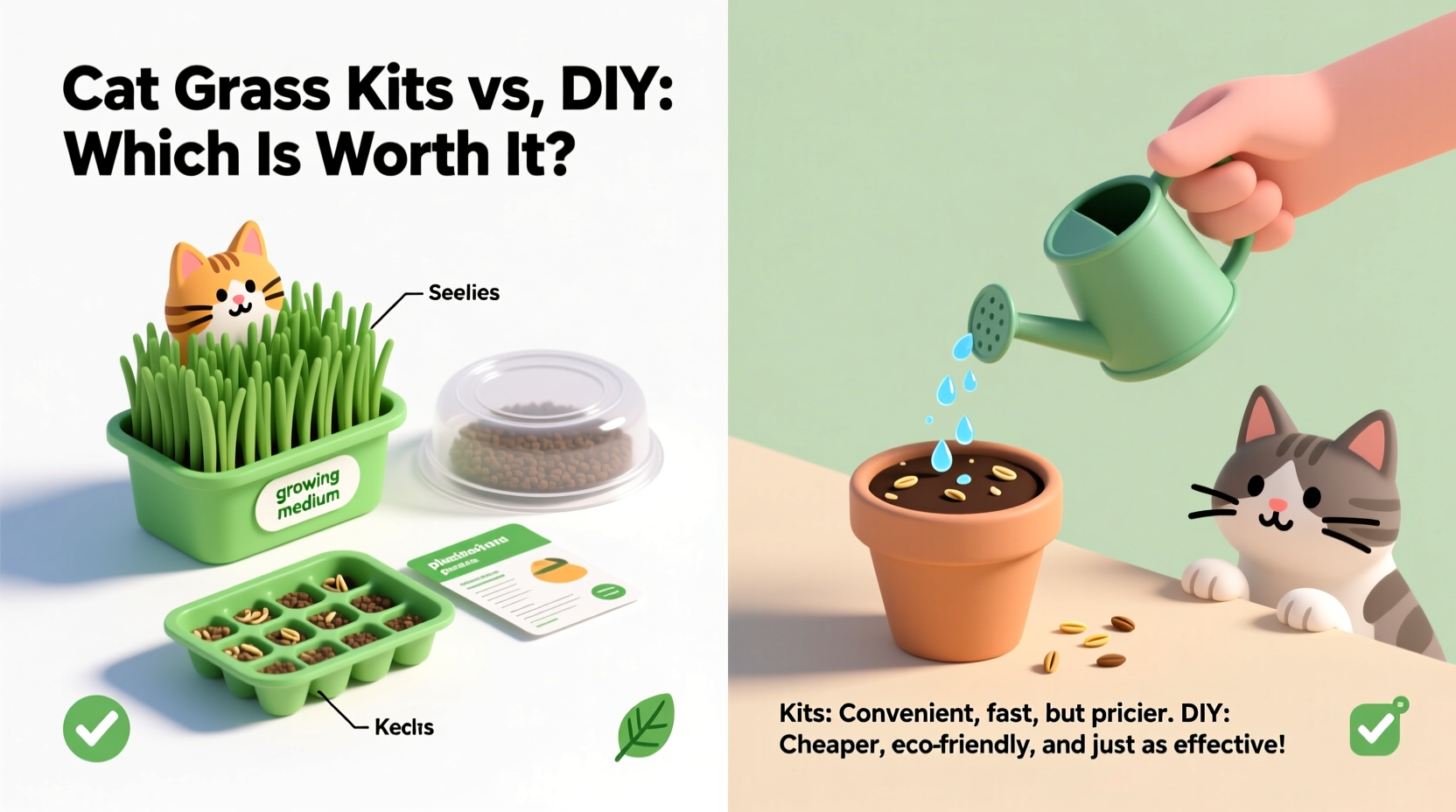
Despite the name, “cat grass” isn’t a single species. It typically refers to young cereal grasses such as wheatgrass, oat grass, barley, or rye. These are non-toxic, easy to digest, and rich in fiber and chlorophyll. Unlike catnip—which affects behavior—cat grass serves a digestive purpose. Veterinarians note that occasional grass consumption is normal and even beneficial.
“Grass acts as a natural emetic and laxative. It helps cats purge indigestible materials like fur or feathers without causing harm.” — Dr. Lena Peterson, DVM, Feline Nutrition Specialist
Cats lack the enzymes to break down plant matter fully, so they don’t derive nutrition from grass in the way herbivores do. Instead, the fibrous texture stimulates peristalsis (intestinal movement) and may help induce vomiting when needed. Indoor cats, in particular, benefit from having a safe, consistent source since they don’t have access to outdoor alternatives.
Store-Bought Cat Grass Kits: Convenience at a Cost
Pet supply companies have capitalized on the demand for cat-safe greens by offering pre-packaged cat grass kits. These usually include a container, soil, and seeds, sometimes with instructions and fertilizer. Some even come with decorative pots or self-watering trays. The appeal is clear: minimal effort, no guesswork, and immediate results.
However, this convenience comes with trade-offs:
- Higher cost per use: A typical kit ranges from $15 to $30 and lasts 2–4 weeks before needing replacement.
- Limited reusability: Most kits aren’t designed for regrowth. Once the grass is eaten or dies, you must start over.
- Plastic waste: Many kits use non-recyclable plastic trays and packaging, contributing to environmental impact.
- Variable quality: Some kits contain low-quality soil or old seeds, resulting in poor germination.
When a Kit Makes Sense
Despite the drawbacks, kits are ideal for certain situations:
- You’re new to pet ownership and want a foolproof introduction.
- You live in an apartment with limited gardening supplies.
- You need cat grass quickly—kits often sprout within 5–7 days.
- You prefer a neat, contained system that fits on a windowsill.
In these cases, the time saved and reduced learning curve justify the higher price—for a while. Long-term users often find themselves seeking more economical solutions.
Growing Your Own Cat Grass: Simple, Affordable, and Effective
You don’t need green thumbs or special equipment to grow cat grass at home. With basic household items and inexpensive seeds, you can produce fresh, organic grass for a fraction of the cost of commercial kits. The process is straightforward and rewarding, especially if you enjoy DIY pet care projects.
Step-by-Step Guide to Growing Cat Grass at Home
- Choose your seeds: Use untreated wheat, oat, rye, or barley seeds. Avoid any labeled for agricultural use, as they may be coated with fungicides.
- Select a container: Any shallow pot or tray with drainage holes will work. Repurpose yogurt cups, takeout containers, or small flower pots.
- Add soil: Fill the container with organic potting mix. Moisten it until damp but not soggy.
- Sow the seeds: Sprinkle seeds densely across the surface and lightly press them into the soil. Cover with a thin layer of soil (about 1/4 inch).
- Water gently: Mist the surface daily. Keep the soil consistently moist but not waterlogged.
- Provide light: Place in a sunny window or under a grow light. Germination occurs in 3–7 days.
- Harvest when ready: Grass is ready when it reaches 4–6 inches tall—usually within 10–14 days.
Once mature, place the pot where your cat can access it easily. Most cats will begin grazing within hours. Replace the grass every 2–3 weeks or when it becomes sparse or discolored.
Tip: To extend lifespan, grow multiple batches on a rotating schedule so fresh grass is always available.Cost Comparison: Kit vs. DIY
To illustrate the financial difference, here’s a breakdown of estimated costs over six months:
| Option | Initial Cost | Monthly Replenishment | Total 6-Month Cost | Notes |
|---|---|---|---|---|
| Commercial Kit | $20 | $20 (replacement kit) | $140 | Assumes one kit per month |
| DIY Setup | $15 (seeds + soil + pot) | $3 (soil/seeds refill) | $33 | One-time pot; bulk seeds last multiple batches |
As shown, DIY cultivation saves over $100 in half a year. Even accounting for minor expenses like extra soil or a spray bottle, the savings are substantial. Additionally, growing your own allows full control over ingredients—ensuring your cat avoids synthetic chemicals or unknown additives.
Common Challenges and How to Avoid Them
While growing cat grass is generally simple, several issues can arise—especially for beginners.
Mold Growth
Excess moisture and poor airflow encourage mold, which appears as fuzzy white or gray patches. To prevent it:
- Don’t overwater—use a spray bottle instead of pouring water.
- Ensure good air circulation around the container.
- Use clean containers and fresh soil each batch.
Poor Germination
If seeds fail to sprout, possible causes include expired seeds, overly deep planting, or cold temperatures. Always use fresh, food-grade seeds stored in a cool, dry place.
Cat Overgrazing
Some cats treat the grass like a salad bar and eat it down to the roots. This prevents regrowth. To manage this:
- Rotate multiple pots so one can recover.
- Limit access to a few minutes per day if necessary.
- Consider placing a second pot out of immediate reach as a backup.
Mini Case Study: Sarah’s Transition from Kit to DIY
Sarah, a cat owner in Portland, initially bought a premium cat grass kit advertised as “organic and vet-approved.” She paid $28 and was pleased with how quickly the grass grew. Her two cats, Luna and Milo, loved it. However, after four weeks, the grass yellowed, and the tray developed mold despite careful watering.
She purchased a second kit, but frustration grew when she realized she’d spend nearly $340 annually just to keep her cats supplied. On a friend’s recommendation, she tried growing her own using wheat berries from a local health food store and a reused plastic container.
Her first batch sprouted in six days. She rotated three pots weekly, keeping fresh grass available at all times. After six months, her total spending was under $25—including seeds, soil, and a mister. “It’s cheaper, greener, and I feel better knowing exactly what my cats are eating,” she said.
Checklist: Setting Up Your First DIY Cat Grass Batch
- ☐ Purchase untreated wheat, oat, or barley seeds (food-grade)
- ☐ Find a shallow container with drainage holes
- ☐ Buy organic potting soil (peat-free preferred)
- ☐ Prepare a spray bottle for gentle watering
- ☐ Choose a sunny windowsill or grow light location
- ☐ Label your container with planting date
- ☐ Monitor daily for sprouting and mold
- ☐ Introduce to cats once grass reaches 4 inches
Frequently Asked Questions
Is cat grass the same as catnip?
No. Cat grass (wheatgrass, oat grass) supports digestion and is safe for all cats. Catnip (Nepeta cataria) is a mint-family herb that causes behavioral effects in some cats but offers no digestive benefit. They serve different purposes and can be offered separately.
How often should I replace cat grass?
Replace every 2–3 weeks or sooner if it turns yellow, develops mold, or is completely grazed. Regular replacement ensures freshness and hygiene.
Can I grow cat grass outdoors?
Yes, but only if you can protect it from pesticides, other animals, and contamination. Indoor growing is safer and more controlled, especially in urban environments.
Final Verdict: Are Cat Grass Kits Worth It?
Commercial cat grass kits are worth it—if you value convenience over long-term savings and sustainability. They’re excellent for testing whether your cat likes grass or for temporary use. However, for regular, ongoing access, growing your own is clearly superior in cost, control, and environmental impact.
The initial learning curve is minimal, and most supplies can be reused or repurposed. Once you establish a simple rotation system, maintaining a steady supply becomes effortless. Plus, there’s satisfaction in nurturing something healthy for your pet with your own hands.
Conclusion: Take Charge of Your Cat’s Wellness Naturally
Providing cat grass isn’t about luxury—it’s about supporting your cat’s natural instincts and digestive health. Whether you start with a kit or jump straight into DIY, the goal is the same: safe, accessible greens your cat can enjoy without risk.
But why stop at convenience when you can achieve better results for less? With a small investment of time and a few dollars in supplies, you can grow healthier, chemical-free cat grass at home. Try your first batch today. Your cat will thank you—and your wallet will too.
💬 Have you tried growing cat grass at home? Share your tips, challenges, or favorite seed types in the comments below—your experience could help another cat owner get started!








