In recent years, 3D nail stickers have exploded in popularity, promising salon-quality designs at a fraction of the time and cost of traditional gel manicures. With TikTok tutorials going viral and drugstore shelves packed with colorful sheets of adhesive art, it’s easy to see why so many are tempted. But behind the glitter and convenience lies a critical question: Are 3D nail stickers truly comparable to professional gel nail art, or are consumers simply throwing their money away on a fleeting trend?
The answer isn’t black and white. While 3D nail stickers offer undeniable accessibility and creativity, they differ significantly from gel art in terms of longevity, finish, customization, and overall aesthetic quality. To understand whether they’re a smart alternative or a short-lived shortcut, we need to examine both options across key factors like durability, application process, cost-effectiveness, and real-world performance.
Durability and Longevity: How Long Do They Really Last?
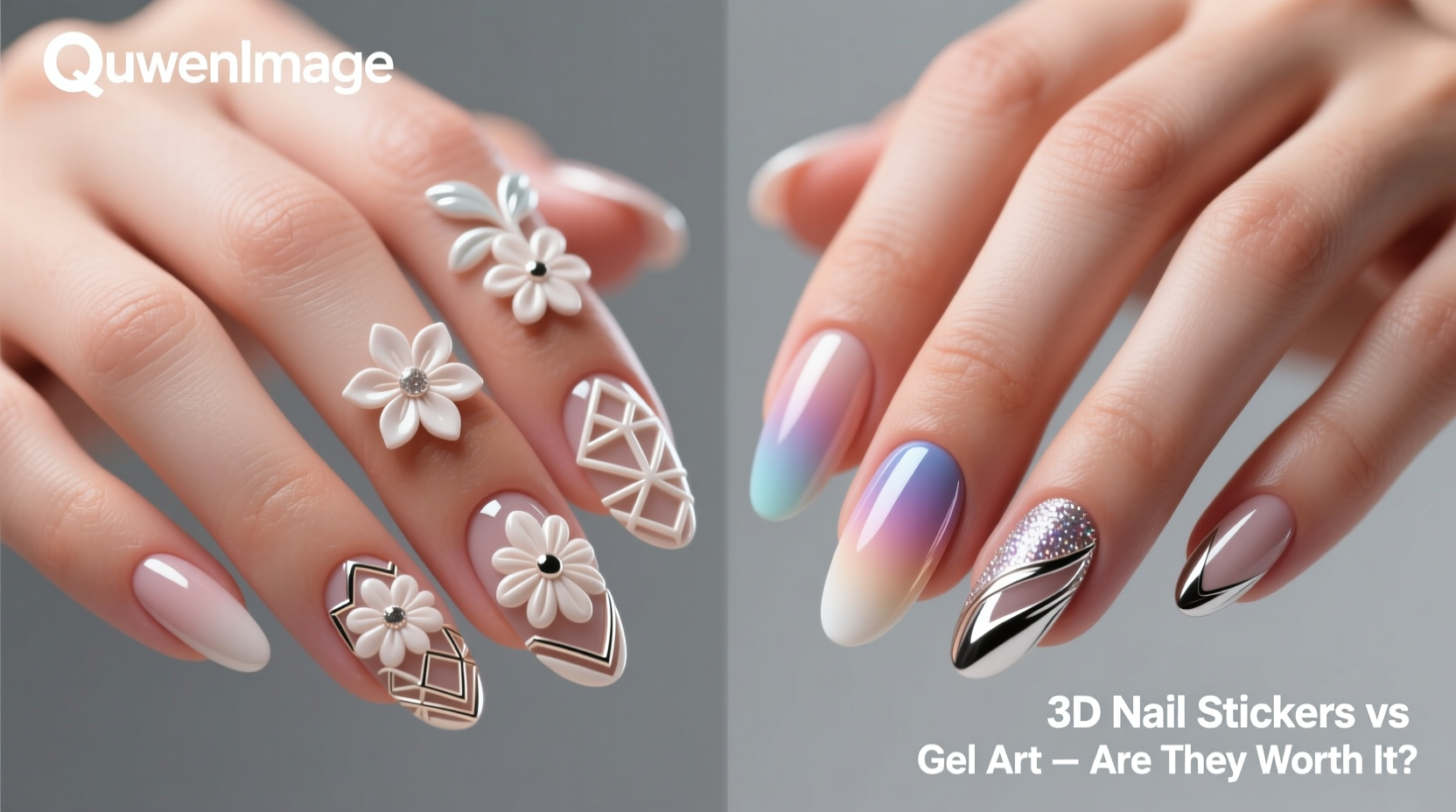
Gel nail art is renowned for its resilience. When applied correctly—base coat, design layer, and top seal—gel polish can last two to three weeks without chipping, fading, or lifting. The UV-cured formula bonds tightly to the nail plate, making it resistant to daily wear, water exposure, and minor impacts.
In contrast, 3D nail stickers typically last between five to ten days under ideal conditions. Their lifespan depends heavily on the quality of the sticker, the precision of application, and how well they’re sealed with a top coat. Without proper sealing, edges can lift, moisture can seep underneath, and the entire design may peel prematurely. Even high-end brands struggle to match the seamless adhesion of cured gel.
Tip: Extend the life of your nail stickers by applying a thick, quick-dry top coat immediately after placement—and reapply every other day.While some users report success lasting up to two weeks with meticulous care, this is the exception rather than the rule. For those with active lifestyles or frequent hand washing (think healthcare workers, parents, or chefs), gel remains the superior option for long-term wear.
Application Process: Convenience vs. Precision
One of the biggest selling points of 3D nail stickers is their ease of use. No lamp, no brushes, no drying time. Just peel, stick, trim, and seal. This makes them ideal for beginners or anyone seeking instant results without investing in tools or training.
However, simplicity comes at a cost. Achieving a flawless, salon-like finish requires patience and precision. Misalignment, air bubbles, and uneven trimming are common issues—even for experienced DIYers. Unlike gel, which can be painted and corrected in layers, stickers are unforgiving once placed. Mistakes often mean starting over or settling for a slightly imperfect look.
Gel art, while more complex, allows for far greater control. Artists can build dimension, blend colors, and create intricate details directly on the nail. Freehand painting, stamping, and embedding embellishments all fall within the realm of gel techniques that stickers simply cannot replicate.
“Stickers are great for inspiration and experimentation, but they lack the depth and texture of true 3D gel sculpting.” — Lila Chen, Professional Nail Technician & Educator
Cost Comparison: Upfront Savings vs. Long-Term Value
At first glance, 3D nail stickers appear to be the more economical choice. A single sheet costs between $3 and $8 and can be used across multiple sets of nails. Compare that to a professional gel manicure, which averages $40–$70 per session, and the savings seem obvious.
But when evaluating value, frequency matters. If a sticker manicure lasts only one week, you’d need four applications per month—totaling $12–$32 monthly. Over six months, that adds up to $72–$192. Meanwhile, bi-weekly gel fills at $50 would total $100 over the same period, offering longer wear and less maintenance.
Additionally, many sticker users end up purchasing extra top coats, cuticle oils, and nail prep products to improve results—incremental costs that erode initial savings. High-performance sealing polishes alone can cost $10–$20 each.
| Factor | 3D Nail Stickers | Gel Nail Art |
|---|---|---|
| Average Cost Per Use | $3–$8 | $40–$70 |
| Lifespan | 5–10 days | 14–21 days |
| Skill Required | Low to moderate | Moderate to high |
| Customization | Limited (pre-designed) | High (customizable) |
| Finish Quality | Good (if sealed well) | Excellent (glossy, seamless) |
Real-World Example: Sarah’s Weekend Experiment
Sarah, a graphic designer in Austin, decided to test 3D nail stickers against her usual gel routine. She bought a premium sticker set online ($7) and spent 45 minutes applying them on a Sunday evening. The result was striking—gold foil butterflies with rhinestone accents looked almost identical to a design she’d seen at her favorite salon.
By Wednesday, however, the corner of one sticker lifted during dishwashing. By Friday, two more had partially detached. She reapplied a new top coat each night, but couldn’t prevent gradual peeling. In contrast, her previous gel manicure lasted 18 days with only minor tip wear.
“I loved how fast and fun it was,” Sarah said. “But I wouldn’t rely on stickers for important events or long trips. They’re better for casual weekends or when I want to try something bold without commitment.”
When 3D Nail Stickers Make Sense (And When They Don’t)
3D nail stickers aren’t inherently wasteful—but they serve a specific niche. They excel in situations where:
- You want a temporary change for a special occasion.
- You’re experimenting with bold styles before committing to a permanent look.
- You lack access to a salon or don’t own gel equipment.
- You enjoy creative DIY projects and don’t mind redoing them weekly.
They fall short when:
- You need durability for work, travel, or physical activity.
- You expect a perfectly smooth, glossy finish without visible seams.
- You’re looking for a long-term cost-saving solution.
- You have oddly shaped or unusually sized nails that pre-cut stickers won’t fit.
Frequently Asked Questions
Can I reuse 3D nail stickers?
No, most 3D nail stickers are designed for single use. Once removed, the adhesive loses its grip and the material may warp or tear. Some reusable silicone caps exist, but these are different from decorative stickers.
Do nail stickers damage natural nails?
Not if applied and removed properly. Avoid aggressive peeling. Soak nails in acetone-based remover for a few minutes to gently dissolve the adhesive. Overuse of harsh solvents or excessive scrubbing can weaken the nail surface over time.
Can I combine stickers with gel polish?
Absolutely. Many professionals use stickers as a base accent and seal them under a full gel overlay. This enhances durability and creates a flush, polished finish—effectively getting the best of both worlds.
Final Verdict: Smart Shortcut or Wasted Investment?
3D nail stickers are not a waste of money—if used with realistic expectations. They are not replacements for gel nail art, but rather complementary tools in a broader beauty toolkit. For occasional flair, creative expression, or budget-friendly experimentation, they deliver impressive results with minimal effort.
Where people go wrong is treating stickers as a direct substitute for professional-grade manicures. When durability, finish, and longevity matter, gel still reigns supreme. However, dismissing stickers entirely ignores their role in democratizing nail art, allowing more people to explore design without financial or technical barriers.
The smart approach? Use stickers strategically. Save them for weekends, photo shoots, or seasonal themes. Invest in gel for everyday elegance and long-term wear. And if you're truly passionate about nail aesthetics, consider learning basic gel techniques—many starter kits now include tutorials and affordable UV lamps.
🚀 Ready to make smarter nail choices? Start by trying one sticker set and one at-home gel kit. Compare results, track longevity, and decide what fits your lifestyle. Share your findings in the comments—we’d love to hear what works for you!








