Kawaii, a Japanese term meaning \"cute,\" has evolved from a domestic aesthetic into a global cultural phenomenon. What began as a quiet rebellion among teenage girls in 1970s Japan now shapes international trends in fashion, design, entertainment, and social media. The appeal of kawaii culture—characterized by pastel colors, childlike innocence, playful characters, and emotional warmth—transcends borders, resonating with audiences far beyond Japan’s shores. But what makes this seemingly simple concept so universally compelling? To understand its global popularity, we must explore its origins, psychological underpinnings, and the ways it has been adapted and reinterpreted around the world.
The Origins of Kawaii: From Rebellion to National Identity
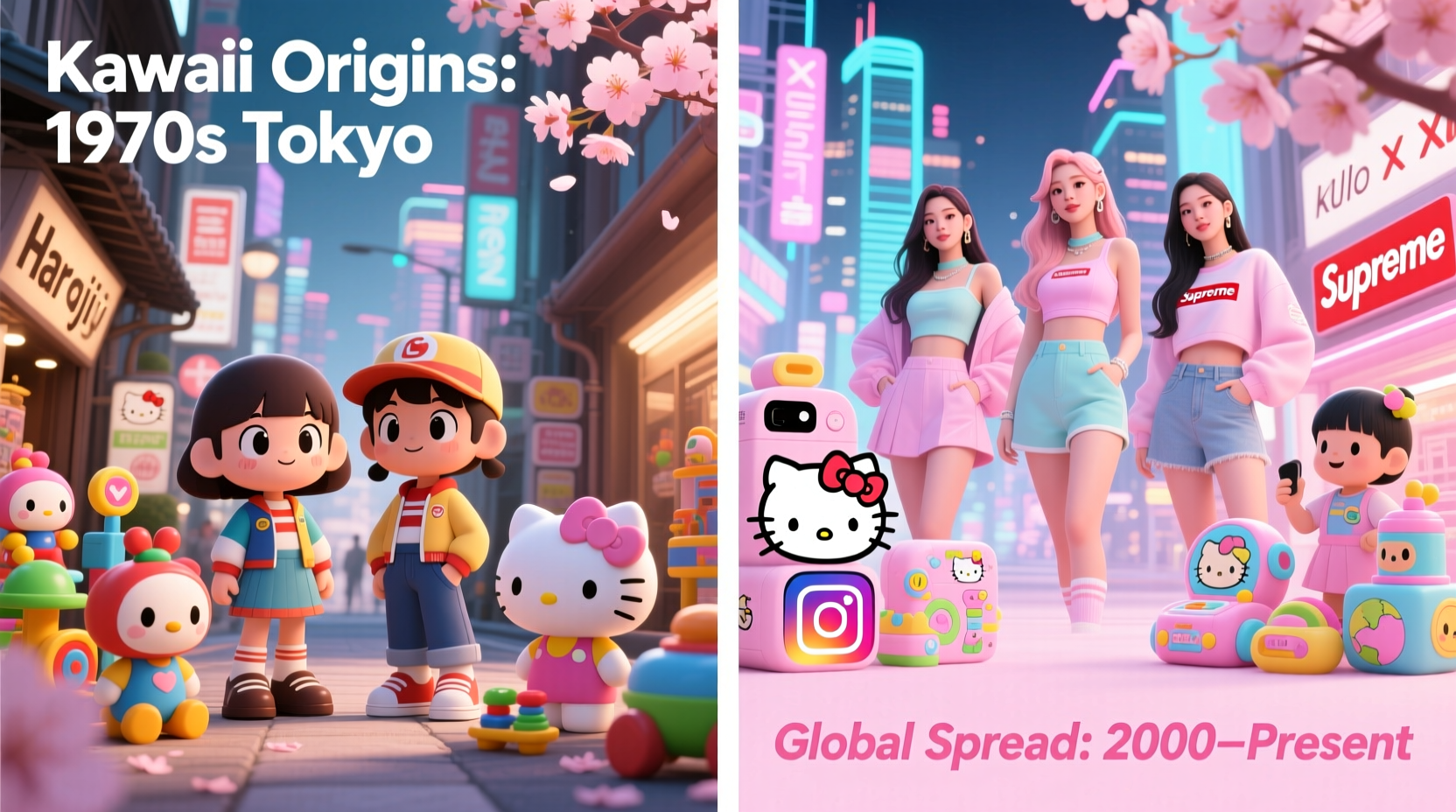
The modern kawaii aesthetic emerged in Japan during the 1970s, primarily through the handwriting styles of high school girls. These students began using rounded, decorative script filled with hearts, stars, and cartoonish faces—what linguists call “girly writing” or *kogals* style. This was more than just a fad; it was a subtle act of resistance against rigid educational norms and patriarchal expectations. By embracing cuteness, young women carved out a space for self-expression that felt personal, intimate, and defiantly joyful.
By the 1980s, kawaii had entered mainstream consumer culture. Companies like Sanrio capitalized on the trend with Hello Kitty, launched in 1974. Unlike traditional mascots, Hello Kitty had no backstory, no voice, and no animation series—yet she became an icon. Her blank expression invited projection, allowing fans to imbue her with their own emotions. This emotional flexibility became a hallmark of kawaii branding.
The 1990s saw kawaii expand into music, fashion, and pop psychology. Artists like Kyary Pamyu Pamyu fused kawaii visuals with electronic music, while Harajuku street style gave rise to subcultures such as Lolita, Decora, and Fairy Kei—all rooted in exaggerated cuteness. Psychologically, kawaii taps into *baby schema* (Kindchenschema), a theory developed by ethologist Konrad Lorenz suggesting that humans are biologically wired to respond positively to infantile features: large eyes, round faces, small noses. Marketers and creators leverage these traits to evoke feelings of warmth, protection, and affection.
Tip: Understanding the baby schema helps explain why even non-Japanese audiences instinctively respond to kawaii characters—our brains are hardwired to find them endearing.Global Expansion: How Kawaii Went International
Kawaii culture did not spread globally overnight. Its journey followed multiple pathways: anime and manga exports, toy imports, digital communication, and youth-driven subcultures. In the late 1990s and early 2000s, Western exposure to Japanese pop culture surged with hits like *Pokémon*, *Sailor Moon*, and *Hello Kitty*. These properties weren’t just entertaining—they were emotionally accessible. Their bright colors, clear moral themes, and cute protagonists appealed to children and adults alike.
Social media accelerated this process. Platforms like Instagram, TikTok, and Pinterest favor visually engaging content, making kawaii aesthetics ideal for virality. Hashtags such as #kawaiicore, #cutelife, and #japanesestyle amass billions of views. Influencers decorate their spaces with plush toys, pastel furniture, and sticker-covered devices, normalizing kawaii as a lifestyle choice rather than a niche interest.
Moreover, kawaii has been localized across cultures. In South Korea, the *aegyo* concept mirrors kawaii, emphasizing playful, childlike behavior to express affection. In France, boutique stores sell Japanese-inspired stationery and desserts under the label *kawaii chic*. In Brazil, cosplay communities incorporate kawaii elements into festival costumes. Each adaptation retains core principles—softness, joy, whimsy—while blending with local tastes.
“Kawaii is not just about appearance—it's a philosophy of kindness, gentleness, and emotional safety.” — Dr. Miho Tsukamoto, Cultural Anthropologist at Waseda University
Psychological and Emotional Appeal of Kawaii
Beyond aesthetics, kawaii fulfills deep psychological needs. In high-stress societies, especially post-pandemic, people seek comfort and emotional regulation. Studies have shown that viewing cute images improves focus, reduces aggression, and increases prosocial behavior. A 2012 study published in *Emotion* found that participants performed better on fine motor tasks after looking at pictures of puppies and kittens—stimuli similar to kawaii imagery.
This effect extends to product design. Companies use kawaii elements to make technology feel less intimidating. For example, Line Friends—a spin-off from the messaging app LINE—features characters like Brown, Cony, and Sally that appear in stickers, emojis, and smart home devices. These avatars soften digital interactions, making users feel accompanied rather than isolated.
In mental health contexts, kawaii is increasingly used therapeutically. Japan’s *healing kawaii* movement promotes stress relief through cute cafes, animal parks, and mindfulness apps featuring cartoon guides. Similarly, Western therapists report patients using kawaii journals or mood trackers to reduce anxiety. The aesthetic acts as emotional armor—a way to reclaim innocence in a complex world.
Timeline of Kawaii’s Global Influence
- 1970s: Emergence of girly handwriting and Sanrio’s Hello Kitty in Japan.
- 1980s: Kawaii enters fashion and advertising; rise of idol culture.
- 1990s: Anime and manga exports introduce kawaii to global audiences (*Sailor Moon*, *Pokémon*).
- 2000s: Harajuku styles gain international attention; kawaii fashion blogs emerge.
- 2010s: Social media amplifies kawaii aesthetics; collaborations with global brands (Uniqlo x Sanrio, Vans x Hello Kitty).
- 2020s: Kawaii integrates into wellness, tech interfaces, and sustainable design (e.g., eco-friendly kawaii packaging).
Commercialization and Cultural Appropriation: Challenges Ahead
As kawaii gains popularity, it faces criticism for over-commercialization and cultural dilution. Some argue that Western interpretations strip kawaii of its emotional depth, reducing it to superficial decoration. For instance, mass-produced “kawaii” merchandise often lacks authenticity, relying on lazy stereotypes like pink unicorns without understanding the cultural context.
There’s also concern about cultural appropriation—when non-Japanese entities profit from kawaii aesthetics without crediting their origins. Fast fashion brands have been called out for copying Harajuku styles while ignoring the labor and creativity behind them. To address this, ethical engagement requires acknowledgment, collaboration, and respect for intellectual property.
Yet, when done thoughtfully, cross-cultural exchange can enrich kawaii’s evolution. Independent artists in Canada, Germany, and Australia collaborate with Japanese illustrators, creating hybrid forms that honor tradition while innovating. The key lies in intentionality: treating kawaii not as a trend to exploit, but as a living culture to engage with respectfully.
| Era | Key Development | Global Impact |
|---|---|---|
| 1970s–80s | Rise of Sanrio, kogal writing | Laid foundation for character-based marketing |
| 1990s | Anime boom (*Pokémon*, *Cardcaptor Sakura*) | Introduced kawaii narratives to Western children |
| 2000s | Harajuku fashion goes global | Inspired alternative fashion movements worldwide |
| 2010s | Social media virality | Democratized access to kawaii aesthetics |
| 2020s | Integration with wellness and tech | Expanded kawaii into functional, emotional domains |
Real-World Example: The Case of Kawaii Cafe Tokyo to Paris
In 2018, a group of French entrepreneurs opened *Mon Petit Kawaii Café* in Paris, inspired by Tokyo’s famous themed cafes. They partnered with a Japanese designer to ensure authenticity, sourcing matcha from Kyoto and importing limited-edition Sanrio tableware. Rather than simply replicating the look, they incorporated French patisserie techniques—offering lavender-honey macarons shaped like Hello Kitty.
The café succeeded not because it was “exotic,” but because it balanced cultural fidelity with local relevance. Customers appreciated the attention to detail: handwritten menus in both Japanese and French, staff trained in omotenashi (Japanese hospitality), and a quiet corner for letter-writing with kawaii stamps. Within a year, it became a hub for expat communities, language learners, and fans of Japanese culture. This case illustrates how kawaii can thrive abroad when rooted in mutual respect and creative collaboration.
Actionable Checklist: Embracing Kawaii Culture Respectfully
- Research the history and values behind kawaii before adopting its aesthetics.
- Credit original creators when sharing or selling kawaii-inspired designs.
- Support authentic Japanese brands and independent artists.
- Avoid reducing kawaii to gendered stereotypes (e.g., assuming only women enjoy it).
- Use kawaii elements to promote positivity, inclusivity, and emotional well-being.
Frequently Asked Questions
Is kawaii culture only for children?
No. While kawaii includes childlike elements, it is embraced by adults across Japan and globally. Many adults use kawaii as a form of self-care, identity expression, or artistic exploration. Products like kawaii office supplies, skincare lines, and even cars show its broad demographic reach.
Can non-Japanese people participate in kawaii culture?
Yes, but with awareness. Participation should be respectful and informed. Learn about its origins, avoid caricatures, and support creators from Japan. Appreciation differs from appropriation—engagement matters more than ownership.
Does kawaii have any connection to mental health?
Increasingly, yes. Therapists and researchers recognize kawaii’s role in emotional regulation. Cute imagery can trigger dopamine release, reduce cortisol levels, and encourage nurturing behaviors. Apps like *Streaks* or *Habitica* use kawaii rewards to motivate healthy habits, proving its practical value beyond aesthetics.
Conclusion: Why Kawaii Endures—and How You Can Be Part of It
Kawaii culture’s global popularity stems from its unique blend of visual charm, emotional resonance, and cultural adaptability. It offers a refuge from harsh realities, a language of kindness in digital spaces, and a canvas for creative identity. More than a trend, it reflects a universal desire for softness in a sharp world.
Its history—from teenage rebellion to international branding—shows how deeply personal expressions can evolve into shared cultural resources. As kawaii continues to spread, its future depends on mindful participation. Whether you're designing a product, decorating your home, or simply enjoying a Sanrio sticker sheet, remember that kawaii is not just about looking cute. It’s about feeling seen, safe, and connected.
🚀 Ready to bring more joy into your daily life? Start small: add a kawaii notebook to your workspace, send a message with a thoughtful emoji, or learn about a Japanese artist shaping the culture today. Share your journey online and inspire others to embrace kindness—one cute moment at a time.