
The word “Bible” carries immense cultural, religious, and historical weight. For billions of people across the world, it represents a divine revelation, a moral compass, and a foundational text for faith. But have you ever wondered why it’s called the *Bible*? The answer lies not in a single moment of naming, but in a fascinating linguistic journey that spans centuries, languages, and civilizations. Understanding the origin and evolution of the term reveals how a simple word came to symbolize one of the most influential books in human history.
The Etymology: From “Byblos” to “Biblia”
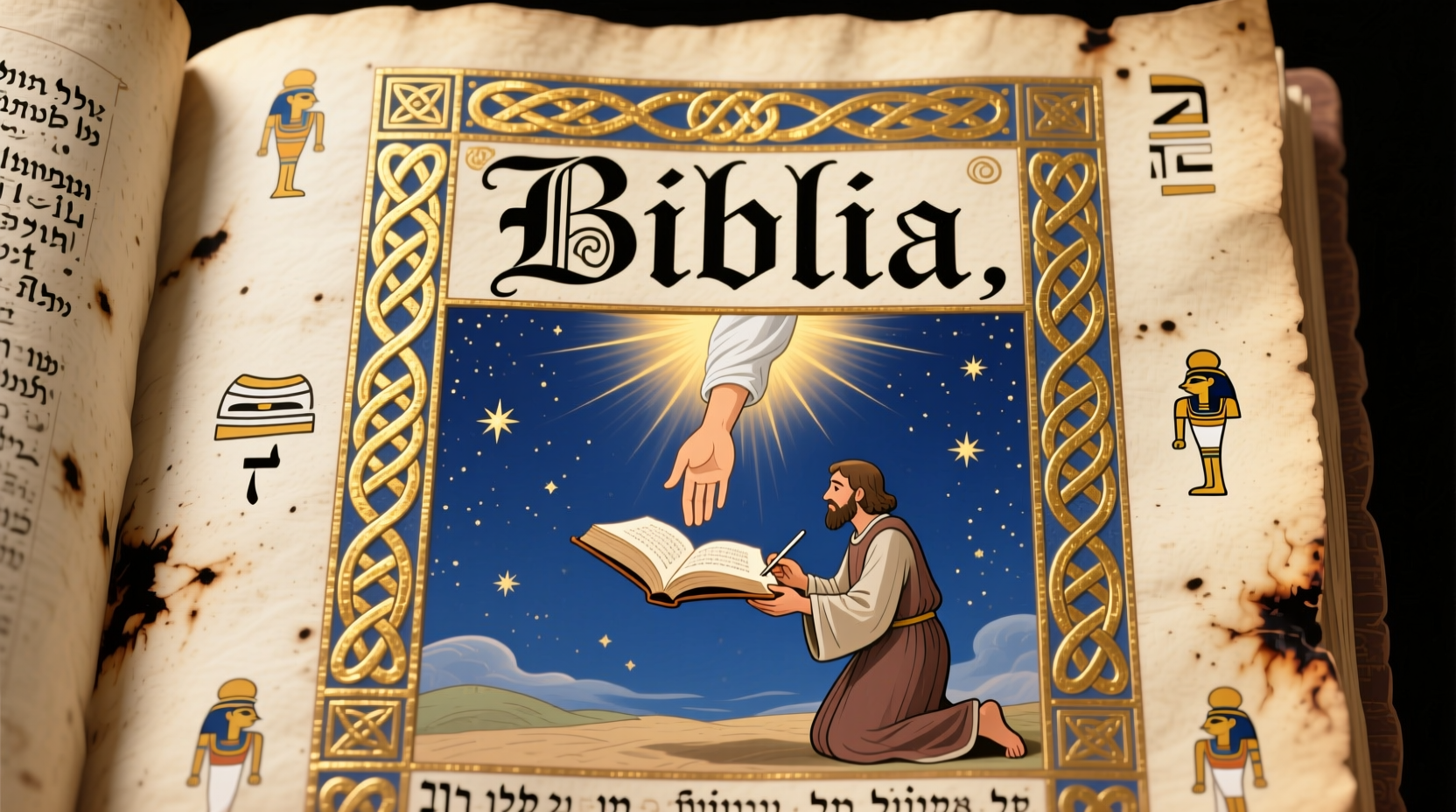
The word “Bible” traces back to the ancient Phoenician city of Byblos, located in what is now modern-day Lebanon. Byblos was renowned in antiquity as a major center for the export of papyrus—a paper-like material made from the pith of the papyrus plant, which grew abundantly along the Nile River in Egypt. The Greeks, who traded extensively with the region, referred to papyrus as “byblos” after the city through which it was commonly imported.
Over time, the Greek word evolved. “Byblos” (meaning “book” or “scroll”) became “biblion,” a diminutive form that meant “little book.” Eventually, the plural form “ta biblia” emerged, literally translating to “the books.” This was not originally a religious term—it simply described a collection of written scrolls.
In the early centuries of the Common Era, early Christians adopted the phrase “ta biblia” to refer to their sacred scriptures, which were composed of multiple texts—historical accounts, prophetic writings, letters, and gospels. As these writings were compiled into a single authoritative corpus, the expression “the books” gradually transformed into “the Book”—a singular entity formed from many parts.
Tip: Remember that \"Bible\" originally meant \"books\"—a clue to its composite nature, combining diverse texts across centuries.From Collection to Canon: How “Books” Became Scripture
The transition from “ta biblia” as a general term for scrolls to “The Bible” as a sacred canon was gradual. Ancient Jewish communities had already established collections of sacred writings—what Christians now call the Old Testament. These included the Torah (Law), Nevi’im (Prophets), and Ketuvim (Writings), collectively known as the Tanakh.
With the rise of Christianity, new texts emerged—particularly the Gospels and the letters of Paul. Early church leaders debated which writings were divinely inspired and should be included in the official canon. By the 4th century, councils such as the Council of Carthage (397 CE) formalized the list of New Testament books, completing what we now recognize as the Christian Bible.
It was during this period that Latin-speaking Christians began using the term “Biblia” in the singular form—as una Biblia, meaning “one book.” Despite being a compilation of 66 books (in Protestant tradition), 73 (in Catholic tradition), or more (in Orthodox traditions), the Bible was increasingly seen as a unified whole, inspired by God and central to faith.
Linguistic Evolution Across Cultures
The word “Bible” traveled through Latin into Old French as “biblie,” and eventually entered Middle English around the 12th century as “bible.” At first, it remained a scholarly term, used primarily in ecclesiastical contexts. But with the invention of the printing press and the translation of the Bible into vernacular languages—most notably William Tyndale’s English translation and later the King James Version—the word became part of everyday language.
Today, “Bible” is used universally in English to denote the sacred scripture of Christianity, though it is also sometimes used metaphorically to describe any authoritative guide (“the investor’s bible” or “the cook’s bible”). This reflects the deep cultural imprint the text has left on language and thought.
| Era | Term Used | Meaning | Context |
|---|---|---|---|
| 1500–1000 BCE | Byblos (city) | Phoenician port city | Papyrus trade hub |
| 800–300 BCE | byblos / biblion | book, scroll | Greek literature |
| 1st–4th century CE | ta biblia | the books | Early Christian writings |
| 4th–12th century | Biblia (Latin) | The Book (sacred) | Church doctrine |
| 12th century+ | Bible (English) | Sacred scripture | Religious & cultural use |
Expert Insight: The Power of a Name
“The shift from ‘books’ to ‘The Book’ reflects a profound theological development—the belief that diverse writings, composed over centuries, are united by a single divine purpose.” — Dr. Miriam Cohen, Professor of Religious Studies, University of Edinburgh
This unification wasn’t just linguistic—it was doctrinal. The Church taught that while the Bible contained many authors and genres, its ultimate author was God. This concept, known as divine inspiration, elevated the Bible beyond a mere anthology to a living, transformative text.
Why Does the Name Matter?
The name “Bible” does more than label a religious text; it encapsulates its identity. Calling it “the books” reminds us of its diversity—poetry in Psalms, law in Exodus, prophecy in Isaiah, narrative in Genesis, and theology in Romans. Yet calling it “the Book” emphasizes its unity and authority. This duality is central to how believers engage with it: as both a library and a single voice.
In Jewish tradition, the reverence for the text is so great that worn copies are ceremonially buried rather than discarded. In Christian worship, the Bible is often carried in procession and placed at the center of the sanctuary. The name, though derived from an ancient trading post, now evokes awe, devotion, and continuity across generations.
Tip: When studying the Bible, remember its composite nature—different books were written in different times, genres, and purposes. Context is key to understanding.Common Misconceptions About the Name
- Misconception: “Bible” is a Hebrew word.
Reality: It’s Greek in origin, not Hebrew. The Hebrew Bible is called the Tanakh, an acronym of its three sections. - Misconception: The Bible was always one book.
Reality: It was originally separate scrolls and codices, only compiled into a single volume centuries after its earliest texts were written. - Misconception: All Bibles are identical.
Reality: Different Christian traditions include varying numbers of books, especially in the Old Testament (e.g., Deuterocanonical books).
FAQ
What does the word “Bible” literally mean?
Literally, “Bible” comes from the Greek “ta biblia,” meaning “the books.” It originated from the name of the city Byblos, a center for papyrus trade, which gave the Greeks a word for “book” or “scroll.”
Is the word “Bible” found in the Bible itself?
No. The word “Bible” as we know it today does not appear in any biblical text. It developed centuries later as a way to refer to the collected scriptures.
Why is the Bible sometimes called “The Good Book”?
“The Good Book” is a reverent nickname emphasizing the Bible’s moral teachings and spiritual value. It became popular in the 18th and 19th centuries, particularly in evangelical circles.
Conclusion: A Name That Transcended Its Origins
The term “Bible” began as a humble reference to paper from a coastal city and evolved into a title of unparalleled spiritual significance. From “byblos” to “Biblia” to “Bible,” the word’s journey mirrors the text’s own transformation—from scattered writings to a cornerstone of global faith. Understanding this origin enriches our appreciation of the Bible not just as a religious object, but as a living artifact of language, culture, and belief.
💬 Did this history surprise you? Share your thoughts or ask questions in the discussion—let’s explore the legacy of the Bible together.