In professional hockey, few elements spark as much debate as fighting. While most sports penalize physical altercations between players, the National Hockey League (NHL) not only allows but unofficially tolerates on-ice fights. Unlike basketball or football, where a punch can lead to ejection and suspension, hockey players who drop their gloves often serve only a five-minute penalty and return to play. This unique aspect of the game raises a critical question: why is fighting legal in hockey? The answer lies in a complex mix of tradition, player safety logic, unwritten codes, and league policy that has evolved over more than a century.
The Historical Roots of Fighting in Hockey
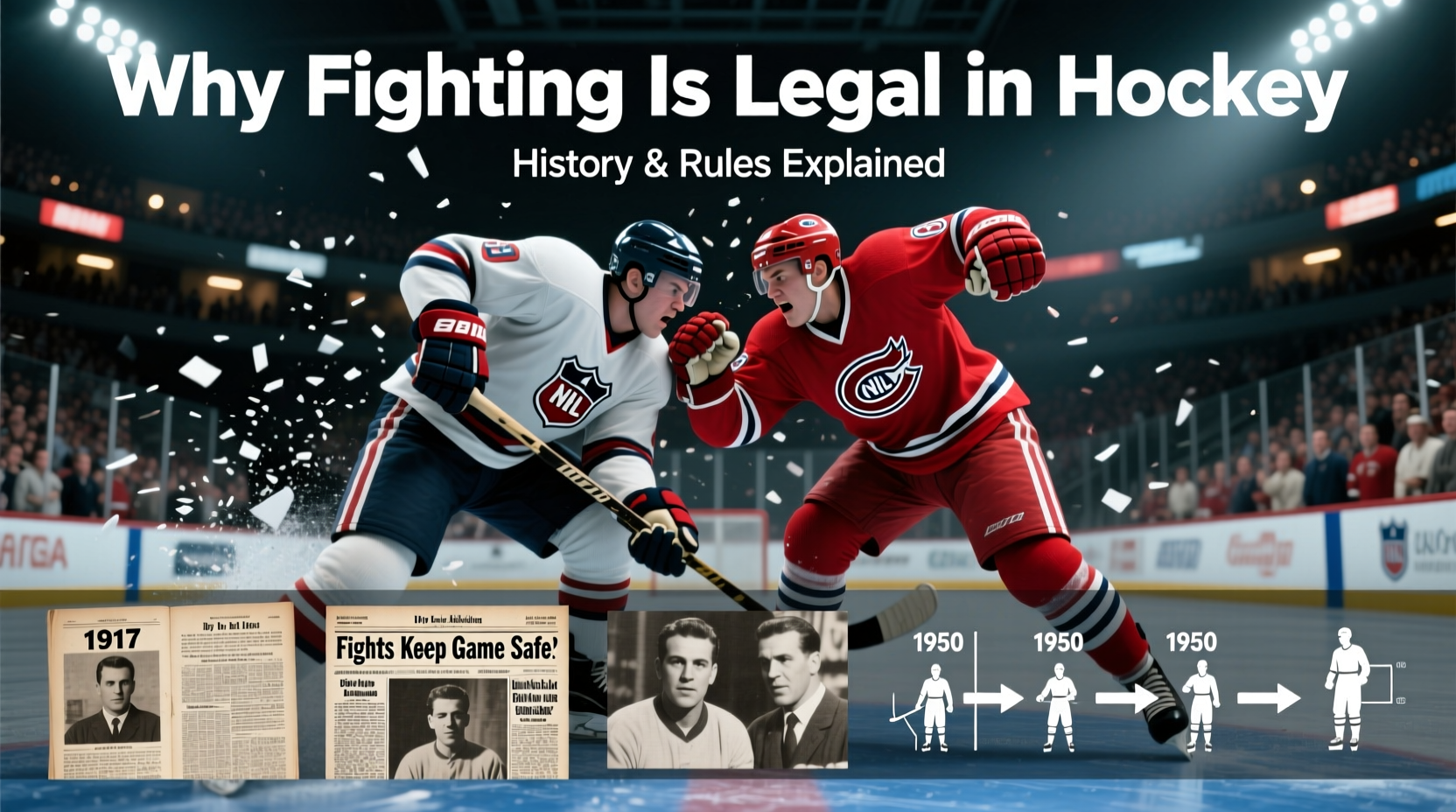
Fighting has been part of ice hockey since its earliest organized days in the late 19th and early 20th centuries. In an era when protective gear was minimal and rules were loosely enforced, the game was inherently rough. Players used sticks, elbows, and fists freely, and formal penalties for violence were rare. As the sport professionalized in the early 1900s, leagues began introducing rules to curb dangerous behavior — yet fighting remained a tolerated outlet for aggression.
By the mid-20th century, particularly during the NHL’s “Original Six” era (1942–1967), enforcers emerged as a distinct role. These players weren’t expected to score goals but to protect star teammates and deter opponents from taking liberties. The presence of enforcers institutionalized fighting as a strategic component rather than mere chaos. Teams like the Philadelphia Flyers of the 1970s, dubbed the “Broad Street Bullies,” took this approach to extremes, using intimidation and brawls to dominate opponents.
The league never outright banned fighting. Instead, Rule 46 in the NHL rulebook outlines penalties for fighting — specifically, a five-minute major — which implies regulation rather than prohibition. This subtle distinction signals that while the league discourages violence, it acknowledges its role in the game’s culture and balance.
The Unwritten Code: Why Players Fight
Fighting in hockey operates under a complex, unspoken code understood by players but often invisible to fans. This code governs when, how, and with whom a fight should occur. It serves several purposes:
- Protecting star players: Enforcers step in when skilled players are targeted with dirty hits or verbal taunts.
- Maintaining team morale: A well-timed fight can energize a struggling team or shift momentum.
- Policing the game: With limited visibility and split-second decisions, referees can’t catch every infraction. Players often respond themselves to enforce respect.
- Responding to retaliation: If a player injures a teammate (intentionally or recklessly), a fight may be seen as settling the score.
“Hockey is the only sport where the referee can’t see everything. When someone takes a cheap shot, the team responds. It’s about accountability.” — Brendan Shanahan, NHL Hall of Famer and former VP of Player Safety
This self-regulating system reduces the likelihood of sneak attacks and sustained dirty play. While controversial, many players argue that allowing controlled fights actually prevents more dangerous covert actions like stick-swinging or blindside hits.
Is Fighting Legal? Understanding NHL Rules
Fighting is not technically “legal” in the sense of being encouraged or permitted without consequence. However, it is regulated, not prohibited. Under NHL Rule 46, players who engage in a fight receive a five-minute major penalty. They are allowed to return to the game afterward unless additional infractions (like weapon use or third-man-in) are involved.
Compare this to other leagues:
| League | Fighting Policy | Penalty for Fighting |
|---|---|---|
| NHL | Tolerated with penalties | 5-minute major; possible game misconduct for escalation |
| IIHF (International) | Strictly prohibited | Match penalty, ejection, and potential suspension |
| NCAA (College) | Banned | Gross misconduct; automatic ejection and suspension |
| European Leagues | Generally banned | Ejection and multi-game suspensions |
The NHL’s approach stands in stark contrast to international standards, highlighting its unique cultural stance. While the league has cracked down on head shots and dangerous plays, it maintains the five-minute fighting penalty, suggesting a calculated tolerance.
Arguments For and Against Fighting in Hockey
The debate over fighting centers on two core questions: does it enhance player safety or endanger it?
Arguments in Favor
- Deters dirty play: Knowing they might face a heavyweight enforcer discourages players from targeting stars.
- Emotional release: High-speed collisions and intense rivalries create tension; fighting acts as a pressure valve.
- Entertainment value: Many fans enjoy the spectacle and drama of a good fight.
- Self-policing: Reduces reliance on inconsistent officiating for justice.
Arguments Against
- Concussion risk: Repeated blows to the head contribute to long-term brain trauma.
- Normalizes violence: Sends the wrong message, especially to youth players.
- Outdated role: Enforcers are increasingly rare as the game emphasizes speed and skill.
- Inconsistent enforcement: Some fights go unpunished while others draw fines or suspensions.
A Real Shift: The Decline of Fighting in Modern Hockey
Despite its historical roots, fighting has declined significantly over the past two decades. According to data from QuantHockey, the average number of fights per NHL game dropped from over 0.8 in the 1980s to less than 0.2 in the 2020s. Several factors explain this trend:
- Rule changes: Stricter penalties for head contact and boarding reduce the need for retribution.
- Coaching philosophy: Coaches now emphasize puck possession, skating, and structure over intimidation.
- Player development: Young players are trained in skills, not toughness, reducing the pool of natural enforcers.
- Medical awareness: Growing concern over CTE (chronic traumatic encephalopathy) makes leagues cautious about head trauma.
A mini case study illustrates this evolution: In 2011, the Vancouver Canucks reached the Stanley Cup Final with a high-skilled, fast-paced roster. They avoided fights entirely during their playoff run, relying on disciplined defense and offensive depth. Though they lost the series, their style influenced future team-building strategies across the league. Contrast this with the 1996 Colorado Avalanche, who employed tough guys like Tie Domi and regularly engaged in brawls — a model now largely obsolete.
FAQ: Common Questions About Fighting in Hockey
Do players get suspended for fighting?
Typically, no — a standard fight results in a five-minute major penalty. However, players can be suspended if they escalate the fight (e.g., kicking, using a weapon, or continuing after being separated).
Why don’t other sports allow fighting?
Most sports lack hockey’s combination of high speed, physical proximity, and limited refereeing angles. Additionally, hockey’s culture developed around player autonomy in enforcing respect, which isn’t present in sports like soccer or basketball.
Will the NHL ever ban fighting?
It’s unlikely in the near term. While commissioner Gary Bettman has acknowledged the risks, banning fighting would require a massive cultural shift. Any attempt would face strong resistance from players, coaches, and traditional fans.
Conclusion: Tradition Meets Transition
Fighting in hockey persists not because it’s ideal, but because it’s embedded in the sport’s DNA. From its origins in unregulated rinks to its modern role as a tactical deterrent, fighting has served multiple functions — some practical, some symbolic. While the game is evolving toward greater speed, skill, and safety, the legacy of physical accountability remains.
As medical research advances and fan preferences shift, the future of fighting hangs in balance. Yet for now, the five-minute major endures as a testament to hockey’s unique identity — a sport where respect is sometimes earned not with a goal, but with a glove hit the ice.
🚀 What do you think — should fighting stay in hockey, or is it time to retire the enforcer role? Share your thoughts and join the conversation below.