
Applying to dozens of jobs without a single interview invite is frustrating—and increasingly common in today’s competitive job market. You’re not alone if you’ve sent out résumés, tailored applications, and still heard nothing. The truth is, most rejections happen before hiring managers even consider your qualifications. They’re filtered out by subtle but critical mistakes in your application strategy. Understanding these pitfalls—and fixing them—is the key to breaking through.
1. Your Résumé Doesn’t Pass the 6-Second Test
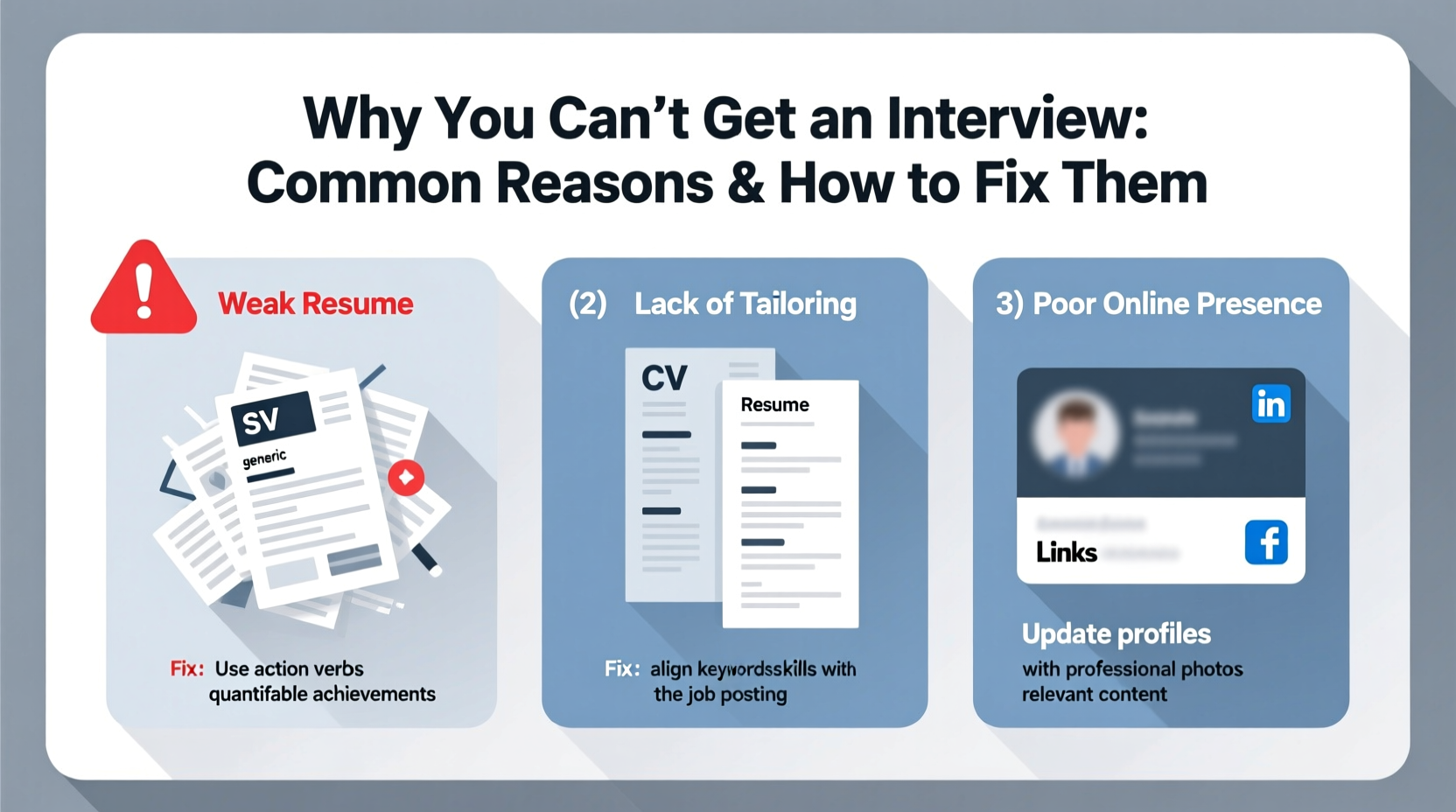
Hiring managers spend an average of six seconds scanning a résumé before deciding whether to move forward. If your document doesn’t immediately highlight relevant skills, achievements, and keywords, it’s likely discarded. Generic summaries, cluttered formatting, or outdated information can all sabotage your chances.
Tip: Start each bullet point with a strong action verb—like “Led,” “Optimized,” or “Increased”—and quantify results whenever possible.Résumés that fail this initial scan often lack customization. Sending the same version to every job, regardless of industry or role, signals a lack of genuine interest. Employers want candidates who understand their specific needs.
“Resumes aren’t about listing duties—they’re about proving impact. Show what you changed, not just what you did.” — Sarah Lin, Talent Acquisition Manager at TechForward Inc.
2. Missing the Right Keywords for ATS Filters
Most companies use Applicant Tracking Systems (ATS) to automatically filter out unsuitable applicants. These systems scan for keywords related to skills, tools, certifications, and job titles. If your résumé doesn’t include the right terms, it may never reach human eyes—even if you’re highly qualified.
For example, applying for a “Digital Marketing Specialist” role without including terms like “SEO,” “Google Analytics,” or “conversion rate optimization” could result in automatic rejection.
| Job Posting Keyword | What to Include on Your Résumé | Avoid This Mistake |
|---|---|---|
| Project Management | PMP-certified, led cross-functional teams, managed $500K budget | Saying “helped with projects” instead of “managed end-to-end delivery” |
| Data Analysis | Proficient in Python, SQL, Tableau; reduced reporting time by 30% | Listing only “familiar with Excel” without specifics |
| Customer Service | Handled 50+ daily inquiries, improved CSAT by 20% | Vague statements like “good with people” |
To pass ATS filters, always mirror the language used in the job description. But don’t overstuff keywords unnaturally—balance readability with optimization.
3. Weak or Missing Cover Letter
Many job seekers skip the cover letter, assuming it’s optional. In reality, it’s one of the few places where you can stand out as a person, not just a list of credentials. A strong cover letter explains why you’re interested in *this* company, connects your background to their challenges, and demonstrates communication skills.
Weak cover letters repeat the résumé or use generic templates. Strong ones tell a story. For instance:
Tip: Open your cover letter with a compelling hook—such as a relevant achievement or personal connection to the company’s mission.Mini Case Study: From Rejection to Interview Call
Jamal, a logistics coordinator, applied to over 30 operations roles with no response. His résumé listed responsibilities accurately but lacked impact. After working with a career coach, he revised his résumé to say: “Reduced shipment processing time by 27% through workflow automation,” and wrote a cover letter explaining how he admired the company’s sustainability initiatives and wanted to contribute operational efficiency to support that goal. Within two weeks, he received three interview invitations.
4. Poor Online Presence or No Personal Branding
Recruiters routinely check LinkedIn and Google search results before contacting candidates. If your profile is incomplete, inconsistent with your résumé, or contains unprofessional content, it can disqualify you instantly.
Common issues include:
- LinkedIn headline that says “Looking for opportunities” instead of “Operations Analyst | Supply Chain Optimization”
- No summary section or endorsements
- Privacy settings that hide your activity or connections
- Outdated job titles or dates compared to your résumé
Your online presence should reinforce your professional identity—not contradict it.
Step-by-Step Guide: Optimize Your LinkedIn in 30 Minutes
- Update your headline to reflect your current role and expertise (e.g., “HR Generalist | Employee Engagement & Onboarding Specialist”).
- Add a professional photo with clear lighting and neutral background.
- Write a concise summary (3–5 sentences) highlighting your value proposition.
- Ensure experience matches your résumé, including dates and key achievements.
- Request 2–3 recommendations from former colleagues or managers.
- Engage weekly by commenting on industry posts or sharing insights.
5. Applying Too Broadly or Without Strategy
Mass-applying to every opening you see might feel productive, but it often backfires. Employers notice when applications seem impersonal or mismatched. Worse, job boards prioritize candidates who apply early and have high relevance scores.
Instead of quantity, focus on quality. Target roles where your skills align closely with the requirements. Research the company, tailor both résumé and cover letter, and if possible, find a referral.
“Candidates who mention a mutual connection or reference a recent company milestone are 3x more likely to get a callback.” — Mark Tran, HR Director at NexaCorp
Checklist: Before You Hit “Apply”
- ✅ Customize your résumé using keywords from the job description
- ✅ Write a unique cover letter addressing the company and role
- ✅ Verify LinkedIn profile is up to date and public
- ✅ Check for typos and formatting errors
- ✅ Confirm contact information is correct
- ✅ Save the application with a clear file name (e.g., “Smith_J_Resume_Marketing_Manager.pdf”)
Frequently Asked Questions
How many jobs should I apply to each week?
Quality matters more than quantity. Aim for 5–10 highly targeted applications per week rather than 50 generic ones. Each should be customized and submitted with intention.
Should I follow up after applying?
Yes—especially if you have a connection at the company. A polite LinkedIn message to the hiring manager or team member referencing your application and enthusiasm for the role can make a difference. Wait 5–7 days before following up.
Is it worth applying to jobs that require experience I don’t fully have?
Sometimes. If you meet 70% of the requirements and can demonstrate transferable skills, go ahead. Emphasize adaptability and quick learning in your cover letter. Avoid roles where core qualifications (like certifications or technical tools) are completely missing.
Conclusion: Turn Applications Into Interviews
Not getting interviews isn’t a reflection of your worth—it’s a signal that your job search strategy needs refinement. Small changes in your résumé, keyword usage, cover letter, and online presence can dramatically improve your visibility and appeal. Stop treating applications like lottery tickets. Start treating them like targeted pitches.
Revise one résumé this week using the job descriptions you’ve saved. Write a real cover letter—not a template. Update your LinkedIn to reflect your current goals. Then apply to one role with full attention to detail. That focused effort will yield better results than 20 rushed applications.
🚀 Ready to get noticed? Pick one fix from this article and implement it today. One change can open the door to your next interview.