
Flags flying at half-staff are a solemn symbol across the United States and many other nations, signifying mourning, remembrance, or national tragedy. When you see the American flag lowered, it’s not a random decision—it follows strict protocol established by law and presidential or gubernatorial proclamation. Understanding why flags are at half-staff today requires awareness of recent events, official announcements, and the traditions that govern this powerful visual gesture.
This article explores the common reasons behind half-staff observances, how notifications are issued, and what citizens can do to stay informed. Whether you're a government employee, educator, business owner, or concerned citizen, knowing the significance and sources of these directives helps honor those being remembered and uphold national customs with respect.
What Does Flying the Flag at Half-Staff Mean?
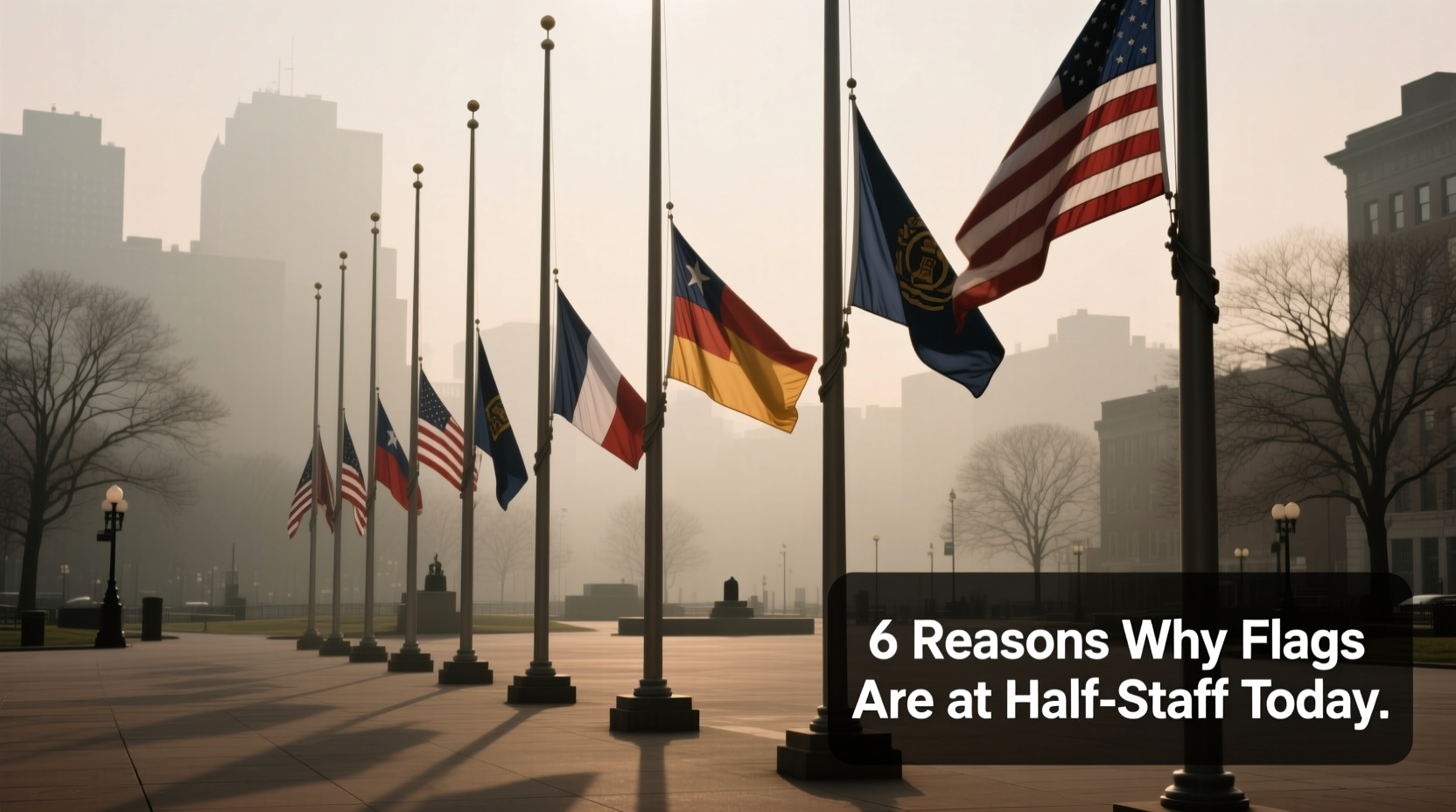
Flying a flag at half-staff (often mistakenly called “half-mast,” which refers to ships) is a symbolic act of mourning. It originated centuries ago as a way to represent death and loss, making space for the “invisible flag of death” above the national banner. In modern U.S. practice, lowering the flag signifies national grief, tribute to fallen heroes, or recognition of tragic events.
The gesture applies to all U.S. flags—on federal buildings, military installations, naval vessels, and even private residences when properly observed. The President of the United States has the authority to issue nationwide proclamations, while governors may order flags lowered within their respective states.
“Lowering the flag is one of the most visible and unifying acts of national mourning. It speaks without words.” — Dr. Jonathan Hale, Historian of American Civic Symbols
Common Reasons Flags Are Lowered
There are several standard and extraordinary circumstances under which the U.S. flag is flown at half-staff. These fall into two categories: fixed-date observances and ad hoc proclamations.
Fixed National Observances
Some dates are pre-designated by federal law for half-staff display:
- Peace Officers Memorial Day (May 15): Flags are lowered unless it coincides with Armed Forces Day.
- Memorial Day (last Monday in May): Flags fly at half-staff until noon, then are raised to full-staff to honor living veterans.
- National Peace Officers Memorial Day (May 15): Honors law enforcement officers killed in the line of duty.
- September 11 National Day of Service and Remembrance: Marks the anniversary of the 2001 terrorist attacks.
Ad Hoc Presidential Proclamations
The President may issue a proclamation following:
- Death of a current or former U.S. President, Vice President, Supreme Court Justice, or high-ranking official.
- National tragedies such as mass shootings, natural disasters, or terrorist attacks.
- Significant military losses or the death of a prominent service member.
- Acts of terrorism or attacks on allied nations (at the President's discretion).
How to Find Out Why Flags Are at Half-Staff Today
With multiple proclamations possible at any time, staying updated requires reliable sources. Here are the best ways to receive accurate notifications:
- White House Official Website: All presidential proclamations are published at whitehouse.gov under the \"Proclamations\" section.
- U.S. Flag Code and Federal Register: Formal notices appear in the Federal Register, detailing duration and scope.
- State Government Websites: Governors often issue separate orders for state facilities and buildings.
- Local News Outlets: Reputable TV stations, newspapers, and radio broadcasts report on flag status changes.
- NOAA Weather Radio and Emergency Alert System: Occasionally used for urgent national mourning declarations.
Example: A Recent Half-Staff Notification
In January 2024, President Biden ordered flags lowered to honor the victims of a devastating tornado outbreak in the Midwest. The proclamation specified that flags remain at half-staff for five days on federal grounds and encouraged all Americans to do the same. This example illustrates how natural disasters—when they result in significant loss of life—can prompt national observance.
Do’s and Don’ts When the Flag Is at Half-Staff
| Do’s | Don’ts |
|---|---|
| Raise the flag to the peak before lowering it to half-staff. | Leave the flag at half-staff overnight unless illuminated. |
| Follow both federal and state proclamations if applicable. | Lower the flag without a formal announcement out of confusion. |
| Honor the reason—take a moment of silence or reflection. | Use the occasion for political statements or commercial promotion. |
| Display the flag respectfully, even at home. | Allow the flag to touch the ground or become entangled. |
Mini Case Study: Community Response After a School Shooting
After a tragic school shooting in a small Ohio town in 2023, the President issued a three-day proclamation to fly flags at half-staff. Local schools, fire departments, and businesses immediately complied. One high school principal organized a brief assembly where students read names of the victims aloud while the flag was lowered.
Residents began placing small flags at half-staff on front porches. The local newspaper published the full text of the presidential proclamation, helping residents understand the significance. This collective response demonstrated how a national symbol can unite communities in grief and solidarity.
Step-by-Step Guide: How to Respond When Flags Are Lowered
- Verify the Proclamation: Check whitehouse.gov or your state’s official website to confirm the directive and its duration.
- Adjust Your Flag Accordingly: If you display a flag at home or business, lower it properly using the peak-first method.
- Inform Others: Share the news with coworkers, community groups, or social media followers—with context and respect.
- Observe a Moment of Silence: Especially on Memorial Day or after a tragedy, pause to reflect.
- Return the Flag to Full-Staff Correctly: At the end of the designated period, raise it briskly to the top.
Frequently Asked Questions
Why are flags at half-staff if I don’t see any news about it?
Sometimes, lesser-known proclamations occur, such as honoring the passing of a former cabinet member or a quiet national day of remembrance. Not all half-staff orders receive widespread media coverage, but they are still official. Always verify through government websites.
Can individuals lower their flags at home?
Absolutely. While not required, it is a respectful gesture to follow federal and state directives. The U.S. Flag Code encourages private citizens to participate in national mourning.
How long do flags stay at half-staff?
It varies. For the death of a President, it may be 30 days. For other officials, it ranges from 10 days to a single day. Memorial Day is a special case—only until noon. The proclamation always specifies the duration.
Conclusion: Honoring Through Awareness and Action
Seeing a flag at half-staff should prompt more than curiosity—it should inspire reflection. These moments connect us to shared values of sacrifice, unity, and national memory. By understanding the reasons behind the gesture and knowing where to find accurate information, every citizen can participate meaningfully in the nation’s rituals of remembrance.
Stay informed. Observe with dignity. And take a moment to recognize the lives and events that move a nation to lower its colors in silent tribute.
💬 Did you see flags at half-staff recently? Share your experience or thoughts in the comments below—let’s build a more informed and respectful community together.