Across Tokyo convenience stores, anime convention vending booths, and niche online marketplaces, you’ll find bottles labeled “Demon Slayer Whiskey,” “My Hero Academia Rum,” or “Jujutsu Kaisen Shochu”—complete with character art, themed packaging, and tasting notes referencing cursed techniques or quirk abilities. These products exist in a legally ambiguous, culturally vibrant gray zone: some are officially licensed collaborations; others are unlicensed, fan-produced spirits that skirt copyright law while tapping into deep emotional resonance with fandoms. Understanding this ecosystem isn’t just about spotting knockoffs—it’s about recognizing how anime’s spiritual motifs (ritual, purification, ancestral reverence, intoxication as transcendence) intersect with real-world beverage culture, commercial licensing, and grassroots creativity.
The Licensing Landscape: When Spirits Get Official Approval
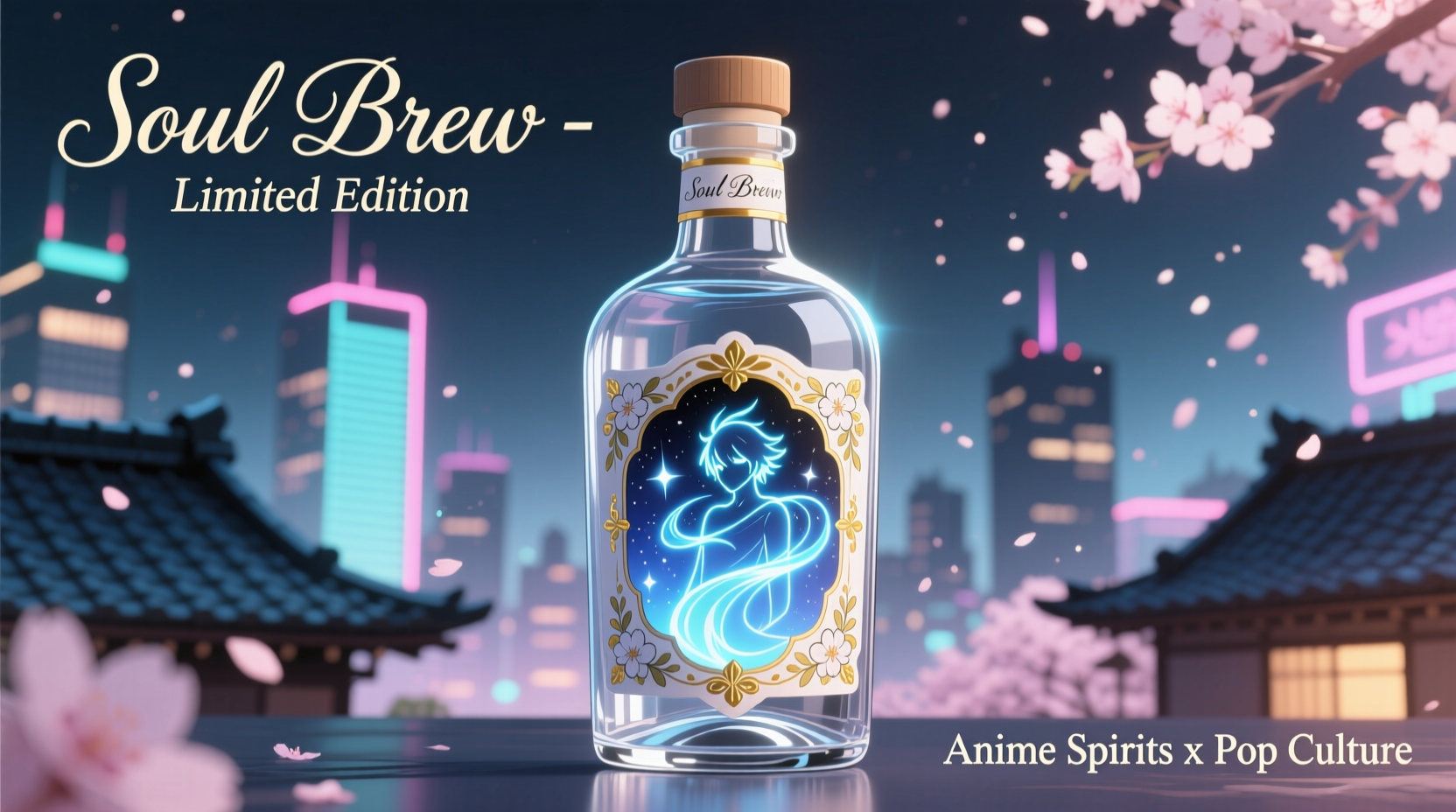
Major anime franchises rarely license alcohol directly through their core production committees. Instead, partnerships emerge via layered agreements involving publishers (e.g., Shueisha), animation studios (e.g., MAPPA, Ufotable), and regional distributors. The most credible spirit-themed merchandise appears through three primary channels: limited-edition promotional tie-ins, regional tourism campaigns, and premium collector collaborations.
In 2023, Toho and Kirin Brewery released a limited run of *Spirited Away*-inspired yuzu shochu under the “Chihiro Collection.” Bottled in ceramic jars resembling No-Face’s mask and sold exclusively at Studio Ghibli Museum gift shops and select Japanese department stores, it carried full copyright attribution, holographic authentication seals, and compliance with Japan’s Liquor Tax Act—requiring explicit approval from both the National Tax Agency and Studio Ghibli’s licensing division. Similarly, Crunchyroll partnered with Suntory in 2022 for a “One Piece”-themed highball set featuring Chopper-branded glassware and a custom-blended whiskey liqueur—distributed only to Premium subscribers in North America and certified by the TTB (Alcohol and Tobacco Tax and Trade Bureau).
These official releases share key markers: transparent sourcing (distillery names, batch numbers, ABV clearly stated), absence of direct character likenesses on liquid labels (to avoid violating Japan’s strict “character use” regulations for alcohol), and alignment with franchise tone—e.g., no “Goku energy shots” or “Lelouch vodka”—because licensed partners prioritize brand integrity over shock value.
Tip: Look for the shōgyōtōroku (business registration number) on Japanese alcohol labels and verify licensing via the official anime studio’s “Goods & Collaborations” page—not third-party retailers’ claims.Fan-Made Booze: Craft, Culture, and Legal Tightropes
Outside formal licensing, a thriving subculture of home distillers, microbrewers, and cocktail artists produce spirit-themed beverages as acts of homage—not commerce. These range from small-batch sake infused with matcha and black sesame (branded “Naruto Ramen Night Sake”) to vapor-distilled gin using yuzu peel and sanshō pepper (“Demon Slayer Gin: Domain Expansion Edition”). Most operate under local cottage food laws or non-commercial gifting frameworks, explicitly disclaiming affiliation and avoiding trademarked phrases like “Akatsuki Red Wine” in favor of evocative alternatives like “Crimson Leaf Reserve.”
A key distinction lies in intent and scale. In Kyoto, a collective called *Kami no Mizu* (“Water of the Gods”) has operated since 2019, producing seasonal junmai daiginjo rice wines inspired by Shinto purification rituals depicted in *K-On!* and *Mushishi*. They distribute bottles only at shrine festivals and anime-adjacent cultural salons—never online—and include hand-written calligraphy cards explaining how each release mirrors concepts like *kami*, *kegare*, and *harai*. Their work is recognized by local tourism boards as part of “anime pilgrimage” programming—not as merchandise, but as experiential storytelling.
“Fan-made spirits succeed when they deepen cultural literacy—not replicate logos. A bottle labeled ‘Sailor Moon Moonlight Sake’ sells units. One brewed with silver-leafed sakura blossoms and served during hanami with a reading of the *Tale of Genji*? That builds legacy.” — Dr. Kenji Tanaka, Professor of Media Anthropology, Waseda University
Authenticity vs. Aesthetic: Decoding the Packaging Clues
Consumers face real risk when purchasing spirit-themed anime merch: counterfeit alcohol poses health hazards, and mislabeled products may contain undisclosed allergens or unsafe ethanol concentrations. Below is a comparative table identifying reliable indicators of legitimacy across five critical dimensions.
| Feature | Official Licensed Release | High-Quality Fan-Made | Unverified / Risky Product |
|---|---|---|---|
| Label Language | Japanese/English bilingual; legal disclaimers in small print; distillery address visible | Primarily Japanese or poetic English; includes brewing philosophy statement; no commercial claims | Only romaji text; exaggerated claims (“100% authentic Jujutsu energy!”); missing regulatory info |
| Packaging Integrity | Heat-shrink seals with studio holograms; tamper-evident caps; consistent ink density | Hand-stamped wax seals; recycled paper labels; visible artisan signature | Peeling stickers; blurry printing; mismatched font weights; plastic wrap without batch code |
| Distribution Channel | Sold via official anime store, licensed retailer (e.g., Animate, Mandarake), or distillery taproom | Available only at live events, Patreon supporter tiers, or local izakayas with documented collaboration | Third-party marketplaces (eBay, Amazon Marketplace) with no seller verification; Instagram DM-only sales |
| Alcohol Disclosure | ABV clearly printed; ingredient list compliant with national labeling law; no medicinal claims | ABV disclosed; fermentation method described (e.g., “naturally carbonated, unpasteurized”); no health promises | ABV omitted or obscured; “detox blend,” “curse-reversal tincture,” or “power-up infusion” language |
| Price Point | $45–$120 USD (reflecting premium ingredients + licensing fees) | $28–$65 USD (handcrafted volume limits; no IP royalties) | Under $15 USD or suspiciously inflated ($199+ for 200ml “limited edition”) |
Mini Case Study: The “Attack on Titan” Gin Controversy of 2021
In late 2021, a London-based distillery launched “Wall Rose Dry Gin,” marketed with charcoal illustrations of Survey Corps insignia and tasting notes referencing “oak-aged freedom” and “citrus-washed despair.” Initial social media buzz was intense—#WallRoseGin trended for 72 hours. But within a week, fans noticed discrepancies: the distillery’s website lacked any licensing badge; the “Survey Corps” logo used unauthorized color gradients; and the gin’s base spirit was sourced from a bulk supplier with no craft provenance.
When contacted, the distillery issued a vague statement citing “inspirational homage” and removed all direct references to *Attack on Titan*—rebranding the product as “Frontier Gin” with redesigned labels. However, existing stock continued circulating. Japanese customs later seized 300 bottles en route to Osaka after a complaint from Production I.G.’s legal team. Crucially, no consumers reported illness—but the incident exposed how easily aesthetic mimicry crosses into infringement when spiritual themes (walls as psychological barriers, wine as blood ritual, gin as clarity amid chaos) are stripped of context and commodified.
This case underscores why discernment matters: the gin wasn’t dangerous, but its marketing exploited emotional investment without contributing meaningfully to either anime scholarship or beverage craftsmanship.
How to Engage Responsibly: A Five-Step Guide
Whether you’re a collector, casual fan, or aspiring creator, navigating this space ethically requires intentionality—not just vigilance. Follow this sequence before purchasing, sharing, or producing spirit-themed anime goods.
- Verify the source: Search the anime’s official website under “Collaborations” or “Licensed Products.” Cross-reference with the distillery’s press releases or industry databases like Liquor.com’s licensed partnership tracker.
- Read the fine print: Check for terms like “not affiliated with,” “fan tribute,” or “unofficial.” If those appear, assume zero licensing—even if packaging looks identical.
- Assess cultural alignment: Does the product reflect the anime’s thematic depth? E.g., a *Demon Slayer* sake honoring Kagaya Ubuyashiki’s tea ceremony ethos carries more weight than a “Rengoku Fire Whiskey” with chili-infused burn.
- Inspect physical documentation: Legitimate Japanese alcohol must display the manufacturer’s name, address, alcohol percentage, and tax payment number. Absence = red flag.
- Support sustainably: Prioritize producers who reinvest in community—like *Kami no Mizu* donating 10% of proceeds to shrine preservation—or licensed partners funding anime industry training programs.
FAQ
Are spirit-themed anime merch items legal to import into the U.S.?
Yes—if fully compliant with TTB regulations. This requires pre-approval of labels, formulas, and importer registration. Unlicensed fan-made spirits imported without TTB certification are subject to seizure. Customs does not distinguish “fan tribute” from infringement; legality hinges on documentation, not intent.
Can I make my own anime-inspired cocktail for a private party?
Absolutely—and it’s encouraged. As long as preparation is non-commercial, no trademarks are reproduced (e.g., avoid printing “Luffy’s Straw Hat Rum” on napkins), and guests understand it’s a creative interpretation, personal use falls under fair use doctrine in most jurisdictions. Adding thematic garnishes (blue curaçao “Spirit River” float, shiso leaf “cursed technique” garnish) honors the source respectfully.
Why do so many anime spirit releases focus on Japanese drinks like sake and shochu?
It reflects both cultural authenticity and regulatory pragmatism. Sake and shochu carry centuries-old associations with ritual, seasonality, and regional identity—aligning naturally with anime’s frequent exploration of tradition versus modernity. Additionally, Japan’s Alcohol Tax Act permits smaller-batch production under looser oversight than whiskey or gin, lowering barriers for licensed experimentation.
Conclusion
Spirit-themed anime merch sits at a rare intersection: where devotion meets distillation, fandom informs fermentation, and reverence shapes retail. Whether you’re savoring a certified *Studio Ghibli* yuzu liqueur or sharing a friend’s hand-bottled “My Neighbor Totoro” plum wine at a quiet gathering, what matters most isn’t ownership of the label—but stewardship of the meaning behind it. These products gain power not from logos, but from how they invite us to pause, taste intentionally, and remember why certain stories feel sacred in the first place: because they hold up mirrors to our own struggles, hopes, and quiet moments of transcendence—sometimes best appreciated, like good sake, slightly warmed and shared with care.
💬 Your perspective matters. Have you encountered a spirit-themed anime release that deepened your connection to the story—or one that felt hollow? Share your experience in the comments. Let’s build a more thoughtful, informed, and spirited pop culture conversation—together.