Diatomaceous earth (DE) coasters have gained popularity for their natural moisture-wicking properties, elegant texture, and eco-friendly composition. Made from fossilized remains of marine phytoplankton, these porous coasters absorb condensation efficiently while adding a minimalist aesthetic to any table setting. However, their longevity depends heavily on proper drying after each use. Improper drying leads to warping, mold growth, reduced absorbency, and eventual cracking. This guide provides a comprehensive approach to drying DE coasters effectively—ensuring they remain functional and beautiful for years.
The Science Behind Diatomaceous Earth and Moisture Absorption
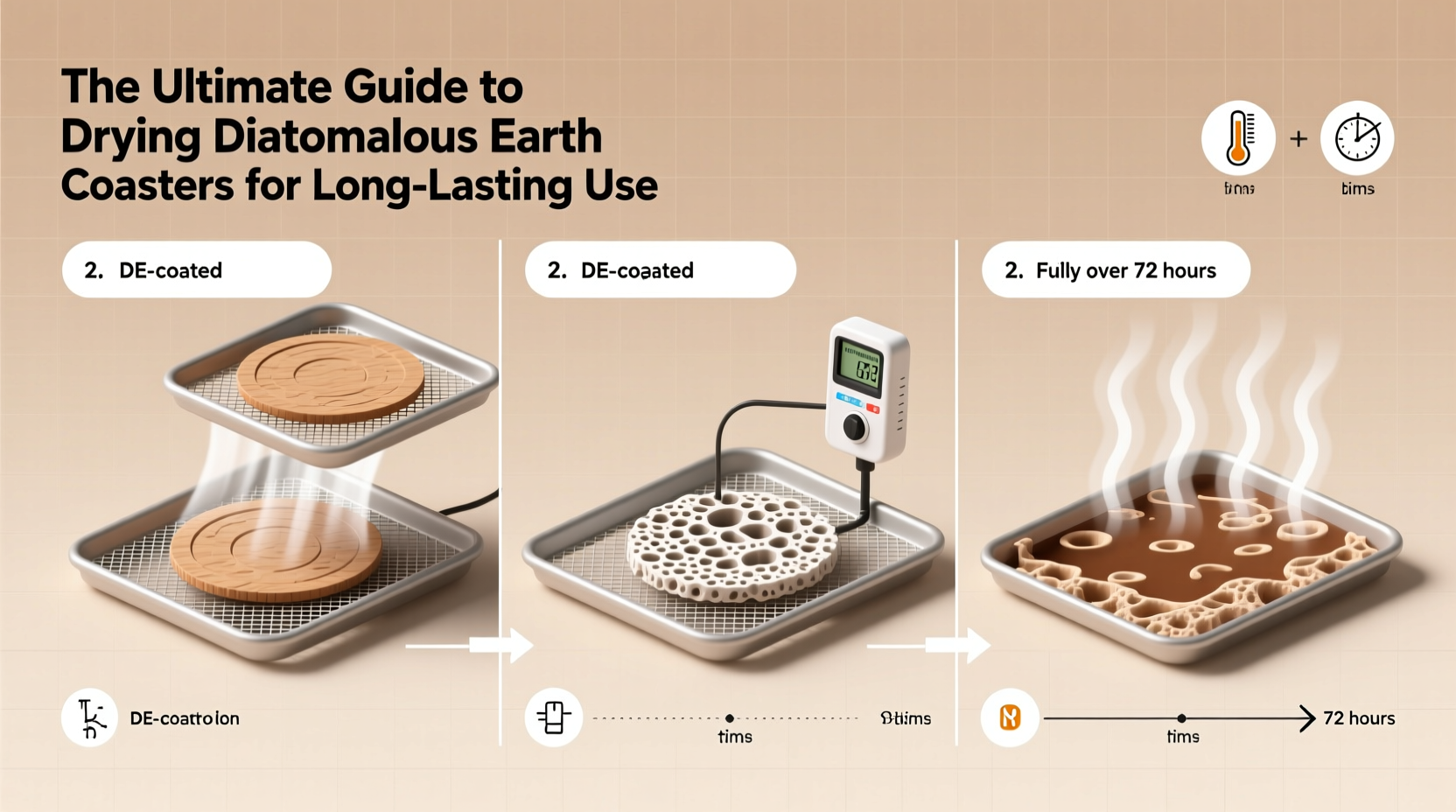
Diatomaceous earth is composed of silica-rich microfossils with an intricate network of microscopic pores. These pores give DE its high surface area, enabling it to draw in and hold moisture through capillary action. When used as a coaster, it pulls condensation away from glassware, preventing water rings on furniture. But this same absorbency makes the material vulnerable when not dried correctly.
Unlike cork or ceramic, DE does not evaporate moisture quickly on its own. If left damp, water can linger within the matrix, promoting bacterial or fungal development. Over time, repeated wet-dry cycles without thorough drying cause internal stress, leading to structural fatigue. Understanding this behavior is key to preserving the integrity of your coasters.
“Drying isn’t just about removing surface moisture—it’s about allowing the internal structure to fully release trapped humidity.” — Dr. Lena Pruitt, Materials Scientist specializing in porous ceramics
Step-by-Step Guide to Properly Drying Diatomaceous Earth Coasters
To maximize the lifespan of your DE coasters, follow this detailed drying process after every use:
- Wipe excess moisture immediately: After removing the glass, gently blot the coaster with a dry microfiber cloth to remove surface water. Do not rub aggressively, as abrasion may damage the fine grain.
- Air-dry upright or on edge: Place the coaster vertically between books or lean it against a wall to expose both faces to airflow. Avoid laying flat on surfaces that restrict evaporation underneath.
- Choose a well-ventilated area: Select a location with consistent air movement—near a window (not in direct sunlight), under a ceiling fan, or in a room with active ventilation.
- Allow 12–24 hours for complete drying: Depending on ambient humidity, full drying may take up to a full day. In humid climates, extend drying time accordingly.
- Rotate halfway through: Flip or reposition the coaster midway to ensure even exposure and prevent one side from remaining damp.
- Test before reuse: Press a fingertip lightly on the center. If coolness or dampness is detected, continue drying. Only return to use when completely dry throughout.
Best Practices vs. Common Mistakes
How you handle drying directly affects performance and durability. The following table outlines recommended practices alongside frequent errors to avoid:
| Best Practices | Common Mistakes |
|---|---|
| Dry in open, airy spaces with good circulation | Leaving coasters in closed cabinets while still damp |
| Use vertical positioning to maximize airflow | Laying coasters flat on non-porous surfaces like tile or wood |
| Inspect for residual dampness before reuse | Returning coasters to use prematurely due to urgency |
| Occasionally sun-dry in indirect light once a month | Exposing to direct sunlight for extended periods, causing brittleness |
| Store only when bone-dry in breathable fabric pouches | Storing in plastic bags or sealed containers while slightly moist |
Maintaining Long-Term Durability: A Monthly Care Checklist
Beyond daily drying, periodic maintenance ensures your coasters remain effective and visually appealing. Incorporate the following into your routine:
- ✔️ Once a week: Inspect each coaster for signs of staining, odor, or soft spots.
- ✔️ Every two weeks: Clean with a soft brush and lukewarm water; never soak.
- ✔️ Monthly: Perform a deep dry by placing coasters near a dehumidifier or in a warm, ventilated room for 48 hours.
- ✔️ Twice a year: Refresh appearance by gently sanding surface imperfections with 400-grit paper.
- ✔️ As needed: Replace any coaster showing cracks, persistent odors, or loss of structural rigidity.
Real Example: How One Household Extended Coaster Life by Two Years
In Portland, Oregon—a city known for high humidity—Sarah Kim noticed her DE coasters developing dark spots and crumbling edges within six months. After consulting a local ceramics conservator, she implemented a strict drying protocol: wiping after each use, standing coasters upright near a kitchen vent, and rotating sets weekly. She also began storing them in linen pouches inside a cabinet with a small silica gel pack.
Within three months, staining stopped appearing. By the end of the second year, all eight original coasters remained intact and fully functional. “I thought they were disposable,” Sarah said. “But treating them like delicate pottery changed everything.” Her experience underscores how simple behavioral shifts yield dramatic improvements in product longevity.
Frequently Asked Questions
Can I speed up drying with a hairdryer or heater?
No. Applying direct heat causes rapid, uneven moisture loss, which leads to thermal shock and microfractures. Allow natural air drying instead.
Is it safe to wash DE coasters in the dishwasher?
Absolutely not. The high-pressure water and detergents compromise the porous matrix, weakening the structure and reducing absorbency permanently.
Why do my coasters sometimes develop a white residue?
This is likely mineral buildup from hard water or condensation containing dissolved solids. Wipe gently with a damp cloth and allow thorough drying. Prevent recurrence by using distilled water if cleaning.
Final Thoughts: Treat Them Like Fine Craft, Not Disposables
Diatomaceous earth coasters are more than functional accessories—they’re handcrafted objects that blend natural science with design. Their lifespan reflects how we treat them. With mindful drying habits, attentive storage, and regular inspection, a set can last five years or more, far exceeding expectations.
The effort required is minimal: a few seconds to wipe, a moment to position upright, and patience to wait before reuse. These small actions compound into significant results—preserving beauty, function, and sustainability. In a world of disposable goods, caring for simple items like DE coasters becomes a quiet act of intentionality.
💬 Have a tip or drying hack that works for your coasters? Share your experience in the comments and help build a community of mindful users.