
For many, the term \"shadow work\" evokes images of dark rituals or psychological deep dives into trauma. In reality, shadow work is a gentle yet powerful process of self-discovery rooted in Jungian psychology. It involves identifying and integrating the repressed, denied, or unconscious parts of ourselves—what Carl Jung called the \"shadow.\" These aspects may include unprocessed emotions, childhood wounds, fears, insecurities, or behaviors we judge as unacceptable.
While increasingly popular in wellness and personal development circles, shadow work remains misunderstood. Many beginners wonder: What exactly does it involve? Is it safe to explore these hidden layers on your own? And how can someone begin without professional support?
This article demystifies shadow work for newcomers, outlines its benefits and risks, and provides a structured approach to practicing it safely—even in solitude.
Understanding the Shadow: The Foundation of Self-Awareness
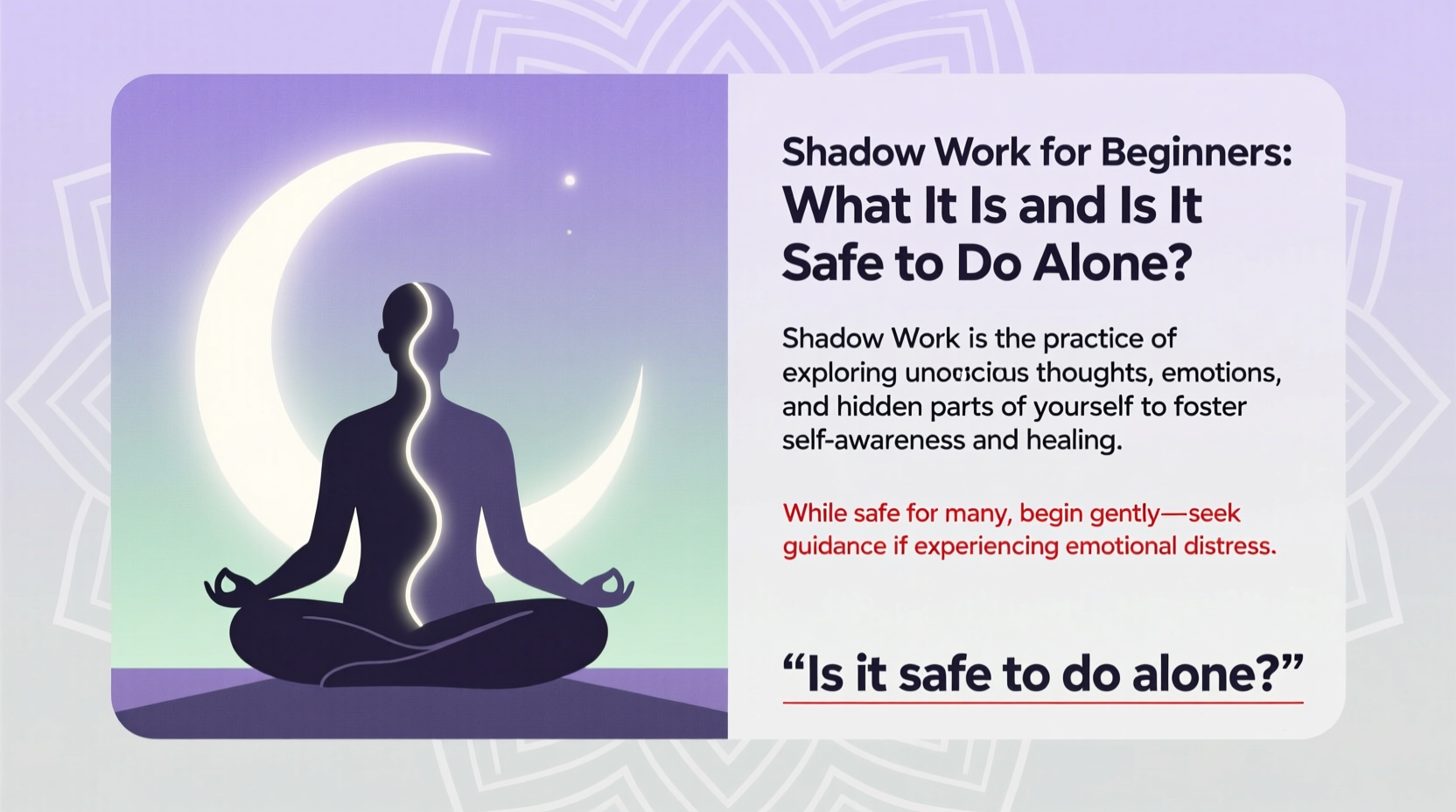
The concept of the shadow was introduced by Swiss psychiatrist Carl Gustav Jung in the early 20th century. He described the psyche as having three main components: the ego (our conscious identity), the persona (the social mask we present), and the shadow (the unconscious part containing everything we disown).
The shadow isn't inherently negative. It holds not only suppressed anger, shame, or jealousy but also creativity, passion, and untapped potential that society or upbringing taught us to hide. For example, a person raised to be \"always kind\" might suppress assertiveness, pushing it into their shadow—only for it to emerge later as passive aggression or burnout.
“Until you make the unconscious conscious, it will direct your life and you will call it fate.” — Carl Jung
Shadow work aims to bring these unconscious patterns into awareness so they can be integrated rather than projected onto others or acted out unconsciously. Integration doesn’t mean acting on every impulse; it means acknowledging them with compassion and choosing healthier responses.
Why People Turn to Shadow Work
Modern life often rewards surface-level positivity and emotional suppression. Yet unresolved inner conflicts manifest in relationships, career stagnation, anxiety, or repetitive self-sabotaging behaviors. Shadow work offers a path to break these cycles.
Common reasons people begin shadow work include:
- Recurring arguments or relationship patterns
- Unexplained mood swings or emotional triggers
- A sense of emptiness despite external success
- Difficulty setting boundaries or expressing needs
- Chronic self-criticism or low self-worth
By exploring the shadow, individuals gain insight into why certain situations provoke strong reactions. This awareness creates space between stimulus and response—the foundation of emotional freedom.
Tip: Start by noticing when you feel disproportionately upset. These emotional spikes often point to shadow material.Is Shadow Work Safe to Do Alone?
This is one of the most pressing questions for beginners. The answer is nuanced: yes, basic shadow work can be done safely alone—but with important caveats.
Light to moderate exploration using journaling, meditation, or guided prompts is generally safe for emotionally stable individuals. However, those with a history of trauma, dissociation, severe depression, or PTSD should consider working with a licensed therapist trained in depth psychology.
Going too deep too quickly without support can lead to emotional overwhelm, retraumatization, or destabilization. As therapist Dr. Thema Bryant explains:
“Facing the shadow requires a container of safety. Without it, the process can feel like opening a wound without proper care.” — Dr. Thema Bryant, Clinical Psychologist and Trauma Specialist
That said, millions practice foundational shadow work independently through reflective practices. The key lies in pacing, preparation, and knowing when to seek help.
When Solo Shadow Work Is Appropriate
Solo practice is suitable if you:
- Have a stable mental and emotional baseline
- Are not currently in crisis
- Can regulate your emotions effectively
- Have supportive relationships or outlets
- Approach the process with patience and self-compassion
When You Should Seek Professional Support
Consider therapy or guided work if you:
- Have experienced abuse, neglect, or complex trauma
- Struggle with dissociation or identity confusion
- Feel easily overwhelmed by emotions
- Have a diagnosed mental health condition
- Notice increased anxiety or intrusive thoughts after starting
Step-by-Step Guide to Starting Shadow Work Safely
Beginners benefit from a structured approach that builds self-awareness gradually. Here’s a six-phase method designed for safe, sustainable progress.
- Set Your Intention: Clarify why you’re doing this work. Is it to improve relationships? Reduce anxiety? Understand recurring patterns? Write your intention down to anchor your journey.
- Create a Safe Container: Choose a quiet time and space where you won’t be interrupted. Light a candle, play calming music, or use grounding techniques like deep breathing before beginning.
- Begin with Observation: For one week, simply notice moments when you feel triggered. Journal: Who was involved? What happened? How did your body react? Avoid analysis—just record.
- Identify Patterns: After a week, review your entries. Look for themes: Do certain types of people trigger you? Are there repeated emotional responses? These clues point to shadow material.
- Engage with Compassionate Inquiry: Once you identify a pattern, ask yourself gently: “When did I first learn this emotion was unsafe?” or “What belief about myself does this reaction protect?” Let answers arise without judgment.
- Practice Integration: Acknowledge the part of you that holds this experience. You might say inwardly: “I see you. You were trying to protect me. I’m here now.” This validates the emotion without being consumed by it.
Practical Tools and Techniques for Beginners
Different tools resonate with different people. Experiment to find what works best for you.
| Technique | How It Helps | Best For |
|---|---|---|
| Journaling Prompts | Encourages honest self-reflection | Identifying triggers and beliefs |
| Mirror Work | Facing self-judgments directly | Healing self-image issues |
| Meditation & Visualization | Accessing subconscious material gently | Connecting with inner child or inner critic |
| Dream Analysis | Reveals symbolic shadow content | Exploring recurring dreams or nightmares |
| Dialogue Exercises | Communicating with disowned parts | Building internal empathy |
One effective prompt: “What trait do I hate most in others?” Then reflect: “Do I ever exhibit this, even slightly? When? Why might I deny it in myself?” Often, our strongest judgments mirror our own suppressed qualities.
Mini Case Study: From Resentment to Reconnection
Lena, 34, noticed she became furious whenever her partner left dishes in the sink. She labeled him “lazy” and “disrespectful.” During shadow work, she explored her reaction and recalled growing up with a mother who worked two jobs while managing all household duties. Lena had internalized the belief that “if you love someone, you never burden them.”
Her anger wasn’t really about the dishes—it was fear of becoming overwhelmed and unseen. By acknowledging this buried worry, she could express her need for shared responsibility without blame. Her relationship improved not because her partner changed, but because she stopped projecting her unmet childhood needs onto him.
This shift didn’t happen overnight. It took weeks of journaling and mindfulness. But the result was deeper authenticity and reduced conflict.
Checklist: Getting Started with Confidence
Use this checklist to ensure you're beginning shadow work responsibly:
- ☐ Assess your current emotional stability
- ☐ Define your intention for doing this work
- ☐ Choose one simple technique (e.g., journaling)
- ☐ Set aside 10–15 minutes, 3 times per week
- ☐ Create a calming ritual before each session
- ☐ Identify a trusted friend or therapist to talk to if needed
- ☐ Commit to self-compassion over self-criticism
Frequently Asked Questions
Can shadow work make you depressed or anxious?
Temporarily, yes. Confronting painful memories or long-denied emotions can cause discomfort. This is normal and usually short-lived. However, if symptoms persist or worsen, pause the practice and consult a mental health professional. Healthy shadow work should ultimately reduce anxiety by resolving inner conflict.
How long does it take to see results?
Some people notice subtle shifts within weeks—like fewer knee-jerk reactions or improved self-understanding. Deeper integration takes months or years. Think of it as lifelong maintenance, not a one-time fix. Like physical fitness, emotional growth thrives on consistency, not intensity.
Do I need to believe in Jungian psychology to benefit?
No. While the framework comes from Jung, the core principle—becoming aware of unconscious patterns—is universal. Whether you call it the shadow, inner child, or subconscious mind, the process of self-inquiry yields real-world benefits regardless of terminology.
Final Thoughts: Embracing Wholeness
Shadow work isn’t about fixing yourself. It���s about remembering parts of yourself you’ve forgotten, ignored, or feared. Every emotion, memory, and trait—even the ones labeled “ugly”—served a purpose at some point. With patience and care, they can be transformed from sources of shame into wellsprings of wisdom.
Starting alone is possible, even empowering, as long as you proceed with respect for your limits. Honor your pace. Celebrate small breakthroughs. And remember: healing isn’t linear. Some days will feel illuminating; others may feel heavy. Both are part of the journey.
💬 Ready to begin? Pick one journal prompt today and write without editing. Share your experience in the comments—your courage might inspire someone else to start theirs.